Category Archives: Careers & Specialties

Natural Gas 101: Pros, Cons & Career Guide
Natural gas is a fossil fuel primarily composed of methane, formed over millions of years from decayed organic matter. It supplies approximately 22% of global energy needs for heating, electricity generation, and industrial processes. While natural gas burns cleaner than coal or oil—producing 50% less carbon dioxide—its extraction and use raise environmental concerns including methane…
Read more

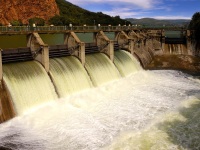
Hydroelectric Power: How It Works, Pros & Cons, and Careers

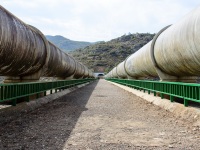
Hydroelectric power harnesses the kinetic energy of moving water to generate electricity, making it the world's most widely used renewable energy source. It's clean, cost-effective, and capable of producing power at scales ranging from a few kilowatts to over 20 gigawatts. It currently generates roughly 19% of the world's electricity, with careers in the field…
Read more

What is NEPA? Introduction to U.S. Environmental Policy

The National Environmental Policy Act (NEPA), signed into law on January 1, 1970, requires all federal agencies to assess environmental impacts before taking major actions. NEPA established three types of review documents (EIS, EA, and CE), created the Council on Environmental Quality, and gave citizens a voice in federal decision-making through required public participation. The…
Read more

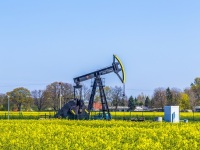
Hydraulic Fracturing: Health Risks, Regulations & Career Impact

Hydraulic fracturing extracts natural gas and oil from deep shale rock by drilling vertically, then horizontally, and pumping high-pressure fluid to fracture the formations. Now producing 67–79% of US natural gas and 50% of crude oil, the technology has transformed American energy independence. However, peer-reviewed research increasingly links fracking operations to elevated childhood cancer rates,…
Read more

Aerial Photography in Environmental Science: A Complete Guide

Aerial photography involves capturing images of the Earth's surface from aircraft, drones, or other elevated platforms. It's used across environmental science—from tracking climate change and mapping vegetation to archaeological surveys and urban planning. Images are taken either obliquely (at an angle) or vertically (straight down), with each method serving different research needs. When paired with…
Read more

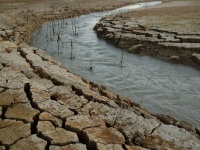
Understanding Drought in the United States: Types, History, and Impact

Drought is a temporary period when water availability falls below normal levels for a region, affecting humans, agriculture, and ecosystems. The United States experiences four types of drought—meteorological, agricultural, hydrological, and socioeconomic—each triggered by different conditions and impacting different sectors. While cyclical in nature, droughts have grown more intense due to climate change and increasing…
Read more

Dendrochronology: How Tree Rings Reveal Environmental History

Dendrochronology is the scientific analysis of tree-ring patterns to date wood samples and reconstruct past environmental conditions. Students from archaeology, climate science, chemistry, and forestry use dendrochronology in their research. Tree rings reflect annual growth influenced by climate, enabling scientists to date artifacts, calibrate radiocarbon testing, and study historical climate patterns spanning thousands of years.…
Read more

GIS in Environmental Science: Principles, Applications, and Career Pathways

Geographic Information Systems (GIS) are specialized software tools that environmental scientists use to visualize, analyze, and interpret spatial data. GIS has become essential across environmental science specializations, enabling professionals to track species migration, model climate patterns, plan conservation efforts, and assess environmental impacts. Most environmental science programs now include GIS training at undergraduate or graduate…
Read more

Solar Energy Advantages and Disadvantages

Solar energy converts sunlight into electricity through photovoltaic cells or solar thermal systems. Its main advantages include zero emissions and solar costs are now well below those of new coal and natural gas plants. The key drawback is intermittency — no generation at night — and upfront installation cost, though the 30% federal Investment Tax…
Read more

El Niño and La Niña’s Impact on Our Environment

El Niño and La Niña are opposite phases of the El Niño Southern Oscillation (ENSO), a climate pattern affecting ocean temperatures and atmospheric pressure in the equatorial Pacific every 3-7 years. El Niño brings warmer waters and disrupted trade winds, while La Niña brings cooler temperatures and stronger winds. Both phenomena significantly impact global weather…
Read more