Category Archives: Environmental Geologist

Environmental Geologist

What is Palynology? Environmental Science’s Microscopic Detective Work

Palynology is the scientific study of microscopic organic materials like pollen, spores, and dinoflagellates preserved in sediments and rocks. This interdisciplinary method helps researchers understand past climates, track environmental changes, identify archaeological sites, and reconstruct ancient landscapes. Palynologists work across botany, geology, archaeology, and climate science to unlock Earth's environmental history. Understanding how landscapes and…
Read more

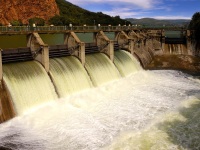
Hydroelectric Power: How It Works, Pros & Cons, and Careers

Hydroelectric power harnesses the kinetic energy of moving water to generate electricity, making it the world's most widely used renewable energy source. It's clean, cost-effective, and capable of producing power at scales ranging from a few kilowatts to over 20 gigawatts. It currently generates roughly 19% of the world's electricity, with careers in the field…
Read more

How Radiocarbon-14 Dating Works

Radiocarbon dating measures the decay of carbon-14 isotopes in organic materials to determine their age, typically within a range of 55,000-60,000 years. Developed in the 1940s by Willard Libby, this method revolutionized archaeology, environmental science, and climate research by providing accurate dates for wood, bone, pollen, and other organic remains. Today's Accelerated Mass Spectrometry (AMS)…
Read more

Is Environmental Science Really a Good Major?

Environmental science is a strong major choice for 2026, with median salaries of $80,060 and projected 4% job growth through 2034. The field combines biology, chemistry, geology, and policy to address real-world environmental challenges, preparing graduates for careers in consulting, government agencies, conservation, and research with approximately 8,500 annual job openings nationwide. When prospective students…
Read more

What We Wish We Had Known before Majoring in Environmental Science

Environmental science students consistently identify four critical areas they wish they'd understood before starting their major: the foundational importance of chemistry across all specializations, the competitive nature of introductory science courses, the long-term value of professional networking from day one, and the significant adjustment required for university-level science education. These insights come from hundreds of…
Read more