
Geologists are Earth scientists who study rocks, minerals, and the natural processes that shape our planet. Working under the Bureau of Labor Statistics classification of "Geoscientists," geologists earn a median annual salary of $99,240 as of May 2024, though those in oil and gas extraction command premium compensation with mean wages around $156,580. The field requires at least a bachelor's degree in geology or related Earth sciences, with 6% employment growth projected through 2032, creating approximately 6,900 annual job openings nationwide.
Geologists work in one of the most important and oldest Earth sciences. Most people know they study rocks in the environment and examine rock formations to understand how they're created, like the distinctive layers of the Grand Canyon. But geology goes much deeper than that. These scientists investigate what leads to rock formation (most rocks are compacted organic materials, though some form from volcanic activity) and the natural processes that shape our world. They examine how natural forces affect rocks, like river formation carving through stone over millennia, and how different rock types influence their surroundings. Rocks can dramatically impact soil pH levels and determine which plant and animal species thrive in a given area. The ultimate goal? Understanding our planet's history and piecing together the chronology of individual rock formations and entire landscapes.
Beyond rocks themselves, geologists play a critical role in understanding ground-based natural disasters. They're often the experts communities turn to when trying to understand what triggers mudslides, earthquakes, and volcanic eruptions—knowledge that's increasingly vital for public safety and urban planning. This means studying both the Earth's long-term geological record and its short-term processes, analyzing how sudden events impact communities and environments.
Geologists also specialize in dating rocks and geological formations, using various techniques to establish timelines. This work helps scientists piece together how continents formed, how they've shifted over millions of years, and how our landscapes continue to evolve today.
Where Does a Geologist Work?
The majority of geologists work in private industry, where their understanding of geological processes makes them invaluable for resource extraction and development. According to May 2023 Bureau of Labor Statistics data, engineering and architectural services represent the largest employment sector, accounting for approximately 35% of all geoscientist positions. Management and technical consulting firms employ another 16% of professionals in the field. Government positions—federal, state, and local agencies combined—account for roughly 17% of geoscientists, including roles with organizations like the U.S. Geological Survey, state geological surveys, and environmental regulatory agencies. Oil and gas extraction, while employing only about 8% of geoscientists, offers the highest compensation in the field. The remaining positions are distributed across mining operations, academic institutions, and specialized research facilities.
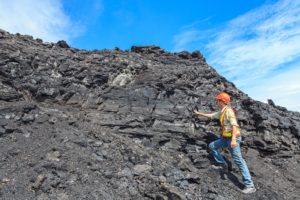
The work environment varies dramatically by specialty and employer. Field geologists might spend weeks at remote mine sites, offshore platforms, or wilderness areas collecting samples and mapping formations. Others work primarily in laboratories analyzing rock and soil samples, or in offices interpreting seismic data and creating geological models. Many positions blend fieldwork with office-based analysis, though the balance shifts throughout your career—entry-level positions typically involve more fieldwork, while senior roles focus more on analysis, project management, and client consultation.
What Is the Average Geologist Salary?
Geologist salaries vary significantly based on industry, location, and specialization. According to May 2024 Bureau of Labor Statistics data, geoscientists (including geologists) earn a median annual salary of $99,240, with the mean wage at $111,310. The field employs approximately 22,510 professionals nationwide.
Here's what's interesting: salary ranges span considerably across the profession. The lowest 10% of geoscientists earn around $50,130 annually, often in entry-level positions or with nonprofit organizations and academic institutions. The 25th percentile sits at $62,090, while the 75th percentile reaches $103,730. Top earners in the 90th percentile make $134,830 or more, typically in senior consulting roles or specialized petroleum geology positions.
Industry makes a dramatic difference in earning potential. Oil and gas extraction consistently offers the highest compensation, with geoscientists in this sector earning mean wages around $156,580 according to May 2023 data—approximately 50% above the profession's overall median. This premium reflects both the specialized skills required and the economic value of petroleum exploration work. Federal government positions provide stable income and comprehensive benefits, while academic and research positions often pay less but offer advantages like flexible schedules and opportunities to pursue independent research.
The ongoing talent shortage across STEM fields has created competitive hiring conditions for qualified geology candidates, particularly those with specialized skills in areas like 3D geological modeling, geochemical analysis, and geographic information systems. Professionals with expertise in emerging specializations—environmental geology, geological hazards assessment, or sustainable resource management—often find themselves with multiple career opportunities.
| Industry Sector | Mean Annual Wage | Typical Roles |
|---|---|---|
| Oil & Gas Extraction | $156,580 | Petroleum geologists, reservoir analysts, and exploration geologists |
| Management of Companies | $168,880 | Corporate geologists, strategic resource planners, executive advisors |
| Federal Government | $113,610 | Research geologists, regulatory specialists, survey scientists |
| Engineering Services | $97,260 | Engineering geologists, geotechnical consultants, site investigators |
| Mining Operations | $107,330 | Mining geologists, resource evaluation specialists, and exploration managers |
Geology Jobs & Job Responsibilities
Geologists have diverse responsibilities that vary considerably by employer and specialization, but certain core duties remain consistent across most positions. Understanding what the role actually entails can help you decide if this career path aligns with your interests and skills.
Entry-Level Requirements
Starting your geology career typically requires a Bachelor of Science degree in geology or a closely related Earth science field. You'll need demonstrated ability to work across various environments—from outdoor fieldwork in challenging conditions to meticulous laboratory analysis and detailed office reporting. Many positions involve extensive travel, depending on project locations and employer needs. You'll be expected to know geological factors relevant to your work site, whether that's understanding sedimentary formations for petroleum exploration or igneous rock properties for mining operations.
Collaboration is central to geological work. You'll work closely with multidisciplinary teams, sharing geological data and insights with engineers, environmental scientists, and project managers. This requires excellent verbal communication skills for interacting with both technical colleagues and non-specialist stakeholders. The ability to collect and analyze geological information—water samples, soil cores, rock specimens—forms the foundation of daily work. You'll write detailed, accurate reports that compile your data collection and analysis, often creating technical mappings or graphical representations of your findings.
Safety compliance is non-negotiable. You must understand and follow all relevant safety codes and standards, ensuring work procedures are executed safely. Modern geologists also need proficiency with specialized databases and software for geological modeling and analysis. Depending on your employer and location, you may be responsible for acquiring necessary permits for field projects and ensuring all work complies with federal, state, and local regulations related to geological investigations.
Day-to-Day Responsibilities
A typical day varies dramatically by role and project phase. Field days might involve hiking to remote locations, operating drilling equipment, collecting rock and soil samples, and mapping formations using GPS and geological instruments. Lab days focus on analyzing samples, running tests to determine mineral composition and age, and interpreting results. Office days involve processing data, creating geological models, writing reports, and planning upcoming fieldwork.
Most geologists move between these environments regularly. You might spend a week at a field site collecting samples, then return to the office for two weeks of analysis and reporting. The work requires both physical stamina for fieldwork and intellectual rigor for analysis and interpretation. Modern technology has transformed certain aspects—GIS (Geographic Information Systems) and 3D modeling software now handle much of what was once done with paper maps and hand calculations. However, fieldwork remains irreplaceable for direct observation and sample collection.
Advanced Career Paths & Management Roles
As you gain experience, opportunities for advancement open up. Many geologists pursue graduate degrees—a Master's or Ph.D. in geology or a closely related field—which significantly expands career options. Advanced positions often involve studying relationships between work projects and environmental impact, developing new methods for geological analysis that minimize environmental disruption, and managing work from junior geologists while providing feedback and recommendations.
Senior geologists ensure projects meet deadlines and budget requirements. They present data to diverse audiences—stakeholders, clients, government agencies, executive management—using various media and communication approaches. Staying current requires regularly updating skills through workshops, conferences, and professional courses to learn improved methods and emerging technologies. Management responsibilities often include overseeing contractors like drillers and excavators, ensuring health and safety compliance for all workers, managing project budgets, and ordering necessary materials and equipment.
Leadership roles involve attending regular management meetings to provide geological insights and strategic guidance, as well as providing ongoing training to staff regarding investigative techniques and data interpretation. Some senior geologists transition into consulting, starting their own firms or joining specialized consultancies where they command premium rates for their expertise.
What Is the Job Demand for Geologists?
Employment for geoscientists, including geologists, is projected to grow 6% between 2022 and 2032, according to Bureau of Labor Statistics projections. This translates to approximately 4,800 new positions created over the decade, with about 6,900 annual job openings expected when accounting for workers leaving the occupation or retiring.
The demand story is nuanced. While oil and gas extraction represents a smaller percentage of total employment (approximately 8%), it continues to require geological expertise for exploration, extraction optimization, and site remediation despite the energy transition. The field's ongoing talent shortage—common across STEM disciplines—means qualified candidates often have multiple job opportunities available.
Engineering services and technical consulting represent the largest employment sectors, collectively accounting for more than half of all geoscientist positions. These roles support infrastructure development, environmental assessments, and construction projects across all regions. States with significant mining industries, active geological survey operations, or major infrastructure development also demonstrate consistent demand for geological expertise.
Emerging specializations are also creating new opportunities. Environmental geology has grown as companies face stricter remediation requirements. Environmental geologists assess contamination, plan cleanup operations, and ensure compliance with environmental regulations. Similarly, engineering geology—supporting infrastructure projects and urban development—continues to expand. Geologists who develop expertise in climate change impacts, geological hazards assessment, or sustainable resource management are particularly well-positioned for future opportunities.
What Are the Education Requirements to Become a Geologist?
Geology is a core STEM discipline, and a bachelor's degree is the minimum requirement for entry into the profession. Most major colleges and universities offer geology degree programs, so you shouldn't struggle to find relevant coursework. These programs typically require four years of full-time study and include both classroom instruction and hands-on field experience.
Core coursework covers fundamental areas like mineralogy (the study of minerals and their properties), petrology (rock formation and composition), structural geology (how rocks deform under stress), sedimentology (sediment formation and deposition), paleontology (fossils and ancient life), and geochemistry (chemical processes in geological systems). You'll also take substantial math and physics coursework—calculus, statistics, and mechanics are essential for understanding geological processes and interpreting data. Many programs require a field camp, typically a 4-6 week intensive experience where students apply classroom knowledge in real geological settings, learning to map formations, identify rocks in the field, and conduct field investigations.
If geology programs aren't available at your chosen institution, geography or other Earth science programs are acceptable alternatives. However, you'll want to take minors or electives in mathematics, physics, chemistry, and computer science. Geographic Information Systems (GIS) represents a growing and increasingly required technical skill—modern geologists use GIS for mapping, spatial analysis, and data visualization. Familiarity with programming languages like Python or R is also valuable for data analysis and modeling.
Despite the ongoing skills shortage, employers strongly prefer candidates with master's degrees due to the advanced scientific methods and extensive project work that graduate programs provide. A master's typically requires 2-3 years beyond the bachelor's degree and involves thesis research—original investigation that contributes new knowledge to the field. This experience demonstrates you can design studies, collect and analyze data, and communicate findings—all critical professional skills.
Graduate programs also allow specialization. You might focus on petroleum geology, hydrogeology (groundwater), environmental geology, geophysics, or geochemistry. This specialization often determines your career trajectory—petroleum geology students typically pursue oil and gas careers, while environmental geology students move toward consulting or regulatory work.
Doctoral degrees (Ph.D.) are essential for academic careers—teaching at universities and conducting research—and advantageous for senior government positions or high-level consulting roles. A Ph.D. typically requires 4-6 years beyond the bachelor's degree and involves substantial original research resulting in a dissertation that advances the field. While not required for most industry positions, some research-focused roles and senior advisory positions prefer or require doctoral-level expertise.
Certification requirements vary by state and work type. Some states require licensure for geologists working on projects with public safety implications, such as groundwater assessments, geological hazard evaluations, or mining operations. This typically involves passing the Fundamentals of Geology (FG) exam early in your career, gaining several years of supervised experience, and then passing the Practice of Geology (PG) exam. However, certification isn't required for the majority of geological positions, particularly those in research, federal employment, or some industry sectors.
Geology Specializations
As you advance in your career, you'll likely develop expertise in a specific area of geology. These specializations often determine the industries you work in and the types of problems you solve.
Petroleum geology focuses on finding and extracting oil and natural gas deposits. Petroleum geologists work closely with petroleum engineers to locate hydrocarbon reservoirs, assess their economic viability, and plan extraction strategies. This specialization typically offers the highest salaries but may involve working in remote locations and adapting to energy industry cycles.
Environmental geology applies geological knowledge to environmental problems—contamination assessment and remediation, geological hazard evaluation, environmental impact studies, and sustainable land use planning. Environmental geologists work with environmental scientists, engineers, and regulators to protect human health and ecosystems from geological hazards and contamination.
Mining geology involves locating valuable mineral deposits—metals, industrial minerals, coal—and planning extraction operations. Mining geologists assess ore quality, estimate reserves, and work with engineers to design efficient, safe mining operations. This specialization often involves international work as major mining operations span the globe.
Hydrogeology studies groundwater—its distribution, movement, quality, and sustainability. Hydrogeologists assess water resources for communities, design well systems, investigate contamination, and model how groundwater responds to development and climate change. With growing water scarcity concerns, this specialization is increasingly important.
Geochemistry examines chemical composition and processes in geological materials. Geochemists analyze rock, mineral, water, and soil samples to understand Earth processes, trace environmental contamination, determine rock ages, and explore for resources. This specialization requires a strong chemistry background and often involves significant laboratory work.
Engineering geology applies geological knowledge to construction and infrastructure projects. Engineering geologists assess site conditions for buildings, bridges, dams, and tunnels, evaluating geological hazards and foundation conditions. They work closely with civil engineers to ensure projects account for geological constraints.
Paleontology studies ancient life through fossils. While often considered a separate field, many paleontologists have geology backgrounds and work in geological contexts—studying evolution, ancient environments, and Earth history. Academic and museum positions are common, though some paleontologists work in industry, helping interpret ancient environments for petroleum exploration.
Technology & Tools in Modern Geology
Modern geology has been transformed by technological advances. Today's geologists need proficiency with sophisticated tools and software alongside traditional field skills.
Geographic Information Systems (GIS) have become fundamental to geological work. Software programs like ArcGIS and QGIS allow geologists to create detailed geological maps, analyze spatial relationships, and visualize complex data. GIS skills are now expected for most geology positions, from entry-level to senior roles.
Three-dimensional geological modeling software helps visualize subsurface structures. Programs such as Leapfrog, Petrel, and Move allow geologists to build detailed 3D models of rock formations, faults, and ore bodies. These models are critical for resource estimation, mine planning, and petroleum exploration.
Seismic data analysis tools process information from seismic surveys—essentially creating images of subsurface structures using sound waves. Petroleum geologists and researchers studying earthquake hazards use these tools extensively. The data sets are massive and require specialized software to interpret.
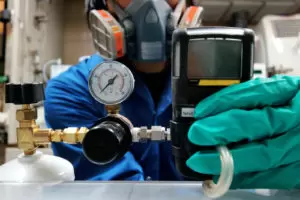
Laboratory equipment for geochemical analysis has become increasingly sophisticated. X-ray diffraction (XRD) instruments identify mineral composition, mass spectrometers determine ages and trace element concentrations, and electron microscopes reveal microscopic structures. Many geologists work closely with lab technicians who operate this equipment, though understanding its capabilities and limitations is essential.
Field instruments have also evolved. Modern geologists use handheld GPS units for precise location data, portable X-ray fluorescence (XRF) analyzers for quick mineral identification in the field, ground-penetrating radar to image shallow subsurface features, and drones equipped with cameras and sensors for mapping and surveying large areas quickly. Despite these advances, traditional tools—rock hammers, hand lenses, compasses, and field notebooks—remain essential for direct observation and sample collection.
What Kind Of Societies and Professional Organizations Do Geologists Have?
Professional organizations play an important role in geological careers, offering networking opportunities, continuing education, advocacy for the profession, and resources for career development.
The International Union of Geological Sciences serves as the largest international community of its kind. This hands-on organization offers programs in education, quality standards, and environmental management for geological stakeholders worldwide.
The US National Committee for Geological Sciences represents the American arm of IUGS, examining international issues surrounding geology and geological sciences in an American context. The committee works to serve American professionals both domestically and in international collaborations.
American Institute of Professional Geologists promotes the profession of geology and advocates for professional standards in the workplace. While primarily an American organization, AIPG has international members and promotes ethical practice across the geological profession.
Frequently Asked Questions
What degree do I need to become a geologist?
A bachelor's degree in geology or a related Earth science field is the minimum requirement. However, most employers prefer candidates with a master's degree due to the advanced training and research experience it provides. If you're pursuing academic research, teaching positions, or senior government advisory roles, a Ph.D. is typically necessary. Your undergraduate degree should include substantial coursework in geology, physics, mathematics, and chemistry.
What's the difference between a geologist and a geoscientist?
Geologists are a subset of geoscientists. The Bureau of Labor Statistics uses "geoscientists" as a broad category that includes geologists, geophysicists, hydrologists, and other Earth science professionals. When you see salary and employment data for "geoscientists," it represents this broader group. Geologists specifically focus on rocks, minerals, and Earth's structure, while other geoscientists might specialize in atmospheric science, oceanography, or other Earth system components.
Can I become a geologist without a geology degree?
It's challenging but possible. If you have a degree in a related field like geography, environmental science, physics, or engineering, you may qualify for some entry-level positions, particularly if you've taken geology coursework as electives. However, you'll be more competitive with a formal geology education. Some professionals transition into geology by completing a master's degree in geology even if their undergraduate degree was in a different field. This path works well for career changers who've developed relevant skills in related professions.
Which industries hire the most geologists?
Engineering and architectural services represent the largest employment sector, accounting for approximately 35% of all geoscientist positions. Management and technical consulting firms employ another 16% of professionals. Government agencies (federal, state, and local combined) employ roughly 17%. While oil and gas extraction employs only about 8% of geoscientists, it offers the highest compensation ,with mean wages around $156,580. Mining companies, environmental consulting firms, and construction companies also hire significant numbers of geologists.
Do I need certification or licensing to work as a geologist?
It depends on where you work and what you do. Some states require professional licensure for geologists working on projects with public safety implications—like groundwater assessments, geological hazard evaluations, or certain mining operations. This typically involves passing the Fundamentals of Geology exam, gaining supervised experience, and passing the Practice of Geology exam. However, many geology positions—particularly in research, federal employment, and some industry sectors—don't require licensure. Check your state's requirements and your intended career path to determine if licensure is necessary for your goals.
Key Takeaways
- Versatile Career Options: Geologists work across diverse industries, with engineering services representing 35% of employment, technical consulting 16%, government agencies 17%, and oil/gas extraction 8%, with roles ranging from field-intensive exploration to office-based analysis and research.
- Competitive Earning Potential: Median annual salary of $99,240 nationally as of May 2024, with significant variation by sector—oil and gas extraction offers mean wages of $156,580 (50% above median), while top earners in the 90th percentile make $134,830 or above.
- Educational Pathways: Bachelor's degree required minimum, master's strongly preferred for most professional positions, and Ph.D. necessary for academic research, university teaching, and senior government advisory roles. Programs include intensive field training alongside classroom instruction.
- Steady Employment Growth: 6% employment growth projected through 2032, creating approximately 4,800 new positions and 6,900 average annual openings when accounting for retirements. The ongoing STEM skills shortage creates competitive hiring conditions for qualified candidates.
- Technology Integration: Modern geologists need proficiency with GIS software, 3D geological modeling programs (such as Leapfrog and Petrel), seismic data analysis tools, and geochemical laboratory equipment alongside traditional field skills—technical expertise is increasingly essential across all specializations.
Ready to start your geology career? Explore accredited geology degree programs that can prepare you for this dynamic field and connect you with the Earth science community.

2024 US Bureau of Labor Statistics salary and job growth figures for geoscientists reflect national data, not school-specific information. Conditions in your area may vary. Data accessed January 2026.