Geographers study Earth's physical features, human populations, and their spatial interactions using technologies like GIS and remote sensing. They earn a median annual salary of $88,900 with federal government positions offering the highest pay at $92,440. Most geographers need at least a master's degree, though bachelor's degrees can open some entry-level government positions.
Geography is broader than most people realize. It's not just making maps—it's understanding how Earth's physical features, human populations, and natural systems interact with each other. Whether you're drawn to tracking glacier movements, analyzing urban transportation patterns, or mapping disease distribution, geography offers career paths that combine rigorous science, cutting-edge technology, and real-world problem-solving.
The field divides into two main branches: physical geography (studying landforms, climate, and natural hazards) and human geography (examining cultures, economies, and political systems). But here's what makes geography unique—these branches constantly overlap. Physical and human geographers often collaborate to understand how natural environments shape societies and how human activities transform landscapes.
What Do Geographers Do?
Physical geographers examine the features and processes of the natural environment. They might map glacier locations and study how meltwater affects downstream communities, analyze soil erosion patterns, or track how coastal wetlands respond to sea-level changes. Their work combines fieldwork—collecting samples, taking measurements, observing landscapes—with laboratory analysis and computer modeling.
Human geographers analyze how people interact with their environments and with one another across space. The field breaks down into several specialized areas:
| Specialization | Focus Area | Example Research |
|---|---|---|
| Cultural Geography | How cultures relate to and are influenced by location | Studying how coastal communities adapt traditions to rising sea levels |
| Economic Geography | Resource distribution, supply chains, and location's impact on industry | Analyzing how port proximity affects regional manufacturing growth |
| Environmental Geography | Human impacts on the environment | Mapping habitat loss patterns or tracking desertification spread |
| Medical Geography | Distribution of health issues and disease patterns | Mapping disease outbreaks to identify environmental risk factors |
| Political Geography | Relationship between geography and political systems | Studying how natural borders influence regional governance |
| Regional Geography | All geographic aspects of a specific region | Comprehensive analysis from neighborhood to continental scale |
| Urban Geography | How geography relates to cities and urban systems | Examining how transportation networks affect population health |
Regardless of specialization, geographers rely heavily on technology. They gather data from field observations, maps, satellite imagery, aerial photography, laser scans, and census records. Then they use Geographic Information Systems (GIS) to overlay maps and data, analyze spatial relationships, run statistical models, and create visualizations that reveal patterns invisible to the naked eye.
GIS has become the cornerstone of modern geography. It's a powerful mapping technology that lets you layer different types of data for a specific location—slope, precipitation, wind speed, existing infrastructure, population density—and query their relationships. For example, you might overlay data on terrain, weather patterns, energy grid locations, and building sites to identify the optimal location for a new wind farm. The results inform planning decisions and shape policy at local, regional, and national levels.
Because geography's interdisciplinary, geographers often work alongside professionals from other fields. You'll collaborate with legislators on land-use policy, advise engineers on site selection for infrastructure projects, partner with energy companies on facility placement, or work with public health officials on disease prevention strategies.
It's worth noting that "geographer" is just one job title you might hold with geography training. Many geography professionals work as GIS specialists, cartographers and surveyors, urban and regional planners, or geoscientists—each applying geographic principles in specialized ways.
Daily Responsibilities for Geographers
Geographers integrate multiple technologies and disciplines in their daily work. You'll assess geographic information from varied sources—paper maps, digital databases, satellite imagery, census data—and transform this raw data into actionable insights through GIS mapping and spatial analysis. Research into physical, climatological, and human geography patterns forms the foundation of your work, while collaboration with policymakers and government agencies ensures your findings inform land-use decisions and environmental planning.
Most geographers become proficient in several peripheral technologies and sub-disciplines, including GIS, cartography, geology, remote sensing, photogrammetry, imagery analysis, and urban planning. You'll generate detailed reports, review scientific literature to stay current in your field, and consult with policy makers about pressing geographic issues. Temporary, short-notice travel is common when fieldwork demands it, and fluency in another language can significantly expand your career opportunities, particularly for international development or research positions.
As geographers advance to senior roles, their responsibilities expand to include team leadership and strategic planning. Senior geographers report to administrators and stakeholders, consult with all levels of government to designate and inform land use, and serve as thought leaders in geographic technology—spanning from traditional cartography to modern GPS and remote sensing systems. They manage and retain third-party contracts, secure research funding, ensure projects meet deadlines and budgets, and mentor junior team members. Creating a positive, challenging work environment and participating in conferences and networking opportunities become important aspects of the role.
Where Do Geographers Work?
The federal government employed approximately 57% of geographers as of May 2022, making it the single largest employer in the field. Federal agencies such as the U.S. Geological Survey, the National Park Service, and various environmental and intelligence agencies hire geographers for mapping, resource management, and spatial analysis projects.
GIS specialists often find positions in state and local government, where they support urban planning departments, environmental agencies, and emergency management offices. Many geographers also work for architectural and engineering firms, where their spatial analysis skills inform site selection, environmental impact assessments, and infrastructure planning.
Education represents another significant employment sector. Geographers teach at all levels—from kindergarten through PhD-granting institutions—though most college-level positions are at universities and professional schools.
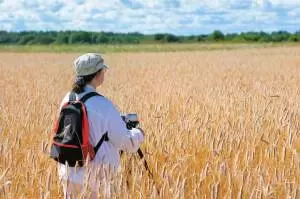
Most geographers work full-time during typical business hours, though project deadlines can require flexibility. Fieldwork is a regular component of many geography positions, whether you're collecting environmental data, surveying sites slated for development, or documenting landscape changes. Some positions involve travel to foreign countries and remote destinations, particularly for research or international development work.
Geographer Salary & Compensation
Geography careers offer competitive salaries that vary by employer and specialization. Here's what you can expect:
| Employment Sector | Median Annual Salary | Career Notes |
|---|---|---|
| All Geographers (National Median) | $88,900 | Overall median across all sectors |
| Federal Government | $92,440 | Highest-paying sector; includes USGS, NPS, intelligence agencies |
| Professional, Scientific, and Technical Services | $91,430 | Consulting firms, research organizations, private sector |
| Educational Services | $55,790 | Colleges, universities, and professional schools |
Salary potential increases significantly with advanced degrees, specialized technical skills (particularly GIS expertise), and years of experience. Federal government positions typically offer the most competitive compensation packages, including comprehensive benefits and retirement plans.
Job Outlook for Geographers
The Bureau of Labor Statistics projects 0% growth for geographers between 2022 and 2032. Despite limited growth, the profession should see about 100 openings annually. These openings result from geographers retiring, changing occupations, or leaving the workforce for other reasons.
Here's the reality: geography is a small, specialized field with strong competition for positions. However, demand remains steady for geographers with advanced technical skills, particularly those proficient in GIS, remote sensing, and spatial data analysis. The growing emphasis on climate change research, urban planning, and environmental management creates ongoing demand for geographic expertise.
Your best opportunities will come from developing specialized knowledge in high-demand areas like environmental geography, GIS applications, or urban systems, combined with strong technical and analytical skills.
Education Requirements for Geographers
A bachelor's degree can get you started in some entry-level government positions and nonprofits, but these jobs typically require GIS training as well. While one-year GIS certificates are available, they're generally designed to supplement—not replace—study in related specialties such as geography, geology, environmental science, or archaeology.
For most positions outside government, you'll need at least a master's degree. Research positions usually require a master's degree or doctorate plus several years of related work experience. The advanced degree isn't just a credential—it's where you develop the specialized expertise and research skills that distinguish you in this competitive field.
Most geography programs offer comprehensive coursework in physical and human geography, statistics, remote sensing, and GIS. A solid background in applied technologies—GIS, GPS, remote sensing—is essential for virtually all modern geography positions. Specializing in a particular aspect of geography gives you a competitive edge in this broad field. Consider focusing on water resources, economic geography, GIS applications, urban systems, or climate change research, depending on your interests and career goals.
Don't underestimate the importance of practical experience. The profession is still relatively small, and competition for positions is strong. Internships, part-time jobs, or volunteer work with government agencies, environmental organizations, or planning departments can significantly improve your job prospects. The GIS Certification Institute offers professional certification that's highly advantageous for GIS specialists, particularly those without advanced degrees.
Related Degree Options for Geographers
Geography Job Opportunities
[job_listings header_type="h3" header_text="Recent Geography Job Listings" intro="Use the search box below to find all the geographer job listings in our job board." widget="yes" align="right"]Professional Organizations & Resources
Connecting with professional organizations can accelerate your career development, provide access to job opportunities, and keep you current with emerging technologies and research. Here are the primary organizations for geographers:
Association of American Geographers (AAG) — At over 100 years old, the AAG is the foremost professional association for geographers of all specializations. The organization advocates for geography education and the inclusion of geographers in policymaking, hosts an annual conference, publishes scholarly journals, and disseminates news through its newsletter. Check their job board or network through specialty groups and regional divisions to connect with other geography professionals.
American Society for Photogrammetry and Remote Sensing (ASPRS) — ASPRS focuses on the applied technologies geographers use daily, including remote sensing, GIS, LiDAR scanning, and other spatial analysis tools. As society advances the evolution of these technologies, it offers training and professional development opportunities and facilitates peer networking among practitioners.
Society for Conservation GIS (SCGIS) — The SCGIS serves geographers and other professionals who apply GIS to environmental conservation work. The group offers free webinars, maintains a job board, hosts an annual conference, and provides opportunities for local involvement through regional chapters.
Frequently Asked Questions
Is geography a good career choice?
Geography can be a rewarding career if you're passionate about understanding spatial relationships and environmental systems. The field offers intellectual challenge, opportunities to address real-world problems, and the satisfaction of seeing your work inform policy decisions. However, it's a small, competitive field with limited job growth. Your success depends on developing specialized skills (particularly in GIS and remote sensing), earning advanced degrees, and gaining practical experience through internships or research positions.
What's the difference between a geographer and a GIS specialist?
While there's significant overlap, geographers typically focus on research questions about physical or human geography, using GIS as one tool among many. GIS specialists concentrate specifically on spatial data analysis, database management, and creating mapping solutions for clients. Many geographers work as GIS specialists, and many GIS specialists have geography backgrounds, but GIS roles are more technically focused and less research-oriented than traditional geography positions.
Do geographers travel frequently for work?
It depends on your specific position. Research geographers and field study researchers may travel regularly to remote or international locations to collect data and conduct surveys. Geographers in government planning or GIS roles typically work from offices with occasional local field visits. Physical geographers generally travel more than human geographers, who often work with existing datasets and census information.
Can you become a geographer with just a bachelor's degree?
Yes, but with limitations. Entry-level government positions and some nonprofit roles accept bachelor's degrees, especially if you have strong GIS skills. However, most positions outside government require a master's degree, and research or academic positions need a doctorate. If you're serious about a geography career, plan on graduate education to access the full range of opportunities and earn competitive salaries.
What's the job market like for geographers right now?
Honest answer: It's competitive. The BLS projects 0% growth through 2032, with only about 100 openings nationwide each year. However, geographers with advanced technical skills—particularly in GIS, remote sensing, and spatial data science—remain in demand. Climate change research, urban planning challenges, and environmental management create ongoing needs for geographic expertise. Focus on developing specialized, high-demand skills to improve your prospects.
What skills are most important for geographers?
GIS proficiency is non-negotiable for virtually all modern geography positions. Beyond that, you'll need strong analytical and statistical skills, the ability to work with large datasets, critical thinking abilities, and excellent written and verbal communication skills. Many positions value programming skills (Python, R), remote sensing expertise, and the ability to translate complex spatial analysis into clear recommendations for non-technical audiences.
How does geography relate to environmental science?
Geography and environmental science overlap significantly, particularly in physical and environmental geography. Geographers bring expertise in spatial analysis and a focus on human-environment interactions, while environmental scientists often focus more on biological, chemical, and ecological processes. Many environmental problems—such as climate change, habitat loss, and resource management—benefit from both perspectives. Geography training can lead to environmental careers, and vice versa.
Key Takeaways
- Geography encompasses two major branches: Physical geography studies Earth's natural features and processes, while human geography examines cultures, economies, and political systems. These branches frequently overlap in addressing real-world challenges.
- Master's degrees open most career doors: While bachelor's degrees can access some entry-level government positions, most geography careers outside government require at least a master's degree, and research positions typically need a doctorate.
- GIS skills are essential across all specializations: Geographic Information Systems technology has become the cornerstone of modern geography. Proficiency in GIS, remote sensing, and spatial data analysis is critical for career success regardless of your specialization.
- The federal government offers the highest salaries: federal agencies employ approximately 57% of geographers and pay the most competitive compensation, with a median of $92,440 annually, significantly above other sectors.
- Job growth is limited but steady: The field projects 0% growth through 2032 with about 100 annual openings. Success requires specialized skills, advanced education, and practical experience gained through internships or research positions.
Ready to explore geography and GIS career paths? Discover degree programs that combine spatial analysis, environmental science, and cutting-edge technology to prepare you for this dynamic field.
U.S. Bureau of Labor Statistics salary and job growth figures (May 2022) reflect national data for geographers, not school-specific information. Conditions in your area may vary. Data accessed February 2026.