
Chemical oceanographers study the chemical composition of ocean water, examining acidity levels, pollution impacts, and how changing chemistry affects marine ecosystems. They work for government agencies like NOAA and EPA, research institutions, and private consulting firms, classified under Environmental Scientists and Specialists, earning a median salary of $80,060 nationally as of 2024. This specialized field typically requires at least a master's degree, with many research and academic roles requiring a PhD, combining chemistry expertise with marine science research skills.
The health of our oceans depends on a delicate chemical balance. When that balance shifts—through pollution, climate change, or industrial runoff—entire marine ecosystems can collapse. Chemical oceanographers stand at the frontline of understanding and protecting this balance, using chemistry to decode what's happening beneath the waves.
Chemical oceanographers examine the chemical composition of the oceans, analyzing acidity levels and attempting to understand how ecology, biology, and other elements might change based on shifting chemical profiles. While oceanographers study the oceans broadly, chemical oceanographers focus specifically on the chemistry that makes ocean life possible—or impossible.
What Does a Chemical Oceanographer Do?
Chemical oceanographers are essentially oceanographers with specialized expertise in marine chemistry. Rather than studying ecology, biological life, and geology as broad subjects, they examine the specific chemical composition of ocean environments. The chemistry of our oceans is critically important—many plant and animal species have evolved to thrive in certain acidities and cannot survive when seawater becomes too acidic or not acidic enough. When an ocean's chemical composition becomes unbalanced, it creates profound effects on the ecology.
One of the most critical roles chemical oceanographers play today is monitoring ocean acidification. Oceans act as a net carbon sink, but acidification is increasing, which has had measurable effects on acid levels. Corals have been bleached primarily due to ocean warming, though acidification adds further stress to reef systems already threatened by rising temperatures. As ice caps melt, ocean acidification could be diluted in some areas, creating new challenges for marine chemistry research.
Beyond climate change, chemical oceanographers investigate problems caused by industrial chemicals and pollution. They advise on environmental policy and may work as government advisors, providing evidence for court cases where civil action is brought against businesses responsible for ocean pollution.
Where Does a Chemical Oceanographer Work?
As oceanographers with a specialized focus, chemical oceanographers work in many of the same settings as those qualified in broader oceanographic disciplines. They often work for government agencies such as NOAA, EPA, and state environmental protection agencies, focusing on conservation and policy development. University research labs employ many chemical oceanographers, where they engage in vital research as part of global efforts to tackle climate change. Collaboration is common—you'll work alongside biological oceanographers, marine biologists, wildlife biologists, and other environmental scientists. Dedicated marine science units and research organizations also offer career opportunities.
Private industry provides another avenue for chemical oceanographers. Companies at risk of polluting oceans need advisory and policy expertise to make informed decisions regarding mitigation and cleanup efforts—oil spills being a prime example. You may work independently or as a government employee preparing scientific reports for prosecutions in cases of corporate negligence. Marine transport companies also employ chemical oceanographers to assess how fuel and propulsion methods might leave pollution affecting indigenous ocean populations.
The work environment typically balances laboratory analysis with field research. You'll spend time at sea collecting samples, then return to labs for detailed chemical analysis. Some positions involve more desk work—data modeling, report writing, and policy consultation—while others emphasize hands-on fieldwork aboard research vessels.
Chemical Oceanographer Salary & Compensation
Chemical oceanographers, classified by the Bureau of Labor Statistics as Environmental Scientists and Specialists, Including Health, earned competitive salaries as of May 2024. Understanding the salary range can help you plan your educational investment and career trajectory.
| Salary Percentile | Annual Wage |
|---|---|
| 10th Percentile | $50,130 |
| 25th Percentile | $62,090 |
| Median (50th) | $80,060 |
| Mean (Average) | $88,640 |
| 75th Percentile | $103,730 |
| 90th Percentile | $134,830 |
These figures represent the national average for Environmental Scientists and Specialists. Your actual salary will depend on factors like your education level (master's vs. PhD), years of experience, geographic location, and whether you work for government, academia, or private industry. Coastal states with significant oceanographic research facilities often offer higher compensation.
Core Responsibilities of Chemical Oceanographers
Chemical oceanographers perform diverse duties that blend fieldwork, laboratory analysis, and scientific communication. Your daily responsibilities will vary depending on your position and specialization, but most chemical oceanographers handle the following core tasks:
Sample Collection & Field Research
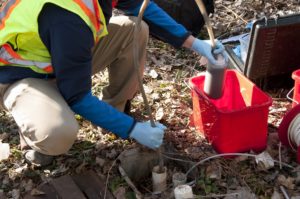
You'll collect samples from the ocean, its floor, substrate matter, and atmosphere using specialized equipment and techniques. Field data collection requires careful attention to contamination prevention and proper storage protocols. You'll also collect data using remote sensing equipment and interpret information from sediment traps and other monitoring devices. Research at sea forms a significant component of the work, often involving extended periods aboard research vessels.
Laboratory Analysis & Chemical Testing
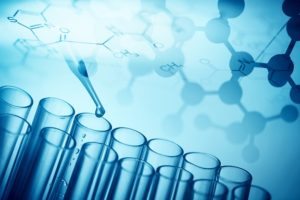
Back in the lab, you'll analyze samples by scanning for organic and chemical components and identifying anomalous materials. This includes examining the quantity and quality of metals and other substances present in ocean water. You'll use advanced analytical chemistry techniques to measure trace elements, organic compounds, and pollutants. Laboratory work demands precision and adherence to strict quality control protocols.
Data Modeling & Research
Mathematical models allow you to perform simulations of oceanic events—both historic and future—and assess their impact on ocean chemistry. You'll use laboratory and field data to research hypotheses and make predictions about chemical changes in marine environments. Manipulating large datasets from various formats and sources is routine, requiring strong computational and statistical skills. You'll interpret sample measurements and remote sensory information using advanced statistical methods.
Communication & Publication
Scientific communication forms a crucial part of the role. You'll create reports and papers detailing research activities and observations, then submit them for peer review. Presenting scientific results at professional conferences helps disseminate findings to the broader oceanographic community. If you work in academia, lecturing to university classes and mentoring students in the field will be part of your responsibilities. You'll also submit proposals to obtain research funding—a necessary skill for advancing your career.
Equipment Maintenance & Monitoring
Technical proficiency is essential. You'll maintain and repair devices such as Doppler velocimeters (ADV), tide gauges, wave gauges, and optical and chemical sensors. Ensuring the operation of water-column profilers and monitoring operations data from various oceanographic sensors requires both chemical knowledge and technical troubleshooting abilities.
Senior-Level Responsibilities
As you advance in your career, management and leadership opportunities emerge. Senior chemical oceanographers often provide scientific understanding about natural resource conditions and their impact on ocean health. You might deploy large-scale investigations using multi-disciplinary teams, serve as a liaison between research teams and clients, and use your chemical oceanography expertise to inform executive strategy. Training junior team members, providing feedback on technical reports and scientific papers, and representing ocean health advocacy become central to senior roles.
Job Outlook & Career Growth
The job market for chemical oceanographers falls under the broader category of Environmental Scientists and Specialists. Employment for Environmental Scientists and Specialists—a category that includes chemical oceanographers—is projected to grow 6% between 2022 and 2032, resulting in approximately 6,900 annual job openings nationwide. While this growth rate is about average compared to other occupations, competition can be intense given the specialized nature of the field.
Most demand comes from increased awareness of ocean health issues, climate change research, and environmental protection regulations. However, competition is strong given the niche specialization of chemical oceanography. Government agencies continue to expand their oceanographic research programs, particularly in monitoring ocean acidification and pollution. The specialized chemistry focus means you'll face competition from both general oceanographers and marine chemists for certain positions.
Career advancement typically follows an academic research trajectory. Entry-level positions with a master's degree might involve assisting senior researchers and conducting routine sample analysis. With a PhD and publication record, you can lead your own research projects, secure independent funding, and mentor graduate students. Some chemical oceanographers transition into policy advisory roles, environmental consulting, or corporate environmental management as their careers progress.
Education Requirements to Become a Chemical Oceanographer
You'll typically start with a hard science bachelor's degree. Chemistry is ideal for chemical oceanography, and you should include substantial coursework in mathematics and biology as your minors and elective choices. The key is ensuring you get a strong foundation in degree-level science. Statistics coursework will prove particularly valuable given the data-heavy nature of oceanographic research.
While some scientific positions will be open to you with a bachelor's degree, you'll need a master's degree specialization to improve your competitiveness for chemical oceanography positions specifically. If you want to become an ocean scientist of any kind, you'll almost certainly need an advanced degree. PhDs are essential for leading research projects and securing positions in university-level teaching and research.
The typical educational timeline looks like this: four years for a bachelor's in chemistry or related science, followed by two to three years for a master's in oceanography or marine chemistry, then four to six additional years for a PhD if you pursue research-focused work. During your graduate studies, focus on courses covering marine chemistry, aquatic geochemistry, chemical processes in seawater, analytical chemistry, and oceanographic instrumentation.
Practical experience matters as much as coursework. Seek internships at marine research labs, participate in research cruises as a student assistant, and gain proficiency with analytical chemistry equipment and data analysis software. Many successful chemical oceanographers built their expertise through summer research programs at institutions like Woods Hole Oceanographic Institution, Scripps Institution of Oceanography, or similar marine science centers.
Chemical Oceanography - Related Degrees
Essential Skills for Chemical Oceanographers
Beyond formal education, certain skills separate successful chemical oceanographers from the rest. Strong analytical chemistry skills form the foundation—you need expertise in techniques like mass spectrometry, chromatography, and spectroscopy. Computational skills are equally important, as you'll work with large datasets and complex mathematical models regularly.
Problem-solving abilities help you troubleshoot both technical equipment issues and research challenges. Attention to detail ensures accuracy in sample collection, analysis, and data recording. Communication skills—both written and verbal—allow you to publish findings, present at conferences, and explain complex chemistry to non-specialists.
Physical stamina and adaptability serve you well during extended research cruises, which may involve working in challenging weather conditions or remote locations. Collaboration skills are essential, as you'll rarely work in isolation—marine research requires coordinating with biologists, geologists, engineers, and policy makers.
Professional Societies and Organizations for Chemical Oceanographers
Professional organizations provide valuable networking, research collaboration, and career development opportunities. While options are somewhat limited due to the specialized nature of chemical oceanography, the following organizations offer useful resources and connections:
- Bigelow Laboratory for Ocean Sciences: Their mission focuses on investigating the microbes of life (biological and chemical) that make up the oceans and influence ocean ecology. Founded in 1974 as a private research organization, Bigelow Lab conducts cutting-edge research in marine chemistry and microbiology.
- Naval Oceanographic Office (NAVO): This military organization provides oceanographic services and support to the Navy and other Department of Defense areas requiring oceanographic data. Established in 1830, NAVO offers both civilian and military career opportunities for oceanographers with various specializations.
- Marine Biological Laboratory (MBL): MBL researches many elements of marine biology, including the chemical makeup of oceans. In the 1960s, researchers there received a Nobel Prize in Chemistry, establishing the lab's reputation for excellence in marine chemistry research.
Frequently Asked Questions
What's the difference between a chemical oceanographer and a marine biologist?
Chemical oceanographers focus specifically on the chemistry of ocean water—analyzing chemical composition, acidity, pollution, and how chemical changes affect marine ecosystems. Marine biologists study living organisms in ocean environments, focusing on animal behavior, population dynamics, and ecology. While both fields overlap in studying ocean health, chemical oceanographers use chemistry as their primary tool, while marine biologists use biology and ecology. You might collaborate frequently with marine biologists, providing chemical data that helps them understand biological changes.
Do I need a PhD to become a chemical oceanographer?
It depends on your career goals. A master's degree in oceanography or marine chemistry qualifies you for many research assistant positions, government agency roles, and some private sector jobs. However, if you want to lead your own research projects, secure independent funding, or teach at the university level, a PhD is typically required. PhDs also provide more career advancement opportunities and higher earning potential. Many chemical oceanographers start with a master's degree, work in the field for several years, then return to complete a PhD once they've clarified their research interests.
What chemistry courses are most important for this career?
Analytical chemistry is absolutely essential—you'll use its techniques daily in laboratory work. Physical chemistry and thermodynamics help you understand chemical processes in seawater. Organic chemistry is valuable for studying marine pollution and carbon cycles. Inorganic chemistry covers metal chemistry in ocean water. Beyond these core courses, take classes in aquatic geochemistry, environmental chemistry, and chemical oceanography if your program offers them. Don't overlook mathematics—calculus, statistics, and computational modeling courses will serve you throughout your career.
Can chemical oceanographers work outside of government agencies?
Yes, several private sector opportunities exist. Environmental consulting firms hire chemical oceanographers to assess pollution impacts and advise on cleanup strategies. Oil and shipping companies employ them to evaluate and minimize their environmental impact. Some chemical oceanographers work for research organizations like Woods Hole Oceanographic Institution or Scripps, which are independent nonprofits. Others find roles in marine biotechnology companies or join environmental engineering firms developing ocean pollution mitigation technologies. While government and academic positions remain most common, private sector options are growing.
How does ocean acidification relate to chemical oceanography?
Ocean acidification is one of the most critical issues chemical oceanographers study today. As oceans absorb carbon dioxide from the atmosphere, chemical reactions occur that increase acidity (lower pH). This process affects everything from coral reef health to shellfish survival. Chemical oceanographers monitor pH changes, track carbon dioxide absorption rates, study how acidification affects marine chemistry, and work with biologists to understand ecological impacts. This research directly informs climate change policy and ocean conservation strategies, making it one of the field's most important contributions to environmental science.
Key Takeaways
- Specialized Chemistry Focus: Chemical oceanographers differ from general oceanographers by concentrating specifically on ocean chemistry, analyzing acidity, pollution, and chemical composition to understand marine ecosystem health.
- Climate Change Frontline: Ocean acidification monitoring represents one of the field's most critical roles, as oceans absorb increasing carbon dioxide, threatening coral reefs and marine life adapted to specific chemical conditions.
- Competitive Compensation: Environmental Scientists and Specialists (including chemical oceanographers) earn a median salary of $80,060, with the top 10% earning over $134,830 annually based on 2024 BLS data.
- Advanced Education Required: While bachelor's degrees in chemistry open doors, you'll typically need a master's degree for most positions and a PhD to lead research projects or teach at universities.
- Steady Career Growth: The field projects 6% employment growth through 2032 with approximately 6,900 annual job openings nationwide, driven by increased focus on ocean health, climate research, and environmental protection.
Ready to explore oceanography careers? Discover degree programs that combine chemistry and marine science to prepare you for this vital field protecting our ocean ecosystems.
2024 US Bureau of Labor Statistics salary and job growth figures for Environmental Scientists and Specialists, Including Health reflect national data, not school-specific information. Conditions in your area may vary. Data accessed January 2026. Source: BLS Occupational Outlook Handbook