

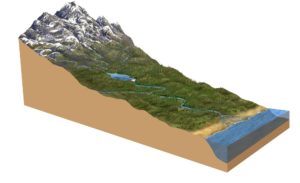
Hydrogeologists study how water interacts with underground rocks and soil, examining groundwater flow, contamination, and water resource management. With a median salary of $92,060 (2024 BLS data) and approximately 6,300 positions nationwide, hydrogeologists work for federal agencies (28%), consulting firms (22%), and state/local governments, combining fieldwork with office analysis to protect water supplies and understand environmental processes.
Hydrogeologists examine and explain the relationships between water, rocks, and soil. If you're passionate about protecting water resources and understanding how our planet's water systems work, this career combines scientific investigation with meaningful environmental impact. Here's what you need to know about becoming a hydrogeologist.
What Does a Hydrogeologist Do?
Hydrogeologists are a type of environmental geologist who specialize in how water interacts with rocks and soil beneath the Earth's surface. Think of them as detectives studying the hidden water systems that flow through underground layers—systems that supply our drinking water, influence natural disasters, and shape our landscape over time.
People with these qualifications typically carry out one of two roles, though many experts work in both areas. The first role is environmental geographer. They study the relationship between water, rocks, and soil as a natural process. Their data helps other experts understand environmental processes like glaciation, river formation and movement, flood risk, and long-term geological changes. They examine field data, GIS analysis, and historical maps to piece together how water has shaped—and continues to shape—our environment.
The second role focuses on ensuring water supplies remain safe and healthy. Some rocks and soils contain contaminants that are harmful to human health. It's their job to identify and mitigate these risks. Most contaminants are naturally occurring, but they may also result from industrial pollutants. Hydrogeologists provide expert analysis in litigation against responsible businesses when court cases become necessary.
They're also involved in environmental planning. The waste we produce requires safe disposal sites, and hydrogeologists analyze the underlying soil and geology of proposed locations to ensure pollution risks are minimal. For example, they'll check for subterranean rivers or lakes that might flow into domestic water supplies. Land-use planners regularly consult hydrogeologists during site selection. They differ from hydrologists in that hydrologists study surface water (rivers, lakes, precipitation) rather than underground water systems and their interaction with geological materials.
Where Does a Hydrogeologist Work?
Hydrogeology is closely related to hydrology and the Earth sciences, so professionals in this field develop a comprehensive understanding of environmental systems. The largest employer of hydrogeologists is the federal government, accounting for about 28% of positions. They work in diverse areas, including monitoring for the National Park Service, research for the EPA, water resource management for agencies such as FEMA, and public prosecution support. The work balances office analysis with fieldwork—commonly estimated around 60% office and 40% field time, though this can vary widely depending on the employer and specific project.
Around 22% work for scientific and technical consulting services. These individuals operate independently or are hired on a case-by-case basis. Government agencies, private businesses, and nonprofit organizations contract them for specific projects that might last from a few weeks to several years. Similarly, the 17% who work in engineering services are hired for similar roles by civic engineering and construction companies, or they work on infrastructure projects their employers manage.
Another 17% and 9% work for state and local government, respectively. Their roles mirror federal government positions but focus on regional and local water resource management, environmental protection, and public health issues. Regardless of the sector, the work involves a dynamic mix of laboratory analysis, computer modeling, fieldwork to collect samples, and stakeholder meetings to present findings.
What Is the Average Hydrogeologist Salary?
Hydrogeologists earn competitive salaries that reflect their specialized expertise in water resource management. According to 2024 Bureau of Labor Statistics data, the median annual wage for hydrologists and hydrogeologists is $92,060. The field employs approximately 6,300 professionals nationwide. Compensation varies significantly by employment sector, geographic location, and experience level.
| Employment Sector | Typical Salary Range | Workforce Percentage |
|---|---|---|
| Scientific/Technical Consulting | $85,000 - $110,000 | 22% |
| Engineering Services | $80,000 - $105,000 | 17% |
| Federal Government | $75,000 - $115,000 | 28% |
| State/Local Government | $65,000 - $95,000 | 26% combined |
Entry-level positions typically start around $55,000-$65,000 annually, while experienced professionals with advanced degrees and specialized expertise can earn $115,000 or more. Geographic location significantly impacts salary—hydrogeologists in areas with active mining, oil and gas industries, or significant water resource challenges often command higher compensation. The median salary of $92,060 places hydrogeology solidly in the middle-income professional category, with substantial room for growth through experience and specialization.
Hydrogeology Jobs & Job Description
The work of a hydrogeologist is required across many industries, including mining, waste management, stormwater management, and environmental remediation. Requirements and tasks vary by project scope and employer, but here's what you can expect in the field:
Education and Core Qualifications: A Bachelor of Science degree in hydrogeology, environmental science, geology, or a related physical science field is required. You'll need the ability to work independently on projects while also contributing effectively as a team member. Strong written, verbal, and technical communication skills are essential—you'll be presenting findings to diverse audiences from field crews to executive boards.
Fieldwork Requirements: Expect to travel to various field sites, with travel demands varying significantly by employer. Some positions involve weekly field visits within a regional area, while others might require extended stays at remote sites. You'll work in extreme weather and environmental conditions, so physical stamina matters. Proper use of personal protective equipment and strict attention to safety protocols are mandatory at all times.
Technical Skills: You'll perform groundwater sampling at field sites using specialized instrumentation like water level meters, bailers, and monitoring equipment. Regular inspection and calibration of all equipment is part of the job. You'll conduct on-site tests, including hydraulic aquifer tests (also called pumping tests), or transport samples to laboratories for detailed analysis. Computer proficiency is essential—you'll use databases for data management, GIS software for spatial analysis, and specialized groundwater modeling programs.
Analysis and Reporting: After collecting samples and data, you'll analyze results and prepare both qualitative and quantitative reports. This requires strong attention to detail and the ability to translate technical findings into clear recommendations for clients, regulators, or the public.
Regulatory Knowledge: A thorough understanding of environmental laws, regulations, and permits is crucial. You'll work with regulations covering hazardous waste, pollutants, water resources, and environmental protection at federal, state, and local levels. Many positions require specialized certifications, such as a 40-Hour OSHA HAZWOPER certification.
Senior Hydrogeologist Responsibilities: With experience and typically a Master's degree, senior hydrogeologists take on additional duties. They develop remediation projects and investigations for groundwater and soil contamination at work sites. Project management becomes central—you'll multitask several projects simultaneously, handling budgeting, scheduling, and team coordination. Mentoring junior staff, administering training on sampling methods, and overseeing water supply development projects are key responsibilities. Senior professionals also participate in client retention and business development, present at meetings and conferences, and stay current with new applications and methods through continuing education programs and seminars.
What Is the Job Demand for Hydrogeologists?
According to the Bureau of Labor Statistics, employment for hydrologists and hydrogeologists is projected to change little or not at all from 2024 to 2034, with the field maintaining approximately 6,300 positions nationwide. While this represents flat overall growth, the reality is more nuanced. Retirements and career changes will create ongoing openings—the BLS projects about 500 annual job openings through 2034 due to workforce turnover.
Despite flat growth projections, demand remains steady in several key areas. Water scarcity issues, particularly in the western United States, continue to drive the need for hydrogeologists who can assess and manage groundwater resources sustainably. Climate change impacts—including altered precipitation patterns, increased flooding, and drought intensification—require ongoing hydrogeological assessment and monitoring. Aging infrastructure and concerns about water contamination from both industrial sources and aging municipal systems create consistent demand for expertise.
Emerging opportunities exist in newer fields like geothermal energy development, carbon sequestration projects, and environmental remediation of legacy contamination sites. Additionally, increasing regulatory scrutiny of water resources and environmental protection creates sustained demand for hydrogeological consulting services. While job growth may be flat, the field offers stable employment for qualified professionals with strong technical skills, and competition for positions will favor candidates with master's degrees and specialized expertise in areas like groundwater modeling or contaminant hydrogeology.
What Are the Education Requirements to Become a Hydrogeologist?
At minimum, you'll need a bachelor's degree for the majority of entry-level positions. Students should pursue degrees in environmental science, geography, geology, earth sciences, or related fields. Physics coursework is also advantageous, as is geoengineering. Tailor your minors and electives toward environmental subjects—hydrology, soil science, environmental chemistry, and GIS are particularly valuable. You should also take math-related courses, specifically statistics, as analytical work forms a significant part of the profession.
Since hydrogeology involves substantial fieldwork and practical application, a master's degree is highly advisable and often essential in competitive markets. MA/MS programs provide hands-on experience with the type of project work you'll encounter throughout your career. Graduate programs also offer opportunities to specialize in areas like contaminant hydrogeology, groundwater modeling, or water resource management. The combination of coursework and thesis research prepares you for the complex problem-solving required in professional practice.
A doctorate is required for teaching and research roles at colleges and universities. Those interested in environmental law may find that higher qualifications help advance their careers, though a law degree would also be necessary for legal practice. PhD programs typically focus on advancing hydrogeological science through original research, often in areas like climate change impacts on groundwater systems, advanced contaminant transport modeling, or novel remediation technologies.
Hydrogeology - Related Degrees
What Kind Of Societies and Professional Organizations Do Hydrogeologists Have?
Hydrogeology is a relatively new discipline, but it's supported by several professional organizations that provide networking, continuing education, and career development opportunities:
- International Association of Hydrogeologists: A global organization whose mission is to promote understanding and protection of the world's water bodies. IAH is a member group that releases publications, organizes conferences, and interacts with international water management bodies. Membership provides access to the latest research and professional development opportunities.
- Hydrogeologists Without Borders: A charitable organization working to create a world where water is sustainably managed for the communities it serves. They work in disaster-affected areas to improve water supplies and provide pro bono hydrogeological expertise to underserved communities worldwide.
- International Hydrological Programme: IHP is a division of UNESCO and the only part of the UN dedicated to water research. What began as a research program now provides solutions, management strategies, and capacity-building initiatives to address water resource challenges globally.
Frequently Asked Questions
What's the difference between a hydrogeologist and a hydrologist?
Hydrogeologists specifically study groundwater—how water interacts with underground rocks and soil. Hydrologists focus on surface water systems like rivers, lakes, precipitation, and runoff. While both fields overlap in water resource management, hydrogeologists specialize in subsurface water movement, contamination, and the geological factors that affect groundwater. In contrast, hydrologists emphasize surface water flow, watershed dynamics, and atmospheric water cycling.
Do I need a PhD to become a hydrogeologist?
No, a PhD isn't required for most hydrogeology positions. A bachelor's degree qualifies you for entry-level roles, though a master's degree is increasingly preferred and often necessary in competitive markets. PhDs are primarily required for university teaching positions, high-level research roles, and some specialized consulting positions. Most practicing hydrogeologists work successfully with a master's degree.
Can hydrogeologists work remotely, or is all work field-based?
Hydrogeology involves both fieldwork and office work, with a typical split of 60% office and 40% field time, though this can vary widely depending on the employer and specific project. Office work includes data analysis, report writing, modeling, and client meetings—tasks that can sometimes be done remotely. However, field sampling, site assessments, and the installation of monitoring wells require on-site presence. Some positions offer hybrid arrangements where office days can be remote, but completely remote hydrogeology positions are rare.
What certifications do hydrogeologists need?
Standard certifications include the 40-Hour OSHA HAZWOPER certification for hazardous waste site work, which many employers require. Some states require Professional Geologist (PG) licensure for certain types of work. The Certified Professional Geologist (CPG) credential through the American Institute of Professional Geologists can enhance career prospects. First Aid/CPR certification is often required for fieldwork, and confined-space entry certification may be necessary depending on your specific role.
Is hydrogeology a promising career for someone interested in environmental protection?
Absolutely. Hydrogeologists play a direct role in protecting water resources—one of our most critical environmental assets. You'll work to prevent contamination, remediate polluted sites, ensure safe drinking water supplies, and help communities understand flood risks. The work combines scientific investigation with tangible environmental impact. With approximately 6,300 positions nationwide and a median salary of $92,060, the field offers stable employment. If you're passionate about water conservation, public health, and solving complex environmental challenges, hydrogeology provides a rewarding career path with steady demand for qualified professionals.
Key Takeaways
- Diverse Work Settings: 28% of hydrogeologists work for federal government agencies, 22% in scientific consulting, 17% in engineering services, and 26% in state/local government, with work commonly estimated around 60% office and 40% field time.
- Competitive Salaries: Median salary of $92,060 (2024 BLS data) with approximately 6,300 positions nationwide. Salaries range from $55,000 to $65,000 for entry-level to $115,000+ for experienced professionals, varying by sector and location.
- Essential Education: Bachelor's degree minimum for entry-level roles; master's strongly recommended for competitive positions and project management responsibilities; PhD required only for teaching and high-level research positions.
- Stable Employment: Flat job growth projected (2024-2034) with approximately 500 annual openings due to workforce turnover. Steady demand driven by water scarcity challenges, climate change impacts, aging infrastructure, and emerging fields like geothermal energy and carbon sequestration.
- Dual Expertise: Role combines environmental geography (studying natural water-rock interactions and geological processes) with a public health focus (ensuring water supply safety, contamination mitigation, and environmental protection).


Ready to start your hydrogeology career? Explore accredited environmental science and geology programs that prepare you for this rewarding field.
2024 US Bureau of Labor Statistics salary and job growth figures for hydrologists reflect national data, not school-specific information. Conditions in your area may vary. Data accessed January 2026.