
Environmental health and safety technicians implement workplace safety programs and monitor environmental compliance under the direction of EH&S managers. They earn a median annual salary of $48,380 and require at minimum an associate degree in environmental health or related field. The field is projected to grow 6% through 2032, creating approximately 4,400 new positions annually.
Workplace accidents, environmental contamination, and compliance violations don't prevent themselves—that's where environmental health and safety (EH&S) technicians come in. If you're passionate about protecting both people and the planet through hands-on safety work, this career combines scientific knowledge with practical problem-solving across nearly every industry sector. From manufacturing plants to hospitals, mining operations to government agencies, EH&S technicians serve as the frontline implementers of the policies and systems that keep workplaces safe and environmentally compliant.
This career path offers a unique blend of laboratory analysis, field work, regulatory compliance, and advisory responsibilities. While you won't be designing organizational policy, you'll be instrumental in making it work—installing monitoring equipment, conducting environmental tests, training employees, and ensuring your employer meets increasingly stringent federal and state regulations.
What Does an Environmental Health and Safety Technician Do?
The environmental health and safety technician stands at the forefront of implementing policies and equipment that improve overall environmental quality. While not responsible for deciding organizational policy, they work under the direction of environmental health and safety managers, reporting on compliance issues, recommending devices to install, and advising on implementation methods. In many organizations, they act as the crucial link between frontline employees and decision-makers, translating policy into practice.
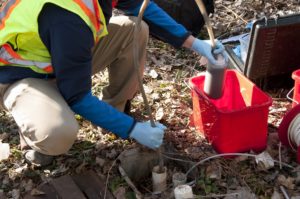
A typical day might involve conducting field water-quality tests, calibrating laboratory equipment, inspecting emission-control devices, or meeting with department supervisors to discuss safety protocol updates. The role requires staying up to date on developments in environmental health and safety engineering. Although technicians don't design the technology, they're qualified to implement, install, repair, and replace systems, and they obtain the necessary licenses to perform these changes.
Many EH&S technicians also work alongside or double as environmental health and safety trainers, ensuring employees understand their obligations under current regulations. This educational component has become increasingly important as environmental compliance requirements have expanded across all sectors. The role demands extensive knowledge of health and safety policy and law as it applies to specific work environments, along with the ability to develop practical procedures for implementation.
Core responsibilities typically include:
- Performing laboratory and field tests to monitor environmental conditions and investigate pollution sources
- Collecting samples of gases, soil, water, and other materials for scientific analysis
- Recording test data and preparing reports, summaries, or charts, interpreting results
- Implementing programs for monitoring environmental pollution or radiation levels
- Examining materials forthe presence and concentration of contaminants
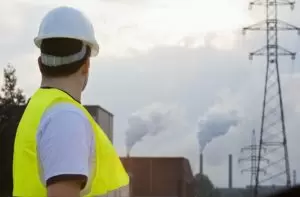
- Monitoring emission control devices to ensure proper function and regulatory compliance
- Installing and repairing environmental health and safety technology as needed
More senior EH&S technicians typically take on expanded consulting and advisory duties, presenting test results to internal and external stakeholders, developing advisory services for environmental treatment programs, and providing technical assistance to government representatives, employers, and the public on environmental protection issues.
Where Does an Environmental Health and Safety Technician Work?
Environmental health and safety professionals are required across all sectors and business types. Protection of the environment, ecosystems, and individual species carries equal weight with human health and safety concerns, creating diverse employment opportunities.
Understanding where EH&S technicians work helps you consider which environment aligns with your interests and career goals. Each sector offers distinct advantages and challenges:
| Sector | % of Workforce | Typical Work Environment | Key Considerations |
|---|---|---|---|
| Government (Federal, State, Local) | 18% | Office and field settings; regulatory compliance oversight | Job stability, structured advancement, may involve public-facing consultation work |
| Manufacturing | 16% | On-site at production facilities; hands-on with industrial processes | Direct impact on workplace safety; EPA compliance focus; exposure to industrial environments |
| Management & Technical Consulting | 10% | Variable client sites; project-based work | Diverse experiences across industries; report writing emphasis; contract-based employment |
| Hospitals & Healthcare | 7% | Medical facilities; focus on hazardous materials and waste disposal | Critical compliance role; specialized knowledge of medical waste regulations |
| Mining & Extraction | 6% | Remote or industrial sites; challenging conditions | Higher compensation potential; rigorous safety protocols; may involve travel to extraction sites |
Government technicians ensure compliance across public facilities or serve as consultants helping private organizations meet regulatory standards. Manufacturing roles focus on proper handling and disposal of industrial chemicals, accident mitigation, and continuous compliance with EPA regulations. Consulting technicians analyze business practices for various clients, typically producing reports for organizational decision makers. Healthcare facilities require technicians to handle potentially toxic instruments and substances and to ensure proper disposal protocols are followed. Mining operations require careful handling, storage, and disposal of industrial chemicals and waste materials to protect the environment and worker health.
Consider your preferences carefully: Do you want the stability of government work or the variety of consulting? Are you comfortable working with industrial chemicals in manufacturing settings? Does the specialized nature of healthcare compliance appeal to you? Your choice of sector significantly shapes your day-to-day experience in this field.
What Is the Average Environmental Health and Safety Technician Salary?
Environmental health and safety technicians earn a median annual salary of $48,380, according to the Bureau of Labor Statistics. Compensation varies significantly based on experience, industry sector, geographic location, and level of responsibility.
Entry-level technicians in the lowest 10% earn approximately $31,280 annually, while experienced professionals in high-demand sectors or senior positions can earn $79,340 or more. Industries like mining and oil extraction typically offer higher compensation due to challenging work conditions and critical safety requirements, while government positions may offer lower starting salaries but provide superior benefits and job security.
Geographic location also plays a substantial role—technicians in states with extensive manufacturing, energy production, or stringent environmental regulations often command higher salaries due to increased demand. Metropolitan areas generally offer higher wages but also higher living costs. As you gain experience and potentially earn specialized certifications, your earning potential grows considerably, particularly if you transition into senior technician or management roles.
What Is the Job Demand for Environmental Health and Safety Technicians?
Demand for environmental health and safety technicians is expected to grow 6% between 2022 and 2032—about as fast as the average for all occupations during this period. This growth translates to approximately 4,400 new positions annually, driven by several key factors.
Federal and international compliance requirements for health and environmental protection continue to strengthen, creating sustained demand for qualified technicians to implement and monitor these regulations. As part of the expanding "green economy," environmental health and safety roles have seen consistent growth over recent years. Industries facing increasing scrutiny—from manufacturing and energy production to healthcare and transportation—need more technicians to ensure compliance with evolving EPA, OSHA, and state-level environmental standards.
The outlook is particularly strong for technicians with specialized skills in emerging areas like renewable energy systems, climate change mitigation technologies, and advanced environmental monitoring equipment. Those willing to work in high-demand sectors like oil and gas extraction, chemical manufacturing, or waste management may find even more robust opportunities.
This positive job outlook makes EH&S technician roles an attractive option for those seeking stable, meaningful work in environmental protection. However, competition for government positions and prestigious consulting roles can be intense, so building a strong educational foundation and gaining relevant internship or field experience during your studies provides important advantages.
What Are the Education Requirements to Become an Environmental Health and Safety Technician?
The path to becoming an environmental health and safety technician begins in high school, where strong performance in scientific subjects—mathematics, geography, chemistry, and biology—builds essential foundational knowledge. Equally important are communication skills. This role requires liaising with multiple stakeholders, from front-line employees to senior management, making written, oral, and electronic communication abilities essential. Professional presentation skills are crucial for conveying technical information to non-technical audiences.
Unlike many occupational health and safety positions that don't require a degree, environmental health and safety is a specialist field that typically requires at least an associate degree. While the role emphasizes practical application over academic research, environmental professionals must understand the balance between practical pollution solutions and ecological principles. This theoretical foundation separates environmental health and safety work from general workplace safety.
Useful degree programs include environmental health, ecology, environmental law or policy, and environmental studies. When choosing a program, look for coursework in environmental monitoring techniques, regulatory compliance, hazardous materials management, and environmental impact assessment. Laboratory experience is particularly valuable—programs that offer hands-on experience with analytical equipment and field sampling methods provide a competitive advantage.
Many students pursue bachelor's degrees in environmental science or related fields, which can accelerate career advancement into senior technician or management positions. A four-year degree isn't strictly necessary for entry-level work, but it broadens career options and may qualify you for roles with greater responsibility and higher compensation.
While professional certification is not universally required, it strengthens your credentials. Organizations such as the National Environmental Health Association (NEHA) offer the Registered Environmental Health Specialist (REHS) certification, while the Board of Certified Safety Professionals (BCSP) provides relevant credentials. Certification requirements vary by state and industry sector—research the specific credentials valued in your target employment area.
Postgraduate degrees (master's or doctoral) aren't required unless you intend to enter teaching or research careers. The practical nature of technician work means you'll need to stay current with technological developments and emerging research, but not from an academic research perspective. Instead, focus on professional development through industry certifications, specialized training programs, and continuous learning about new monitoring technologies and regulatory changes.
Environmental Health and Safety Technician - Related Degrees
Frequently Asked Questions
What's the difference between an EH&S technician and an EH&S manager?
Environmental health and safety technicians implement and monitor safety programs under the direction of EH&S managers. Technicians conduct field tests, collect samples, install equipment, and train employees. Managers develop organizational policy, make strategic decisions about safety programs, manage budgets, and oversee technician teams. Think of technicians as the hands-on implementers and managers as the strategic planners. Many technicians advance into management roles after gaining several years of field experience.
Do I need certification to become an EH&S technician?
Certification requirements vary by state, industry sector, and specific job responsibilities. While not universally mandatory for entry-level positions, professional certifications like the Registered Environmental Health Specialist (REHS) or certifications from the Board of Certified Safety Professionals (BCSP) significantly strengthen your credentials and advancement potential. Some specialized roles—particularly those involving radiation safety or hazardous waste management—do require specific certifications. Research requirements in your target geographic area and industry to determine which certifications will benefit your career path.
Can I become an EH&S technician with a bachelor's degree instead of an associate's degree?
Absolutely. A bachelor's degree not only qualifies you for entry-level technician positions but also positions you for faster advancement into senior technician or management roles. Four-year degrees in environmental science, environmental health, or related fields provide deeper theoretical knowledge and often include more extensive laboratory and field experience. Many employers prefer bachelor's degree holders for positions with greater responsibility or specialized technical requirements. If you're considering long-term career growth in this field, a bachelor's degree is a worthwhile investment.
What industries hire the most EH&S technicians?
Government agencies employ the largest share (18%) of EH&S technicians, followed by manufacturing (16%), management and technical consulting (10%), hospitals and healthcare facilities (7%), and mining operations (6%). However, virtually every industry requires some level of environmental health and safety expertise. Other significant employers include utilities, waste management companies, educational institutions, transportation companies, and food processing facilities. Your industry choice significantly affects your day-to-day work environment, compensation, and career trajectory.
Is there room for advancement as an EH&S technician?
Yes, EH&S technician roles offer clear advancement pathways. With experience, you can move into senior technician positions with expanded responsibilities and higher compensation. Many technicians transition into EH&S specialist or coordinator roles, eventually advancing to management positions. Some pursue specialized paths in areas like industrial hygiene, radiation safety, or environmental compliance auditing. Additional education, professional certifications, and demonstrated expertise in emerging environmental technologies all accelerate advancement opportunities. The key is gaining diverse experience across different aspects of environmental health and safety work.
Do EH&S technicians work indoors or outdoors?
Both. EH&S technicians typically split their time between laboratory or office settings and field work. You might spend mornings collecting water samples outdoors and afternoons analyzing those samples in a laboratory. Some days involve inspecting manufacturing equipment on production floors, while others focus on preparing compliance reports at a computer. The indoor/outdoor balance varies significantly across employers and industries. Government and consulting roles often involve more field work and site visits, while hospital-based positions tend to be more consistently indoors. If the work environment is important to you, ask about the typical breakdown during job interviews.
What software or tools do EH&S technicians use regularly?
EH&S technicians work with a diverse range of tools, including field sampling equipment, laboratory analytical instruments, and specialized software. Common equipment includes gas detectors, water-quality meters, noise-level monitors, radiation detection devices, and various sampling apparatus. On the software side, you'll use environmental data management systems, compliance tracking platforms, statistical analysis tools, and reporting software. Many technicians also work with Geographic Information Systems (GIS) for environmental mapping and the Microsoft Office suite for documentation and presentations. Specific tools vary significantly by industry sector and employer, but expect to continuously learn new technologies as environmental monitoring capabilities advance.
What Kind of Societies and Professional Organizations Do Environmental Health and Safety Technicians Have?
Environmental health and safety is an extensive field supported by numerous professional organizations that provide continuing education, networking opportunities, certification programs, and industry updates. Membership in these organizations demonstrates professional commitment and keeps you up to date on emerging trends and regulatory changes.
- NSF International: One of the largest global bodies developing certification programs and public health standards. They test and certify devices and systems for use in public health and safety, providing valuable resources for technicians working with environmental monitoring equipment.
- International Society of Exposure Analysis: This worldwide organization examines the science behind environmental exposure and presents recommendations on the links between the environment and human health, offering important research insights for practitioners.
- Chartered Institute of Environmental Health: Though based in the UK, it provides advice to governments worldwide on health and safety policy and law, making it a valuable resource for understanding international environmental health standards.
Additional professional organizations worth exploring include the National Environmental Health Association (NEHA), American Industrial Hygiene Association (AIHA), and the American Society of Safety Professionals (ASSP). Many of these organizations offer student memberships at reduced rates, providing early career professionals access to job boards, mentorship programs, and professional development resources.
Key Takeaways
- Diverse Career Applications: EH&S technicians work across virtually every industry sector—from government agencies and manufacturing plants to hospitals, consulting firms, and mining operations—providing job security and varied career options.
- Education Requirements: Minimum of an associate degree in environmental health or related field required; bachelor's degrees accelerate advancement into senior or management roles. Professional certifications strengthen credentials and career prospects.
- Competitive Compensation: Median salary of $48,380 with significant variation by industry, location, and experience level. Senior technicians and those in high-demand sectors earn considerably more.
- Strong Job Outlook: 6% projected growth through 2032, driven by increasing environmental compliance requirements and expansion of the green economy. Approximately 4,400 new positions annually.
- Balanced Skill Set Required: Success requires combining technical scientific knowledge with practical problem-solving, regulatory compliance expertise, and strong communication skills for interacting with diverse stakeholders.
Ready to start your career in environmental health and safety? Explore accredited degree programs that prepare you for this growing field and connect you with employers seeking qualified EH&S professionals.

2022 US Bureau of Labor Statistics salary and job growth figures for environmental science and protection technicians reflect state and national data, not school-specific information. Conditions in your area may vary. Data accessed January 2026.