

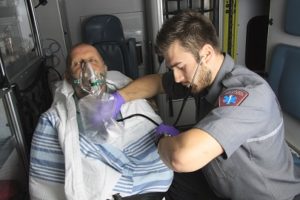
Emergency Medical Technicians (EMTs) and Paramedics provide critical pre-hospital emergency care at accident scenes, in homes, and anywhere medical emergencies occur. EMTs complete 1,200-1,800 hours of training for basic life support, while Paramedics require an Associate's degree and can administer advanced medications and invasive procedures. The combined median salary is $46,350 (May 2024), with 5% job growth projected through 2034 creating approximately 19,000 annual job openings.
If you've ever wondered what it takes to be first on the scene when someone needs emergency medical care, a career as an EMT or Paramedic might be your calling. These healthcare professionals deliver life-saving treatment at accident scenes, during natural disasters, and in any situation requiring immediate medical response. Understanding the distinctions between these roles and the pathways to enter this rewarding field is essential for anyone considering this career. Here's what you need to know about becoming an EMT or Paramedic.
What Does an Emergency Medical Technician or Paramedic Do?
EMTs and Paramedics serve as the critical first responders in medical emergencies, providing expert care before patients reach hospital facilities. While they're known for driving ambulances as part of a medical crew, their role extends far beyond transportation. These professionals possess extensive medical knowledge and technical skills that they deploy at sites ranging from traffic accidents and building collapses to fires and environmental disasters.
In environmental emergency contexts, EMTs and Paramedics respond to oil spills, chemical leaks, and toxic waste accidents, treating patients exposed to hazardous substances. Some professionals develop specialized expertise in treating chemical burns or managing exposure to environmental toxins. They work alongside emergency and disaster response technicians at accident scenes and coordinate indirectly with disaster management specialists to ensure a comprehensive emergency response.
Day-to-Day Responsibilities
Every emergency call presents unique challenges, but EMTs and Paramedics draw from a core set of responsibilities. They maximize on-call efficiency by prioritizing both administrative tasks and on-scene duties while treating all patients, families, and colleagues with compassion and respect. These professionals commit to continuous learning, deepening their understanding of pre-hospital medicine through ongoing professional development.
At emergency scenes, they provide initial medical assessment and treatment, combining independent judgment with established medical protocols and best practices. They assess patients to evaluate the cause and severity of illness or injury, then administer appropriate treatment. Accurate and efficient documentation is critical, as is maintaining strict confidentiality and adhering to ethical standards. EMTs and Paramedics also maintain and calibrate equipment, vehicles, and machinery, reporting any maintenance or process issues for consideration.
Safety remains paramount in this profession. These professionals create safe work environments for colleagues and patients, emphasize Occupational Safety and Health Programs, and participate in all emergency response and training exercises. They provide both routine medical care during scheduled transports and emergency treatment during crisis situations, always prepared to transport ill and injured persons to appropriate medical facilities.
Professional Competencies and Senior Roles
Senior emergency medical technicians and paramedics often advance into leadership positions due to their extensive experience and aptitude for logistics. While each organization structures these roles differently, certain responsibilities are common at the management level. Senior professionals model exemplary employment histories and orient new EMTs to clinical and operational policies and procedures.
They act as preceptors to paramedic students and interns, complete all paperwork accurately and concisely, and assist systems and quality assurance teams with performance metrics. Senior EMTs and Paramedics create and approve training materials and processes, attend required Field Training Officer training, and perform employee evaluations while maintaining active field trainer status. They attend evaluator meetings and in-services, document and evaluate employees and processes according to organizational policy, and provide training, orientation, and remedial assistance to employees as needed.
What Is the Difference Between an Emergency Medical Technician and a Paramedic?
In most developed countries, the terms EMT and Paramedic are often used interchangeably. Some countries don't use the term "EMT" at all. However, here in the United States, there's a meaningful distinction worth understanding. How you train and what you study will significantly impact your career path and scope of practice. The difference has legal implications, making it essential to understand before choosing your educational direction.
Emergency Medical Technician (EMT): EMTs typically receive between 1,200 and 1,800 hours of training before they're permitted to practice. After completing their training, they're qualified to provide emergency medical treatment, including CPR, administering oxygen and glucose, assisting with asthma attacks, and treating allergic reactions. EMTs form the foundation of pre-hospital emergency care.
Paramedic: Paramedics can perform all EMT duties but have significantly expanded involvement in administering medication and performing medical procedures. They're permitted to establish intravenous access, provide more advanced airway management, and administer a broader range of medications through injections and other routes. The key distinction is that Paramedics can perform treatments that break a patient's skin and have authorization to prescribe a more extensive list of medications than EMTs.
EMT vs. Paramedic Comparison
| Aspect | Emergency Medical Technician (EMT) | Paramedic |
|---|---|---|
| Training Hours | 1,200-1,800 hours | 2,000+ hours (Associate's degree) |
| Education Level | High school diploma + postsecondary nondegree award | Associate's degree minimum |
| Scope of Practice | Basic life support, CPR, oxygen, glucose, and assist with medications | Advanced life support, IV access, intubation, and broader medication administration |
| Invasive Procedures | Cannot break skin | Can perform procedures that break skin (IV, injections) |
| Median Annual Salary (2024) | $41,340 | $58,410 |
| Time to Complete | 6 months to 2 years | 2 years (typical Associate's program) |
Where Does an Emergency Medical Technician or Paramedic Work?
EMTs and Paramedics work predominantly in the medical sector, with employment distributed across three primary areas. The majority work for ambulance services as "on the road" medical providers, responding to emergency calls throughout their service area. The second largest employer is local government, excluding local education and government-run hospital facilities, where EMTs and Paramedics often serve as municipal emergency responders.
The third major employer category is hospitals, including state, local, and privately run facilities, which employ approximately one-sixth of the qualified EMT and Paramedic workforce. While these professionals typically contract for a standard 40-hour work week, most work additional hours due to the on-call nature of emergency medical services. Shift work is common, including nights, weekends, and holidays, as medical emergencies occur around the clock.
Outside traditional medical settings, some EMTs and Paramedics find positions with fire departments, allowing them to provide immediate medical care at fire scenes and other emergencies alongside firefighting personnel. Others work with the military as military medics, typically either receiving medical training after joining the armed forces or enlisting specifically for medical roles. Military medics follow a different educational pathway from conventional civilian medical training programs.
What Is the Average Emergency Medical Technician and Paramedic Salary?
As of May 2024, the median annual salary for EMTs and Paramedics combined was $46,350, according to the U.S. Bureau of Labor Statistics. This represents a significant difference between the two professional levels: Emergency Medical Technicians earned a median of $41,340 annually, while Paramedics earned considerably more at $58,410 per year, reflecting their additional training and expanded scope of practice.
The salary range varies considerably based on experience and location. For EMTs, the lowest 10% earned $31,410 annually, while the highest 10% earned $60,780. Paramedics see a wider range, with the lowest 10% earning $40,130 and the top 10% earning $82,420 annually.
Work setting also influences compensation. For Emergency Medical Technicians, outpatient care centers offer the highest median wages at $67,990, followed by general medical and surgical hospitals (private) at $44,830, local government at $43,330, and ambulance services at $39,190. Paramedics earn the highest median salaries in local government positions at $59,840, followed by offices of physicians at $59,370, general medical and surgical hospitals (private) at $58,780, and ambulance services at $57,720.
What Is the Job Demand for Emergency Medical Technicians and Paramedics?
As of 2024, approximately 282,900 EMTs and Paramedics were employed across the United States, with EMTs accounting for 181,000 positions and Paramedics holding 101,900 positions. The employment outlook for this profession remains positive, with the Bureau of Labor Statistics projecting 5% growth between 2024 and 2034. This faster-than-average growth rate exceeds the projected 3% average for all occupations.
This growth translates to an estimated 14,300 new positions created over the decade, with approximately 19,000 job openings projected annually. The majority of these openings will result from the need to replace workers who transfer to other occupations or exit the labor force through retirement. Several factors drive continued demand for EMTs and Paramedics: an aging population requiring more medical care, increasing vehicle traffic leading to more accident-related calls, and the ongoing need for emergency responders at natural disasters and environmental emergencies.
Career Advancement and Specialization Opportunities
EMTs and Paramedics have multiple pathways for career advancement beyond the basic-to-advanced progression. Specialization opportunities allow experienced professionals to develop expertise in specific areas of emergency medicine while often commanding higher salaries and working in more challenging environments.
Flight Paramedic: These specialized professionals provide emergency medical care aboard medical helicopters and fixed-wing aircraft, transporting critically ill or injured patients over long distances or to specialized facilities. Flight paramedics typically need several years of ground experience, additional certification in flight medicine, and must maintain currency in advanced life support skills.
Tactical Paramedic: Working with law enforcement SWAT teams and other tactical units, these paramedics provide medical support during high-risk operations. They receive specialized training in tactical medicine, operate in potentially dangerous environments, and must understand both medical protocols and tactical operations.
Critical Care Transport Paramedic: These advanced practitioners transport patients between medical facilities, often managing ventilators, multiple medication drips, and complex monitoring equipment. This specialization requires additional education and certification beyond standard paramedic training.
Management and Leadership Roles: Experienced EMTs and Paramedics often advance into supervisory positions, such as shift supervisor, operations manager, or EMS director. These roles involve personnel management, budget oversight, protocol development, and coordination with other emergency services. Some pursue additional education in healthcare administration or emergency management to enhance their management capabilities.
Bridge Programs: Many Paramedics use their experience as a stepping stone to other healthcare careers. Bridge programs allow Paramedics to transition into nursing (Paramedic-to-RN programs), physician assistant roles, or other allied health professions. These programs recognize and credit the clinical experience and medical knowledge Paramedics have already acquired.
What Are the Education Requirements to Become an Emergency Medical Technician or Paramedic?
Your chosen career path determines your educational requirements. For an Emergency Medical Technician position, you'll need a high school diploma or equivalent plus completion of a state-approved EMT training program. Most programs are offered through technical colleges, community colleges, or medical training centers and can be completed in six months to two years. A critical component of EMT training is earning a Cardiopulmonary Resuscitation (CPR) certificate, which must be maintained throughout your career.
Aspiring Paramedics require more intensive education, typically an Associate's degree from an accredited program. These two-year programs combine classroom instruction with extensive clinical rotations and field experience. The curriculum covers advanced anatomy and physiology, pharmacology, advanced life support techniques, and specialized topics like pediatric emergency care and trauma management. Many programs also include coursework in public health concepts relevant to emergency medical services.
Certification and Licensing
Following completion of your education, both EMTs and Paramedics must obtain certification from the National Registry of Emergency Medical Technicians (NREMT). The NREMT offers multiple certification levels that reflect different scopes of practice:
EMT-Basic (EMT): The entry-level certification allows you to provide basic life support, including patient assessment, CPR, oxygen administration, and assistance with certain medications. This certification requires passing a cognitive exam and a psychomotor skills assessment.
Advanced EMT (AEMT): This intermediate level expands on EMT-Basic skills, allowing for limited medication administration, intravenous fluid therapy, and advanced airway management. Some states utilize this certification level, while others move directly from EMT to Paramedic.
Paramedic: The highest level of NREMT certification permits the full scope of advanced life support, including medication administration, advanced airway management, cardiac monitoring, and other invasive procedures.
Beyond national certification, you must also obtain state licensure to practice. State requirements vary, with some states requiring additional training or examinations beyond NREMT certification. It's essential to check your specific state's requirements with your state EMS office.
Continuing Education
Maintaining certification requires ongoing continuing education. The NREMT mandates specific hours of continuing education for recertification every two years. These requirements ensure that EMTs and Paramedics stay current with evolving medical protocols, new treatment guidelines, and emerging technologies in emergency medicine. Many professionals exceed minimum requirements, pursuing additional certifications in areas like Advanced Cardiac Life Support (ACLS), Pediatric Advanced Life Support (PALS), or specialized rescue techniques.
EMT - Paramedic - Related Degrees
Essential Skills and Attributes for Success
Beyond formal education and certification, successful EMTs and Paramedics possess specific personal qualities and skills that enable them to excel in this demanding profession. Understanding these attributes can help you assess whether this career path aligns with your strengths and interests.
Physical Stamina and Strength: Emergency medical work is physically demanding. You'll routinely lift and carry patients, medical equipment, and stretchers, often in challenging conditions like uneven terrain, narrow stairwells, or unstable environments. Physical fitness isn't just beneficial—it's essential for safely performing your duties and protecting both patients and yourself from injury.
Stress Management and Emotional Resilience: EMTs and Paramedics regularly encounter traumatic situations, critically ill patients, and life-or-death scenarios. Developing healthy coping mechanisms for stress, maintaining emotional boundaries while still providing compassionate care, and processing difficult calls are crucial for long-term career sustainability. Many services offer critical incident stress debriefing and mental health resources to support their personnel.
Communication Skills: Effective communication occurs on multiple levels in emergency medical services. You must communicate clearly with patients who may be frightened, in pain, or altered mental status. You'll need to gather critical information from family members, bystanders, and other first responders. Clear radio communication with dispatch and receiving hospitals is essential. Documentation must be precise and thorough. Strong interpersonal skills help you work effectively with diverse populations in high-stress situations.
Quick Decision-Making Under Pressure: Emergency medicine doesn't allow for lengthy deliberation. You must rapidly assess situations, determine priorities, and implement treatment protocols while conditions continue to evolve. This requires not only technical knowledge but also the ability to think clearly when adrenaline is high and every second counts. Experience builds this skill, but an aptitude for staying calm under pressure is invaluable.
Teamwork and Coordination: EMTs and Paramedics rarely work in isolation. You'll partner with another EMT or Paramedic on your crew, coordinate with fire department personnel, police officers, and other first responders at scenes, and hand off patient care to emergency department staff. Understanding your role within the larger emergency response system and working seamlessly with diverse professionals is fundamental to providing optimal patient care.
Professional Organizations and Resources
Several professional organizations serve EMTs and Paramedics, providing valuable resources, advocacy, and networking opportunities throughout your career:
International Association of EMTs and Paramedics (IAEP): This global organization welcomes all emergency medical professionals, whether EMT or Paramedic. Representing approximately 10,000 professionals worldwide, the IAEP provides information, resources, and support for members across international boundaries.
National Association of Emergency Medical Technicians (NAEMT): As the largest organization of its kind in the United States, NAEMT offers guidance on workplace practices, safety protocols, and EMS advocacy. The organization works to protect EMTs and Paramedics on the job, representing their interests at the national level and providing continuing education opportunities.
National Registry of Emergency Medical Technicians (NREMT): The NREMT serves as the national certification and regulation body for all EMTs and Paramedics within the United States. Beyond certification, the NREMT provides resources for continuing education, maintains professional standards, and works to advance the EMS profession.
Frequently Asked Questions
What's the main difference between an EMT and a Paramedic?
The primary distinction lies in the scope of practice and the education level. EMTs complete 1,200-1,800 hours of training and provide basic life support, including CPR, oxygen administration, and assistance with certain medications. Paramedics require an Associate's degree (typically 2 years) and can perform advanced procedures, including establishing IV access, administering a broader range of medications through injection, and performing more invasive treatments. The legal difference is that Paramedics can perform procedures that break a patient's skin, while EMTs cannot. This expanded scope also translates to a salary difference, with Paramedics earning a median of $58,410 compared to EMTs' $41,340.
How long does it take to become an EMT?
EMT programs typically take 6 months to 2 years to complete, depending on whether you're enrolled full-time or part-time and the specific program structure. The training includes approximately 1,200-1,800 hours of classroom instruction, skills labs, and clinical experience. After completing your program, you'll need to pass the National Registry of Emergency Medical Technicians (NREMT) exam and obtain state licensure. Many students complete EMT certification in about one year while working or attending other classes part-time. This makes EMT an accessible entry point into healthcare for those who want to start working relatively quickly.
Do you need a college degree to become an EMT?
No, you don't need a college degree to become an Emergency Medical Technician. The requirement is a high school diploma or equivalent plus completion of a state-approved EMT training program, which is a postsecondary nondegree award. However, if you want to become a Paramedic, you will need at least an Associate's degree. Many prospective EMTs choose to complete their training at community colleges or technical schools, which may offer the program as a certificate or within a degree program. Some students earn an Associate's degree while completing their EMT certification, giving them flexibility to advance to Paramedic later or pursue other healthcare careers.
What is the job outlook for Paramedics and EMTs?
The job outlook for EMTs and Paramedics is positive, with 5% employment growth projected from 2024 to 2034, which is faster than the average for all occupations. This translates to approximately 14,300 new positions created over the decade, with about 19,000 annual job openings expected when factoring in replacement needs for workers who retire or change careers. Demand is driven by an aging population requiring more medical care, increasing vehicle traffic, and the ongoing need for emergency responders at natural disasters and environmental emergencies. Geographic location significantly impacts opportunity, with rural and urban areas often facing EMS staffing challenges.
Can you advance from EMT to Paramedic?
Yes, advancing from EMT to Paramedic is a common career progression, and many Paramedic programs specifically look for applicants with EMT experience. To make this advancement, you'll need to complete a Paramedic training program, which typically requires an Associate's degree and takes about two years. Some programs offer bridge programs specifically designed for working EMTs, allowing you to continue working while completing your Paramedic education through evening or weekend classes. Many EMTs work in the field for one to three years before pursuing Paramedic certification, using that time to build clinical experience, save for tuition, and confirm their commitment to emergency medical services as a long-term career. Your EMT experience will prove valuable in Paramedic school and throughout your advanced career.
Key Takeaways
- Two Distinct Career Levels: EMTs complete 1,200-1,800 hours of training for basic life support, while Paramedics require an Associate's degree and can perform advanced procedures, including IV access and a broader range of medication administration.
- Competitive and Growing Salaries: The combined median salary for EMTs and Paramedics is $46,350 (May 2024), with EMTs earning $41,340 and Paramedics earning $58,410. Top earners in each category can exceed $60,000-$82,000 annually.
- Faster-Than-Average Job Growth: Employment is projected to grow 5% from 2024 to 2034, faster than the average for all occupations, creating approximately 19,000 annual job openings driven by an aging population and increasing demand for emergency medical services.
- Diverse Work Environments: EMTs and Paramedics work primarily for ambulance services (39-45%), local government (26-38%), and hospitals (15-16%), with opportunities in fire departments, military, and specialized transport services.
- Clear Advancement Pathways: Beyond basic EMT-to-Paramedic progression, specialization opportunities include flight paramedic, tactical paramedic, critical care transport, management roles, and bridge programs to nursing or physician assistant careers.
Ready to start your emergency medical career? Explore accredited EMT and Paramedic training programs that match your schedule, location, and career goals.

2024 US Bureau of Labor Statistics salary and job growth figures for EMTs and paramedics reflect national data, not school-specific information. Conditions in your area may vary. Data accessed January 2026.