

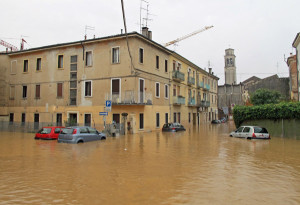
Disaster management specialists, officially classified as emergency management directors, plan and coordinate responses to natural disasters, hazardous incidents, and other emergencies. These professionals earn a median annual salary of $86,130 as of May 2024, according to the U.S. Bureau of Labor Statistics. Most positions require a bachelor's degree in emergency management, public administration, or a related field, with job growth projected at 3% through 2034—about as fast as the average for all occupations.
Disaster management isn't about waiting for a catastrophe to strike—it's about planning for the worst and hoping you'll never need to use those plans. These professionals spend their days mapping evacuation routes, coordinating with hospitals and first responders, and making sure communities can weather whatever nature (or human activity) throws their way.
If you're someone who stays calm under pressure, thinks strategically about complex systems, and wants to protect your community, this career path might be precisely what you're looking for. Here's what disaster management specialists actually do, what they earn, and how you can break into this growing field.
What Does a Disaster Management Specialist Do?
Disaster management specialists—often called emergency management directors—are the strategic planners behind your community's emergency response system. Before a hurricane makes landfall or an earthquake hits, they've already determined which roads will become evacuation routes, which buildings can serve as emergency shelters, and how hospitals will coordinate patient care during a crisis.
The work breaks down into four main phases:
Planning and Prevention
Most of the job happens before disasters strike. These specialists develop comprehensive emergency response plans that comply with local, state, and federal regulations. They meet with law enforcement, fire departments, hospitals, and other stakeholders to coordinate resources and identify potential coverage gaps. They're constantly asking: What if the main highway floods? What if we lose power for three days? What if multiple emergencies happen simultaneously?
They also assess community vulnerabilities. In coastal areas, that means hurricane preparedness. In California, earthquake readiness. In industrial regions, chemical spill protocols. Every community faces unique risks, and these professionals need to understand them all.
Response and Coordination
When disaster strikes, disaster management specialists shift from planners to crisis leaders. They activate emergency operations centers, coordinate disaster response technicians and first responders, open public shelters, and order evacuations when necessary. They're making critical decisions under intense pressure—often with incomplete information and lives on the line.
During Hurricane Katrina, emergency management directors coordinated rescue operations across multiple states. During the COVID-19 pandemic, they set up testing sites and vaccination centers. During wildfires, they manage evacuation orders and coordinate firefighting resources. This isn't desk work—it's active crisis management that requires quick thinking and clear communication.
Recovery and Assessment
After the immediate crisis passes, the work continues. Specialists assess damage, coordinate recovery efforts, and help communities rebuild. They document everything—what worked, what didn't, and what needs to change for next time. They often work with federal agencies like FEMA to secure disaster relief funding.
They also conduct post-incident reviews with all involved agencies. These "after-action reports" become the foundation for improving future responses. Every disaster teaches lessons that save lives in the next one.
Training and Public Education
Between emergencies, these professionals train first responders, conduct disaster drills, and educate the public. They visit schools to teach earthquake safety. They work with businesses to develop continuity plans. They ensure that when a crisis hits, everyone knows their role.
They also continuously maintain and update emergency plans. Climate change is increasing the frequency and intensity of disasters, so plans that worked five years ago may no longer be adequate today. These specialists stay current on new technologies, changing weather patterns, and evolving best practices.
Where Does a Disaster Management Specialist Work?
About 54% of disaster management specialists work for local government agencies, including city and county emergency management offices—another 17% work in healthcare, primarily at hospitals developing emergency preparedness plans. State governments employ roughly 12%, while 4% work in consulting firms helping organizations develop business continuity strategies. Universities employ about 3% of the workforce and often manage campus emergency services.
The work environment varies significantly. Most specialists work in offices, but they travel frequently to meet with stakeholders, conduct site assessments, and attend regional planning meetings. During emergencies, they work from Emergency Operations Centers—often for extended shifts with little sleep. It's common to work 60-80-hour workweeks during active disasters.
Remote work has become more common for planning and coordination, especially after COVID-19 demonstrated that emergency management can leverage virtual tools effectively. However, the response and assessment phases still require physical presence.
The job can be stressful. You're planning for worst-case scenarios, making high-stakes decisions under tight deadlines, and handling emergencies where lives depend on your judgment. But for people drawn to this work, the challenge is precisely what makes it rewarding.
What Is the Average Disaster Management Specialist Salary?
The U.S. Bureau of Labor Statistics reports that emergency management directors earned a median annual salary of $86,130 as of May 2024. This represents the midpoint—half of all emergency management directors earn more than this amount, and half earn less.
Salary varies significantly based on several factors:
Experience Level: Entry-level emergency management coordinators typically start around $55,000-$65,000 annually. With experience and certifications, mid-career specialists earn $70,000-$90,000. Senior emergency management directors in major metropolitan areas or federal positions can earn $110,000-$140,000 or more.
Employment Sector: Federal government positions, including roles with FEMA and other federal agencies, typically offer the highest salaries. State government positions usually pay more than local government roles, though large cities with complex emergency management needs often compete with state-level compensation. Private-sector positions in healthcare or consulting can vary widely depending on the organization's size and location.
Geographic Location: Emergency management directors in high-cost-of-living areas and disaster-prone regions typically earn more. Coastal areas facing hurricane risks, western states dealing with wildfires, and major metropolitan areas generally offer higher compensation than rural communities.
Beyond base salary, many positions offer strong benefits packages including health insurance, retirement plans with pension options (especially in government), paid time off, and professional development funding. Government positions typically provide excellent job security—communities need emergency management regardless of economic conditions.
Currently, there are approximately 13,200 emergency management director positions nationwide, according to BLS data. This relatively specialized field means positions can be competitive, but the combination of growing disaster frequency and retirements is creating steady opportunities for qualified candidates.
How Do I Get a Disaster Management Specialist Degree?
Most disaster management positions require at least a bachelor's degree. While some smaller municipalities might hire candidates with extensive experience in firefighting or law enforcement instead of a degree, the vast majority of employers now require formal education.
Degree Programs and Coursework
The most direct path is a bachelor's degree in emergency management, which specifically prepares students for this career. These programs typically cover:
- Emergency operations and incident command systems
- Disaster mitigation and preparedness planning
- Risk assessment and hazard analysis
- Crisis communication and public information
- Federal emergency management frameworks (National Response Framework, National Incident Management System)
- Geographic Information Systems (GIS) for disaster mapping
- Public administration and budgeting
- Environmental health and safety principles
Related degrees that also qualify include public administration, public health, homeland security, or environmental science with an emphasis on emergency management. What matters most is coursework that covers emergency planning, risk assessment, and crisis management.
| Education Level | Typical Programs | Career Entry Point |
|---|---|---|
| Bachelor's Degree | Emergency Management, Public Administration, Environmental Science | Emergency Management Coordinator, Assistant Emergency Manager |
| Master's Degree | Emergency Management, Public Health, Public Administration (MPA) | Emergency Management Specialist, Deputy Director |
| Experience Alternative | 5+ years as a firefighter, Law Enforcement, and military (with additional emergency management training) | Lateral entry to Coordinator or Specialist role |
Professional Certifications
While not always required, professional certifications significantly strengthen your credentials and demonstrate expertise. The International Association of Emergency Managers (IAEM) offers two widely recognized credentials:
Associate Emergency Manager (AEM): Entry-level certification requiring a bachelor's degree and two years of emergency management experience (or equivalent combination of education and experience). It demonstrates foundational knowledge of emergency management principles.
Certified Emergency Manager (CEM): Advanced certification requiring a bachelor's degree and three years of comprehensive emergency management experience. This is considered the gold standard in the field and is held by senior professionals nationwide.
Some states also require emergency management directors to obtain state-specific certification after hire. These requirements vary by location, so check with your state emergency management agency for details.
How to Become a Disaster Management Specialist
Breaking into disaster management requires a strategic approach. Here's the typical career pathway:
Step 1: Complete Your Education
Start with a bachelor's degree in emergency management or a related field. During your studies, look for internship opportunities with local emergency management agencies, the Red Cross, or FEMA. Real-world experience during your degree sets you apart from other candidates.
Step 2: Gain Relevant Experience
Entry-level positions often have titles like "Emergency Management Coordinator," "Emergency Preparedness Coordinator," or "Business Continuity Planner." You might start in a hospital, university, or small municipality. These roles involve supporting senior staff with plan development, training coordination, and exercise planning.
Alternative entry paths include starting as a firefighter, paramedic, or law enforcement officer, then transitioning into emergency management after gaining field experience. Military veterans with logistics or planning backgrounds also transition well into this field.
Step 3: Build Specialized Skills
Complete FEMA's Professional Development Series courses (available free online). Learn GIS software for disaster mapping. Get certified in the Incident Command System. Volunteer with disaster relief organizations. Each additional skill makes you more valuable and opens new opportunities.
Step 4: Pursue Certification
Once you have two years of experience, pursue your AEM certification. This demonstrates your commitment to the profession and your mastery of core competencies. After three years, work toward your CEM.
Step 5: Advance to Leadership Roles
With experience and credentials, you can move into "Emergency Management Specialist" or "Deputy Emergency Management Director" roles. These positions involve more strategic planning and less day-to-day coordination. Eventually, you can become an Emergency Management Director, leading your own program.
Timeline expectation: Most people spend 2-3 years in entry-level coordinator roles, 3-5 years as specialists, and then advance to director positions. Your progression speed depends on your location, organization size, and professional development efforts.
What Skills Do Disaster Management Specialists Need?
This career requires a unique combination of technical knowledge and soft skills. Here's what successful specialists bring to the job:
Technical Skills
- Emergency Planning Frameworks: Deep knowledge of the National Response Framework, National Incident Management System (NIMS), and Incident Command System (ICS)
- Geographic Information Systems (GIS): Ability to create and interpret disaster maps showing evacuation routes, hazard zones, and resource locations
- Risk Assessment: Capability to evaluate community vulnerabilities and develop mitigation strategies
- Budget Management: Understanding of grant writing, especially for FEMA Hazard Mitigation Assistance and Emergency Management Performance Grants
- Emergency Operations Center (EOC) Technology: Familiarity with WebEOC or similar crisis management platforms
- Public Health Principles: Understanding of disease outbreak response, mass casualty management, and shelter operations—especially critical after COVID-19
Essential Soft Skills
- Decision-Making Under Pressure: When a hurricane is six hours away, and you need to decide whether to order evacuations, there's no room for hesitation
- Clear Communication: You need to explain complex emergency plans to elected officials, coordinate with multiple agencies using precise language, and communicate with the public during high-stress situations
- Strategic Thinking: The ability to anticipate cascading failures and second-order effects—if the power goes out, what else breaks?
- Collaboration: You'll work with fire departments, police, hospitals, schools, utilities, and dozens of other organizations. Building strong relationships before emergencies makes coordination during crises much smoother.
- Adaptability: No disaster unfolds exactly as planned. The best specialists adjust quickly when circumstances change.e
- Emotional Resilience: You'll see communities at their worst moments. Managing your own stress while supporting others requires significant emotional strength.
Many of these skills develop through experience, but you can start building them now. Volunteer with disaster relief organizations, take FEMA training courses, or join community emergency response teams (CERT). The sooner you start developing these competencies, the better prepared you'll be for professional roles.
What Is the Job Demand for Disaster Management Specialists?
The Bureau of Labor Statistics projectsthat employment for emergency management directors will grow 3% between 2024 and 2034, about as fast as the average for all occupations. This translates to approximately 400 new positions over the decade, or about 40 job openings annually when you factor in positions created by growth and the need to replace workers who retire or leave the occupation.
Several factors are driving demand:
Climate Change Impact: More frequent and intense natural disasters—from hurricanes and wildfires to extreme heat events and floods—are increasing the need for emergency management professionals. Communities that rarely experienced major disasters now face regular threats, creating new positions.
Infrastructure Vulnerability: Aging infrastructure combined with extreme weather creates compounding risks. Power grid failures, dam breaches, and transportation disruptions require sophisticated emergency planning that didn't exist a generation ago.
Public Health Preparedness: COVID-19 demonstrated how emergency management intersects with public health. Many jurisdictions are expanding their emergency management programs to handle future pandemics and infectious disease outbreaks better.
Cybersecurity Threats: Modern disasters aren't just physical. Ransomware attacks on critical infrastructure, like the Colonial Pipeline incident, require emergency response coordination. This new threat landscape is creating specialized roles within emergency management.
However, job growth faces some headwinds. State and local budget constraints can limit hiring, and some smaller jurisdictions combine emergency management responsibilities with other roles rather than creating dedicated positions. With approximately 13,200 positions nationwide and moderate growth projections, competition remains strong—especially for federal positions with FEMA and other agencies that offer the highest salaries and most comprehensive programs.
Geographic variation matters significantly. Disaster-prone areas—coastal regions facing hurricanes, western states dealing with wildfires, tornado alley communities—typically have stronger job markets. Urban areas and state capitals offer more opportunities than rural regions.
The field is also seeing increased specialization. Beyond general emergency management, there's growing demand for specialists in specific areas: pandemic preparedness coordinators, wildfire mitigation specialists, business continuity planners for private sector organizations, and environmental health and safety professionals who integrate emergency planning into workplace safety programs.
Professional Organizations for Disaster Management Specialists
Two major organizations serve the emergency management community:
The National Emergency Management Association (NEMA) primarily serves state emergency management directors and provides a platform for state-level coordination. NEMA advocates for emergency management priorities with Congress and federal agencies, hosts two national conferences annually, and offers professional development opportunities. Their document library and state agency directory provide valuable resources for job seekers researching potential employers.
The International Association of Emergency Managers (IAEM) is the largest professional association for emergency managers at all levels. IAEM administers the CEM and AEM certifications, hosts annual conferences and regional meetings, and provides networking opportunities through local chapters and online discussion boards. Their job board is one of the best resources for finding emergency management positions nationwide. Student memberships are available at reduced rates.
Joining these organizations while still in school or early in your career provides networking opportunities, keeps you current on field developments, and signals your professional commitment to potential employers. Many positions are filled through professional networks before they're ever publicly posted.
Frequently Asked Questions
What does a disaster management specialist do day-to-day?
On a typical day, disaster management specialists review and update emergency plans, meet with partner agencies to coordinate resources, conduct training sessions, write grant applications for funding, and monitor potential threats like severe weather. During emergencies, their work shifts to 24/7 operations—activating emergency operations centers, coordinating response efforts, and making critical decisions about evacuations or resource deployment.
How much do disaster management specialists make?
Emergency management directors earn a median salary of $86,130 annually as of May 2024, according to the Bureau of Labor Statistics. Entry-level coordinators typically start around $55,000-$65,000, while experienced directors in major cities or federal positions can earn $110,000-$140,000 or more. Federal government positions typically pay the highest salaries, followed by state government and large municipalities.
What's the difference between a disaster management specialist and an emergency management director?
These titles often describe the same role, with "disaster management specialist" emphasizing the position's focus on natural and technological disasters. "Emergency management director" is the more common official title, particularly in government agencies, and it's the designation used by the Bureau of Labor Statistics. The distinction is mainly semantic—both positions involve planning for, responding to, and recovering from emergencies. Some organizations use "specialist" for mid-level positions and "director" for senior leadership roles heading entire programs.
What degree do you need to become a disaster management specialist?
Most positions require a bachelor's degree in emergency management, public administration, homeland security, or a related field. Emergency management programs provide the most direct preparation, covering disaster planning, risk assessment, and crisis management. Some smaller jurisdictions may hire candidates with extensive firefighting or law enforcement experience instead of a degree, but formal education has become the standard. A master's degree in emergency management or public administration can accelerate career advancement to director-level positions.
Is disaster management a good career choice?
If you're drawn to work that protects communities, requires strategic thinking, and provides tangible impact, disaster management offers a rewarding career. The field provides job security (communities always need emergency planning), competitive median salaries of $86,130 as of 2024, and the satisfaction of knowing your work saves lives. However, it's demanding—expect irregular hours during emergencies, high-stress decision-making, and the emotional weight of disaster response. The best candidates are calm under pressure, comfortable with uncertainty, and motivated by public service rather than routine schedules.
Key Takeaways
- Competitive Compensation: Emergency management directors earn a median salary of $86,130 as of May 2024, with federal positions and major metropolitan areas offering higher pay. The field provides substantial benefits and job security, particularly in government roles.
- Education Requirements: A bachelor's degree in emergency management, public administration, or a related field is typically required. Professional certifications (AEM and CEM) strengthen credentials significantly and demonstrate expertise in the field.
- Steady Demand: Employment is projected to grow 3% through 2034—about as fast as the average for all occupations—with approximately 40 annual job openings nationwide. Demand is driven by increased disaster frequency from climate change, infrastructure vulnerabilities, and expanded public health preparedness needs.
- Diverse Career Pathways: Entry routes include traditional academic preparation, alternative pathways through firefighting or law enforcement, and military backgrounds. Advancement typically progresses from coordinator to specialist to director roles over 5-10 years.
- Meaningful Impact: This career directly protects lives and communities. You'll develop emergency plans, coordinate crisis responses, and help communities recover from disasters—work that provides tangible results and genuine public service.


Ready to protect your community through emergency preparedness? Explore degree programs in emergency management, public administration, and related fields that prepare you for this critical career.

2024 US Bureau of Labor Statistics salary and job growth figures for emergency management directors reflect national data, not school-specific information. Conditions in your area may vary. Data accessed January 2026.