
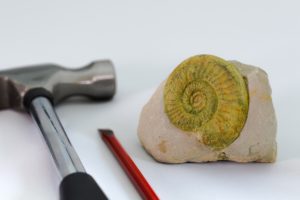
Paleobiologists study fossilized remains of all biological life—from microscopic plant cells to complete organisms—to understand how life evolved over millions of years. This interdisciplinary field combines biology, geology, and chemistry, offering careers in academia, oil and gas exploration, and environmental consulting. Paleobiologists are classified under the broader category of Environmental Scientists and Specialists, who earn a median salary of $80,060 nationally as of 2024, with the broader field of environmental scientists projected to grow 6% through 2032.
If you're fascinated by the evolution of life on Earth—not just dinosaurs, but every living system that ever existed—paleobiology might be your calling. While paleontologists focus on animal fossils, paleobiologists examine the complete picture: ancient plants, microorganisms, cells, and mineralized deposits that tell the story of biological evolution.
What Does a Paleobiologist Do?
A paleobiologist's daily work depends on their role, but it's far more diverse than just excavation. You'll examine fossilized remains using microscopes to study ancient plant microfossils (seeds, spores, and pollen), phytoliths, and individual cells. Modern paleobiologists use 3D imaging, CT scanning, and isotope analysis alongside traditional trowels and brushes.
In our work with paleobiology students, we've found that careers typically fall into three paths. First, fieldwork involves excavation at sites worldwide—you'll need the same skills as archeologists, including patience and meticulous recording. You'll use ground-penetrating radar and remote sensing equipment to locate promising sites before ever breaking ground.
Second, lab-based research focuses on testing and analysis. You'll date samples using radiocarbon methods, analyze distribution patterns, and create detailed diagrams that help us understand how life spread across ancient environments. This role requires strong analytical skills and comfort with technology.
Third, academic positions let you teach the next generation while conducting your own research. You'll apply for grants, direct excavations, and publish findings—all while mentoring students through their own paleobiology journeys.
Where Does a Paleobiologist Work?
Here's what surprises most students: paleobiologists aren't limited to universities. Your background in geology and biological systems makes you valuable across multiple industries.
The oil and gas sector employs paleobiologists because fossil fuels are literally broken-down organic material. Your knowledge of geological deposits and biological evolution helps companies prospect for new pockets of gas, coal, and oil. If you're interested in this career path, you'll work alongside petroleum geologists who focus specifically on fossil fuel exploration.
Engineering services firms hire paleobiologists as consultants for commercial and residential development projects. You'll compile geological maps and GIS files for construction companies, ensuring they understand the geological history of their sites.
Government positions include state museums, educational establishments, history clubs, and state parks. These roles focus on public education and specimen preservation rather than commercial applications.
Private consulting firms contract with developers and government agencies for technical reports and academic research. This independent work offers flexibility and variety in your projects.
What Is the Average Paleobiologist Salary?
Paleobiologists fall under the Bureau of Labor Statistics category of Environmental Scientists and Specialists, Including Health. According to May 2024 BLS data, this broader occupational category reports a median annual salary of $80,060. However, your earnings will vary significantly based on experience and sector.
According to BLS data, entry-level environmental scientists (10th percentile) earn about $50,130 annually as of 2024. As you gain experience and complete advanced degrees, mid-career professionals reach a median of $80,060. Experienced environmental scientists with PhDs and specialized expertise can earn $134,830 or more (90th percentile).
The mean salary across all experience levels is $88,640, with approximately 84,930 environmental scientists employed nationally as of May 2024. Your specific salary depends on whether you work in private industry, government, or academia, with private sector consulting and energy companies typically offering higher compensation.
How Paleobiology Differs from Paleontology
Students often ask us about the distinction between these two fields. While paleontologists study fossilized animal remains, paleobiologists examine all biological life, expanding the scope to include plants, microorganisms, and complete ecosystems.
Think of it this way: paleontology is a subset of paleobiology. If you're fascinated specifically by ancient animals and want to specialize deeply in vertebrate or invertebrate fossils, paleontology might be your path. If you're interested in how entire biological systems evolved—including the plants that fed those animals and the microorganisms that decomposed them—paleobiology offers a broader scope.
Career-wise, both fields require similar educational backgrounds and offer comparable opportunities in academia, museums, and consulting. The main difference is your research focus and the breadth of specimens you'll study.
Career Pathways in Paleobiology
Entry-Level Positions
Starting your career in paleobiology requires a specialized skill set. Here's what employers typically look for in junior-level positions:
- A bachelor's degree in geology, earth sciences, paleobiology, paleontology, or a related field
- Ability to conduct field studies in varying and occasionally extreme weather conditions
- Skills in generating and measuring stratigraphic section samples using heavy machinery
- The capacity to observe and characterize sedimentary rocks and establish relationships between biological life and rock formations
- Knowledge of applicable laws, codes, and regulations regarding field research and specimen collections
- Ability to document, store, preserve, and organize field research collections
- Experience analyzing specimens using microscopes in laboratory settings
- Organizational skills for cataloging fossils and biological specimens for future researchers
- Research and analytical capabilities for examining organized collections
Senior-Level Positions
Advanced career opportunities in paleobiology require additional qualifications and leadership capabilities. Senior roles might include museum collection management, academic research positions, or executive consulting. These positions typically require:
- A PhD in geology, earth sciences, paleobiology, paleontology, or related field
- Experience managing paleobiological research collections in museum settings
- Ability to supervise research volunteers, staff, and students during projects
- Skills in developing and administering training programs
- Expertise in cataloging and overseeing access to specimens in storage locations
- Strong communication skills for teaching and instructing diverse audiences about paleobiology
- Capacity to develop educational programs and courses for various student levels
- Experience designing complete research projects, including budgets, field locations, staffing, equipment, and methodologies
- Readiness to provide expert consultation for oil drilling proposals and construction projects
- Ability to advise students at the university or college level
What Is the Job Demand for Paleobiologists?
Paleobiology is a niche field, so specific job demand data doesn't exist. However, the broader category of environmental scientists (which includes paleobiologists, geologists, and environmental geologists) provides useful context.
The BLS projects 6% employment growth for environmental scientists between 2022 and 2032. This translates to 4,800 new jobs over the decade, resulting in approximately 6,900 annual openings when accounting for growth and replacements across the environmental science field. Employment is expected to grow from 80,500 in 2022 to 85,300 by 2032.
Much of this demand comes from the energy sector. As existing fossil fuel deposits become depleted, companies need experts who can locate remaining reserves and improve extraction efficiency. Your geological knowledge, combined with an understanding of biological systems, makes you particularly valuable for this work. You'll also find opportunities with hydrogeologists and other environmental specialists on interdisciplinary teams.
What Are the Education Requirements to Become a Paleobiologist?
Let's break down your educational pathway based on your career goals.
High School Preparation
Focus on the sciences to strengthen your college applications. Biology, chemistry, and geography provide the foundation you'll need. Physics and mathematics are also valuable for understanding geological processes.
Bachelor's Degree (Minimum Entry)
A bachelor's degree qualifies you for excavation work and entry-level lab positions. Choose a major that covers both biology and geology—these fields are equally important in paleobiology. Geoscience programs offer excellent preparation, as do biology majors with geology minors.
Here's the reality: bachelor's-only positions are competitive and often low-paid. You'll primarily work on excavation teams rather than leading research or analysis. However, this hands-on experience is valuable if you're still deciding whether to pursue graduate studies.
Master's Degree (Career Advancement)
A master's degree opens doors to desk-based research, advanced lab work, and project management. You'll develop deeper expertise in analytical techniques, technology applications, and research methodologies. Most roles beyond basic excavation require this level of education.
Since dedicated paleobiology master's programs are rare, continue through geology or biology departments and tailor your research focus. Choose a thesis topic that bridges both disciplines—perhaps examining how climate change affected ancient plant distributions or how geological events influenced evolutionary patterns.
Doctoral Degree (Academic & Leadership Roles)
A PhD is essential for university teaching positions, high-level government advisory roles, and senior consulting positions. You'll spend 4-6 years conducting original research that contributes new knowledge to the field. This degree also qualifies you to direct excavations, mentor graduate students, and make strategic decisions in consulting firms.
Paleobiology - Related Degrees
What Kind of Societies and Professional Organizations Do Paleobiologists Have?
Professional membership strengthens your network and keeps you current with field developments. Here are the main organizations serving paleobiology professionals:
- Paleobiology Database: This international, non-governmental knowledge-sharing platform facilitates collaboration among researchers worldwide. It's interdisciplinary by nature, reflecting how paleobiology requires cooperation across multiple scientific fields to understand life's evolutionary history.
- The Paleontological Society: The world's largest membership organization for paleontology, paleobotany, and paleobiology professionals. They publish academic journals, offer short courses for continuing education, and host annual meetings where you can present research and network with colleagues.
Frequently Asked Questions
What's the difference between a paleobiologist and a paleontologist?
Paleontologists study fossilized animal remains, while paleobiologists examine all biological life—including plants, microorganisms, and complete ecosystems. Paleontology is essentially a subset of the broader paleobiology field. Both careers require similar education and offer comparable opportunities in academia, museums, and consulting.
Do I need a PhD to become a paleobiologist?
Not necessarily. A bachelor's degree qualifies you for entry-level excavation and lab positions. However, a master's degree is typically required for research roles, project management, and advanced analysis work. A PhD is only essential if you want to teach at the university level, direct major research projects, or hold senior advisory positions in government or consulting.
Can I work as a paleobiologist in the private sector?
Yes. Private sector opportunities include oil and gas exploration (where your knowledge of geological deposits helps locate fossil fuels), environmental consulting firms (conducting impact assessments for development projects), and engineering services companies (creating geological maps and analyses for construction projects). These positions often pay more than academic roles.
What's the starting salary for entry-level paleobiologists?
According to BLS data, entry-level environmental scientists (10th percentile) earn about $50,130 annually as of 2024. Paleobiologists fall within this broader occupational category. As you gain experience and complete advanced degrees, you'll move toward the median salary of $80,060. Those with PhDs and specialized expertise can earn $134,830 or more in senior positions.
Is paleobiology a growing or declining field?
The field shows steady, modest growth. The BLS projects 6% employment growth for environmental scientists (the broader category that includes paleobiologists) between 2022 and 2032, resulting in approximately 6,900 annual openings when accounting for growth and replacements. While it's not explosive growth, the field remains stable with consistent demand, particularly in the energy sector, prospecting, and environmental consulting.
Key Takeaways
- Competitive Salaries with Growth Potential: Paleobiologists are classified under Environmental Scientists and Specialists, who earn a median salary of $80,060 as of 2024. Entry-level positions (10th percentile) start around $50,130, while experienced professionals can reach $134,830 or more. The mean salary across all experience levels is $88,640.
- Steady Job Growth Through 2032: The broader field of environmental scientists (which includes paleobiologists) shows 6% projected growth from 2022 to 2032, creating 4,800 new positions with approximately 6,900 annual openings when accounting for growth and replacements.
- Graduate Degrees Open Career Doors: While bachelor's degrees qualify you for entry-level work, master's degrees are typically required for research and analysis roles. PhDs are essential only for university teaching, senior consulting, or high-level government advisory positions.
- Diverse Career Opportunities Beyond Academia: Paleobiologists work in oil and gas exploration, environmental consulting, engineering services, government museums and parks, and private research firms—not just universities and excavation sites.
- Broader Scope Than Paleontology: Unlike paleontologists who focus on animal fossils, paleobiologists study all biological life—plants, microorganisms, complete ecosystems—to understand how life evolved across millions of years.
Ready to explore paleobiology programs? Discover geology and biology degree options that prepare you for this fascinating career, studying the evolution of life on Earth.

2024 US Bureau of Labor Statistics salary and job growth figures for Environmental Scientists and Specialists reflect state and national data, not school-specific information. Conditions in your area may vary. Data accessed January 2026.