

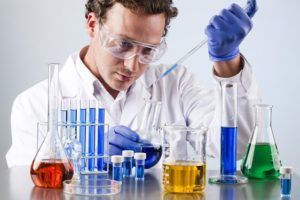
Chemists study the composition, structure, and properties of substances to develop new materials and understand chemical processes. Entry-level positions typically require a bachelor's degree in chemistry, with median annual wages of $84,150 as of May 2024. The field is projected to grow 5% through 2034, creating approximately 7,000 annual job openings nationwide across pharmaceutical, environmental, and industrial research sectors.
Chemistry touches everything around you—from the air you breathe to the medicines that keep you healthy. Chemists study the fundamental building blocks of matter, working to understand chemical processes that shape our world and developing new compounds that solve real problems. It's a field that connects pure scientific curiosity with practical applications that improve daily life.
What Does a Chemist Do?
Chemists work in two major areas of study, each approaching chemistry from different perspectives. Some focus on theoretical chemistry, examining models and ideas about how substances interact at the molecular level. Others concentrate on applied chemistry, conducting hands-on lab work to create new compounds or understand how specific reactions occur. Many chemists work across both areas, moving between theory and practical experimentation.
Theoretical Chemistry (Microscopic)
Theoretical chemists examine the microscopic world—the composition of the atmosphere, chemical processes from Earth's past that drive life today, and natural phenomena that shape our ecosystems. They develop models and theories about how substances behave at the atomic and molecular level. This work includes studying atmospheric disturbances, the chemical makeup of different environments, and the fundamental principles governing chemical reactions.
Applied Chemistry (Macroscopic)
Applied chemists work directly with chemical substances in laboratories, determining how compounds form, creating new materials, or using practical experiments to understand gas formation and chemical reactions. They analyze, theorize, and synthesize—examining atoms and molecules through direct observation and testing. The two approaches work together, with theoretical chemists proposing ideas that applied chemists then test and validate through experimentation.
Environmental Chemistry Applications
Chemistry plays a crucial role in environmental science and protection. Environmental chemists monitor pollution levels, develop pesticides that protect crops without damaging ecosystems, and create solutions for environmental challenges. They also contribute to medical treatment development, cosmetic formulation, and building material design. Analytical chemists specialize in identifying and measuring chemical substances, essential work for quality control and safety testing across industries.
Where Does a Chemist Work?
Most chemists work for research institutes in both the private sector and government positions. Their work spans an impressive range of industries and applications.
Private Sector Opportunities
In private industry, chemists work in laboratories for pharmaceutical companies, life sciences firms, engineering companies, and physical science organizations. Quality control represents one of the largest employment areas—chemists ensure product safety and consistency for pharmaceuticals, cosmetics, toiletries, and cleaning products. In manufacturing, they design new compounds and materials or improve existing products based on testing and feedback.
Government and Research Institutions
Government positions offer some of the highest salaries in the field. Federal chemists conduct research for public health, environmental protection, and national security. Research and development institutions employ chemists to push the boundaries of scientific knowledge and develop innovative solutions to complex problems.
Specialized Applications
Chemists bring valuable expertise to less obvious fields as well. In heritage conservation, their understanding of chemical properties helps preserve and restore historical artifacts. They use techniques like radiocarbon dating to establish the age of archaeological finds. Forensic chemists work with law enforcement agencies, examining crime scene evidence that requires specialized chemical analysis. Environmental organizations employ chemists to study how various compounds affect wildlife and ecosystems, and these professionals often provide expert testimony in legal proceedings related to pollution incidents.
Chemist Salary and Compensation
As of May 2024, the median annual salary for chemists was $84,150. The lowest 10% earned approximately $53,210, while the highest 10% earned over $154,430. Salary varies significantly based on industry sector, with government positions offering the most competitive compensation.
| Industry Sector | Median Annual Salary (May 2024) |
|---|---|
| Federal Government | $134,430 |
| Research & Development (Physical/Life Sciences) | $98,480 |
| Chemical Manufacturing | $81,920 |
| Testing Laboratories | $63,420 |
| Waste Management & Remediation | $62,050 |
Federal government positions consistently offer the highest median wages, nearly 60% above the overall median for chemists. Research and development roles also provide strong compensation, particularly in cutting-edge fields like biotechnology and materials science.
Essential Skills and Qualifications
Success as a chemist requires a combination of technical expertise, analytical thinking, and interpersonal abilities. Here's what you'll need to develop:
Technical Skills: Laboratory techniques form the foundation of chemistry work. You'll need proficiency with analytical instruments, spectroscopy equipment, chromatography systems, and various testing methodologies. Experience with chemical synthesis, compound analysis, and safety protocols is essential. Most positions also require familiarity with data analysis software and lab information management systems.
Analytical and Problem-Solving Skills: Chemistry involves constant investigation and troubleshooting. You'll analyze experimental results, identify patterns in data, and solve complex problems through systematic testing. The ability to think critically about chemical processes and draw accurate conclusions from observations is fundamental to the work.
Communication and Collaboration: Chemists rarely work in isolation. You'll collaborate with engineers, biochemists, and other scientists on research teams. Strong written communication skills are necessary for documenting procedures, preparing technical reports, and publishing research findings. You'll also present findings to both technical audiences and non-scientists, requiring the ability to explain complex concepts clearly.
Organizational and Time Management: Laboratory work demands meticulous record-keeping and careful attention to detail. You'll manage multiple experiments simultaneously, meet project deadlines, and prioritize tasks while maintaining accuracy and safety standards.
What Does a Chemist Do Daily?
The daily work of a chemist varies by specialization and career level, but certain core responsibilities are common across the field.
Entry-Level Chemist Responsibilities:
- Conduct laboratory tests and chemical analyses to support research objectives
- Prepare chemical solutions, compounds, and reagents following established protocols
- Operate and maintain laboratory equipment and instruments safely
- Record experimental procedures and results in detailed lab notebooks
- Interpret data and report findings to senior team members
- Assist with the inventory management of chemicals and laboratory supplies
- Follow regulatory compliance and health and safety standards
Senior Chemist Responsibilities:
With 3-5 years of experience, chemists advance to senior roles that include leadership and strategic responsibilities:
- Design and lead research projects from conception through completion
- Develop and validate new testing methods and analytical procedures
- Mentor junior chemists and laboratory technicians
- Collaborate with clients to understand project requirements and deliver solutions
- Manage project budgets and timelines
- Publish research findings and present at scientific conferences
- Identify opportunities for process improvements and innovation
Job Outlook and Career Growth
Employment for chemists and materials scientists is projected to grow 5% between 2024 and 2034, faster than the average for all occupations. This translates to approximately 7,000 job openings each year during this period. The steady demand reflects ongoing needs across multiple sectors.
Chemistry remains a sought-after qualification across industries. New graduates typically enter positions in research and development, working in pharmaceuticals, cosmetics, technology, materials science, or environmental protection. The field addresses a recognized skills shortage, which means qualified candidates generally find strong job prospects in their chosen specialization.
Emerging areas like nanotechnology, green chemistry, and biomaterials are creating new opportunities for chemists. Environmental concerns continue driving demand for professionals who can develop sustainable materials, improve pollution control methods, and create cleaner manufacturing processes.
Education Requirements to Become a Chemist
Most chemist positions are open to candidates with a bachelor's degree in chemistry or a related field. When pursuing your undergraduate degree, you'll want to include coursework in mathematics, statistics, physics, and other material sciences. These supporting subjects strengthen your analytical foundation and problem-solving capabilities.
Bachelor's Degree Path: A four-year chemistry degree prepares you for entry-level positions in laboratory work, quality control, and technical roles. If you're eager to start working in the field, this is a solid entry point. Many professionals gain a few years of work experience before deciding whether to pursue graduate studies—there's no rush to commit to a master's or PhD right away.
Master's Degree Advantages: A master's degree opens doors to more advanced research positions and specialized roles in industry and government. Graduate programs typically allow you to focus on specific areas like environmental chemistry, analytical chemistry, or materials science. The additional education provides competitive advantages for ambitious projects and leadership opportunities.
Doctorate Requirements: A PhD becomes essential for academic careers, independent research leadership, and managing complex research programs. Doctoral-level chemists lead research teams, secure grants for major projects, and contribute to advancing the field through original research. However, a PhD isn't necessary for most industry positions—it's primarily valuable for those specifically interested in teaching or leading cutting-edge research.
Practical Experience: Regardless of degree level, hands-on experience significantly improves your job prospects. Internships during your undergraduate years provide valuable exposure to professional laboratory environments. Many programs offer research opportunities where you can work alongside faculty on active projects. Co-op programs that alternate between classroom study and paid work experience are particularly valuable for building both skills and professional networks.
If you're interested in the broader field, you might also explore chemistry degree options to understand the various educational pathways available.
Professional Organizations for Chemists
Joining professional organizations provides significant value throughout your chemistry career. These organizations offer more than just networking—they provide access to cutting-edge research, career development resources, and professional recognition.
American Chemical Society (ACS): The ACS is the largest scientific society in the world dedicated to chemistry. Membership provides access to numerous peer-reviewed publications that keep you current with the latest research. The organization offers extensive career services, including job boards, resume reviews, and professional development courses. ACS also funds research programs and awards grants that advance the field. Student memberships are available at reduced rates, making it accessible even before you graduate.
American Institute of Chemical Engineers (AIChE): Founded in 1908, AIChE serves professionals working at the intersection of chemistry and engineering. If your work involves process design, manufacturing, or industrial applications of chemistry, this organization provides specialized resources. AIChE offers technical conferences, continuing education programs, and industry-specific networking opportunities that can accelerate your career in chemical engineering fields.
American Institute of Chemists (AIC): Established in 1923, AIC recognizes professional achievement in chemistry through various awards and certifications. Since 1926, the organization has annually bestowed gold medals on chemists making significant contributions to the field. AIC provides professional certification programs that can enhance your credentials and offers advocacy for the chemistry profession.
Membership in these organizations typically includes subscriptions to scientific journals, discounts on conference registration, access to exclusive job boards, and opportunities to present your research. The networking alone—connecting with experienced professionals, potential employers, and collaborators—often justifies the membership investment.
Frequently Asked Questions
Do I need a PhD to work as a chemist?
Most laboratory technicians and quality control positions require only a bachelor's degree in chemistry. Master's degrees open doors to advanced research roles and project management positions. PhDs are primarily necessary for academic careers, leading independent research teams, or managing highly complex scientific programs. Many successful chemists build entire careers with just a bachelor's or master's degree.
What's the difference between a chemist and a materials scientist?
Chemists focus primarily on understanding chemical composition and reactions—how substances interact and what products they form. Materials scientists emphasize how materials behave under different conditions and work to develop new materials with specific properties. Many professionals work at the intersection of both disciplines, and the distinction often blurs in practical research settings. Materials scientists typically earn higher median salaries ($104,160 vs. $84,150 as of May 2024).
Can chemists work remotely?
Most chemistry positions require regular laboratory access and cannot be performed remotely. However, certain roles offer flexibility. Computational chemists who primarily work with modeling software, regulatory affairs specialists who review documentation, data analysts working with chemical databases, and technical writers preparing scientific materials may have options for hybrid or remote work. These positions are exceptions rather than the rule in chemistry careers.
What industries pay chemists the most?
Federal government positions offer the highest median wages at $134,430 annually as of May 2024. Research and development in physical and life sciences ranks second with median wages of $98,480. Chemical manufacturing provides median wages of $81,920. Testing laboratories ($63,420) and waste management services ($62,050) typically offer lower compensation but may provide other benefits like more predictable schedules or geographic flexibility.
How important are internships for chemistry careers?
Internships provide significant advantages, especially for bachelor's-level candidates entering competitive job markets. Practical laboratory experience demonstrates your technical skills to employers beyond what your transcript shows. Internships also help you build professional networks that often lead directly to job offers after graduation. Many employers prefer candidates who understand professional laboratory environments and standard operating procedures. Even if you plan to pursue graduate school, internship experience strengthens your applications and helps you identify your preferred specialization.
Key Takeaways
- Diverse Career Paths: Chemists work across pharmaceutical research, environmental monitoring, forensic analysis, materials development, and manufacturing quality control in both private and government sectors.
- Educational Flexibility: While bachelor's degrees open most entry-level positions, master's degrees provide competitive advantages for advanced roles, and PhDs are primarily needed for academic careers and research leadership.
- Competitive Compensation: Median chemist salaries reach $84,150 annually as of May 2024, with federal government positions offering the highest pay at $134,430.
- Steady Job Growth: Chemistry careers are projected to grow 5% through 2034, faster than average for all occupations, creating approximately 7,000 annual openings.
- Practical Experience Matters: Internships and laboratory experience significantly improve job prospects, especially for candidates without graduate degrees, by demonstrating technical competence and professional readiness.
Ready to explore chemistry degree programs? Discover accredited programs that align with your career goals and interests in chemical research, environmental chemistry, or materials science.
2024 US Bureau of Labor Statistics salary and job growth figures for chemists and materials scientists reflect national data, not school-specific information. Conditions in your area may vary. Data accessed January 2026.