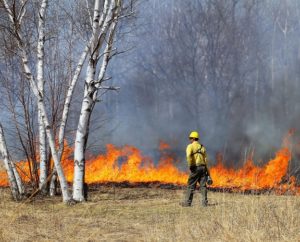


Habitat restoration engineers are environmental specialists who design and implement projects to restore degraded ecosystems to their natural state. Working under the broader BLS category of environmental engineers, these professionals earn a median salary of $104,170 annually. The field combines ecological knowledge with engineering principles to address environmental damage from human activities and natural disasters, with employment in environmental engineering projected to grow 4% through 2034.
If you're passionate about repairing environmental damage and restoring natural landscapes, habitat restoration engineering might be your calling. This specialized field sits at the intersection of ecology, engineering, and conservation science. Habitat restoration engineers don't just study environmental problems—they actively design and implement solutions to restore damaged ecosystems.
What Does a Habitat Restoration Engineer Do?
As human activities and natural events place pressure on ecosystems, habitat restoration engineers step in to assess, plan, and execute ecological repairs. They examine damaged landscapes to identify problems, evaluate potential hazards, and develop comprehensive restoration plans. Whether addressing the aftermath of industrial pollution, natural disasters, or gradual habitat degradation, these professionals work alongside environmental biologists, conservationists, and other specialists to redesign landscapes that support healthy ecosystems.
Their work extends beyond fixing existing problems. Habitat restoration engineers also design new conservation areas and recreate historical landscapes for educational and tourism purposes, such as ecoparks and nature preserves. When land is set aside for conservation, they collaborate with diverse teams including ecological planners, geologists, botanists, herpetologists, and ornithologists. When historic sites or culturally significant landscapes are involved, they must balance ecological restoration with preservation of cultural heritage.
Essentially, habitat restoration engineers are landscape planners with deep expertise in ecology and environmental design. They don't work with individual species in isolation—they consider entire ecosystems and their broader implications for the surrounding environment.
A typical day might include conducting field site assessments, analyzing soil and water samples in the lab, creating computer models to predict restoration outcomes, meeting with stakeholders to discuss project timelines, and overseeing construction crews implementing restoration plans. The work demands both technical expertise and strong communication skills, as engineers must translate complex ecological concepts for clients, government officials, and the public.
Where Does a Habitat Restoration Engineer Work?
Habitat restoration engineers fall under the broader BLS category of environmental specialists working in biotechnology and environmental engineering. According to BLS employment data, environmental engineers work across several sectors, each offering unique opportunities and challenges.
About one quarter of environmental engineers work for scientific and technical consulting services. These independent firms provide specialized expertise on a contract basis, assembling teams and equipment for specific projects. Consultants enjoy variety in their work, moving from wetland restoration to forest rehabilitation to coastal ecosystem restoration, but they must frequently adapt to different clients and locations.
Government agencies employ nearly half of all environmental engineers. Around 22% work in state government, managing state parks and protected lands, advising on conservation policies, and responding to environmental disasters. Another 13% work in local government, focusing on regional ecosystems and community conservation efforts. Federal government positions, comprising about 6% of the workforce, typically involve the National Park Service or disaster relief agencies like FEMA (Federal Emergency Management Agency) and offer the highest median salaries. These roles provide job stability and the opportunity to work on large-scale, long-term restoration projects.
The remaining 10% work for private engineering firms that specialize in environmental projects. These positions often involve helping corporations comply with environmental regulations, conducting environmental impact assessments, and designing mitigation projects for development activities.
Regardless of the employer, expect to split your time between office and field work. You'll work outdoors in various weather conditions and terrain—from wetlands to forests to coastal areas—collecting samples, supervising restoration activities, and monitoring project progress. Office time involves data analysis, report writing, computer modeling, and client meetings. Many positions require regional travel and occasional irregular hours to monitor time-sensitive ecological processes or respond to environmental emergencies.
What Is the Average Habitat Restoration Engineer Salary?
According to the Bureau of Labor Statistics, environmental engineers—the occupational category that includes habitat restoration engineers—earned a median annual salary of $104,170 as of May 2024. This represents a significant increase from previous years, reflecting growing demand for environmental expertise and the specialized nature of the work. Note that BLS does not track habitat restoration engineers as a separate occupation, so salary data reflects the broader environmental engineering field.
Salary varies considerably by employer type and geographic location. Here's how compensation breaks down across major employment sectors for environmental engineers:
| Employer Type | Median Annual Salary | % of Workforce | Key Advantages |
|---|---|---|---|
| Federal Government | $113,580 | 6% | Highest pay, comprehensive benefits, job security |
| Private Engineering Firms | $106,240 | 10% | Diverse projects, advancement opportunities |
| Consulting Services | $104,890 | 25% | Project variety, entrepreneurial environment |
| State Government | $88,430 | 22% | Stable employment, good benefits, regional focus |
| Local Government | $85,920 | 13% | Community impact, work-life balance |
Entry-level positions typically start around $65,000 to $75,000 annually, while experienced professionals with advanced degrees and project management skills can earn well over $130,000. Geographic location significantly impacts salary—restoration engineers in California, the Northeast corridor, and areas with high enforcement of environmental regulations generally command higher wages than those in less regulated regions.
Habitat Restoration Engineering Jobs & Job Description
Habitat restoration is essential for maintaining ecosystem health across the United States. Engineers in this field design comprehensive projects and coordinate restoration efforts involving multiple stakeholders and disciplines.
Entry-Level Habitat Restoration Engineer positions typically require a Bachelor of Science degree in environmental engineering, restoration ecology, or a related field. You'll need technical skills, including proficiency with specialized software (GIS mapping, hydraulic modeling, CAD programs), database management, and statistical analysis tools. Strong written and oral communication abilities are essential for preparing technical reports, presenting findings to non-technical audiences, and collaborating with diverse team members.
You should be comfortable working both independently and as part of a team, capable of conducting site investigations and sample collection in challenging outdoor conditions while also performing detailed office-based analysis. Core competencies include conducting environmental sampling and analysis, using surveying equipment and GPS devices accurately, and producing clear technical documentation. Physical demands include working in extreme weather conditions, traversing difficult terrain, and occasionally lifting equipment weighing 50+ pounds.
Most importantly, successful candidates demonstrate genuine commitment to environmental improvement and strict compliance with local and federal environmental regulations, including the Clean Water Act, Endangered Species Act, and NEPA (National Environmental Policy Act) requirements.
Senior Habitat Restoration Engineer positions demand advanced expertise: A Master of Science degree in environmental engineering, restoration ecology, or a related specialty becomes important for career advancement. Senior engineers bring several years of hands-on restoration experience across various ecosystems—wetlands, forests, grasslands, coastal areas, and riparian zones.
Advanced responsibilities include creating computer simulations to predict long-term restoration outcomes, designing complex multi-phase development projects, and managing substantial project budgets from planning through completion. You'll lead and train field teams, make critical decisions when projects encounter unexpected challenges, and present project proposals to clients, regulatory agencies, and company leadership. Senior positions require strong problem-solving abilities, the capacity to manage multiple projects simultaneously, commitment to continuous learning as restoration techniques evolve, and the development of training programs for junior staff and field crews.
What Are the Education Requirements to Become a Habitat Restoration Engineer?
Habitat restoration engineering demands comprehensive knowledge spanning multiple environmental sciences. You'll need to understand wildlife management, conservation planning, hydrology, soil science, and plant ecology, in addition to engineering principles.
Currently, no specific "habitat restoration engineering" degree exists, though many universities offer related programs in restoration ecology, conservation biology, or environmental engineering with an ecological focus. Your educational path involves strategic course selection across related disciplines. Here's what you need to know about building the right educational foundation:
| Degree Level | Typical Timeline | Recommended Major | Key Coursework | Career Outcomes |
|---|---|---|---|---|
| Bachelor's Degree | 4 years | Environmental Engineering, Restoration Ecology, Environmental Science | Core major courses plus minors/electives in math, physics, chemistry, biology, GIS, hydrology | Entry-level positions, field technician roles, research assistant positions |
| Master's Degree | 2 years beyond bachelor's | Environmental Engineering, Restoration Ecology, Conservation Biology | Advanced restoration techniques, ecosystem modeling, project management, independent research | Project leadership roles, independent planning and design work, consulting positions |
| PhD (Optional) | 4-6 years beyond master's | Restoration Ecology, Environmental Engineering | Original research, specialized expertise development, teaching experience | Research positions, university faculty, senior consulting roles, policy advisory positions |
For undergraduate study, pursue environmental engineering degree programs or ecology degree programs at ABET-accredited institutions when possible. Choose your electives strategically—strong foundations in mathematics, physics, chemistry, and biology are essential. Consider adding coursework in geographic information systems (GIS), environmental policy, and technical writing.
Practical experience matters as much as classroom learning. Since habitat restoration engineering is an applied science rather than purely theoretical, you'll need hands-on project experience. Pursue internships during your undergraduate years with environmental consulting firms, government agencies managing public lands, or conservation organizations. These experiences help you understand real-world restoration challenges and build professional networks.
Master's degrees provide the framework for advancement into planning and independent research roles. Graduate programs allow you to specialize in particular ecosystems (wetlands, forests, coastal areas) or restoration techniques (hydrological engineering, soil remediation, native plant establishment). The combination of advanced coursework and thesis research prepares you to lead complex restoration projects and contribute to the evolving science of ecosystem repair.
Professional certifications can enhance your credentials. If your work involves signing off on engineering plans for permitted projects, consider pursuing Professional Engineer (PE) licensure through your state licensing board—though this is more relevant for traditional engineering roles than pure restoration work. More directly applicable certifications include wetland delineation credentials, erosion and sediment control certification, or ecological restoration certification through organizations like the Society for Ecological Restoration.
Habitat Restoration - Related Degrees
What Is the Job Demand for Habitat Restoration Engineers?
Employment of environmental engineers is projected to grow 4 percent from 2024 to 2034, roughly in line with the average for all occupations. This translates to approximately 3,000 job openings annually in the environmental engineering field, many of which result from workers retiring or transitioning to other careers. While BLS does not separately track habitat restoration engineers, professionals specializing in ecological restoration fall within this broader occupational category.
Several factors drive continued demand for habitat restoration expertise. As environmental regulations become more stringent at national and international levels, businesses and government agencies increasingly need restoration engineers to ensure compliance. The Comprehensive Environmental Response, Compensation, and Liability Act (CERCLA, also known as Superfund) continues to generate restoration projects at contaminated sites nationwide.
Our growing understanding of ecosystem dynamics and the threats posed by invasive species creates opportunities for restoration engineers to develop innovative solutions. Climate change adaptation projects—helping ecosystems adjust to new temperature and precipitation patterns—represent an emerging area of growth. As coastal communities face rising sea levels and intensifying storms, habitat restoration engineers will be essential in designing resilient coastal ecosystems that provide natural storm protection.
The expansion of the ecological entertainment and education sectors offers additional opportunities. Ecoparks, nature preserves open to the public, and conservation-focused tourist attractions represent a growing market where restoration engineers can design both ecologically sound and publicly accessible landscapes. These projects allow engineers to create educational experiences that inspire environmental stewardship while accomplishing genuine conservation goals.
Competition for positions varies by sector. Federal government positions, offering the highest salaries and comprehensive benefits, tend to be competitive and may require specific civil service qualifications. Consulting and private sector positions generally offer more opportunities, especially for candidates willing to relocate or travel extensively. State and local government positions fall somewhere in between, often prioritizing candidates with local knowledge and established professional networks.
What Kind Of Societies and Professional Organizations Do Habitat Restoration Engineers Have?
This specialized field benefits from several dedicated professional organizations that provide networking opportunities, continuing education, technical resources, and career development:
- Society for Ecological Restoration (SER): This international organization leads global efforts to restore and protect ecosystems damaged by centuries of human activity. SER provides technical guidance, best practices, and professional certification programs for restoration practitioners. They host regional and international conferences where professionals share research findings and practical techniques, and publish peer-reviewed journals advancing the science of restoration ecology.
- Center for Watershed Protection: As one of the largest water environment protection organizations in the United States, the Center for Watershed Protection focuses on ensuring clean rivers, lakes, streams, and wetlands for future generations. They offer membership benefits including access to research publications, training workshops, and technical assistance for watershed restoration projects. Their work directly supports restoration engineers specializing in aquatic ecosystems.
- National Oceanic and Atmospheric Administration (NOAA): While primarily a federal agency, NOAA maintains extensive partnerships with restoration professionals through its Habitat Conservation Division. They collaborate with regional and state organizations to protect coastal and marine environments, provide funding for restoration projects, and offer technical expertise in coastal ecosystem restoration. NOAA's Office of Habitat Conservation works specifically on restoring fish and wildlife habitats damaged by human activities or natural disasters.
Membership in these organizations provides access to job boards, professional development opportunities, and the latest research in restoration science. They also offer platforms for sharing your own project experiences and contributing to the collective knowledge base that advances the field.
Frequently Asked Questions
What degree do I need to become a habitat restoration engineer?
You'll need at a minimum a bachelor's degree in environmental engineering, restoration ecology, environmental science, or a related field from an ABET-accredited program when possible. A master's degree significantly improves career advancement opportunities and is often preferred for project leadership roles. Choose programs with strong coursework in ecology, hydrology, soil science, and GIS technology, and prioritize gaining practical field experience through internships during your studies.
How much do habitat restoration engineers make?
According to BLS data for environmental engineers (the occupational category that includes habitat restoration specialists), the median annual salary is $104,170 as of May 2024. Federal government positions typically offer the highest pay at $113,580, while state and local government positions tend to pay somewhat less but offer strong benefits and job security. Entry-level positions typically start around $65,000 to $75,000, while experienced professionals with advanced degrees can earn over $130,000 annually.
Is habitat restoration engineering a good career for someone passionate about the environment?
Yes, if you're looking for hands-on environmental work that creates measurable, visible improvements to ecosystems. Unlike some environmental careers focused on research or policy, restoration engineers directly implement solutions to environmental problems. You'll see tangible results from your work—forests regenerating, wetlands returning to health, native species recovering. The work demands both technical expertise and genuine environmental commitment, making it ideal for those who want to combine their passion for nature with engineering problem-solving skills.
Where do habitat restoration engineers typically work?
Expect to split time between office and field environments. Office work includes data analysis, computer modeling, report writing, and client meetings. Fieldwork involves site assessments, sample collection, monitoring restoration progress, and supervising implementation crews across various terrains and weather conditions. According to BLS data on environmental engineers, the employment sectors include environmental consulting firms (25%), state government agencies (22%), local government (13%), private engineering companies (10%), and federal agencies (6%). Most positions require regional travel and flexibility to work occasional irregular hours.
What's the difference between a habitat restoration engineer and a habitat specialist?
Habitat restoration engineers focus specifically on engineering solutions to restore degraded ecosystems, requiring strong technical backgrounds in engineering principles, hydrology, and project design. They typically need engineering degrees and handle large-scale restoration projects involving construction, earthmoving, and complex system design. Habitat specialists, in contrast, often work in wildlife management and conservation contexts, focusing on maintaining existing habitats for particular species rather than engineering large-scale ecosystem repairs. Habitat specialists may work in zoos, wildlife reserves, or conservation organizations with backgrounds in biology or wildlife management rather than engineering.
Key Takeaways
- Strong Earning Potential: Environmental engineers, including those specializing in habitat restoration, earn a median salary of $104,170 annually as of May 2024, with federal positions offering $113,580 and significant variation by sector and experience level.
- Interdisciplinary Expertise Required: Success demands knowledge spanning ecology, engineering, hydrology, and soil science, combined with strong technical skills in GIS, computer modeling, and environmental analysis—making this one of the most intellectually diverse environmental careers.
- Steady Job Growth: The environmental engineering field projects 4% employment growth from 2024 to 2034 with approximately 3,000 annual openings across all environmental engineering specialties, driven by environmental regulation, climate change adaptation needs, and growing demand for ecosystem restoration expertise.
- Master's Degree Recommended: While bachelor's degrees in environmental engineering or restoration ecology qualify you for entry-level positions, a master's degree significantly enhances career advancement opportunities and is often preferred for project leadership roles, with specialized programs providing the strongest preparation.
- Tangible Environmental Impact: Unlike purely research-focused environmental careers, habitat restoration engineering offers the satisfaction of seeing direct, measurable results from your work as degraded ecosystems recover and native species return to restored habitats.
Ready to turn your environmental passion into meaningful restoration work? Explore accredited environmental engineering and ecology degree programs that will prepare you for this rewarding career, combining ecological expertise with hands-on problem-solving.
2024 US Bureau of Labor Statistics salary and employment figures for environmental engineers reflect national data, not school-specific information. Conditions in your area may vary. Data accessed January 2026.