

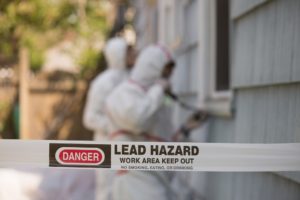
Lead Abatement Technicians safely remove lead and lead-based materials from older buildings during renovation, demolition, and decommissioning projects. Most work in remediation services (75%), earning a median salary of $48,490 as of 2024. The field requires a high school diploma, specialized training, and state certification, with modest 1% job growth projected through 2034.
If you're drawn to environmental safety work that directly protects public health, lead abatement offers a specialized career path at the intersection of construction and hazardous materials management. While lead use in building materials ended mainly in the 1970s, millions of older structures still contain lead-based paint, piping, and other materials that require careful removal by trained professionals. As a Lead Abatement Technician, you'll play a critical role in making buildings safe for renovation, demolition, or continued occupancy.
What Does a Lead Abatement Technician Do?
As a Lead Abatement Technician, you're responsible for the safe removal and disposal of lead and lead-containing materials from buildings and construction sites. Your work directly prevents lead poisoning—a serious health hazard that can cause neurological damage, particularly in children and pregnant women.
The United States has a large number of older industrial-era buildings constructed when lead was a standard building material. Lead has beneficial properties: it's durable, malleable, and provides excellent radiation shielding. It was used extensively in construction right up to the 1970s, when our understanding of lead poisoning health problems improved significantly.
Lead appeared in roofing materials (especially on churches), paint, pipes, and various construction applications. While its use has subsided in recent decades, some buildings still use lead for specialized purposes—particularly for radiation shielding at nuclear plants and for historic preservation projects where original materials must be maintained, rather than in standard construction materials. When renovating or demolishing existing buildings, lead must be disposed of safely. That's why we need specialist Lead Abatement Technicians trained in the safety issues surrounding lead as a building material.
In many ways, Lead Abatement Technicians are a specialized type of decontamination technician who promote good outdoor and indoor air quality for public health. You may also develop knowledge and understanding of other potentially harmful substances, such as asbestos, expanding your expertise in hazardous materials removal.
Where Does a Lead Abatement Technician Work?
Lead exists in buildings and construction projects built before 197,0 when our understanding of lead poisoning improved. Your work environment will vary significantly depending on your employer and specialization.
| Work Setting | Percentage | Typical Responsibilities |
|---|---|---|
| Remediation & Disposal Services | 75% | Direct removal and disposal of lead materials during building decontamination |
| Construction Industry | 10% | Advisory, monitoring, and safety management during renovations of older buildings |
| Government Positions | 4% | Disaster relief, emergency response to building collapses or damage |
| Nuclear Facilities | 4% | Reactor commissioning/decommissioning, radiation shielding maintenance |
| Other Settings | 7% | Specialized applications, consulting, training |
The overwhelming majority (75%) work in remediation and disposal services for the construction industry. With modern construction using safer materials with much lower environmental impact, you'll be primarily tasked with decontaminating and disposing of hazardous materials from older buildings.
Around 10% work in construction, typically in advisory and monitoring roles during the renovation of buildings that may contain lead. In these positions, you might serve as an environmental health and safety manager or a safety trainer, rather than handling materials directly on site. As the number of buildings containing lead reduces, this sector could potentially decrease further.
Some buildings still use lead, especially for radiation shielding or historic restoration—not in standard construction materials. Older church roofing (historic preservation) and nuclear power plants (radiation shielding) are two areas where lead will remain concentrated in the future. Working in atomic facilities requires additional clearances and qualifications.
About 4% of Lead Abatement Technicians are employed in government positions, typically in disaster relief where lead-containing buildings may be damaged or destroyed and release toxic particles into the atmosphere—such as during earthquakes, building collapses, or other emergencies.
Lead Abatement Technician Salary & Compensation
Lead Abatement Technicians fall under the broader Bureau of Labor Statistics category of Hazardous Materials Removal Workers. According to 2024 BLS data, the field offers stable middle-income earning potential with room for advancement.
| Salary Metric | Annual Wage | Hourly Wage |
|---|---|---|
| Median (50th Percentile) | $48,490 | $23.31 |
| Top 10% (90th Percentile) | $81,200 | $39.04 |
| Bottom 10% (10th Percentile) | $34,580 | $16.63 |
Your earning potential increases significantly with experience, specialized certifications, and supervisory responsibilities. Senior-level technicians who manage teams and oversee complex projects typically earn wages in the upper percentiles. Geographic location also impacts salary—urban areas with more older buildings and higher costs of living generally offer higher salaries
Many positions include benefits such as health insurance, retirement plans, and hazard pay for particularly challenging or dangerous assignments. Union membership, standard in this field, often provides additional wage protections and benefits.
Job Outlook & Demand
The outlook for Lead Abatement Technicians shows modest but steady demand over the coming decade. According to 2024 BLS projections, employment of hazardous materials removal workers is expected to grow by 1% between 2024 and 2034—slower than the average for all occupations.
This translates to approximately 500 new jobs over the decade, with the total number of positions reaching about 51,300 nationally. While the growth rate is modest, it's essential to understand the context: as the number of buildings containing lead decreases due to successful abatement efforts, demand naturally stabilizes rather than expands dramatically.
However, job security remains relatively strong for several reasons. First, millions of older buildings still contain lead-based materials that will take decades to address fully. Second, ongoing renovations and demolitions of aging infrastructure underscore the continued need for trained technicians. Third, some applications—particularly in nuclear facilities and specialized industrial settings—will always require lead and thus need removal specialists during decommissioning or renovation.
The field also benefits from retirements, creating openings even without dramatic employment growth. Some hazardous materials remain vital in particular construction and industrial applications, and we cannot avoid using them despite great strides in developing safer alternatives. As older buildings are torn down or renovated, lead abatement remains an ongoing need, especially for professionals who also work with asbestos and other hazardous materials.
Education & Training Requirements
The pathway to becoming a Lead Abatement Technician is more accessible than many environmental careers, with a clear progression from entry-level certification to advanced specializations.
A high school diploma is the minimum requirement to enter the field. During high school, focus on science-related roles—particularly physics and chemistry. These subjects will be advantageous but aren't essential for entry-level positions.
On-the-job training is standard for this role. You'll learn proper handling techniques, safety protocols, equipment operation, and disposal procedures under the supervision of experienced technicians. This hands-on training is where you'll develop the practical skills that make you effective in the field.
Certification requirements vary by state and the specific materials you'll handle. Many states require you to pursue certification before you're permitted to practice as a Lead Abatement Technician. These certification programs typically cover:
- Lead hazard recognition and assessment
- Personal protective equipment usage
- Containment and disposal procedures
- Federal and state regulations (EPA and OSHA requirements)
- Emergency response protocols
For those intending to work in nuclear facilities, the requirements become more stringent. An associate degree is preferable in most cases, though not always essential. Working in atomic facilities falls under the remit of Lead Abatement Technicians when a reactor is being commissioned or decommissioned, or when lead shielding requires maintenance or replacement.
Work at nuclear facilities requires additional qualifications beyond standard lead abatement certification. You must undergo relevant security clearance procedures and submit to alcohol and drug testing. You must also be a U.S. citizen to work in these sensitive facilities.
Consider pursuing additional certifications in related hazardous materials, such as asbestos, to broaden your employment opportunities and increase your value to employers. Many Lead Abatement Technicians cross-train in multiple dangerous materials disciplines, making them more versatile and marketable.
Lead Abatement Jobs & Job Responsibilities
Your daily responsibilities as a Lead Abatement Technician center on safely removing lead from properties while protecting yourself, your team, and the surrounding environment from contamination. The work demands both physical stamina and meticulous attention to detail.
You'll perform work using personal protective equipment, including properly fitting respirators and protective suits. Most work occurs in negative-pressure containment areas—specialized zones you'll help establish to prevent lead particles from escaping into adjoining regions. These containment systems are critical: they protect both workers and building occupants from exposure to toxic lead dust.
The physical demands are significant. You'll lift heavy equipment, work in small confined spaces, and perform tasks in extreme temperatures and varying weather conditions. Environmental conditions can be challenging—you might work in hot attics, cold basements, or buildings without climate control. Your ability to handle physically demanding tasks while maintaining safety protocols is essential.
Communication skills matter more than you might expect. You'll interact regularly with clients and customers, explaining your work processes and addressing their concerns about lead hazards. You'll also correspond with supervisors, complete required reports and documentation for each job assignment, and maintain thorough records of work completed.
Your technical responsibilities include maintaining and regularly inspecting equipment and supplies to ensure everything functions properly and safely. You'll need the ability to follow detailed instructions from supervisors while also working independently when the task requires it. Flexibility is key—you'll travel to various work locations and adapt to varying schedules as needed.
Crucially, you must possess knowledge of local, state, and federal laws and regulations governing lead removal. The EPA and OSHA set strict standards for lead abatement work, and compliance isn't optional. Your understanding of these regulations protects your legal position and ensures the safety of everyone involved in the project.
Career Progression & Advancement
Lead abatement offers a clear career ladder from entry-level technician to senior management positions. Understanding this progression helps you plan your professional development strategically.
| Career Level | Typical Responsibilities | Required Experience |
|---|---|---|
| Entry-Level Technician | Direct removal work, equipment setup, containment establishment, following supervisor instructions | 0-2 years, basic certification |
| Experienced Technician | Independent work on standard projects, lead detection equipment operation, and client consultation | 2-5 years, advanced certifications |
| Senior Technician/Team Lead | Team oversight, project management, risk assessments, equipment calibration, and maintenance | 5-8 years, supervisory certifications |
| Project Manager/Supervisor | Multi-project management, supply ordering, scheduling, client relations, policy development | 8+ years, management training |
As you gain experience, you'll transition from following detailed instructions to making independent decisions about project approaches. Senior-level Lead Abatement Technicians manage teams of technicians, bringing years of hands-on experience to supervisory roles.
In advanced positions, you'll place orders for required supplies and equipment, oversee and mentor teams of junior technicians, and provide insight into lead removal projects to improve efficiency and decrease costs. You'll ensure technicians adhere to all safety protocols, as well as company policies and procedures—a responsibility that requires both technical knowledge and leadership skills.
Senior positions involve providing client consultation on lead-based hazards and performing comprehensive risk assessments. You'll use lead detection equipment to determine the presence of lead in work site areas, calibrate and maintain sophisticated testing equipment, and manage entire lead removal projects to ensure work is completed on time and efficiently.
Your communication responsibilities expand significantly at senior levels. You'll communicate verbally and in writing with management, customers, and clients, complete and validate timesheets and thorough records of work completed, and develop work schedules and process management systems to organize company tasks and increase productivity.
Some experienced technicians transition into training roles, teaching new technicians proper techniques and safety protocols. Others move into regulatory compliance positions, working with government agencies or consulting firms to ensure construction projects meet lead safety standards. The specialized knowledge you develop opens doors to diverse career paths within environmental health and safety.
Professional Organizations & Resources
Lead Abatement Technicians are a specialist subset of Hazardous Materials Removal Worker roles. Several organizations represent this field and provide valuable resources for professional development:
Laborers' International Union of North America (LIUNA): Although not explicitly focused on lead abatement, LIUNA is the United States' largest organization for construction workers, promoting safety standards and worker protections. Many Lead Abatement Technicians are union members, benefiting from collective bargaining, safety advocacy, and ongoing training programs.
Occupational Safety and Health Administration (OSHA): A division of the Department of Labor, OSHA is charged with ensuring workplace safety for both hazardous and non-hazardous jobs. OSHA sets and enforces the regulations you'll follow as a Lead Abatement Technician, and its website provides extensive training resources, regulatory guidance, and safety information essential to your work.
Environmental Protection Agency (EPA): The EPA is the government agency responsible for protecting the environment, including comprehensive guidance and laws governing the removal of lead and other hazardous materials. The EPA's Lead Renovation, Repair, and Painting Program (RRP) specifically regulates renovation work in pre-1978 housing and child-occupied facilities where lead-based paint may be present. This program establishes certification requirements and work practice standards that directly impact your daily responsibilities.
These organizations offer training programs, certification courses, regulatory updates, and networking opportunities that support your professional development throughout your career.
Frequently Asked Questions
What qualifications do I need to become a Lead Abatement Technician?
You need a high school diploma and specialized certification in lead abatement, which varies by state. Most certification programs require 3-5 days of training covering lead hazard recognition, containment procedures, the use of personal protective equipment, and federal regulations. On-the-job training under experienced supervisors is also standard. For nuclear facility work, an associate's degree and security clearance are typically required.
How much do Lead Abatement Technicians earn?
According to 2024 BLS data, the median annual salary for hazardous materials removal workers (including Lead Abatement Technicians) is $48,490, or about $23.31 per hour. Entry-level positions start around $34,580 annually, while experienced senior technicians in the top 10% earn $81,200 or more. Earnings vary by geographic location, experience level, certifications, and whether you work in union or non-union positions.
Is lead abatement a dangerous job?
Lead abatement involves handling toxic materials, so safety protocols are critical. When proper procedures are followed—including wearing respirators and protective suits, establishing negative pressure containment areas, and adhering to OSHA and EPA regulations—the work is safe. The physical demands (heavy lifting, confined spaces, extreme temperatures) pose more day-to-day challenges than chemical exposure for properly trained technicians. Comprehensive training and strict adherence to safety protocols significantly minimize health risks.
What's the difference between lead abatement and asbestos abatement?
Both involve removing hazardous materials from buildings, but they target different substances. Lead abatement focuses on lead-based paint, pipes, and other lead-containing materials primarily from pre-1970s buildings. Asbestos abatement removes asbestos-containing materials, such as insulation, floor tiles, and roofing, from buildings constructed before 1980. The health risks, removal techniques, containment requirements, and disposal procedures differ between the two. Many technicians cross-train in both specialties to increase their employability and expertise in hazardous materials removal.
Can Lead Abatement Technicians work in nuclear facilities?
Yes, but nuclear facility work requires additional qualifications beyond standard lead abatement certification. You'll need to undergo security clearance procedures, pass drug and alcohol testing, and be a U.S. citizen. An associate degree is often preferred for nuclear facility positions. About 4% of Lead Abatement Technicians work in nuclear settings, typically during reactor commissioning or decommissioning when lead radiation shielding requires maintenance, replacement, or removal.
Key Takeaways
- Specialized Safety Role: Lead Abatement Technicians protect public health by safely removing lead-based materials from older buildings, requiring specialized training in hazardous materials handling and strict adherence to EPA and OSHA regulations.
- Accessible Entry Path: The career requires a high school diploma and state certification (typically 3-5 days of training), making it more accessible than many environmental careers while still offering middle-income earning potential, with a median annual salary of $48,490.
- Stable Demand: With 51,300 current positions and 75% working in remediation services, the field offers steady employment as millions of older buildings still require lead removal despite modest 1% growth projections through 2034.
- Clear Career Progression: You can advance from entry-level technician to senior project manager, with top earners making $81,200+ annually through experience, additional certifications, and supervisory responsibilities.
- Physical and Technical Demands: The work combines significant physical challenges (heavy lifting, confined spaces, extreme conditions) with technical expertise in containment systems, detection equipment, and regulatory compliance—requiring both strength and meticulous attention to safety protocols.


Ready to start a career in environmental health and safety? Explore accredited environmental science and occupational safety programs that prepare you for specialized certifications in hazardous materials handling and lead abatement.

Lead Abatement - Related Degrees
2024 US Bureau of Labor Statistics salary and job growth figures for hazardous materials removal workers reflect national data, not school-specific information. Conditions in your area may vary. Data accessed January 2026.