
Ecologists study how organisms interact with each other and their environments across ecosystems like forests, wetlands, and deserts. They work for government agencies, environmental consulting firms, research institutions, and universities. Environmental scientists and specialists (including ecologists) earn a median salary of $80,060 annually, while conservation scientists earn $69,060. Entry-level positions require a bachelor's degree, with master's or doctoral degrees needed for research and senior roles.
The reintroduction of wolves to Yellowstone National Park in the 1990s offers a compelling example of ecosystem complexity. Some researchers observed increased biodiversity and vegetation changes following the wolf reintroduction, though the extent and causality remain debated in scientific literature. This case illustrates what ecologists do: they study the intricate connections within ecosystems to better understand how changes ripple through biological communities.
Unfortunately, conservation successes face ongoing challenges. Invasive species like zebra mussels, Kudzu vines, and Burmese pythons continue to disrupt native ecosystems across the United States. The roles species play in their communities are complex, and changes to those communities can be devastating. Ecologists help us understand these relationships and make better decisions that minimize our environmental impact.
Since evolution has shaped natural systems over billions of years through natural selection, ecologists also help us learn from these patterns when designing human systems. By studying how natural processes work, we can develop more efficient and sustainable approaches to industry, agriculture, and community planning. When it comes to the environment, understanding these relationships is essential. The work of ecologists provides the knowledge we need to protect it.
RELATED - Ecology: Examining the Relationships Between Living Things
What Does an Ecologist Do?
Ecologists investigate how plants, animals, and microorganisms interact with their physical surroundings. They might track how the removal or return of apex predators like wolves affects other species, study the competitive advantages of invasive species compared to native ones, or analyze how climate change shifts species distributions.
On a typical day, ecologists might:
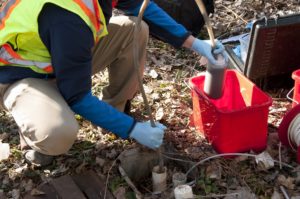
- Conduct fieldwork to collect data on species populations, soil conditions, water quality, or climate patterns
- Design and execute research studies to test hypotheses about ecosystem function
- Analyze data using statistical software and modeling techniques
- Assess habitat health and biodiversity levels
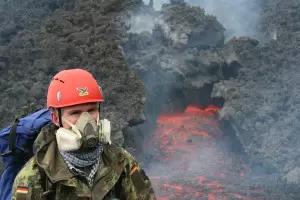
- Monitor the impacts of pollution, development, or climate change on ecosystems
- Develop habitat management plans for landowners or government agencies
- Write environmental impact statements evaluating proposed projects
- Communicate findings through reports, presentations, and published research
- Collaborate with policymakers, land managers, and conservation organizations
The work varies significantly depending on specialization. Aquatic ecologists might spend their days sampling water bodies and analyzing aquatic food webs, while restoration ecologists design and oversee projects to restore degraded habitats. Urban ecologists study how cities affect wildlife and plant communities, seeking ways to make urban areas more livable for both humans and nature.
Solving Environmental Problems
Ecologists apply their expertise to address real-world environmental challenges. They investigate factors disrupting an ecosystem, anticipate the potential effects of proposed developments or policy changes, and design sustainable practices that balance human needs with environmental protection.
This often involves fieldwork to collect samples and assess habitat conditions, followed by laboratory analysis of soil, water, or tissue samples. Ecologists use this information to plan habitat management strategies, including detailed procedures, resource requirements, schedules, and budgets. They present their recommendations to clients and decision-makers, often using maps created with geographic information systems (GIS) or diagrams developed with computer-aided design (CAD) programs.
Where Do Ecologists Work?
Many ecologists work for state and federal natural resource agencies. These professionals write environmental impact statements, manage protected lands, monitor wildlife populations, and enforce environmental regulations. The U.S. Forest Service, National Park Service, Environmental Protection Agency, and state departments of natural resources are major employers.
Environmental consulting companies hire ecologists to assess project impacts for private clients. These ecologists conduct field surveys, prepare permit applications, and design mitigation strategies to minimize environmental damage from construction, mining, agriculture, or industrial activities.
Research positions exist at universities, government laboratories, and nonprofit organizations. Academic ecologists teach courses while conducting long-term studies on ecosystem dynamics, species interactions, or conservation strategies. Some ecologists work as naturalists and environmental educators at parks, nature centers, and outdoor education facilities.
Additional career paths for ecologists include:
- Wildlife biologists studying animal populations and behavior
- Program managers advising policymakers through committees and reports
- Conservation scientists managing natural resources for sustainable use
- Environmental biologists conducting ecological research across multiple scales
- Restoration ecologists leading habitat recovery projects
While ecologists work nationwide, job opportunities concentrate in western states, particularly along the West Coast. In the eastern United States, ecologically sensitive Florida employs significant numbers of ecology professionals.
Ecologist Salary and Compensation
Ecologists fall under two central Bureau of Labor Statistics occupational categories, each with different salary ranges. Environmental scientists and specialists (which includes many ecologists) earned a median annual salary of $80,060 as of May 2023. Conservation scientists and foresters (including field-focused ecologists) earned a median of $69,060 during the same period.
Salary varies significantly based on education level, experience, specialization, and employer type. The table below shows the salary distribution for environmental scientists and specialists:
| Percentile | Annual Salary | What This Means |
|---|---|---|
| 10th Percentile | $47,370 | Entry-level positions and technician roles |
| 25th Percentile | $61,150 | Early-career professionals with bachelor's degrees |
| Median (50th) | $80,060 | Mid-career ecologists with 5-10 years of experience |
| 75th Percentile | $102,140 | Senior ecologists and program managers |
| 90th Percentile | $129,450 | Top earners in research, consulting, or leadership |
Government positions typically offer competitive salaries, strong benefits packages, and job security. Private consulting firms may offer higher base salaries, but with more variable workloads. Academic positions at research universities provide opportunities for independent research alongside teaching responsibilities, though starting salaries may be lower than in the private sector.
Job Outlook and Demand
The field of ecology is experiencing steady growth, driven by increasing environmental awareness and a stronger focus on sustainability. According to the Bureau of Labor Statistics, employment of environmental scientists and specialists is projected to grow 4% from 2024 to 2034, at the same rate as the average for all occupations. This growth will create approximately 4,000 new positions over the decade, with roughly 400 job openings annually, accounting for replacement needs.
For conservation scientists and foresters (another category that includes many ecologists), employment is projected to grow 3% from 2024 to 2034, matching the average growth rate for all occupations. This represents an employment increase of about 1,100 jobs over the decade.
Much of this demand comes from private companies, non-governmental organizations, and educational institutions rather than traditional government agencies. Growing concerns about climate change, biodiversity loss, habitat degradation, and sustainable resource management are creating new opportunities across sectors.
Keep in mind that ecology professionals are often hired under various job titles, including environmental consultant, natural resource manager, conservation scientist, program manager, restoration specialist, and even environmental lawyer or lobbyist. The actual number of career opportunities for ecology-trained professionals exceeds what appears under the "ecologist" job title alone.
Education Requirements for Ecologists
Educational requirements vary significantly based on career goals. Here's how different degree levels align with career opportunities:
Associate's Degree
Associate degrees in environmental science or related fields prepare students for technician positions. Lab technicians, field assistants, and research technicians often hold associate degrees. These roles involve collecting samples, maintaining equipment, entering data, and supporting senior scientists. While these positions offer good entry points into the field, advancement opportunities are limited without further education.
Bachelor's Degree
A bachelor's degree in ecology, environmental science, biology, or a related field is the minimum requirement for most professional ecologist positions. With a bachelor's degree, you can work as a program scientist for government agencies, an environmental educator at nature centers or schools, or a field biologist collecting data for research projects.
Coursework typically includes biology, chemistry, earth science, mathematics, and statistics. Specialized courses cover population ecology, community ecology, ecosystem ecology, conservation biology, and field methods. Many programs require a capstone research project or an internship that provides hands-on experience.
Master's Degree
Most mid-level and senior positions require a master's degree. Environmental consultants, environmental planners, wildlife biologists, natural resource managers, and program managers in private industry typically hold master's degrees. Government positions at the program manager or senior scientist level also require graduate education.
Master's programs allow students to specialize in areas like restoration ecology, landscape ecology, aquatic ecology, or conservation biology. The degree typically requires 2-3 years and includes advanced coursework, comprehensive exams, and a thesis based on original research.
Doctoral Degree (Ph.D.)
A doctorate is required for faculty positions at colleges and universities, senior research positions in government or nonprofit organizations, and high-level research roles in private companies. Ph.D. programs take 4-7 years and involve original research contributing new knowledge to the field. Graduates are expected to design studies, secure funding, publish findings, and often supervise other researchers.
Building a Strong Foundation
Regardless of degree level, successful ecologists need strong foundations in multiple disciplines. Life sciences (zoology, microbiology, botany) provide an understanding of organisms. Chemistry and earth science explain environmental processes. Mathematics and computer science enable data analysis and modeling. Since ecologists regularly advise stakeholders and communicate findings, writing and presentation skills are equally important.
Practical experience is essential. Start building your resume early by volunteering in research labs, working as a professor's assistant, or spending summers at biological field stations. Many colleges offer Research Experiences for Undergraduates (REU) programs. Seek out internships through resources like the Ecological Society of America or the Student Conservation Association, which matches students with volunteer and paid opportunities.
Students interested in fish and wildlife management programs should explore specialized degree options that combine ecology with natural resource policy and management.
Essential Skills for Ecologists
Success as an ecologist requires a combination of technical expertise and interpersonal abilities. Here are the most essential skills to develop:
Scientific and Technical Skills: Field sampling techniques, laboratory methods, statistical analysis, GIS mapping, data visualization, scientific writing, research design, and literature review.
Analytical Skills: Critical thinking to evaluate complex ecological relationships, problem-solving to address environmental challenges, attention to detail when collecting and analyzing data, and the ability to recognize patterns across large datasets.
Communication Skills: Translating technical findings for non-specialist audiences, writing clear reports and proposals, presenting research at conferences, collaborating with diverse stakeholders, and teaching or training others.
Physical and Practical Skills: Comfort working outdoors in various weather conditions, physical stamina for fieldwork, ability to operate specialized equipment, basic survival skills for remote locations, and adaptability to changing field conditions.
Professional Skills: Project management, including budgeting and scheduling, grant writing to secure research funding, regulatory knowledge about environmental laws, and the ability to work independently or as part of a team.
Career Pathways in Ecology
Ecology careers typically follow a progression from entry-level positions to senior roles with increasing responsibility:
Entry Level (0-3 years): Field technicians and research assistants collect data, maintain equipment, and support senior staff. These roles build practical skills and often lead to admission to graduate programs—salary range: $35,000-$50,000.
Early Career (3-7 years): Ecologists with bachelor's or master's degrees take on project leadership, design studies, analyze data independently, and begin publishing research or technical reports. They may supervise technicians and coordinate with stakeholders.—salaryrange: $50,000-$70,000.
Mid-Career (7-15 years): Senior ecologists and project managers oversee multiple projects, secure funding, mentor junior staff, and develop strategic initiatives. They serve as technical experts and often represent their organizations at meetings or hearings. —salaryange: $70,000-$95,000.
Senior Level (15+ years): Program directors, principal investigators, and chief scientists set organizational direction, manage large budgets and teams, establish research priorities, and influence policy. Many hold Ph.D.s and have extensive publication records—salary range: $95,000–$130,000+.
Professional Organizations and Resources
The Ecological Society of America (ESA) at http://www.esa.org offers professional certifications, networking through regional chapters, an annual conference, and several peer-reviewed journals. Student membership provides access to career resources, mentoring programs, and reduced conference rates.
The Organization of Biological Field Stations (OBFS) at http://www.obfs.org/ supports research, education, and outreach programs at field stations across North America. Their website provides directories of internships, REU opportunities, field courses, and best practices for field research.
Additional Resources
Frequently Asked Questions
What does an ecologist do daily?
Daily activities vary by position and season. Field ecologists spend time outdoors collecting samples, observing wildlife, and recording environmental conditions. Lab-based ecologists analyze samples, run statistical models, and interpret data. Most ecologists split their time between fieldwork, data analysis, report writing, and meetings with colleagues or stakeholders. Administrative tasks like grant writing, budgeting, and project planning also consume significant time, especially for senior ecologists.
How much do ecologists make?
Median salaries depend on the specific role and employer. Environmental scientists and specialists (including many ecologists) earn a median annual salary of $80,060, while conservation scientists earn $69,060. Entry-level positions start around $47,000, while experienced ecologists in senior roles or private consulting can earn $100,000 to $130,000 or more. Government positions offer competitive salaries with substantial benefits, while consulting firms may pay more but with less job security.
What degree do you need to become an ecologist?
A bachelor's degree in ecology, biology, environmental science, or a related field is the minimum for professional positions. However, master's degrees are typically required for environmental consulting, resource management, and most government positions beyond entry level. Doctoral degrees are necessary for university faculty positions, senior research roles, and positions directing research programs. Practical field experience through internships or research assistantships is equally essential at all degree levels.
What's the difference between an ecologist and an environmental scientist?
Ecologists specifically study relationships between organisms and their environments, focusing on biological communities and ecosystems. Environmental scientists have a broader scope, examining how human activities affect the environment across physical, chemical, and biological systems. An ecologist might study how deer populations affect forest regeneration, while an environmental scientist might assess the impacts of industrial pollution on air, water, and soil quality. Many professionals work in overlapping areas, and the BLS classifies ecologists under the environmental scientist category.
Where do most ecologists find employment?
The largest employers are federal and state natural resource agencies, including the U.S. Forest Service, the National Park Service, the EPA, NOAA, and state departments of environmental quality or natural resources. Environmental consulting firms represent another primary employment sector. Universities and research institutions employ ecologists in teaching and research roles. Nonprofit conservation organizations, botanical gardens, zoos, and aquariums also hire ecology professionals. Job opportunities are concentrated in the western states, notably California, Oregon, and Washington.
Key Takeaways
- Diverse Work Settings: Ecologists work across government agencies, private consulting firms, research institutions, nonprofits, and educational facilities, with the highest job concentrations in western states and environmentally sensitive regions.
- Competitive Salaries: Environmental scientists (including ecologists) earn a median annual salary of $80,060, with top earners earning more than $129,000. Conservation scientists earn a median salary of $69,060, with wages varying by education level, experience, and employer type.
- Growing Demand: The field is projected to grow 4% for environmental scientists (2024-2034) and 3% for conservation scientists (2024-2034), driven by increased focus on sustainability, climate change, and biodiversity conservation.
- Education Pathways: Bachelor's degrees open entry-level positions, master's degrees are required for consulting and management roles, and doctoral degrees are necessary for research leadership and academic positions. Practical field experience is essential at all levels.
- Interdisciplinary Skills: Success requires combining biology, chemistry, earth science, mathematics, and computer science, along with strong communication skills, to present findings and advise stakeholders on environmental decisions.


Ready to start your ecology career? Explore accredited environmental science and ecology degree programs that match your interests and career goals.

2024 US Bureau of Labor Statistics salary and job growth figures for environmental scientists and specialists, and conservation scientists and foresters reflect national data, not school-specific information. Conditions in your area may vary. Data accessed January 2026.