

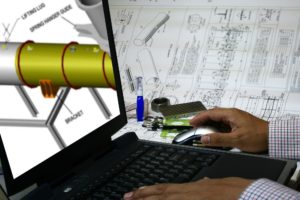
Computer Aided Design (CAD) Technicians—classified by the Bureau of Labor Statistics under "Drafters" (SOC 17-3011)—use specialized software to create technical drawings and schematics for buildings, products, and systems across industries. According to May 2024 BLS wage data, drafters earn a median salary of $61,430 annually, with architectural services employing nearly half of all CAD professionals. Employment is projected to decline by 2% from 2022 to 2032, but candidates with digital skills and 3D modeling experience remain competitive.
Computer-Aided Design (CAD) Technicians transform ideas into precise technical drawings using specialized software. Whether you're interested in designing sustainable buildings, aerospace components, or consumer products, CAD skills provide the technical foundation for bringing concepts to reality across industries. Your unique interests can shape which specialization you pursue, and understanding the full scope of this career helps you make informed educational decisions.
What Does a Computer-Aided Design Technician Do?
A Computer Aided Design or CAD Technician works in an office environment with specialized software for the design of structures, products, and systems. Regardless of which industry or area they wor ink, their skills are transferable. Modern CAD technicians work with either 2D (surface modeling) or 3D plans (solid modeling), and many now use Building Information Modeling (BIM) software that integrates design with project management and construction data. CAD Technicians are increasingly involved in 3D printing workflows, now a standard technology that allows rapid production of prototypes and models.
Their tasks include a variety of design responsibilities, including producing design plans for prototypes. They may or may not be engineers with the technical knowledge that entails, and they may or may not have input into the production of the design. They are also involved in the modification of digital designs while a product is still in the planning and design stage. This means they may be required to add technical data for reporting and collaborate with engineers, architects, and project managers.
New products, especially electronic products, require designs and prototypes to ensure that they work as described. This is why any new product on the market requires lengthy testing, design approval, working models, prototypes, and finally the finished design. Increasingly, CAD Technicians are using their transferable skills to design environments and landscapes, including sustainable infrastructure and green building projects. In this way, they have some skills in common with GIS specialists.
Computer-Aided Design Technicians go by other names, including drafters, CAD drafters, and CAD operators. Their roles are usually similar with some variation.
Where Does a Computer-Aided Design Technician Work?
CAD skills are transferable and useful in a wide range of industries. However, one industry stands out as employing more than any other. Architectural services employ 49%—that's nearly half—of all Computer Aided Design Technicians. This includes work on buildings and landscape architecture. Architecture requires superior technical skills at every step of the way, including the design of models of every system and the building itself. Similarly, 9% work in construction, although these CAD technicians typically work with existing designs rather than at the concept stage as they would with architects.
The second largest area of employment for CAD technicians is in manufacturing. As mentioned above, products require lengthy testing and design. CAD is one of the most important steps between the initial conceptual design drawings and producing the prototype, especially with the widespread use of 3D modeling. Manufacturing can include areas as diverse as clothing, automotive parts, aerospace parts, electronics, heavy machinery, and much more.
Many CAD positions now offer remote or hybrid work options since the work is primarily computer-based. However, some roles in manufacturing, construction, or collaborative design environments may require on-site presence for team coordination and direct consultation with engineers or architects.
What Is the Average Computer Aided Design Technician Salary?
CAD Technician salaries vary significantly based on specialization and industry. CAD Technicians are classified by the Bureau of Labor Statistics under the occupational category "Drafters" (SOC 17-3011). According to the most recent BLS wage data (May 2024), drafters earn a median salary of $61,430 annually. The range spans from $39,870 for the lowest 10% of earners to $96,140 for the highest 10% of earners. Your earning potential grows with experience, advanced software skills, and specialization in high-demand industries like aerospace or sustainable architecture.
Salary variation by specialty includes electrical and electronics drafters earning the highest median at $68,260. Mechanical drafters earned close to the overall median at $63,600, while architectural and civil drafters earned slightly lower at $60,630. These figures reflect the technical complexity and demand within each specialization.
CAD Technician Jobs & Job Description
A computer-aided design (CAD) technician is required to have a strong knowledge of specialized computer software that allows them to design detailed working diagrams of machinery, structures, and other products and systems. A CAD technician at the beginning of his or her career may be tasked with the following job duties:
- Coordinate the collection of data and incorporate this information into detailed design drawings and specifications for mechanical equipment, structures, tools, products, and systems using computer-aided drafting tools
- Produce three-dimensional models of products, using computer-aided design (CAD) software and 3D modeling applications
- Lay out and draw schematic, orthographic, or angle views to depict functional relationships of components, assemblies, system,s and machines
- Compute mathematical formulas to develop and design specifications for components, structures, machinery, or products
- Work with customer representatives to review schematics and answer questions pertaining tothe installation of systems
- Modify and revise designs to correct operating or production problems that may arise
- Check the dimensions of the materials to be used and assign numbers to the materials
- Develop proficiency with the latest CAD software, BIM platforms, and parametric design tools
A computer-aided design technician who has developed several years of work experience may take on more of an advisory and oversight role. His or her job duties may include:
- Review and analyze specifications, sketches, drawings, ideas, and related data to assess the efficiency and feasibility of the design
- Coordinate with and consult other workers to design, lay ou,t or detail components and systems, and resolve design problems
- Discuss designs or plans with clients and other stakeholders
- Supervise engineering or other technical personnel
What Is the Job Demand for Computer-Aided Design Technicians?
3D printing and automation technologies have revolutionized the manufacture of prototypes, improved accuracy, and sped up production of new types of products. These advances have increased efficiency but also affected employment projections. According to BLS data, employment of drafters is projected to decline by 2% from 2022 to 2032. This represents approximately 1,700 fewer jobs over the decade. However, CAD specialists with strong digital skills remain better positioned within this trend. Candidates are advised to improve their employability with advanced software proficiency, particularly in BIM, parametric design, and emerging technologies. Specializations in high-growth areas like sustainable architecture, renewable energy infrastructure, and advanced manufacturing continue to show stronger demand.
What Are the Education Requirements to Become a Computer Aided Design Technician?
High school students will need to demonstrate scientific proficiency, particularly in math and information technology. Technical skills are more highly valued with CAD Technician work than for most other subjects, but good grades in math, and in some cases physics (for architecture or engineering roles), will help you in your intended career. However, any CAD qualification provides transferable skills that can be adapted to various industries.
There are multiple education pathways for prospective CAD Technicians. The first option is to pursue practical skills through post-secondary education. Most technical or community colleges offer CAD or related qualifications. These practical courses teach working skills throughout the duration of the course, typically ranging from several months to two years. Students who pursue this path may need to seek internships or other avenues of working experience to complement their technical training. You may be expected to carry out practical projects useful to the job.
The second path is to pursue a bachelor's degree, which opens more opportunities for prospective CAD technicians. Because these programs teach both practical skills and theory relevant to certain industries, a degree course provides many opportunities for entry into the CAD Technician jobs market. With the employment market facing automation challenges, students should consider pursuing degrees where possible and where their grades permit. For specialist roles such as environmental engineering or sustainable design, it may be advisable to take a degree in Environmental Geoscience and take CAD as a minor or elective. Postgraduate degrees are not always required, but certification may be necessary in some instances. Geographic Information Systems may be an advisable course to complement some roles, particularly those involving spatial analysis or environmental planning.
CAD Technician - Related Degrees
What Kind Of Societies and Professional Organizations Do Computer-Aided Design Technicians Have?
CAD is a large, global discipline that has been around for decades.
- American Design Drafting Association: Their mission is to prepare CAD Technicians and other drafters to preserve the past and imagine the future. They provide certification that may be necessary for some roles in North America
- United States National CAD Standard: This organization facilitates communication between the various disparate CAD professionals in the US, ensuring a commitment to standards and continued cooperation in the construction and architecture industries
- ACADIA: The Association for CAD in Architecture promotes communication, standards, and critical thinking between CAD workers in the architecture field
Frequently Asked Questions
Do CAD Technicians need a bachelor's degree?
Not always. Many CAD Technicians enter the field with an associate's degree or technical certificate from community colleges. However, bachelor's degrees in fields like engineering technology or architecture open more advanced opportunities and higher salaries, particularly in competitive markets.
What's the difference between a CAD Technician and a CAD Engineer?
CAD Technicians focus on producing technical drawings from existing designs and specifications. CAD Engineers typically have engineering degrees and are involved in design decisions, calculations, and problem-solving beyond drafting. Engineers carry greater responsibility for the technical integrity of designs.
Is CAD a good career in 2026?
CAD remains valuable, especially for technicians who develop skills in 3D modeling, Building Information Modeling (BIM), and specialized software. While automation affects some routine tasks, demand continues for skilled drafters in architecture, manufacturing, and specialized fields like sustainable design and aerospace.
Can you work remotely as a CAD Technician?
Yes, many CAD positions now offer remote or hybrid options since the work is primarily computer-based. However, some roles in manufacturing or construction may require on-site presence for coordination with teams and direct consultation with project stakeholders.
What CAD software should I learn first?
AutoCAD remains the industry standard across many fields. For architecture, learn Revit and BIM software. For mechanical design, SolidWorks or CATIA is essential. For general 3D modeling, SketchUp or Rhino provide strong foundation. Most programs in CAD technology expose you to multiple software platforms during training.
Key Takeaways
- Versatile Career Path: CAD skills transfer across industries from architecture (49% of jobs) to manufacturing, aerospace, and environmental design, giving you flexibility in career direction.
- Multiple Education Routes: Enter through associate's degrees, technical certificates, or bachelor's programs, depending on career goals and salary expectations. Each pathway offers different opportunities for advancement.
- Digital Skills Matter: Professionals with 3D modeling, BIM, and advanced software proficiency remain competitive despite automation trends. Continuous learning in emerging technologies protects career prospects.
- Salary Variation by Specialty: Earnings vary significantly by specialization, with electrical drafters typically earning the highest salaries ($68,260 median) and architectural drafters close to the overall median ($60,630).
- Evolving Field: While automation impacts some routine tasks, demand continues for skilled technicians who can work with complex systems, collaborate across teams, and adapt to new software platforms and design methodologies.
Ready to explore CAD Technician programs? Discover degree and certificate programs that can prepare you for this technical, creative career path.
May 2024 US Bureau of Labor Statistics salary and job growth figures for drafters reflect national data, not school-specific information. Conditions in your area may vary. Data accessed January 2026.