

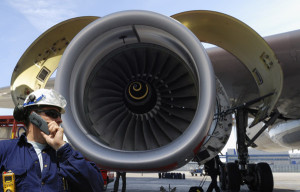
An Aerospace Engineer designs and tests aircraft, spacecraft, satellites, and missiles, requiring at least a bachelor's degree in aerospace engineering from an ABET-accredited program. With a median salary of $134,830 and 6% projected job growth through 2034, aerospace engineers work primarily in office settings using advanced computer systems, with periodic visits to manufacturing facilities and testing sites.
Aerospace engineering combines physics, mathematics, and creativity to solve humanity's most ambitious challenges: building machines that fly. Whether you're fascinated by commercial aviation, military defense systems, or the emerging space economy, aerospace engineering offers a career at the cutting edge of technology. Here's what you need to know about this dynamic field.
What Does an Aerospace Engineer Do?
Aerospace engineers design aircraft, spacecraft, satellites, missiles, and other systems that travel through air or space. You'll spend significant time creating prototypes and testing them—this hands-on evaluation is where theoretical designs meet real-world physics. Expect to analyze test data, troubleshoot design flaws, and iterate on solutions until the design meets safety, performance, and regulatory standards.
Most aerospace engineers specialize in either aeronautical or astronautical engineering early in their careers. Aeronautical engineers focus on aircraft that operate within Earth's atmosphere—commercial airplanes, military jets, helicopters, and drones. Astronautical engineers design spacecraft, satellites, launch vehicles, and systems that operate beyond the atmosphere. This specialization often happens during the junior or senior year of your undergraduate program, though some engineers transition between specializations as their careers progress.
Beyond design work, you may evaluate other engineers' designs to ensure they meet ethical, safety, and environmental standards. It's not unusual to oversee the building process as well, ensuring proper deadlines are met and specifications are followed. Aerospace engineers typically collaborate with multidisciplinary teams including mechanical engineers, materials scientists, software developers, and manufacturing specialists throughout the design and production process.
As you gain experience, your responsibilities expand. Senior aerospace engineers often direct entire projects, manage engineering teams, coordinate with contractors, and present technical findings to non-technical stakeholders. You might also conduct research to develop new technologies—from advanced propulsion systems to materials that withstand extreme temperatures.
Where Do Aerospace Engineers Work?
Aerospace engineers spend most of their time in office environments working with advanced computer-aided design (CAD) software, computational fluid dynamics programs, and sophisticated simulation tools. These aren't your typical office jobs—you're running complex analyses, modeling airflow patterns, testing structural integrity virtually, and collaborating with teams spread across multiple facilities or even countries.
At times, you'll find yourself in manufacturing environments overseeing the construction and implementation of your designs. This might mean visiting aircraft assembly plants, spacecraft integration facilities, or engine testing sites. Some aerospace engineers work in laboratories conducting materials testing or propulsion research. Others spend time at remote testing facilities—think desert proving grounds or coastal launch sites—observing flight tests and collecting performance data.
Most aerospace engineers work full-time on regular schedules, though managing larger projects can require overtime hours, particularly when deadlines approach or when troubleshooting critical issues. Engineers working on defense projects may need security clearances, which can affect where you work and what projects you access. Those in the commercial space sector might experience the fast-paced culture of private companies like SpaceX or Blue Origin, while defense contractors and NASA offer more traditional corporate or government environments.
How Much Do Aerospace Engineers Earn?
Aerospace engineering offers strong earning potential. According to the Bureau of Labor Statistics, aerospace engineers earn a median annual salary of $134,830 as of May 2024. The lowest-paid 10% earn around $85,350, while the highest-paid 10% earn over $205,850 annually.
Several factors influence where you'll fall within this range. Geographic location matters significantly—aerospace engineers in Washington, California, and Maryland typically earn more than the national median, reflecting high concentrations of aerospace employers in those states. Your specialization also affects earnings. Engineers working on cutting-edge space systems or advanced military aircraft often command higher salaries than those in more established sectors.
Experience and credentials drive salary growth throughout your career. Entry-level engineers with bachelor's degrees start at the lower end of the scale, but earnings increase substantially with experience. Engineers in leadership roles, those with Professional Engineer (PE) licenses, or professionals with security clearances typically earn well above the median. Master's degrees and specialized certifications can also boost earning potential, particularly for roles involving complex research or systems integration.
Industry matters too. Aerospace engineers working for federal agencies or major defense contractors often receive comprehensive benefits packages including security clearance bonuses, while those in commercial aerospace might see equity compensation at rapidly growing space companies.
Education Requirements for Aerospace Engineers
Aerospace engineers need at least a bachelor's degree to enter the field, typically in aerospace engineering. All accredited aerospace engineering programs must meet standards set by ABET (Accreditation Board for Engineering and Technology), ensuring consistent quality across institutions. Some universities offer five-year programs that allow students to earn both a bachelor's and a master's degree simultaneously, which can accelerate their career trajectory.
Your undergraduate coursework will cover thermodynamics, aerodynamics, propulsion systems, orbital mechanics, aircraft structures, materials science, and control systems. Expect heavy doses of calculus, differential equations, and physics—the mathematical foundation is essential for understanding flight dynamics and structural analysis. Many programs include hands-on projects where you'll design and build scale aircraft or participate in competitions like NASA's Student Launch Initiative.
While entry-level positions don't require licensure, more advanced roles may benefit from a Professional Engineer (PE) license. Unlike civil or mechanical engineering, PE licensure is less common in aerospace because many engineers work on projects that fall under federal jurisdiction or corporate oversight rather than public projects. However, if you plan to consult independently, sign off on designs for public projects, or pursue certain government positions, PE licensure becomes valuable. Requirements vary by state but typically include an accredited engineering degree, four years of progressive work experience, and passing both the Fundamentals of Engineering (FE) exam and the PE exam specific to your discipline.
Graduate degrees aren't required but are increasingly common, especially for research positions, specialized roles in propulsion or avionics, or advancement into technical leadership. A master's degree typically takes 1-2 years and allows deeper specialization in areas like computational fluid dynamics, space systems, or hypersonic flight. PhDs are essential for academic careers or high-level research positions at national laboratories.
Career Path & Advancement Opportunities
Your aerospace engineering career typically follows a clear progression. You'll start as an entry-level engineer working under senior engineers' supervision, focusing on specific components or subsystems. You might analyze stress loads on wing structures, model airflow around fuselage designs, or test propulsion system components. These early years build your technical foundation and expose you to how aerospace projects move from concept to reality.
After 3-5 years, you'll likely advance to mid-level engineer positions with more autonomy. You'll take ownership of larger subsystems, lead small teams, and interact directly with clients or stakeholders. You might coordinate between design and manufacturing teams or represent your project in technical reviews. This is when many engineers decide whether to pursue technical specialist roles or management tracks.
The technical specialist path leads to senior engineer, principal engineer, or technical fellow positions. These roles involve solving the most complex engineering problems, mentoring junior engineers, and establishing technical direction for major programs. You'll become the go-to expert in specific areas—maybe computational aerodynamics, satellite systems, or engine design. Some technical specialists eventually transition into consulting or start their own engineering firms.
The management track leads to program management, engineering management, or director-level positions. You'll oversee entire projects, manage budgets and schedules, coordinate multidisciplinary teams, and communicate with executives and clients. Success requires strong technical knowledge plus business acumen, communication skills, and leadership ability.
Some aerospace engineers transition into related fields like technical sales, where engineering knowledge helps sell complex aerospace systems to government or commercial customers. Others move into government oversight roles with the FAA or Department of Defense, setting regulations and standards. Some engineers pivot to adjacent industries like automotive (particularly electric vehicles and autonomous systems) or renewable energy, where aerospace engineering principles apply.
Job Outlook & Industry Growth
The aerospace engineering field is experiencing steady growth. According to the Bureau of Labor Statistics, employment of aerospace engineers is projected to grow 6% from 2024 to 2034—faster than the average for all occupations. This translates to approximately 4,500 job openings annually over the decade, driven by both new positions and the need to replace retiring engineers.
Several factors fuel this growth. National defense remains a major driver, with continued demand for advanced fighter jets, unmanned aerial systems, hypersonic weapons, and next-generation military satellites. The United States maintains significant aerospace manufacturing capability, and defense modernization efforts create ongoing opportunities.
Commercial space exploration represents the fastest-growing sector. Companies like SpaceX, Blue Origin, and others have dramatically reduced satellite launch costs, opening new markets for commercial satellite constellations, space tourism, and eventual lunar and Mars missions. The commercialization of space creates demand for engineers across the industry—from launch vehicles to spacecraft systems to ground infrastructure.
Environmental initiatives are reshaping commercial aviation. Airlines face increasing pressure to reduce carbon emissions and noise pollution, driving demand for engineers who can redesign aircraft with improved fuel efficiency, develop electric or hybrid propulsion systems, and optimize flight operations. Similar to environmental engineering more broadly, this intersection of engineering and sustainability creates new opportunities.
The drone industry continues expanding beyond hobbyist applications into commercial and industrial uses—from package delivery to agricultural monitoring to disaster response. This growth creates opportunities for aerospace engineers specializing in autonomous systems and small-scale aviation.
Geographic concentration matters for job prospects. Washington (home to Boeing and numerous aerospace suppliers), California (aerospace manufacturers and commercial space companies), Texas (NASA Johnson Space Center and expanding commercial space sector), Alabama (rocket manufacturing), and the Washington DC area (defense contractors and government agencies) offer the most opportunities.
Essential Skills for Success
Success in aerospace engineering requires both technical expertise and professional capabilities. On the technical side, you'll need strong analytical skills for solving complex mathematical problems and evaluating design tradeoffs. Proficiency with industry-standard software is essential—expect to master CAD programs like CATIA or Siemens NX, computational fluid dynamics tools like ANSYS Fluent, and structural analysis software like NASTRAN or Abaqus. Many roles also require programming skills in languages like Python, MATLAB, or C++ for automating analyses and processing test data.
Systems thinking distinguishes good aerospace engineers from great ones. Aircraft and spacecraft are incredibly complex systems where changes to one component affect everything else. You need to understand how propulsion, structures, aerodynamics, controls, and avionics interact. This holistic perspective helps you anticipate problems before they occur and design robust solutions.
Communication skills matter more than many students expect. You'll write technical reports, present findings to diverse audiences, and explain complex concepts to non-engineers. Project managers, executives, and clients need clear explanations of technical challenges, proposed solutions, and associated risks. Poor communication can derail excellent engineering work.
Collaboration and teamwork are daily requirements. Aerospace projects involve dozens or hundreds of engineers from multiple disciplines. You'll work with materials scientists developing lightweight composites, software engineers programming flight control systems, manufacturing engineers ensuring designs can actually be built, and quality assurance teams verifying everything meets specifications. Success requires respecting others' expertise, communicating clearly across disciplines, and finding solutions that satisfy everyone's constraints.
Attention to detail can be literally life-or-death in aerospace engineering. A miscalculation, overlooked stress concentration, or incorrect assumption can cause catastrophic failures. You'll develop methodical work habits, implement robust verification processes, and cultivate healthy skepticism about your own work and others'.
For defense-related positions, understand that security clearances are often required. This means background investigations, restrictions on foreign national colleagues, and limitations on discussing your work outside secure facilities. Some engineers embrace this environment; others find it restrictive.
Degrees Related to Aerospace Engineering
Professional Organizations & Resources
Joining professional organizations provides networking opportunities, access to industry publications, continued education, and career development resources. Here are the most valuable organizations for aerospace engineers:
American Institute of Aeronautics and Astronautics (AIAA): The world's largest professional society dedicated to aerospace engineering, AIAA offers technical conferences, publications, networking events, and career resources. Student memberships provide access to aerospace professionals, scholarship opportunities, and design competitions. AIAA's journals publish cutting-edge research, and their conferences bring together engineers from across the industry.
SAE International: With over 138,000 members across transportation industries, SAE International includes a large aerospace contingent. They provide databases of technical standards, conferences featuring the latest aerospace technologies, continuing education opportunities, and an active career center. SAE's standards are widely used across the aerospace industry, making membership particularly valuable for engineers working on certification and compliance.
Sigma Gamma Tau: Sigma Gamma Tau is the national aerospace engineering honor society recognizing students in strong academic standing at ABET-accredited programs. Membership acknowledges academic achievement and provides networking with accomplished aerospace professionals. They also extend membership to aerospace engineers who have made significant contributions to the field.
Active participation in these organizations—attending conferences, contributing to technical committees, or writing for publications—accelerates career development and keeps you connected to industry trends and opportunities.
Frequently Asked Questions
What's the difference between aeronautical and astronautical engineering?
Aeronautical engineers focus on aircraft that operate within Earth's atmosphere, including commercial airplanes, military jets, helicopters, and drones. Astronautical engineers design spacecraft, satellites, launch vehicles, and systems that operate outside the atmosphere. Most aerospace engineering programs allow you to specialize in one area during your junior or senior year, though the foundational coursework is similar.
Can I become an aerospace engineer without a PE license?
Yes, most entry-level and mid-level aerospace engineers don't hold Professional Engineer (PE) licenses. PE licensure is less common in aerospace than in civil or mechanical engineering because many aerospace engineers work on defense projects, commercial aviation, or space systems that fall under federal oversight rather than state licensing requirements. PE licenses become important primarily for independent consultants, engineers working on public infrastructure projects, or those pursuing certain senior government positions.
Do aerospace engineers only work in the defense industry?
No, while defense contractors employ many aerospace engineers, substantial opportunities exist elsewhere. Commercial airlines, NASA, and other space agencies, private space companies like SpaceX and Blue Origin, automotive manufacturers developing electric vertical takeoff aircraft, drone manufacturers, research institutions, and aerospace suppliers all hire aerospace engineers. The field is diversifying rapidly as commercial space exploration expands and new aviation technologies emerge.
How competitive is the aerospace engineering job market?
Aerospace engineering is moderately competitive. With 6% projected growth through 2034 and approximately 4,500 annual openings, opportunities exist for qualified candidates. However, entry-level positions can be competitive, especially at prestigious employers like NASA, SpaceX, or major defense contractors. Many positions require U.S. citizenship due to export control regulations and security clearance requirements, which can limit the applicant pool. Geographic flexibility helps—being willing to relocate to aerospace hubs significantly improves job prospects.
What programming languages should aerospace engineers know?
MATLAB and Python are most commonly used for data analysis, simulations, and automating calculations. C++ and C are important for flight software and embedded systems. Increasingly, aerospace engineers work with machine learning frameworks like TensorFlow or PyTorch for optimization and predictive modeling. While you don't need to be a software engineer, basic programming proficiency makes you significantly more valuable and opens more career opportunities.
Key Takeaways
- Strong Earning Potential: Aerospace engineers earn a median salary of $134,830 annually, with the top 10% earning over $205,850, making it one of the higher-paying engineering disciplines.
- Bachelor's Degree Required: Entry into the field requires an ABET-accredited bachelor's degree in aerospace engineering, with many engineers pursuing master's degrees for specialized roles or advancement opportunities.
- Choose Your Specialization: Engineers typically specialize in either aeronautical engineering (aircraft within Earth's atmosphere) or astronautical engineering (spacecraft and systems beyond the atmosphere) during their undergraduate studies.
- Growing Opportunities: Employment is projected to grow 6% through 2034 with approximately 4,500 annual openings, driven by defense modernization, commercial space exploration, and environmental initiatives in aviation.
- Varied Work Environment: Most time is spent in offices using advanced CAD and simulation software, with periodic visits to manufacturing facilities, testing sites, and launch facilities for hands-on oversight and data collection.
Ready to launch your aerospace engineering career? Explore ABET-accredited aerospace engineering programs that align with your specialization interests and career goals.
2024 US Bureau of Labor Statistics salary and job growth figures for aerospace engineers reflect national data, not school-specific information. Conditions in your area may vary. Data accessed January 2026.