

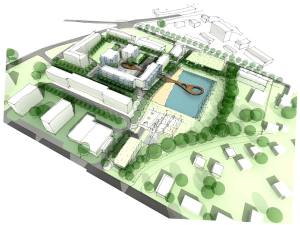
Landscape architects design outdoor spaces by combining environmental science, art, and technical skills to create sustainable parks, urban landscapes, and green infrastructure. The median salary is $79,660 annually as of 2024, with job growth projected at 2% through 2034. A bachelor's degree and state licensure are required to practice professionally.
Considering a career shaping the spaces where people live, work, and play? Landscape architecture offers a unique blend of creativity and environmental problem-solving. Whether you're drawn to designing sustainable urban parks, restoring natural habitats, or reimagining how communities interact with their environment, this field provides meaningful opportunities to make lasting impacts on both the built and natural world.
The term "landscape architecture" was coined in the early 19th century and became more widely recognized after Frederick Law Olmsted and Calvert Vaux's influential work on Central Park, which began in 1857. Today's landscape architects continue that legacy while addressing modern challenges like climate adaptation, sustainable infrastructure, and rapidly urbanizing communities. The profession has evolved from purely aesthetic design to encompass complex environmental systems, requiring practitioners to understand how natural and built environments interact and influence each other.
What Does a Landscape Architect Do?
Landscape architects work with natural and artificial environments to create wildlife habitats, innovative spaces, sustainable infrastructure, and thriving communities. The profession requires combining design skills, technical knowledge, ecological understanding, and creative problem-solving across diverse projects and settings.
Core Disciplines and Specializations
The main disciplines within landscape architecture include landscape design, landscape planning, landscape management, urban design, and academia. Professional landscape architects combine art and design with physical, social, economic, political, and cultural factors to generate creative solutions for urban and natural environments.
Success in this field requires expertise across multiple areas: design, geography, science, engineering, art, horticulture, technology, social sciences, politics, history, philosophy, project management, and contract law. This interdisciplinary knowledge base allows landscape architects to address complex environmental and social challenges from multiple perspectives.
Typical Projects and Responsibilities
Landscape architects may be employed to plan, design, and project-manage public and private spaces, including single- and multi-residential areas, public parks, playgrounds, university and government campuses, shopping centers, golf courses, waterways, public gardens, roads and highways, and industrial parks.
Additional work areas include visual impact assessment, expert witness testimony, natural resource management, parks and wildlife planning, urban regeneration, and streetscape design. A typical day might involve creating design renderings in the morning, meeting with clients over lunch, visiting a construction site in the afternoon, and reviewing contractor proposals in the evening.
Why Landscape Architecture Matters
Landscape architecture is an essential career because it helps make the world more livable, protects the environment, and maintains a focus on creativity and design. As climate change intensifies and urban populations grow, landscape architects play crucial roles in developing green infrastructure that manages stormwater, reduces urban heat islands, and creates resilient communities.
Where Does a Landscape Architect Work?
Landscape architects work for government agencies, municipal councils, developers, contractors, major landowners, and local authorities. Projects range from small neighborhood-scale interventions to comprehensive regional planning initiatives. Some landscape architects also work for environmental planning firms or conservation organizations focused on habitat restoration and natural resource protection.
Most work takes place in offices and studios, where landscape architects create plans and designs using computer-aided design (CAD) software like AutoCAD, SketchUp, and Rhino. Geographic Information Systems (GIS) software is essential for site analysis and environmental assessment. However, the job also requires frequent site visits to assess soil conditions, existing vegetation, topography, and spatial relationships.
Landscape architects typically work standard office hours, though project deadlines often require evening and weekend work. Site visits may involve walking over rough terrain, climbing hills to assess viewsheds, and working outdoors in various weather conditions. Travel requirements vary by employer and project type—some positions involve primarily local projects, while others may include regional or national travel.
The profession emphasizes collaboration. Landscape architects work as part of teams that include other architects, engineers, community members, contractors, and stakeholders. Strong communication skills are essential for presenting design concepts, negotiating with clients, and coordinating with construction teams.
What Is the Average Landscape Architect Salary?
Landscape architects earned a median salary of $79,660 as of May 2024, according to the U.S. Bureau of Labor Statistics. The median represents the midpoint—half of landscape architects earn more than this amount, while half earn less. The field employed approximately 21,800 landscape architects nationwide in 2024.
The lowest 10% of landscape architects earned less than $51,990 annually, while the highest 10% earned more than $132,250. Your earning potential depends on factors including years of experience, geographic location, employer type (private firm vs. government), and specialized skills.
Entry-level landscape architects typically start at lower salaries as they complete the required internship hours for licensure. With experience and licensure, compensation increases significantly. Senior landscape architects with 10+ years of experience and project management responsibilities often earn salaries in the upper ranges.
Job demand for landscape architects is projected to grow 2% between 2024 and 2034, slower than the average for all occupations. This growth will result in approximately 800 new landscape architect positions over the decade. Job openings will also arise from the need to replace workers who retire or transition to other careers.
How Landscape Architecture Compares to Related Careers
| Career | Primary Focus | Education Required | License Required | Typical Projects |
|---|---|---|---|---|
| Landscape Architect | Outdoor space design, environmental systems | Bachelor's or Master's in Landscape Architecture | Yes (state-issued) | Parks, campuses, urban green spaces, habitat restoration |
| Landscaper | Installation and maintenance of outdoor spaces | High school diploma, on-the-job training | No | Lawn care, garden installation, and tree planting |
| Urban Planner | Land use planning, community development | Master's in Urban Planning | Optional (AICP certification) | Zoning plans, comprehensive plans, and transportation planning |
What Do Landscape Architects Study?
Landscape architects require a minimum of a bachelor's degree in landscape architecture to enter the field. Most accredited programs lead to either a Bachelor of Landscape Architecture (BLA) or a Bachelor of Science in Landscape Architecture (BSLA) degree. These undergraduate programs typically require four to five years of study.
Coursework combines design studios, environmental science, horticulture, site engineering, construction methods, and professional practice. Students learn to use industry-standard software, including AutoCAD for technical drawings, SketchUp for 3D modeling, Adobe Creative Suite for presentations, and GIS for environmental analysis.
Graduate Degrees and Career Advancement
While a bachelor's degree allows you to practice landscape architecture after licensure, a graduate degree opens doors to advanced positions, academic careers, and specialized practice areas. Master of Landscape Architecture (MLA) programs typically require two to three years of study beyond the bachelor's degree.
Graduate programs offer opportunities to specialize in areas like ecological restoration, urban design, historic preservation, or sustainable infrastructure. Many landscape architects pursue graduate education after working in the field for several years, bringing practical experience into advanced study.
Professional Licensing
Practicing as a landscape architect requires professional licensure in most U.S. states. The Council of Landscape Architectural Registration Boards (CLARB) develops and administers the Landscape Architect Registration Examination (LARE), which tests knowledge across four sections: project and construction administration; inventory and analysis; design; and grading, drainage, and construction documentation.
Before taking the LARE, most states require candidates to complete a supervised internship, typically ranging from 1 to 4 years, depending on their educational background. This practical experience under the supervision of licensed landscape architects helps bridge the gap between academic training and professional practice.
Licensing requirements vary by state, so verify specific requirements through your state's licensing board. The CLARB website maintains current information on requirements for all U.S. states and territories.
The Path to Professional Practice
Most landscape architecture programs require internships or cooperative education experiences as part of the curriculum. These opportunities provide hands-on experience with real projects, client interactions, and professional office environments.
After graduation, the path to licensure typically involves: completing required experience hours (documented through CLARB's Experience Documentation system), studying for the four sections of the LARE, passing all exam sections, and applying for state licensure. The entire process from graduation to licensure usually takes three to four years of full-time work.
Some graduates face challenges during this period—balancing demanding entry-level positions with exam preparation requires discipline and time management. However, completing licensure significantly increases earning potential and career opportunities.
Landscape Architects - Related Degrees
Professional Societies and Organizations
The American Society of Landscape Architects (ASLA) is the primary professional organization representing landscape architects across the United States. Founded to advance knowledge, education, and skill in landscape architecture as an instrument of public welfare, ASLA provides continuing professional education to help practitioners maintain their educational licensing requirements. Members gain access to professional development resources, industry publications, networking opportunities, and advocacy efforts that shape public policy affecting the profession.
For educators and those interested in landscape architecture education, the Council of Educators in Landscape Architecture (CELA) represents faculty members and others engaged in landscape architectural education. Through an annual conference, regional meetings, and scholarly publications, CELA provides opportunities for personal interaction among landscape architecture educators, students, and practitioners. The organization supports research, pedagogical innovation, and the advancement of landscape architecture education across accredited programs.
Frequently Asked Questions
What's the difference between a landscape architect and a landscaper?
Landscape architects are licensed professionals who design outdoor spaces and require a bachelor's or master's degree and state licensure. They create comprehensive plans addressing drainage, grading, plant selection, and environmental systems. Landscapers implement and maintain these designs, focusing on installation and upkeep of gardens, lawns, and plantings. Think of landscape architects as the designers and planners, while landscapers are the skilled craftspeople who bring those plans to life.
Do I need a license to practice landscape architecture?
Yes, most U.S. states require professional licensure to use the title "landscape architect" and offer design services to the public. Licensure involves completing an accredited degree program, gaining supervised work experience (typically 1-4 years), and passing the Landscape Architect Registration Examination (LARE). Some states have exemptions for specific project types or employment situations, but licensure is generally necessary for independent practice.
How long does it take to become a landscape architect?
The timeline typically spans 7-10 years from starting your bachelor's degree to achieving licensure. This includes 4-5 years for a bachelor's degree, 1-4 years of supervised work experience depending on your educational background, and 1-2 years to complete all four sections of the licensing exam while working. Some professionals pursue a master's degree, which adds 2-3 years but may reduce required experience hours in certain states.
What software do landscape architects use?
Industry-standard software includes AutoCAD for technical drawings and construction documents, SketchUp for 3D modeling and conceptual design, Adobe Creative Suite (particularly Photoshop, Illustrator, and InDesign) for presentations and graphics, and Geographic Information Systems (GIS) for site analysis and environmental assessment. Many firms also use specialized software like Lumion for rendering, Rhino for complex 3D modeling, and Vectorworks for integrated design and documentation.
Can landscape architects work remotely?
Remote work is possible for certain aspects of landscape architecture, particularly design development, plan production, and client presentations. However, the profession requires regular site visits to assess existing conditions, meet with contractors during construction, and verify project implementation. Many landscape architects now work in hybrid arrangements, spending some days in the office or on site and other days working remotely on design and documentation tasks.
Key Takeaways
- Competitive Salaries: Landscape architects earn a median salary of $79,660 annually as of May 2024, with the top 10% earning over $132,250. Geographic location, experience level, and specialization significantly impact earning potential.
- Rigorous Education Path: The career requires a bachelor's degree from an accredited program (4-5 years), followed by 1-4 years of supervised experience and successful completion of the four-section LARE licensing examination. Graduate degrees enhance advancement opportunities.
- Interdisciplinary Expertise: Success requires mastery across design, environmental science, engineering, horticulture, and project management. Proficiency in AutoCAD, GIS, SketchUp, and Adobe Creative Suite is essential for modern practice.
- Meaningful Impact: Landscape architects shape how communities interact with their environment, designing sustainable infrastructure that addresses climate change, manages stormwater, creates wildlife habitats, and improves public health through access to green spaces.
- Modest Job Growth: Employment is projected to grow 2% from 2024 to 2034, adding approximately 800 positions over the decade. Despite slower-than-average growth, opportunities exist as experienced landscape architects retire and urbanization drives demand for sustainable design expertise.


Ready to explore landscape architecture programs? Discover accredited degree programs that combine creative design with environmental science and prepare you for professional licensure.

2024 US Bureau of Labor Statistics salary and job growth figures for landscape architects reflect national data, not school-specific information. Conditions in your area may vary. Data accessed January 2026.