
Environmental geologists assess geological safety for waste disposal sites, nuclear plants, and mining operations while helping remediate contaminated soil and groundwater. According to May 2022 BLS data, they earn a median salary of $76,530, with employment projected to grow 6% through 2032, resulting in approximately 6,900 average annual job openings from growth and worker replacement.
Environmental geology sits at the critical intersection of earth science and environmental protection. As communities face increasing challenges from contamination, waste disposal, and resource management, environmental geologists play an essential role in safeguarding public health and natural resources. This guide covers what environmental geologists do, where they work, educational requirements, and current career outlook based on the latest Bureau of Labor Statistics data.
Environmental geologists help prevent contamination of soil and groundwater by determining geologically safe locations for new landfills, coal ash disposal sites, and nuclear power plants. They also help plan underground waste disposal. For example, companies in certain industries dispose of chemical-laden wastewater by pumping it deep underground. Environmental geologists help determine sites for safe wastewater "injection wells" and may oversee the process.
These professionals also help plan new mines to make them as safe for the environment as possible. They decide where to put the mining waste and how to protect groundwater, and may develop a soil and water monitoring plan. They also evaluate the effects of proposed projects on the geological environment and how geology may limit development.
In addition to preventing contamination, environmental geologists also help clean up contamination from leaking underground gasoline storage tanks or chemical spills. For example, they examine the structure of the soils and rock, along with the flow of groundwater, to determine the extent and distribution of contaminants underground. They may also assist with the remediation of Superfund sites and old mines by assessing and mapping underground conditions.
Environmental geologists may also help protect and restore water resources, such as the Louisiana wetlands damaged by oil shipping channels and subsidence. They may also help prevent or repair coastal erosion. Some create natural hazard assessments and safe evacuation routes for local communities.
What Does an Environmental Geologist Do?
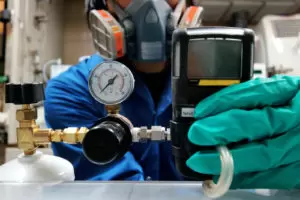
Environmental geologists plan or conduct geological field studies to collect data on a particular site, such as soil types, rock structure, and groundwater flows. They use geographic information systems (GIS) and other specialized software to create geologic maps, maps showing the distribution of contamination, or cross-sectional diagrams.
They then use the information gathered from field surveys, maps, well logs, bore holes, ground penetrating radar, aerial photos, and the geologic literature to understand underground geological conditions and potential natural hazards. They use their expertise and the information they've gathered to assess the geological safety of a location for a particular use, such as waste disposal or siting a nuclear power plant.
These professionals advise on how to reduce risk or restore contaminated sites, writing detailed reports of their findings for clients, regulatory agencies, and stakeholders. Their work combines technical analysis with practical problem-solving to protect communities and ecosystems from geological hazards and contamination.
Day-to-Day Responsibilities
Environmental geologists divide their time between fieldwork, laboratory analysis, and office-based reporting and planning. Their specialty lies in analyzing the earth and its impact on humans and the environment, with the primary intent of forecasting geological events and problems while informing governments, the public, and other stakeholders about preventative measures and potential environmental effects.
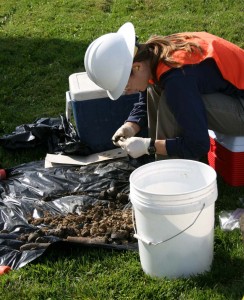
Core responsibilities include reading scientific literature and research reviews, conducting surveys and field studies to gather geological data, and analyzing material samples from project sites using various collection techniques. They gather soil samples for chemical analysis, study geophysical events like erosion and tectonic motion and their impact on human populations and the environment, and use maps, aerial photos, satellite imagery, geochemical surveys, and GIS data to perform comprehensive site analysis.
Environmental geologists identify and report on geological events such as volcanic activity, earthquakes, and mudslides. They prepare detailed reports and imagery based on fieldwork and laboratory research, compile survey information and data, analyze field data alongside aerial photographs and satellite images, create maps and cross-sectional diagrams, and develop recommendations for clients and regulatory agencies.
Senior environmental geologists take on additional leadership responsibilities beyond technical fieldwork. They supervise technicians and support staff while managing complex stakeholder communications with clients, colleagues, government officials, and the public. These professionals navigate environmental regulations, apply for grants and funding, and oversee project budgets, timelines, and communications. They supervise laboratory teams and monitor work quality, manage lab workspace and field resources, procure necessary materials, participate in interdisciplinary projects, and serve as consultants in their specialized areas of expertise.
Where Environmental Geologists Work
Many environmental geologists work for consulting firms, where they offer their expertise to oil and mining companies and other clients. They may also be employed directly by those companies, as well as by engineering and environmental remediation firms. Some work for state and local government agencies, such as geological surveys and environmental agencies. Others become professors or research staff at colleges and universities, or high school science teachers.
Environmental geologists typically split their time between office settings and field locations. They may work outside part of the time, collecting data on site or overseeing remediation operations. Field assignments often involve travel and may require long or irregular hours, particularly when conducting time-sensitive assessments or monitoring active remediation projects. Most geoscientists work full-time, with schedules varying based on project demands and seasonal factors affecting fieldwork accessibility.
Environmental Geologist Salary & Compensation
The Bureau of Labor Statistics classifies environmental geologists under the broader category of Environmental Scientists and Specialists, Including Health. According to May 2022 BLS data, these professionals earned a median annual salary of $76,530, with total national employment of approximately 84,930 workers.
Compensation varies significantly based on experience level, geographic location, industry sector, and educational credentials. The salary distribution across percentiles demonstrates the earning potential at different career stages:
| Experience Level | Percentile | Annual Salary |
|---|---|---|
| Entry Level | 10th Percentile | $50,130 |
| Early Career | 25th Percentile | $62,090 |
| Mid-Career | 50th Percentile (Median) | $76,530 |
| Experienced | 75th Percentile | $103,730 |
| Senior Level | 90th Percentile | $134,830 |
Source: May 2022 BLS data.
Those with advanced degrees, professional certifications, and specialized expertise in high-demand areas such as contamination remediation or natural hazard assessment typically command higher salaries. Geographic location also plays a significant role, with positions in areas facing active environmental challenges or supporting major natural resource industries often offering premium compensation.
Job Outlook & Employment Projections
Employment of environmental scientists and specialists, including environmental geologists, is projected to grow 6 percent from 2022 to 2032, according to the Bureau of Labor Statistics projections. This growth rate reflects increasing public awareness of environmental issues, expanding regulatory requirements, and the growing need for contamination assessment and remediation services.
The field is expected to generate approximately 6,900 average annual job openings from growth and worker replacement over the projection period. These openings arise from a combination of employment growth and the need to replace workers who transfer to different occupations or exit the labor force. The steady demand reflects the ongoing need for environmental protection expertise across multiple industries and government sectors.
Growth drivers include aging infrastructure requiring environmental assessment, expansion of renewable energy projects requiring geological surveys, increasing emphasis on sustainable resource management, and the continued need for contamination cleanup at legacy industrial sites. Climate change adaptation and natural hazard mitigation also contribute to expanding opportunities in the field.
Educational Requirements & Pathways
An increasing number of schools offer undergraduate majors and graduate degrees specifically in environmental geology. However, many environmental geologists have more general degrees in geology or geoscience degree programs. The educational pathway typically begins with a strong foundation in geological fundamentals before specializing in environmental applications.
Coursework includes instruction on the fundamentals of geology, such as structural geology and geochemistry, as well as coastal geomorphology, streams and flooding, soil science, natural hazards, waste disposal, and climate change. Programs integrate environmental science and mathematics throughout the curriculum. Courses typically include laboratory work, field trips to mines, and visits to other sites of geological interest. Students should supplement their studies in geology with electives in geography, environmental studies, mathematics, and information technology.
Geographic information systems (GIS) and specialized geological software are essential tools in modern environmental geology. Classes in GIS and computer science prove highly valuable for career preparation. These technical skills enable geologists to create detailed maps, analyze spatial data, and model underground contamination or groundwater flow patterns.
Practical experience significantly enhances employability. Students should pursue internships during undergraduate studies to build their resumes with real-world project experience. Environmental firms hire geologists with both bachelor's and master's degrees, though those with higher degrees typically receive higher starting salaries and have greater opportunities for advancement into senior roles and project management positions.
While bachelor's degree holders can find entry-level positions, many employers prefer or require master's degrees for roles involving independent project leadership, complex site assessments, or specialized contamination remediation work. Those interested in research careers, teaching at the university level, or achieving the highest levels of technical expertise should consider doctoral programs. However, for most industry and government positions, a master's degree represents the optimal balance of education investment and career opportunity.
Some states require Professional Geologist (PG) licensure for independent practice or to sign off on certain reports. Requirements vary by state but typically include a combination of education, supervised work experience, and passing a professional examination. Aspiring environmental geologists should research licensure requirements in their target work locations early in their educational planning.
Professional Organizations & Resources
Several professional organizations serve the environmental geology community, offering networking opportunities, continuing education, career development resources, and access to current research and industry trends.
The Association of Environmental & Engineering Geologists (AEG) offers professional development through technical and professional short courses and seminars. The organization's career page lists job opportunities, and members can access networking through technical meetings and a member directory. AEG publishes the Environmental & Engineering Geology Journal, which members can access for free, providing valuable insights into current research and best practices in the field.
The Geological Society of America (GSA), with over a century of service to the geological community, serves as the foremost professional association for geologists of all specializations. GSA maintains 18 divisions, including one specifically for Environmental and Engineering Geology. The organization facilitates networking opportunities through geoscience travel programs and tours, conferences, and regional meetings that bring together professionals from academia, industry, and government.
The American Institute of Professional Geologists (AIPG) focuses on certification and professional standards, supporting geologists seeking Professional Geologist licensure and maintaining ethical practice standards. The National Ground Water Association (NGWA) serves professionals working specifically with groundwater resources, a critical area for many environmental geologists. Additionally, most states maintain their own geological societies that provide local networking, educational opportunities, and insights into regional environmental and regulatory issues.
Membership in these organizations demonstrates professional commitment and provides access to resources that support career development throughout one's career. Many organizations offer reduced student membership rates, making early engagement affordable and beneficial for career advancement.
Frequently Asked Questions
What's the difference between an environmental geologist and a regular geologist?
Environmental geologists specialize in understanding how geological processes affect human health and environmental quality, focusing on contamination assessment, waste disposal safety, and remediation. While general geology degree programs cover broader earth science topics, including mineral exploration, petroleum geology, and paleontology, environmental geologists specifically apply geological knowledge to environmental protection and regulatory compliance. Both careers require strong geological foundations, but environmental geologists spend more time working with environmental regulations, contamination analysis, and stakeholder communication.
Do I need a graduate degree to become an environmental geologist?
A bachelor's degree in geology or geosciences qualifies you for entry-level environmental geology positions, particularly in consulting firms and some government agencies. However, many employers prefer master's degrees for positions involving independent project management, complex site assessments, or specialized remediation work. Graduate education also leads to higher starting salaries and faster career advancement. Those interested in research, university teaching, or reaching senior technical positions should consider graduate study, while bachelor's degree holders can gain experience and pursue graduate education later if desired.
Can environmental geologists work remotely?
Environmental geology requires significant fieldwork for site assessments, sample collection, and remediation oversight, which cannot be done remotely. However, many environmental geologists split their time between field and office work. Office-based tasks, including data analysis, GIS mapping, report writing, and client communication, can often be completed remotely. The balance between field and office work varies by role, with senior positions and consulting roles typically offering more flexibility for remote office work between field assignments. Expect to spend at least 25-50% of your time in the field, depending on your specific position and career stage.
What certifications help environmental geologists advance their careers?
Professional Geologist (PG) licensure, required in many states for independent practice, represents the most important credential for career advancement. This typically requires a geology degree, several years of supervised work experience, and passing professional examinations. Additional valuable certifications include OSHA Hazardous Waste Operations and Emergency Response (HAZWOPER) training required for work at contaminated sites, GIS professional certifications for advanced mapping capabilities, and project management credentials for those moving into leadership roles. Specialized certifications in areas like hydrogeology, soil science, or environmental site assessment can also differentiate professionals in competitive markets.
Is field work required for all environmental geology positions?
Most environmental geology positions require at least some fieldwork, as direct site assessment and sample collection form the foundation of geological analysis. However, the amount of field work varies significantly by role. Entry-level positions and field technician roles involve frequent field assignments, while senior geologists, project managers, and research positions may have less frequent but still regular field requirements. Some specialized roles in data analysis, GIS management, or regulatory compliance may involve minimal fieldwork, but these typically require substantial field experience first. If you're considering environmental geology but prefer to minimize field work, target senior-level positions after gaining necessary field experience, or consider related careers in environmental policy or GIS analysis.
Key Takeaways
- Diverse Responsibilities: Environmental geologists work on contamination assessment, waste disposal site planning, natural hazard evaluation, and ecosystem restoration, combining fieldwork with laboratory analysis, GIS mapping, and stakeholder communication to protect public health and environmental quality.
- Competitive Compensation: Environmental scientists and specialists earn a median salary of $76,530 nationally, according to May 2022 BLS data, with entry-level positions starting around $50,130 and experienced professionals in senior roles earning $103,730 to $134,830 or more annually.
- Steady Growth: Employment is projected to grow 6% from 2022 to 2032, with approximately 6,900 average annual job openings from growth and worker replacement as communities prioritize environmental protection, contamination remediation, climate change adaptation, and sustainable resource management.
- Educational Pathways: Most positions require a bachelor's degree in geology or geosciences with coursework in structural geology, geochemistry, soil science, GIS, and environmental regulations, while many employers prefer master's degrees for advanced roles offering higher compensation and greater responsibility.
- Multiple Career Settings: Environmental geologists find opportunities in environmental consulting firms, government agencies at federal, state, and local levels, engineering companies, natural resource extraction industries, environmental remediation firms, and academic institutions, with work environments ranging from field sites to laboratories to offices.
Ready to explore environmental geology programs? Discover accredited degree programs that prepare you for a career protecting our natural resources and communities.
2022 US Bureau of Labor Statistics salary and job growth figures for Environmental Scientists and Specialists reflect state and national data, not school-specific information. Conditions in your area may vary. Data accessed January 2026.