

Radiocarbon dating measures the decay of carbon-14 isotopes in organic materials to determine their age, typically within a range of 55,000-60,000 years. Developed in the 1940s by Willard Libby, this method revolutionized archaeology, environmental science, and climate research by providing accurate dates for wood, bone, pollen, and other organic remains. Today's Accelerated Mass Spectrometry (AMS) technique requires only tiny samples while delivering precise results.
Radiocarbon dating is one of the most powerful tools we have for understanding Earth's history. Whether you're curious about ancient civilizations, climate change patterns, or pursuing a career in environmental science, understanding how this dating method works opens doors to fascinating discoveries.
This absolute dating technique doesn't give you an exact calendar date—instead, it provides an approximate age, usually within a few years either way. That's still remarkably precise when you're dealing with materials that are thousands of years old. The other main approach, "Relative Dating," tells you the order of events without specific ages—think artifact sequences or fossil evolution studies.


Table of Contents
- The Science Behind Radiocarbon Dating
- History of Radiocarbon-14 Dating
- How Dates Are Calibrated
- Real-World Applications
- Career Pathways in Radiocarbon Dating
- Frequently Asked Questions
- Key Takeaways
The Science Behind Radiocarbon Dating
Here's how it works: Three carbon isotopes occur naturally as part of Earth's processes—carbon-12, carbon-13, and carbon-14. The unstable nature of carbon-14, with its precise half-life, makes it ideal for dating. While carbon-12 and carbon-13 are more common in the atmosphere, their abundance increases with fossil fuel burning, making them less reliable for study. Carbon-14 also increases, but it's so rare that this change is negligible.
The carbon-14 isotope has a half-life of 5,730 years (adjusted from the calculated initially 5,568 years in the 1940s). This means you can reliably date materials up to about 55,000-60,000 years old. After that point, there's not enough 14C remaining to measure accurately. For older materials, scientists use other absolute dating methods.
The 14C isotope forms constantly in the upper atmosphere when cosmic rays interact with nitrogen-14 atoms. It oxidizes quickly and gets absorbed by all living organisms—plants, animals, ocean dwellers, land creatures alike. When an organism dies, it stops absorbing the radioactive isotope and begins to decay immediately.
Radiocarbon dating measures the level of 14C isotopes remaining in organic material. Since we know the half-life, we can calculate backwards to estimate when the organism died. It takes 5,730 years to reach half the radioactivity present at death, another 5,730 years to get 25%, and so on.
What Can Be Dated?
Radiocarbon dating works only on organic materials—anything that was once alive or came from something living. The most common materials include:
- Wood and charcoal: From ancient fires, structures, and artifacts
- Seeds, spores, and pollen: Crucial for understanding past climates and vegetation
- Bone, leather, hair, fur, horn, and blood residue: Direct evidence of ancient life
- Peat, mud, and soil: Environmental samples preserving organic matter
- Shells, coral, and chitin: Marine and aquatic organism remains
- Pottery: When organic residue, like food particles, remains
- Wall paintings: Often contain crushed fruit, insects, or other organic binders
- Paper and parchment: Historical documents and manuscripts
This list isn't exhaustive—most organic material works as long as it's old enough and hasn't mineralized. Dinosaur bones are out because they no longer contain any carbon. Stone and metal can't be dated directly, but pottery might be dated through surviving food residue or organic-based paints.
Traditional vs. Modern Methods
Two main approaches exist for radiocarbon dating, each with distinct advantages:
| Method | How It Works | Sample Size Needed | Advantages |
|---|---|---|---|
| Traditional (Gas/Liquid Scintillation) | Counts radioactive decay events as they occur | Large samples (grams) | Well-established, reliable for abundant materials |
| AMS (Accelerated Mass Spectrometry) | Directly counts carbon-14 atoms using ion acceleration | Tiny samples (milligrams) | More accurate, faster results, minimal sample destruction |
AMS revolutionized the field when it was developed in the late 1970s and became widely used by the early 1980s, with significant results published in peer-reviewed journals by 1981. Instead of waiting for isotopes to decay, AMS counts the quantity of 14C present in a sample. This means greater accuracy for older dates and the ability to test precious artifacts without destroying significant portions—a game-changer for items like the Shroud of Turin.
History of Radiocarbon-14 Dating
The method developed in the 1940s was a groundbreaking advance that changed dating methods forever. A team of researchers led by Willard F. Libby calculated the rate of radioactive decay of the 14C isotope in carbon black powder.
To test their method, the team tested wood samples from Egyptian tombs, with radiocarbon dates coming back around 2625 BC � 75 years—reasonably close to historical estimates at the time.
Though their initial calculations were slightly off due to contaminants from extensive nuclear testing of the age, scientists soon discovered the error. They developed more accurate methods, including a calibration date set to 1950. This new method used gas and liquid scintillation counting, and these approaches are still used today, having proven more accurate than Libby's original technique. Willard Libby received the Nobel Prize for Chemistry in 1960 for this revolutionary work.
The next big step came with the advent of Accelerated Mass Spectrometry in the late 1970s and early 1980s. This was a giant leap forward because it offered far more accurate dates for far smaller samples. The destruction of samples became a far less delicate issue for researchers, especially for artifacts like the Shroud of Turin, where accurate dating was now possible without damaging a significant portion.
How Dates Are Calibrated
When scientists corrected the half-life in 1950, they chose that year as the base date for all subsequent calculations. That's why any expression of "before present" means "before 1950." We assume the proportion of atmospheric 14C is the same today as it was in 1950, and that the half-life remains constant.
If a radioactivity level comes back at half what would've been expected if the organism had died in 1950, we infer it's 5,730 years before 1950. But this doesn't give us a precise year of 3780 BC—we still need to calibrate through other methods that show us how atmospheric concentrations of the 14C isotope have changed over time.
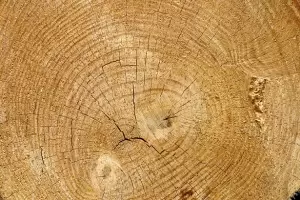
Tree-ring data (dendrochronological records) provide the most accurate calibration. Ancient trees like the North American Bristlecone Pine are ideal for constructing long, accurate records of atmospheric conditions. Researchers compare known records of 14C levels in tree rings, looking for a tree record with the same radiocarbon proportion. The overlapping nature of tree records makes this our most accurate calibration method.
There'll be several possible calendar years within the expected range, which is why radiocarbon dates are reported with a �25-year range. This isn't a flaw—it's an honest acknowledgment of the method's limits in precision.
Real-World Applications
Archaeology was among the first disciplines to use radiocarbon dating, and it remains the primary field that applies this method. Many scientists enter the field by combining chemistry and archaeology. It's had a greater impact on our understanding of the human past than any other field.
Archaeological Discoveries
Radiocarbon dating is highly useful in archaeology, especially since AMS became available, enabling more accurate dates from smaller samples. One compelling example examined the diet of fragile Viking colonies in Greenland. The study didn't just date the people in graves—it examined their diet by analyzing the carbon isotopes in their bones.
The research confirmed suspected but not proven dates: the colony was occupied between the late 10th and early 12th centuries. Radiocarbon AMS was also used to pinpoint when the last Vikings departed Greenland. These findings help us understand not just when events happened, but how people lived and adapted to environmental changes.
Resolving Historical Mysteries
The Shroud of Turin sparked decades of debate about its age. Experts pointed to its medieval design, depiction of Christ, and several other factors suggesting it was roughly 700 years old. It wasn't until 1988, with several subsequent tests since then, that this was confirmed. It's now the best-known example of AMS success—countless tests have been carried out, and all confirm dates in the mid-14th century. A significant portion of the Shroud would've been destroyed using older methods.
Climate Science and Environmental Research
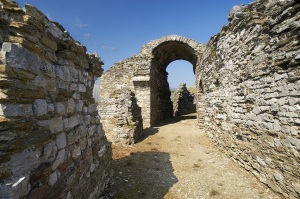
Landscape archaeology bridges archaeology and environmental sciences (though many consider it an environmental science in its own right). It studies how people in the past exploited and changed their environment. This typically involves examining spores and pollen to understand when land was cleared of scrub and trees during the Neolithic Revolution to make way for crops.
The field also uses phytoliths, entomological remains, GIS (digital mapping), soil sampling, bone analyses, ground-penetrating radar, and map studies. It's been fundamental—especially in Europe—to demonstrate how landscapes are relics and monuments in themselves, worthy of study.
Returning to the Viking example, extended studies of faunal remains show distinct changes made by Vikings. The research reveals the approximate arrival dates of European livestock and crops and when they finally disappeared from the record. Studies like these are fundamental to determining not just how the environment has changed due to human manipulation, but also natural changes driven by environmental and climate factors. fluctuations
The practical applications in climate science include similar examples (changes in fauna and vegetation), but it's fundamental in other areas as well. Most critically, it's used when studying ice core dates to determine past climate composition. Hundreds of ice samples have been taken in Antarctica, and this work is fundamental to understanding how we're changing the climate today and how it may change in the future when accounting for fluctuations in atmospheric carbon.
There are complications, of course. Researchers check known ice records against new samples, taking into consideration known ice dates when factoring in their margin of error. Atmospheric composition, the amount of ice coverage at a given time—all these factors are essential in examining past climates.
Phytolith studies (fossilized plant remains), entomology (insect studies), and pollen and spore analyses can show not only how an environment changed and what caused it (human engineering or environmental change), but also when the changes occurred.
Career Pathways in Radiocarbon Dating
If you're fascinated by radiocarbon dating, there are several ways to build a career in this field. The work combines rigorous laboratory science with detective-like problem-solving, making it appealing to people who love both precision and discovery.
Educational Requirements
Most careers in radiocarbon dating require a graduate-level education due to the extensive laboratory work and technical expertise involved. Here's what you'll typically need:
| Degree Level | Typical Programs | Career Opportunities | Focus Areas |
|---|---|---|---|
| Bachelor's Degree | Chemistry, Physics, Geology, Environmental Science | Lab technician, research assistant | Build a foundation in analytical methods, isotope chemistry |
| Master's Degree | Analytical Chemistry, Archaeological Science, Quaternary Science | Dating lab specialist, research scientist | Specialize in AMS techniques, calibration methods |
| PhD | Chemistry, Archaeology, Earth Sciences | Lab director, university professor, senior researcher | Method development, interdisciplinary research |
A Master's Degree in chemistry is typically required because of the extensive laboratory work involved. However, students increasingly learn about the principles of radiocarbon dating in archaeology, paleontology, and climate science degrees. You can combine cross-disciplinary studies to build expertise in both the technical methods and their applications.
Skills You'll Develop
Working with radiocarbon dating builds a unique skill set that's valuable across scientific fields:
- Analytical chemistry techniques: Mastering spectrometry, sample preparation, and contamination prevention
- Statistical analysis: Understanding uncertainty, calibration curves, and error margins
- Interdisciplinary communication: Translating technical results for archaeologists, climatologists, or other specialists
- Critical thinking: Evaluating sample integrity, identifying potential contamination, solving methodological puzzles
- Precision and patience: Working with tiny samples that represent years of someone else's field research
Where You'll Work
Radiocarbon dating specialists find opportunities in diverse settings:
- University research labs: Academic institutions with archaeology or earth science programs
- Dedicated dating facilities: Specialized labs like the Oxford Radiocarbon Accelerator Unit or the University of Arizona AMS Lab
- Museums: Major institutions with conservation science departments
- Government agencies: USGS, EPA, or international equivalents conducting environmental research
- Private sector: Consulting firms serving archaeology, forensics, or environmental assessment
The field is relatively small, which means positions are both competitive and specialized. If you're pursuing this path, consider building expertise in complementary areas like GIS, statistical modeling, or specific applications in archaeology or climate science.
Frequently Asked Questions
How accurate is radiocarbon dating?
Radiocarbon dating is remarkably accurate for materials up to 55,000-60,000 years old. Modern AMS techniques can provide dates within � 25-50 years for well-preserved samples. Accuracy depends on sample quality, contamination levels, and proper calibration using dendrochronology records. The method's precision decreases for ancient samples as carbon-14 levels become harder to measure.
Why can't radiocarbon dating be used on rocks or minerals?
Radiocarbon dating only works on organic materials—things that were once alive or came from living organisms. Rocks and minerals are inorganic and never contain carbon-14 from living processes. For geological materials, scientists use methods such as potassium-argon dating and uranium-lead dating to measure decay in inorganic elements.
What's the difference between radiocarbon dating and carbon dating?
They're the same thing. "Carbon dating" is the informal term, while "radiocarbon dating" or "carbon-14 dating" are the more precise scientific names. All three refer to measuring the decay of carbon-14 isotopes to determine the age of organic materials.
Can contamination affect radiocarbon dating results?
Yes, contamination is one of the biggest challenges in radiocarbon dating. Modern carbon from handling, preservation chemicals, or environmental exposure can make samples appear younger than they actually are. That's why sample preparation is crucial—specialists carefully clean and pretreat materials to remove contaminants before testing. The AMS method's ability to work with tiny samples helps scientists select the purest material.
How does radiocarbon dating support climate change research?
Radiocarbon dating helps climate scientists understand past climate patterns by dating organic materials in ice cores, sediment layers, and fossilized pollen. By precisely dating past environmental changes, researchers can better model how climate systems respond to changes in atmospheric carbon. This historical context is essential for predicting future climate trends and understanding how human activities are accelerating current changes.
Key Takeaways
- Powerful Dating Method: Radiocarbon dating measures carbon-14 decay to accurately date organic materials up to 55,000-60,000 years old, revolutionizing archaeology, environmental science, and climate research since the 1940s.
- AMS Technology Advancement: Modern Accelerated Mass Spectrometry requires only milligram-sized samples and provides more accurate results than traditional methods, enabling scientists to date precious artifacts without causing significant damage.
- Calibration Is Essential: Dates must be calibrated using dendrochronological (tree-ring) records because atmospheric carbon-14 levels fluctuate over time. This calibration process ensures accuracy but introduces expected variation ranges (typically � 25-50 years).
- Wide-Ranging Applications: The method is fundamental to understanding ancient civilizations, resolving historical mysteries, tracking environmental changes, studying past climates, and informing current climate change research through ice-core and sediment analyses.
- Interdisciplinary Career Path: Pursuing a career in radiocarbon dating typically requires graduate education in chemistry, archaeology, or earth sciences, combining laboratory expertise with applications in archaeology, climatology, forensics, and environmental science.
Ready to explore environmental science careers? Discover degree programs in chemistry, archaeology, and earth sciences that can prepare you for work in radiocarbon dating and related fields.

- What Is Parasitology? The Science of Parasites Explained - November 19, 2018
- Desert Ecosystems: Types, Ecology, and Global Importance - November 19, 2018
- Conservation: History and Future - September 14, 2018
Related Articles



Featured Article

What We Wish We Had Known before Majoring in Environmental Science