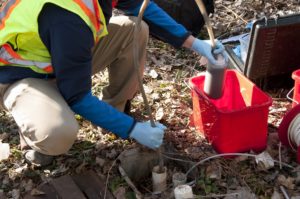


Biologists and biological scientists study living organisms across all environments—from microscopic bacteria to the largest mammals on Earth. Most specialize during their studies in areas like ecology, microbiology, genetics, or botany. Median salaries vary by specialization: microbiologists earn $87,330 annually, while biochemists and biophysicists earn $103,650. The field is projected to grow 4-6% through 2034, with strong demand driven by healthcare innovation, environmental challenges, and biotechnology expansion.
If you're passionate about understanding how life works, adapts, and interacts with environments, a career in biological science offers remarkable opportunities. Biology isn't just a subject—it's a gateway to solving real-world challenges, from developing disease treatments to protecting endangered species to understanding the impacts of climate change on ecosystems.
Here's what you need to know about becoming a biologist: your specialization will shape your career path, your earning potential varies significantly by field, and advanced degrees open the most competitive opportunities. Let's explore what this career actually looks like.
Is There a Difference Between a Biologist and a Biological Scientist?
There's one difference, but it's subtle enough that some professionals use the terms interchangeably. Biologists tend to focus on the "life sciences"—studying ecology, zoology, and plant sciences such as botany. Biological scientists typically work in more laboratory-focused areas like microbiology, genetics, and biochemistry.
The path you choose determines your career trajectory, but the lines are blurred. Any comprehensive biology program should open most doors regardless of whether you identify as a biologist or biological scientist.
What Does a Biologist Do?
Studying life in all its forms is fundamental to understanding our world. From ocean depths to desert ecosystems, from swamps to ice sheets, life exists everywhere—and biologists research and explain it. Darwin's Theory of Evolution by Natural Selection remains at the core of their work, whether they're researching disease treatments, tracking epidemic patterns, studying the effects of polluting substances on organisms, or examining how species adapt to environmental changes.
Biologists investigate the symbiotic relationships between organisms and their environments. They study adaptation mechanisms, population dynamics, food security challenges, and ecological shifts. A biological scientist approaches these same questions but may spend more time in controlled laboratory settings, working with data to prove or disprove specific scientific hypotheses.
Core Responsibilities
With a master's degree in biological science, you'll have developed expertise in specific organisms, habitats, or systems. Your daily work typically involves conducting field studies or laboratory experiments, collecting and analyzing samples, interpreting data, and presenting findings to colleagues and stakeholders. You'll design experiments, maintain detailed records, write scientific reports, and collaborate with interdisciplinary teams.
Most biologists specialize in particular organisms—plants, animals, or microorganisms—or in specific biological systems like ecosystems, molecular processes, or genetic mechanisms. You might study plant responses to climate change, track wildlife migration patterns, analyze microbial communities in soil samples, or investigate genetic factors in disease resistance.
You'll review scientific literature, develop research questions, secure funding through grants, and contribute to ongoing conservation or medical research efforts. Environmental compliance work is everyday, as is providing technical expertise to engineering teams, regulators, and policymakers. Many biologists participate in ecosystem mapping projects and biodiversity assessments.
Senior-Level Biology Careers
Biological scientists at the senior level transition into project, asset, and personnel management. Your experience enables you to effectively facilitate and strategize project outcomes. You'll select and train research teams according to project requirements, conduct regulatory-compliant analyses, drive protocol innovation, and explore creative applications of research findings.
Senior roles demand fluency in chemistry as it applies to biological contexts, competence in mathematics and physics, management skills, and the ability to design and execute wet-lab experiments. You'll serve as the primary contact for project administrators and stakeholders, provide habitat construction and biological relocation expertise, and apply environmental and analytical techniques using standard scientific methods.
| Specialization | Median Annual Salary | Typical Work Settings |
|---|---|---|
| Microbiologist | $87,330 | Healthcare, research labs, CDC, and pharmaceutical companies |
| Biochemist/Biophysicist | $103,650 | Medical research, biotech firms, universities, government labs |
| Environmental Biologist | $80,060 | EPA, state agencies, consulting firms, conservation organizations |
| Wildlife Biologist | $72,860 | National parks, wildlife agencies, and field research stations |
Where Does a Biologist Work?
You'll find diverse employment opportunities in biology. Your career path depends mainly on the specialization you choose during your academic studies—typically by your second year.
Many biology graduates find employment in government agencies. If you specialize in epidemiology, you might work for the CDC or in healthcare research. Military opportunities exist at USAMRIID. Environmental biologists often work for the EPA or state environmental protection bodies in research or advisory capacities. Teaching attracts many biology graduates, particularly since biology is a STEM subject with persistent graduate shortages. Others work in private industry, research institutions, or education.
In law enforcement, biologists have the expertise to work in forensic biology, examining crime scene evidence to reconstruct events.
Private industry offers opportunities in laboratory research, including developing disease treatments through botanical research and creating herbicides and pesticides for agriculture. Biologists are at the forefront of biotechnology, researching genetic modification and future agricultural technology. If it involves studying biological life, there's likely an opening.
Emerging Opportunities in Biology
The field of biology is expanding rapidly into new frontiers. Climate change research has created unprecedented demand for biologists who can study ecosystem responses, species adaptation, and biodiversity shifts. Conservation technology integrates biology with drone monitoring, GPS tracking, and remote sensing to protect endangered species and habitats.
Bioinformatics and computational biology are among the fastest-growing specializations. These roles combine biological knowledge with data science and programming to analyze genomic data, model disease spread, and predict evolutionary changes. If you're comfortable with both biology and technology, this field offers exceptional opportunities.
Personalized medicine relies on biologists who understand how genetic variations affect drug responses and disease susceptibility. Biotechnology companies are developing gene therapies, creating synthetic organisms for industrial applications, and engineering microbes for environmental cleanup. Environmental consulting firms increasingly need biologists who can assess project impacts, design mitigation strategies, and ensure regulatory compliance.
Biologist Salary and Compensation
Salaries in biology vary significantly by specialization. Microbiologists earn a median salary of $87,330, while biochemists and biophysicists earn a median salary of $103,650.
Your earning potential depends on several factors: your specialization, degree level, employer type, and geographic location. Government positions typically offer substantial salaries and excellent benefits—the median salary for microbiologists in government roles is $102,490. Pharmaceutical and biotechnology companies often pay premium wages, particularly for roles in drug development and genetic research. Academic positions may offer lower base salaries but provide research freedom, teaching opportunities, and tenure-track security.
Entry-level positions with bachelor's degrees typically start in the $40,000-$50,000 range, while master's degree holders command $55,000-$70,000 starting salaries. Experienced biologists with PhDs and established research programs can earn $100,000 to $150,000 or more, particularly in private-industry leadership roles.
What Is the Job Demand for Biologists?
Job demand is strong across all STEM subjects, including biology. The Bureau of Labor Statistics projects microbiologist employment will grow 4% from 2024 to 2034, with about 1,700 openings annually. Biochemist and biophysicist positions are expected to grow 6% over the same period—faster than average—adding approximately 2,100 new jobs.
Most developed countries, including the United States, face significant skills shortages in these fields. Growth is driven by aging populations requiring healthcare solutions, environmental challenges demanding conservation expertise, and ongoing biotechnology innovations. Climate change research, public health preparedness, and food security concerns continue to expand opportunities for qualified biologists.
What Are the Education Requirements to Become a Biologist?
Due to strong demand, you're encouraged to pursue advanced degrees. BA and BS degrees in biological science qualify you for entry-level positions like lab technicians and research assistants, but prior laboratory experience is vital. Most of these roles go to master's degree graduates. Bachelor's degree holders can pursue high school teaching—an attractive career choice given the shortage of science teachers.
For responsible research project roles, a master's degree is nearly essential. Laboratory work during your studies significantly strengthens your candidacy. To manage your own research projects or teach at the university level, a doctorate is required. For any advanced degree program, you're strongly advised to take minors and electives in mathematics and statistics. Government roles typically need at least a master's degree, as do competitive positions in medical research.
Typical Degree Pathways
Bachelor's Degree (4 years): Opens entry-level technician roles, field assistant positions, and high school teaching opportunities. Expect coursework in general biology, chemistry, physics, and your chosen specialty area.
Master's Degree (2-3 years): Required for most research positions, environmental consulting, and industry roles. You'll specialize significantly and complete a thesis based on original research.
Doctoral Degree (4-6 years): Essential for principal investigator roles, university faculty positions, and senior research scientist positions. Involves extensive original research, publications, and a dissertation defense.
Biology - Related Degrees
Professional Organizations for Biological Scientists
Several organizations support biological scientists through networking, professional development, and research dissemination:
AIBS: The American Institute of Biological Sciences is the country's premier community of biological scientists engaged in research, practice, advisement, education, and public outreach. They publish academic material, provide peer review, and connect the national community.
ASBMB: The American Society for Biochemistry and Molecular Biology focuses on two critical areas of biological sciences. Their primary mission centers on education. Founded in 1906, they now serve over 12,000 members.
SSE: Evolution underpins everything in biology. The Society for the Study of Evolution (International) is a global community of research and outreach scientists whose work focuses on evolutionary biology.
Frequently Asked Questions
Is there a fundamental difference between a biologist and a biological scientist?
The difference is subtle. Biologists typically focus on ecology, zoology, and botany—the "life sciences" side of the field. Biological scientists tend to work in more laboratory-focused areas like microbiology, genetics, and biochemistry. However, the terms are often used interchangeably, and comprehensive biology programs prepare you for either path.
What's the typical salary for a biologist?
It depends on your specialization. Microbiologists earn a median annual salary of $87,330, while biochemists and biophysicists earn around $103,650. Environmental scientists and specialists typically earn $80,060, and wildlife biologists earn approximately $72,860. Your salary also varies by employer type, location, and experience level.
Do I need a PhD to work as a biologist?
Not for all positions. Bachelor's degrees qualify you for entry-level technician and assistant roles. Master's degrees are sufficient for most research positions, environmental consulting, and industry jobs. You'll need a PhD only if you want to lead your own research program, teach at universities, or reach the highest levels of scientific leadership.
Where do most biologists find employment?
Many work for government agencies like the EPA, CDC, or USAMRIID. Significant numbers find positions in private research labs, pharmaceutical companies, biotechnology firms, and agricultural companies. Academia employs researchers and professors. Environmental consulting firms, conservation organizations, and forensic labs also regularly hire biologists.
Is biology a good career choice in terms of job growth?
Yes. Biology is a STEM field with persistent graduate shortages, creating strong demand. Microbiologist positions are projected to grow 4% through 2034 (about 1,700 annual openings), while biochemist and biophysicist roles are expected to grow 6%—faster than average—adding 2,100 new jobs. Emerging opportunities in climate research, bioinformatics, personalized medicine, and biotechnology drive additional demand beyond traditional roles.
Key Takeaways
- Specialization Shapes Your Career: Whether you focus on microbiology, ecology, genetics, or biochemistry during your studies determines your career path, work environment, and earning potential.
- Competitive Salaries by Specialization: Median salaries range from $72,860 for wildlife biologists to $103,650 for biochemists and biophysicists, with government and pharmaceutical roles offering substantial compensation and benefits.
- Advanced Degrees Open Opportunities: While bachelor's degrees qualify you for entry-level positions, master's degrees are nearly essential for research roles, and PhDs are required for project leadership and university faculty positions.
- Strong Job Market Demand: Biology is a STEM field with projected 4-6% growth through 2034, driven by healthcare innovation, environmental challenges, and biotechnology expansion, with persistent graduate shortages creating ongoing opportunities.
- Emerging Career Frontiers: Beyond traditional roles, biologists are increasingly needed in climate research, bioinformatics, conservation technology, personalized medicine, and environmental consulting—fields that combine biology with data science, engineering, and policy.


Ready to launch your biology career? Explore degree programs that match your interests—from ecology and botany to microbiology and genetic research—and start your journey toward solving real-world challenges.
2024 US Bureau of Labor Statistics salary and job growth figures for biochemists and biophysicists and microbiologists reflect national data, not school-specific information. Conditions in your area may vary. Data accessed January 2026.