
Environmental forensic scientists investigate illegal dumping, contamination events, and environmental crimes by collecting and analyzing physical evidence. They combine expertise in chemistry, geology, and environmental science to trace pollutants to their source and testify in court about their findings. These specialists earn a median annual wage of $63,740, with employment projected to grow 13% through 2032 as environmental regulations and climate concerns expand.
If you've ever wondered who investigates illegal dumping or traces pollution back to its source, you're thinking of environmental forensic scientists. These professionals combine detective work with deep scientific knowledge to hold polluters accountable and protect public health. It's specialized work that matters—not just for individual cases, but for communities dealing with contamination that can last generations.
Welcome to EnvironmentalScience.org, your resource for exploring careers in environmental science. We understand that your passion for environmental protection isn't just a passing interest—it's a significant part of who you are. Let's explore what it really takes to work in environmental forensics.
What Does an Environmental Forensic Scientist Do?
Environmental forensic scientists are scientific detectives who investigate when and how contamination occurred, where it came from, and who's responsible. While forensic biologists might analyze DNA evidence from crime scenes, environmental forensic scientists focus specifically on pollution, hazardous waste, and environmental damage.
Here's what a typical week might look like: Monday and Tuesday, you're at a former industrial site collecting soil and groundwater samples, carefully documenting everything for the legal chain of custody. Wednesday through Friday, you're in the laboratory running chemical analyses to identify specific contaminants and their concentrations. Maybe once a month, you're in a courtroom explaining your findings to judges and juries who need to understand complex chemistry without a science degree.
The work requires meticulous attention to detail. You'll use chemical methods to test evidence, keeping detailed records of every technique and finding. Sample collection isn't just about gathering material—you must catalog everything properly, follow established preservation procedures, and maintain strict documentation that will hold up in court. Environmental forensic scientists also examine the geology and hydrology of contaminated sites to determine how pollutants have traveled through soil and water, and ultimately trace them back to their source.
Here's something many people don't expect: communication skills matter just as much as lab expertise. You'll write detailed technical reports, but then you'll need to explain those reports to lawyers, judges, and juries who didn't major in chemistry. Courts regularly call forensic scientists to testify about their investigative process—which samples were tested, how they were tested, the reliability of those tests, what the results showed, and why they're relevant to the case at hand.
Environmental forensic scientists are valuable professionals who help protect public health and the environment. Unfortunately, the environment often suffers from the "tragedy of the commons," where contamination is seen as acceptable collateral damage. Forensic scientists help ensure that those who contaminate the environment illegally are discovered and brought to justice. They also save taxpayers cleanup dollars by identifying who should be legally responsible for remediation costs.
Where Does an Environmental Forensic Scientist Work?
Most forensic scientists work for federal, state, and local government agencies—think EPA, state environmental protection departments, and district attorney offices. Some work for private environmental consulting firms that specialize in litigation support, while others work directly for law firms handling environmental cases.
Environmental forensic scientists typically split their time between laboratory work, office reporting, field sampling, and court appearances, though specific percentages vary depending on employer and case load. Travel to investigation sites is common, sometimes requiring overnight trips to remote locations.
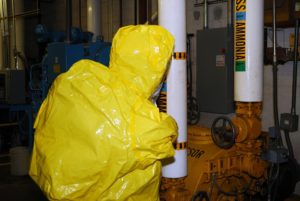
Field work means you'll be outside in all weather conditions when collecting samples or assessing the geology of a contaminated site. You'll need to wear safety equipment—protective suits, respirators, and gloves—when working in the field or handling hazardous materials in laboratories to avoid exposure to environmental toxins. Laboratory work is more controlled, but you're still dealing with potentially dangerous chemicals that require proper safety protocols.
The schedule is generally a standard work week, though court dates and deadlines can create unpredictable hours. Unlike wildlife forensic scientists or traditional forensic scientists who work on violent crimes for local police departments, environmental forensic scientists aren't typically "on call" for emergencies. However, major contamination events like chemical spills can require immediate response.
The reality: some cases take years to resolve. You might collect samples this year and testify about them three years later. Court testimony can be stressful, especially during cross-examination when opposing lawyers challenge your methods and conclusions. You need patience, thick skin, and unwavering commitment to scientific accuracy, regardless of external pressure.
What Is the Average Environmental Forensic Scientist Salary?
The median annual wage for forensic science technicians overall was $63,740 as of May 2022. However, salary varies significantly based on several factors:
| Factor | Impact on Salary |
|---|---|
| Experience Level | Entry-level positions start around $49,320, while experienced specialists with 10+ years earn $82,160 or more |
| Employer Type | Federal government positions typically offer higher salaries than state/local government; private consulting firms vary widely |
| Geographic Location | Metropolitan areas and states with strong environmental regulations (California, New York, Massachusetts) typically pay above the national median |
| Education | Master's degree holders typically earn 15-25% more than those with only bachelor's degrees |
| Specialization | Those with expertise in specific contaminants (PFAS, heavy metals) or advanced analytical techniques command premium compensation |
Environmental Forensic Science Jobs: What You'll Actually Do
Forensic scientists gather information and evidence about specific past events and use this data in judicial courts to determine responsibility under the law. Environmental forensic scientists are often employed by government agencies or work as independent consultants to ensure their ethics on cases remain above reproach.
While jobs vary between different forensic specialties, here's what environmental forensic scientists spend their time doing:
Evidence Collection and Preservation
- Record accurate physical and chronological measurements at contamination sites
- Observe, diagram, and photograph evidence with the intent of preserving it in its raw, untampered state
- Collect and secure samples following strict chain-of-custody protocols—any break in documentation can make evidence inadmissible in court
- Understand how evidence degrades over time and how to prevent contamination or tampering
Scientific Analysis and Testing
- Apply the scientific method to contamination investigations, regardless of biased influences from clients or stakeholders
- Design experiments to generate and test hypotheses about contamination sources and transport pathways
- Test, analyze, and report on soil, water, and air samples using advanced analytical chemistry techniques
- Have deep knowledge of peripheral sciences, including chemistry, toxicology, geology, hydrology, and environmental fate and transport
- Use standard and proprietary software and laboratory equipment with proficiency
Communication and Reporting
- Create detailed technical reports documenting methods, findings, and conclusions
- Develop infographics and data visualizations for presentations
- Understand how to effectively use statistics for analysis and communication
- Translate complex scientific evidence for judges, juries, lawyers, and regulators
- Provide verbal and written testimony in depositions and trials
- Review current research and literature to stay current with analytical methods and legal precedents
Senior environmental forensic scientists often have expanded responsibilities focusing on management and leadership:
- Consult with policymakers and regulators regarding best practices for environmental investigations
- Provide expert consultation to external stakeholders, attorneys, and researchers
- Develop or test new sampling and analytical techniques
- Design software that supports data entry and modeling for contamination analysis
- Plan, organize, and lead case strategy meetings
- Mentor junior scientists and laboratory technicians
What Is the Job Demand for Environmental Forensic Scientists?
Employment of forensic science technicians overall is projected to grow 13% between 2022 and 2032, which is faster than average for all occupations. This translates to approximately 2,600 new positions each year.
Growth depends heavily on the application area. Increased public interest in environmental protection, stricter enforcement of environmental regulations, and growing concerns about climate change and pollution are driving demand for environmental forensic expertise. The emergence of new contaminants of concern—like PFAS ("forever chemicals") and microplastics—is creating additional need for specialists who can trace these substances and identify responsible parties.
However, environmental forensics is a small, specialized field to begin with, so while percentage growth may be strong, the absolute number of new positions remains limited. Competition for positions can be fierce, particularly for federal government roles that offer job security and strong benefits.
Geographic opportunities vary significantly. States with strong environmental protection programs (California, New York, Washington, Massachusetts, Oregon) tend to have more positions available. Areas with historical industrial contamination—the Rust Belt, former mining regions, areas near military bases—also create ongoing demand for forensic investigation.
How Do I Become an Environmental Forensic Scientist?
Here's the realistic timeline: plan on 6-8 years minimum from starting college to working independently as an environmental forensic scientist.
Bachelor's Degree (4 years)
Forensic science technicians generally need at least a bachelor's degree in a natural science. For environmental forensics specifically, the strongest preparation comes from degrees in:
- Environmental Science with chemistry emphasis
- Chemistry or geochemistry
- Geology with strong chemistry background
- Environmental Engineering
Critical coursework includes analytical chemistry (often multiple semesters), organic chemistry, environmental chemistry, geology, hydrology, soil science, statistics, and technical writing. Many programs also require courses in environmental law and regulation—understanding the legal framework is essential for forensic work.
Master's Degree (2 years, often required)
Many environmental forensic scientists pursue a master's degree in forensic science, environmental science, or analytical chemistry. While not always required for entry-level positions, a master's degree significantly improves employment prospects and earning potential. Graduate programs allow you to specialize in environmental forensics specifically, developing expertise in contaminant fate and transport, advanced analytical techniques, and forensic methodology.
On-the-Job Training (1-2 years)
Even with advanced degrees, you'll need supervised training before working independently. This includes learning proper evidence collection procedures, chain-of-custody protocols, laboratory quality assurance/quality control procedures, and courtroom testimony techniques. Many jurisdictions require forensic scientists to pass certification exams before they can work on cases independently or testify as expert witnesses in court.
Continuing Education (Ongoing)
The field evolves constantly. New contaminants emerge, analytical techniques improve, and legal standards change. Expect to participate in regular professional development through workshops, seminars, and professional conferences to keep current with scientific and technological advances.
Optional Certifications
Various optional licenses and certifications can enhance your credentials and employment prospects. These vary by jurisdiction and specialization, but may include certifications from the American Board of Criminalistics, state-level forensic scientist certifications, or specialized certifications in specific analytical techniques or contaminant types.
Degrees Related to Forensic Science
Professional Organizations and Networking
Joining professional organizations provides access to continuing education, networking opportunities, job boards, and the latest research in environmental forensics:
- The International Society of Environmental Forensics (ISEF) is the premier professional association for environmental forensic scientists worldwide. ISEF offers technical workshops and seminars on analytical chemistry, contamination source identification, and environmental fate and transport. The organization publishes the journal Environmental Forensics, which presents case studies, technological developments, and legal insights relevant to practitioners.
- The American Academy of Forensic Sciences (AAFS) is the foremost professional association for forensic scientists of all specialties in the United States. AAFS organizes annual scientific meetings and hosts extensive resources, including a reference library, educational videos, and webinars covering forensic science techniques and legal issues.
Frequently Asked Questions
What does an environmental forensic scientist do day-to-day?
Your daily work varies between field, laboratory, and office environments. Some days, you're at contaminated sites collecting soil and water samples while documenting everything for legal proceedings. Other day,s you're in the laboratory running chemical analyses to identify contaminants and their concentrations. You'll spend significant time writing detailed technical reports and occasionally testifying in court or depositions. The mix keeps the work interesting, though it requires you to be comfortable switching between hands-on fieldwork and detailed analytical work.
How long does it take to become an environmental forensic scientist?
Realistically, plan on 6-8 years from starting college to working independently. That includes 4 years for a bachelor's degree in chemistry, environmental science, or geology, followed by 2 years for a master's degree (increasingly expected), and then 1-2 years of supervised on-the-job training. Some entry-level positions are available with just a bachelor's degree, but career advancement typically requires graduate education and specialized training.
Do environmental forensic scientists work in laboratories or in the field?
Both regularly. Environmental forensic scientists split their time between laboratory analyses, office work, writing reports and reviewing cases, field work collecting samples and assessing sites, and providing courtroom testimony or participating in depositions. The balance varies depending on your specific role and employer, but expect to move regularly between these different work environments rather than staying in one place.
What's the difference between environmental forensic science and regular forensic science?
Traditional forensic science focuses on evidence from crimes against people—analyzing blood, DNA, fingerprints, and physical evidence from crime scenes. Environmental forensic science applies similar rigorous scientific methods to environmental crimes and contamination events. Instead of identifying suspects in violent crimes, you're identifying pollution sources, tracing how contaminants spread through soil and groundwater, and determining who's legally responsible for environmental damage. The scientific rigor is the same, but the subject matter focuses on chemistry, geology, and environmental science rather than biology and physical evidence from crime scenes.
Do I need a graduate degree to work in environmental forensics?
While some entry-level forensic science technician positions require only a bachelor's degree, most environmental forensic scientists hold master's degrees. Graduate education allows you to develop specialized expertise in environmental forensics, specifically, including advanced analytical chemistry techniques, contaminant fate and transport modeling, and forensic methodology. If you're serious about making environmental forensics your career rather than just an entry-level job, plan on pursuing a master's degree. It significantly improves your employment prospects, earning potential, and ability to work on complex cases.
Key Takeaways
- Specialized Scientific Detective Work: Environmental forensic scientists combine expertise in chemistry, geology, and environmental science to investigate illegal dumping, contamination events, and pollution sources, then testify about their findings in legal proceedings.
- Diverse Work Environment: Expect to split time between field work collecting samples at contamination sites, laboratory analysis, office work writing reports, and courtroom testimony, requiring adaptability and diverse skill sets.
- Substantial Education Investment: Plan on 6-8 years from starting college to working independently, including a bachelor's degree in natural science, increasingly a master's degree in forensic science or related field, and 1-2 years of supervised training.
- Strong Career Outlook: Employment is projected to grow 13% through 2032, driven by increased environmental regulations and emerging contaminants like PFAS. Median salaries of $63,740 reflect the specialized expertise required.
- Communication Matters as Much as Science: Success requires not just technical competence in analytical chemistry and geology, but also the ability to write clear reports, testify convincingly in court, and explain complex science to non-scientists under cross-examination.
Ready to combine your passion for environmental protection with scientific investigation? Explore environmental science degree programs that can prepare you for a specialized career in forensic science.
2024 US Bureau of Labor Statistics salary and job growth figures for forensic science technicians reflect national data, not school-specific information. Conditions in your area may vary. Data accessed January 2026.