

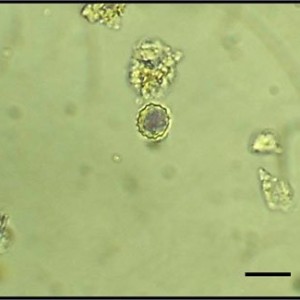
Phytoliths are microscopic silica structures that form inside plant cells and survive long after decomposition, providing evidence of ancient plant life and environments. These "plant stones" help archaeologists and environmental scientists reconstruct past ecosystems, understand early agriculture, and trace human impacts on landscapes dating back thousands of years. Most research roles require a Master's degree or PhD in archaeology, anthropology, or plant biology.
If you've ever wondered how scientists know what plants grew in ancient times or what early humans ate thousands of years ago, phytoliths provide the answer. These microscopic plant fossils are preserved in soil long after other organic materials have decomposed, offering a unique window into past environments and human history.
Phytolith studies require an understanding of several disciplines at once. Although the method is primarily used in archaeology and anthropology (the study of humans in the past), it requires a solid background in plant biology. Therefore, researchers who study phytoliths often place a strong emphasis on ecology, botany, or geography. There are no degrees in phytolith studies. Because of the specialised nature of the research, the level of specialist knowledge required, and the limited number of positions at that level, most roles will require a Master's Degree or higher. Typically, research roles will require a Doctorate. Most graduates will end up in research roles in universities or for environment-related non-profit organisations, and in the private sector as lab technicians and in the agricultural sector.
Jump to Section
- What is a Phytolith?
- A Brief History of Phytolith Studies
- Career Pathways in Phytolith Research
- Applications in Archaeology and Environmental Science
- Frequently Asked Questions
- Key Takeaways
The evidence is largely used to indicate natural changes and those caused by human engineering of the ancient ecology (the palaeoenvironment), and it is drawn from studies of elements of the human past, from which most researchers enter the field. As we are now trying to understand our future by looking at the past, it is increasingly used as evidence across the board in environmental science—environmental archaeology, palaeoclimatology, human geography, and associated fields.
What is a Phytolith?
Phytolith derives from Greek: "phyton" meaning plant and "lithos" meaning stone. When a plant absorbs water from the ground, it will also absorb the nutrients that it needs to live, breathe and reproduce. Nutrients are vital to the plant's survival, and because of the chemical makeup of some types, they will leave a residue long after the individual plant has died and been absorbed back into the ground as nutrients for the next generation. Silica, calcium and opal are minerals absorbed into a plant's cells whether they need them or not; the skeleton left behind following decomposition indicates plant remains in those areas where those minerals are present. The skeleton ends up, along with the decomposing plant, back in the silt.
Phytoliths are tiny, no larger than a single plant cell, perhaps between 10 and 70 microns across and therefore may only be seen through a microscope. Because the cells in most plant types have a specific, identifiable morphology—though not always—we can identify which plant species was present. Modern scanning electron microscopy and digital morphological analysis have made phytolith identification faster and more accurate, expanding research possibilities. Fortunately, silica exists in the ground of most soil types (unlike calcium and opal) and is absorbed mostly into the plant walls and in the specialised cells, so we can tell from which plants the phytolith remains originated. When we talk about phytoliths, we are mostly talking about material composed of silica. Phytoliths are inorganic and, therefore, in soils where they form, may survive for millennia across many soil types, though acidic or highly calcareous soils reduce their preservation. It is important to note that although phytoliths form under most soil conditions, they do not always survive. Soil that is strongly calcareous (chalky areas where hard water forms) drastically reduces the survival rate of phytoliths. They can be easily destroyed in soils with a strong pH.
Most commonly, researchers find phytolith remains of grasses and flowering plants; wood and bark are relatively uncommon but not rare. Examples from caves in Israel demonstrate the types of wood that were burnt by human inhabitants in the Palaeolithic.
A Brief History of Phytolith Studies
Although the Enlightenment saw a massive expansion in the physical sciences, and botany had been an area of interest for hundreds, if not thousands, of years (particularly since the Renaissance), it wasn't until 1835 that anyone studied phytoliths specifically.
Charles Darwin made early observations of dust containing microscopic particles, now understood to include phytoliths, though the term and focused study came later. His interest began while on The Beagle when he studied the dust blown onto the ship off the coast of the Cape Verde Islands. Because of his larger project during the trip, he simply described what he saw and formed his own opinion about what they represented, both in themselves and in terms of plant evolution. Darwin passed his dust samples to a friend, and throughout the late 19th century, several seminal works were published that would form the foundation of research in the early 20th century.
There would be no further significant advances until after World War II. In the US, Russia, UK and Australia, significant advances were made. It was Smithson of the University of Bangor (Wales) who identified the potential study of the then-growing science of ecology. He realised that these plant remains could tell us much about the palaeoclimate and palaeoenvironment, particularly the effects that past human activity could have had on the local environment. The morphological diversity of these countries' landscapes meant that, in a short period, many areas were investigated. In the USA and Australia in particular, the large amount of virgin land meant that researchers could study phytolith remains in geological deposits much older than those in Europe.
Later still, researchers began searching through organic remains at known human sites—looking at hearths and ceramic remains, among other things —for evidence, and since then, archaeology and ecology have become intertwined. To many, this was likely the beginning of the study of humans in the past, becoming as much an environmental study as a historical one. Works from the 1970s to the late 1990s firmly established the data's utility in archaeology and anthropology. Today, phytolith studies remain an essential tool of archaeological methods, anthropology and the environmental sciences.
Career Pathways in Phytolith Research
Because of the specialized nature of phytolith studies and the limited number of positions, most roles require a Master's degree or greater. Research positions typically require a PhD. Here's what the career pathway looks like:
| Degree Level | Focus Areas | Typical Duration | Career Outcomes |
|---|---|---|---|
| Bachelor's Degree | Archaeology, Anthropology, Botany, Ecology, Geography | 4 years | Foundation for graduate work; lab technician positions |
| Master's Degree | Specialized research in phytolith analysis; environmental archaeology | 2-3 years | Research assistant roles; CRM positions; non-profit research |
| PhD | Original phytolith research; palaeoenvironmental reconstruction | 4-6 years | University research positions; senior research roles; consulting |
Educational Foundation: Most researchers enter through programs in archaeology, anthropology, or plant biology. You'll need a solid background in botany, ecology, or geography to understand plant morphology and environmental contexts. Many students encounter phytolith analysis in undergraduate courses in anthropology or environmental archaeology.
Graduate Specialization: There are no specific degrees in phytolith studies, so you'll specialize during graduate research. Many paleoethnobotanists and archaeologists incorporate phytolith analysis into their broader research programs, developing expertise through thesis work and specialized training workshops.
Career Opportunities: As climate change drives increased interest in paleoenvironmental research, demand for researchers skilled in phytolith analysis continues to grow. Most graduates work in:
- University research positions and academic departments
- Environmental non-profit organizations studying conservation and climate
- Private sector laboratory technician roles
- Agricultural research facilities are developing climate-resilient crops
- Cultural resource management (CRM) firms conducting site assessments
The field is growing as we use evidence from the past to understand environmental futures, making phytolith analysis increasingly valuable across environmental archaeology, palaeoclimatology, and human geography.
Applications in Archaeology and Environmental Science
Phytoliths primarily reflect past environments, and in the last few decades, especially, they have helped reconstruct how humans engineered landscapes for farming and when this process began in different regions of the world, providing a more complete picture of the Neolithic Revolution. Ecology and the environment have played a much larger role in the sciences over the last few decades, for reasons too numerous to list and beyond the scope of this article. When it comes to both natural and human processes and environmental change, it is as important today to understand the "why" and the "how" as it is to understand the "when" and the "what".
In the last few decades, phytoliths, along with other plant remains such as pollen and seeds, have been fundamental to reconstructing past environments. They have proven particularly useful for studying the development of past human agricultural systems and their spread across the globe. This means that it is important for researchers to identify which plant remains belong to which known plant species.
This is not always easy to do. It is understood that some phytoliths are so similar that it is difficult to distinguish among species. This can make reconstructing the ecology at any point in the past particularly difficult. This is why we study not only different types of phytoliths and as much data as possible, but also incorporate other datasets, such as pollen. Nevertheless, there is a substantial body of data in this area, despite its relatively young status compared with other botanical and plant microfossil studies.
Similarly, we must be careful not to rely too heavily on phytolith data. Some plants are over-represented in the record because of the amount of ground nutrients they absorb, or because of the types of soil they live in, which is more conducive to phytolith creation and survival. There is a real danger that we could misrepresent an ecological record of the past simply because of this variation in survival rates.
We do not look only to the soils for phytolith evidence. A number of human bodies—where the remains have been preserved under ideal conditions—have yielded phytoliths in the teeth. Naturally, such evidence helps us determine the person's diet, thereby adding to our understanding of the local ecology and human interaction with it. They can also tell us about the types of plants and trees used by humans in crafting and in fire burning. We cannot always determine whether phytoliths recovered from plant remains result from natural brush fires or human activity, which can pose a problem for anthropologists seeking answers to specific questions about a habitation zone and the impact of human populations.
There is some debate about the usefulness of information obtained from weed species in relation to cultivation zones. Some researchers argue that weeds could and did play an important role in crop cultivation. This information has often been discarded, as weeds are considered unwanted contaminants; however, some studies have shown that they can be beneficial in cultivation.
Recent studies from 2023-2024 have used phytolith analysis to examine climate resilience in ancient agricultural systems, providing insights for modern sustainable farming practices amid climate change. This growing application demonstrates how ecological research can bridge past and present environmental challenges.
In addition to learning about past environments and natural processes, and about humans and human engineering, phytoliths can teach us about the plants themselves. Plants absorb silica and other minerals for many reasons, and several studies have shown that some do so because silica hardens cell walls and protects against infection by certain fungi. It has also been suggested that this hardened skeleton may aid plant metabolism in absorbing other nutrients. There is also some evidence to suggest that some plants absorb silica as a defence mechanism against herbivores—the plant's flavour is adversely affected when it absorbs a lot of silica, making it unpalatable to herbivorous plants that would then move onto other plants that do not absorb as much of the mineral. Phytoliths then provide three vital functions for the plant:
- Making the plant stronger
- Controls and regulates the absorption of minerals and heavy metals
- Protecting the plant against disease and herbivores
These three issues have significant implications for the study of plants in their own right, beyond environmental, ecological, and archaeological data. Understanding which soils are and are not suitable for certain plants and crops can help us better understand our own environment, and palaeoclimate records of phytoliths will indicate which respond better to specific environmental conditions and which struggle to survive.
Phytoliths have drawbacks; we noted above the problems of overrepresentation of certain plants and of phytoliths from certain cells. However, despite this, they can offer more localized indicators of plant presence than pollen in certain soil types, due to the erratic nature of survival rates of pollen and spores and the comparatively limited ways in which those plant remains survive. Together, we can reconstruct and get a clearer sense of the palaeoenvironmental record.
Frequently Asked Questions
What is the meaning of phytolith?
Phytolith combines two Greek terms: "phyto" (plant) and "lith" (stone), literally meaning "plant stone." These are microscopic silica structures that form inside plant cells when plants absorb minerals from groundwater. After the plant decomposes, the silica skeleton remains in the soil as evidence of the plants that once grew at that location.
How do phytoliths help archaeologists?
Phytoliths help archaeologists reconstruct ancient environments and understand how humans modified landscapes for farming. They can identify which crops were cultivated, which wild plants grew nearby, and which materials humans used for tools, construction, and fires. Unlike pollen, phytoliths survive across a range of soil conditions, making them more reliable in some contexts.
What plants produce phytoliths?
Grasses and flowering plants most commonly produce identifiable phytoliths. Wood and bark also create phytoliths, but are less common in the archaeological record. Different plant species produce distinct phytolith shapes, allowing researchers to identify specific plants from microscopic remains; however, some species produce similar shapes that can be difficult to distinguish.
How small are phytoliths?
Phytoliths are incredibly tiny—typically between 10 and 70 microns across, about the size of a single plant cell. They can only be seen through a microscope. To put this in perspective, a human hair is roughly 100 microns wide, making most phytoliths smaller than the width of a hair.
What degree do you need to study phytoliths?
Most phytolith research positions require at least a Master's degree, with a doctoral degree typically required for university research roles. There are no specific "phytolith studies" degrees, so students enter through anthropology, archaeology, botany, or geography programs and specialize in phytolith analysis during graduate studies.
Key Takeaways
- Microscopic Evidence: Phytoliths are silica structures (10-70 microns) that form in plant cells and survive for millennia in many soil types, providing evidence of ancient plant life long after decomposition.
- Archaeological Applications: These "plant stones" help reconstruct past environments, trace the development of agriculture, and understand human impacts on ancient landscapes across archaeology and environmental science.
- Interdisciplinary Method: Phytolith analysis requires knowledge of plant biology, archaeology, and ecology, making it valuable for understanding both natural environmental changes and human engineering of landscapes.
- Career Requirements: Specialized research roles typically require a Master's degree minimum, with doctoral degrees needed for university positions. No specific phytolith degrees exist—researchers specialize during graduate studies in archaeology, anthropology, or botany.
- Growing Field: As scientists use past evidence to understand future environmental challenges, phytolith studies are expanding across environmental archaeology, palaeoclimatology, and human geography, creating opportunities in universities, non-profits, and private research labs.
Interested in archaeological and environmental research? Explore degree programs in archaeology, anthropology, and environmental science that can lead to specialized phytolith research careers.

Sources
- http://history.org/Foundation/journal/Autumn06/tech.cfm
- Wilkinson, K. & Stevens, C. 2003: Environmental Archaeology: Approaches, Techniques & Applications. Stroud: Tempus
- https://www.researchgate.net/publication/235933500_Quantitative_Phytolith_Study_of_Hearths_from_the_Natufian_and_Middle_Palaeolithic_Levels_of_Hayonim_Cave_Galilee_Israel
- Zucol, A.F., Brea, M., & Scopel, A., 2005: First record of fossil wood and phytolith assemblages of the Late Pleistocene in El Palmar National Park (Argentina). Journal of South American Earth Sciences 20 p33–43
- http://archaeobotany.dept.shef.ac.uk/wiki/index.php/Phytoliths_-_Introduction
- Egan, D. 2001: The Historical Ecology Handbook: A Restorationist's Guide to Reference Ecosystems. Island Press: Washington DC
- http://www.homepages.ucl.ac.uk/~tcrndfu/articles/HarveyFuller.pdf
- https://academic.oup.com/aob/article/102/4/653/165634
- http://ir.uiowa.edu/cgi/viewcontent.cgi?article=1610&context=etd

- What Is Parasitology? The Science of Parasites Explained - November 19, 2018
- Desert Ecosystems: Types, Ecology, and Global Importance - November 19, 2018
- Conservation: History and Future - September 14, 2018
Related Articles




Featured Article

How Radiocarbon-14 Dating Works