

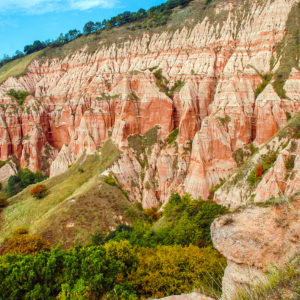
Geology is the study of Earth's physical structure, processes, and materials—from rocks and minerals to earthquakes and volcanoes. Geoscientists earn a median salary of $99,240 annually, with employment projected to grow 3% through 2034, creating approximately 2,000 job openings each year. Most positions require at least a bachelor's degree in geology or earth sciences, with many geologists pursuing master's degrees for advanced opportunities.
If you're fascinated by how our planet works, geology offers a rewarding career path that combines scientific discovery with real-world problem-solving. Geologists study everything from ancient rock formations to modern environmental challenges, working to locate natural resources, predict geological hazards, and protect our environment for future generations.
In environmental science education, we've seen growing interest in geology as students recognize the field's critical role in addressing climate change, sustainable resource management, and natural disaster preparedness. Whether you're drawn to fieldwork outdoors or laboratory analysis, geology provides diverse career opportunities with strong earning potential and job stability.
Table of Contents
- What Is Geology?
- What Do Geologists Do?
- Geology Career Paths
- Education Requirements for Geologists
- Salary & Job Outlook for Geologists
- The Subdisciplines of Geology
- Methods in Modern Geology
- Understanding Geology's Development
- Frequently Asked Questions
- Key Takeaways
What Is Geology?
Geology—from the Greek geo (Earth) and logia (study)—is the scientific study of Earth's physical structure, composition, and processes. Geologists examine rocks, minerals, fossils, and landforms to understand how our planet formed, how it continues to change, and how these processes impact human society.
The field encompasses everything from studying volcanic eruptions and earthquakes to locating underground water sources and mineral deposits. Geologists work to answer fundamental questions: How old is this rock formation? Why do earthquakes occur in certain regions? Where can we find sustainable groundwater sources? How can we minimize environmental damage from resource extraction?
Modern geology integrates knowledge from physics, chemistry, biology, and mathematics to solve complex problems. Geologists don't just study the past—they help us plan for the future by identifying geological hazards, guiding responsible land use, and ensuring sustainable access to Earth's resources.
What Do Geologists Do?
Geologists split their time between fieldwork, laboratory analysis, and office-based research. In the field, they collect rock samples, measure geological formations, use specialized equipment like GPS and ground-penetrating radar, and map geological features. Back in the lab, they analyze samples, run chemical tests, examine fossils and minerals under microscopes, and interpret data using advanced computer modeling.
Their work has immediate practical applications. Geologists help energy companies locate oil, natural gas, and coal deposits. They advise construction firms on soil stability for building projects. They assist water resource managers in locating and protecting groundwater aquifers. They work with environmental agencies to assess contamination sites and plan cleanup efforts.
Many geologists specialize in particular areas. Some focus on petroleum geology, working in the energy sector. Others become environmental geologists, addressing pollution and sustainability challenges. Hydrogeologists specialize in groundwater systems. The common thread? All use their understanding of Earth's processes to solve real-world problems.
Geology Career Paths
A geology degree opens doors to diverse career opportunities across multiple industries. Many geologists work for energy companies, helping locate and extract fossil fuels or assess sites for renewable energy projects like geothermal power or wind farms. Others join environmental consulting firms, conducting site assessments and remediation planning for contaminated properties.
Government agencies employ geologists at the federal, state, and local levels. The U.S. Geological Survey, Environmental Protection Agency, and National Park Service all maintain teams of geoscientists. State geological surveys hire geologists to map natural resources and geological hazards. Some geologists work in academia, conducting research and teaching the next generation of Earth scientists.
The mining and natural resources sector offers opportunities to locate and develop mineral deposits—everything from gold and copper to rare earth elements used in electronics. Civil engineering firms hire geologists to assess soil conditions for major construction projects like highways, dams, and skyscrapers. Museum curators with geology backgrounds manage fossil collections and design educational exhibits.
Emerging fields include planetary geology (studying other planets and moons), forensic geology (using geological evidence in legal cases), and climate geology (reconstructing past climates to understand current changes). The skills you develop as a geologist—critical thinking, data analysis, fieldwork expertise—transfer across all these career paths.
Education Requirements for Geologists
Most entry-level geology positions require a bachelor's degree in geology, earth science, or a closely related field. Your undergraduate coursework typically includes mineralogy, petrology, structural geology, sedimentology, paleontology, field methods, and geological mapping. Strong backgrounds in chemistry, physics, and mathematics are essential—you'll use these skills throughout your career.
Many universities offer geoscience degree programs that combine classroom instruction with hands-on field experience. Summer field camps, where students spend several weeks mapping and analyzing geological formations, are common degree requirements. These intensive field experiences teach you to apply classroom knowledge in real-world settings.
For advanced positions or specialized roles, a master's degree significantly improves your job prospects and earning potential. Graduate programs allow you to focus on specific subdisciplines—hydrogeology, petroleum geology, geophysics, or environmental geology. Some research and academic positions require a Ph.D., particularly if you're interested in conducting original research or teaching at the university level.
Many states require professional licensing to practice geology. Requirements vary but typically include a degree from an accredited program, several years of work experience under a licensed geologist, and passing a professional exam. Beyond formal education, successful geologists develop strong skills in data analysis software, Geographic Information Systems (GIS), and specialized geological modeling tools.
Consider complementing your geology degree with courses in earth science, environmental policy, business, or computer science, depending on your career interests. The field increasingly values professionals who can bridge technical expertise with communication skills, project management, and interdisciplinary collaboration.
Salary & Job Outlook for Geologists
Geologists earn competitive salaries that reflect the specialized knowledge and skills the field requires. According to the U.S. Bureau of Labor Statistics, the median annual wage for geoscientists was $99,240 in May 2024—more than double the median for all U.S. occupations. Entry-level geologists (lowest 10%) earn around $58,790, while experienced professionals (highest 10%) can earn $178,880 or more annually.
Salaries vary significantly by industry and location. Geologists working in oil and gas extraction typically earn higher wages, with median salaries reaching $126,000 or more. Those in management, scientific, and technical consulting services earn around $95,000. Government positions generally offer lower salaries but provide excellent job security and benefits. Geographic location matters too—states with major energy industries like Texas, Alaska, and Oklahoma tend to offer higher wages.
The job outlook for geologists remains stable. The BLS projects 3% employment growth from 2024 to 2034, about as fast as the average for all occupations. This translates to approximately 2,000 job openings each year, including positions created through growth and the need to replace retiring geologists.
Demand for geologists stems from several factors. Energy companies need geologists to locate new oil, gas, and mineral deposits as existing reserves deplete. The renewable energy sector increasingly employs geologists to assess sites for wind farms, geothermal plants, and hydroelectric projects. Environmental concerns drive demand for geologists who can address groundwater contamination, assess natural hazards, and guide sustainable land use. Infrastructure development requires geological expertise for construction projects in earthquake zones and unstable terrain.
Job security tends to be strongest in government agencies and environmental consulting, while positions in oil and gas extraction can fluctuate with energy prices. Geologists with advanced degrees, specialized skills (like geophysical data analysis or GIS expertise), and a willingness to work in remote locations generally enjoy the best opportunities.
The Subdisciplines of Geology
Geology encompasses numerous specialized fields, each focusing on specific aspects of Earth's systems and processes. Understanding these subdisciplines can help you identify which areas align with your interests and career goals.
Petroleum Geology
Petroleum geologists search for underground oil and natural gas deposits using seismic data, well logs, and geological mapping. They work primarily for energy companies, conducting exploration and helping maximize resource extraction while minimizing environmental impact. This specialty typically offers the highest salaries but faces more market volatility.
Hydrogeology
Hydrogeologists study groundwater—its distribution, movement, and quality. They locate water supplies for communities, assess contamination risks, design well systems, and help manage water resources sustainably. This field offers strong job security as water scarcity becomes an increasingly critical issue.
Environmental Geology
Environmental geologists apply geological principles to environmental challenges. They assess contaminated sites, plan remediation strategies, study erosion and soil stability, and evaluate natural hazard risks. Many work for environmental consulting firms or government agencies focused on pollution control and land management.
Engineering Geology
Engineering geologists work at the intersection of geology and civil engineering. They assess ground conditions for construction projects, evaluate slope stability for roads and buildings, investigate foundation problems, and help prevent landslides. Construction firms, engineering consultancies, and transportation departments employ engineering geologists.
Geophysics
Geophysicists use physics principles to study Earth's interior and properties. They analyze seismic waves, gravitational fields, magnetic patterns, and electrical conductivity to map underground structures. Applications include oil exploration, earthquake monitoring, and archaeological investigations.
Paleontology
Paleontologists study fossilized remains of ancient organisms to understand past life forms, evolutionary processes, and ancient environments. While academic positions are competitive, paleontologists also work in museums, energy companies (using fossils to date rock layers), and government surveys.
Marine Geology
Marine geologists study ocean floors, coastal processes, and underwater geological features. They investigate seafloor spreading, submarine volcanoes, and coastal erosion. Research institutions, oceanographic centers, and offshore resource companies employ marine geologists.
Seismology
Seismologists study earthquakes and seismic waves to understand Earth's interior structure and earthquake mechanics. They develop early warning systems, assess seismic hazards for building codes, and locate earthquake epicenters. Most seismologists work for government agencies or research institutions.
Mineralogy and Petrology
Mineralogists study mineral composition, structure, and properties, while petrologists focus on rock formation and transformation. These specialists work in mining companies, materials science labs, and academic research, identifying valuable mineral deposits and understanding rock-forming processes.
Volcanology
Volcanologists study volcanoes, lava, magma, and related phenomena. They monitor active volcanoes, predict eruptions, assess volcanic hazards, and study geothermal energy potential. This specialty involves significant fieldwork and requires working with volcano monitoring observatories and geological surveys.
Methods in Modern Geology
Modern geologists use a combination of traditional field techniques and advanced technologies. Remote sensing and satellite imagery allow them to map large areas and detect surface changes over time. Geographic Information Systems (GIS) integrate spatial data for complex analyses. Ground-penetrating radar and seismic surveys reveal subsurface structures without drilling.
Laboratory analysis has become increasingly sophisticated. Geologists use mass spectrometry to determine rock ages, X-ray diffraction to identify minerals, and electron microscopes to examine microscopic structures. Computer modeling helps simulate geological processes, predict resource locations, and assess natural hazards.
Fieldwork remains essential despite technological advances. Geologists still need to observe rocks in their natural settings, collect samples for analysis, measure stratigraphic sequences, and verify remote sensing data. The combination of traditional field skills and modern technology makes today's geologists more effective than ever.
Understanding Geology's Development
Geology emerged as a modern science during the 18th and 19th centuries, though humans have used geological knowledge for millennia. Early geologists like James Hutton and Charles Lyell established fundamental principles—that Earth's features formed through gradual processes over immense time periods, not sudden catastrophic events. This understanding revolutionized our conception of Earth's age and development.
The 20th century brought transformative discoveries. Plate tectonics theory, developed in the 1960s, explained how continents move and how mountains, earthquakes, and volcanoes form. Radiometric dating methods allowed precise measurement of geological time. Space exploration added planetary geology, revealing how other worlds formed and evolved.
Today's geology continues evolving. New technologies enable more precise measurements and predictions. Climate geology helps us understand current environmental changes by reconstructing past climates. The field increasingly focuses on practical applications—sustainable resource management, natural hazard prediction, and environmental protection.
Frequently Asked Questions
What is geology, and why is it important?
Geology is the scientific study of Earth's physical structure, composition, and processes. It's important because geologists help locate essential natural resources like water, oil, and minerals; predict and prepare for natural disasters like earthquakes and volcanic eruptions; guide safe construction projects; and address environmental challenges like groundwater contamination and climate change. Understanding Earth's processes is fundamental to sustainable living and protecting our planet.
What education do I need to become a geologist?
Most geologists need at least a bachelor's degree in geology, earth science, or a related field. Your undergraduate program will include courses in mineralogy, petrology, structural geology, chemistry, physics, and mathematics, plus hands-on field experience. Many positions, especially specialized or research roles, require a master's degree. Some states also require professional licensing, which typically involves passing an exam after gaining work experience.
How much money do geologists make?
According to the U.S. Bureau of Labor Statistics, the median annual salary for geoscientists was $99,240 in May 2024. Entry-level positions start around $58,790, while experienced geologists in senior positions can earn $178,880 or more. Salaries vary significantly by industry—petroleum geologists working in oil and gas extraction typically earn more than environmental geologists in government positions. Geographic location and specialization also impact earnings.
What does a typical day look like for a geologist?
A geologist's day varies greatly depending on their specialization and whether they're doing fieldwork, lab analysis, or office work. Fieldwork might involve hiking to remote locations to collect rock samples, using GPS and geological instruments to map formations, and documenting observations. Lab days include analyzing samples under microscopes, running chemical tests, and examining data. Office work involves creating geological maps, writing reports, analyzing data using specialized software, and planning future projects.
Is geology a good career choice with strong job prospects?
Geology offers stable career prospects with competitive salaries and diverse opportunities. The BLS projects 3% employment growth through 2034, with about 2,000 annual job openings. Job security is particularly strong in environmental consulting, water resources management, and government positions. The field rewards specialization—geologists with expertise in areas like hydrogeology, geophysics, or environmental assessment typically enjoy the best opportunities. If you're passionate about Earth sciences and enjoy both analytical thinking and outdoor work, geology can be an excellent career choice.
Key Takeaways
- Diverse Career Applications: Geology offers career paths in energy exploration, environmental consulting, natural resource management, government agencies, and academic research. Geologists work both outdoors conducting fieldwork and indoors analyzing data, providing variety and challenge.
- Competitive Salaries: Geoscientists earn a median annual salary of $99,240, significantly above the national average for all occupations. Top earners make $178,880 or more, particularly in petroleum geology and specialized technical consulting roles.
- Stable Job Growth: Employment for geologists is projected to grow 3% from 2024 to 2034, creating approximately 2,000 job openings annually. Demand stems from energy exploration, environmental protection, infrastructure development, and natural resource management.
- Educational Requirements: Most positions require at least a bachelor's degree in geology or earth science, with many geologists pursuing master's degrees for advanced opportunities. Strong foundations in chemistry, physics, mathematics, and field methods are essential for success in the field.
- Real-World Impact: Geologists play critical roles in locating essential resources like water and minerals, predicting natural disasters, guiding sustainable land use, and addressing environmental challenges. The work directly impacts community safety, resource security, and environmental protection.
Ready to explore a career in geology? Discover accredited geology and earth science programs that can prepare you for this rewarding field.
2024 US Bureau of Labor Statistics salary and job growth figures for Geoscientists reflect national data, not school-specific information. Conditions in your area may vary. Data accessed January 2026.

- What Is Parasitology? The Science of Parasites Explained - November 19, 2018
- Desert Ecosystems: Types, Ecology, and Global Importance - November 19, 2018
- Conservation: History and Future - September 14, 2018
Related Articles




Featured Article

The Future of Agriculture: Biotechnology and GM Crops