


Scientists use two main approaches to date geological and biological materials: absolute dating methods provide specific ages (like radiocarbon dating measuring up to 60,000 years), while relative dating establishes sequences showing which events occurred first. Environmental scientists, geologists, archaeologists, and paleontologists combine both approaches to understand Earth's history, track species evolution, and reconstruct past climates with maximum accuracy.
Understanding when geological, biological, and environmental events occurred is fundamental to ecological science. Whether you're studying ancient climate patterns, tracking species evolution, or dating archaeological sites, choosing the right chronology method makes all the difference. This guide explains the dating techniques environmental scientists use—from radiocarbon dating to stratigraphic analysis—and helps you understand when to apply each method in your research.
All dating methods today fall into two categories: absolute dating and relative dating. Absolute dating gives you a numeric age—this artifact is 5,000 years old. Relative dating provides a sequence—this geological layer formed before that one. Both approaches are vital to piecing together Earth's history, and researchers often combine them to arrive at the most accurate dates possible.


Understanding Chronology in Environmental Science
What Is Chronology?
Chronology is the science of arranging events in order and determining when they occurred. Since the Enlightenment, researchers have worked to understand the timeline of geological, biological, and cultural evolution. While early scholars relied on limited sources—some believed Earth was created in 4004 BC—modern scientists use sophisticated dating methods to pinpoint when events happened with remarkable precision.
As technology advances, so do our methods, accuracy, and tools for discovering the past. Today's dating techniques can tell us when a volcano erupted, when a species went extinct, or when humans first settled a region. These chronological frameworks help environmental scientists understand cause-and-effect relationships across millennia.
Why Environmental Scientists Use Dating Methods
Chronology isn't just about satisfying curiosity—it's essential for understanding environmental processes and predicting future changes. Here's why dating methods matter for your work in environmental science:
Climate research depends on accurately dating ice cores, tree rings, and sediment layers to reconstruct past climate patterns. Understanding when temperature shifts occurred helps scientists predict future climate trends and validate climate models.
Conservation biology uses dating methods to track when species populations declined or migrated, informing current conservation strategies. Paleontologists date fossils to understand extinction events and evolutionary patterns that shaped today's ecosystems.
Environmental remediation teams date contamination layers to identify pollution sources and establish liability. Geologists use chronology to assess earthquake and volcanic hazards by understanding the frequency of past events.
If you're considering a career in environmental science, understanding chronology will be essential regardless of your specialization. Many environmental science programs include coursework in at least one dating methodology, and interdisciplinary research often requires familiarity with multiple techniques.
Disciplines That Rely on Dating Techniques
Any scientific discipline that relies on timing uses these dating methods. They reveal not just age, but also the sequence of processes. Here are the fields that depend most heavily on chronological methods:
Anthropology studies people and their behaviors across time. Dating methods help anthropologists determine when human settlements formed, track the spread of agriculture, and understand cultural changes. These techniques reveal how human populations expanded, contracted, and adapted to environmental changes.
Archaeology examines material remains from past civilizations. Archaeologists use dating methods to establish site chronologies, trace the evolution of artifacts, such as stone tool development, and understand cultural change. Dating helps archaeologists distinguish between contemporary settlements and those separated by centuries.
Geography and Geology focus on Earth's physical processes. Geographers and geologists need dates to understand natural phenomena—when rivers changed course, when earthquakes occurred, or when landscapes formed. They examine both the ages of geological processes and their sequences, such as the layering that created the Grand Canyon.
Paleontology, paleobiology, and paleobotany study extinct life forms. These scientists use relative dating for evolutionary studies—tracking how bone structures changed over time—and absolute dating to pinpoint when specimens died. Fossilized tree ring data helps sequence environmental events.
Volcanology, often considered a subdiscipline of geology, studies volcanic activity. Dating volcanic deposits, such as lava flows, helps contextualize geological, archaeological, and geographical events. Understanding when eruptions occurred aids in hazard assessment and prediction.
Beyond these core fields, other disciplines apply similar principles. Astronomers use relative dating to calculate planetary surface ages. Forensic scientists apply dating methods in criminal investigations to determine the time of death—every discipline seeking to understand "when" relies on chronological methods.
Understanding Absolute vs. Relative Dating
Before diving into specific methods, it's helpful to understand how absolute and relative dating differ and complement each other. Think of absolute dating as answering "when did this happen?" and relative dating as answering "which came first?"
| Aspect | Absolute Dating | Relative Dating |
|---|---|---|
| What It Provides | Specific dates or date ranges (e.g., 5,000 years old) | Sequence of events (Event A before Event B) |
| Also Known As | Chronometric dating, numerical dating | Sequential dating |
| Common Methods | Radiocarbon, potassium-argon, uranium-lead, dendrochronology | Stratigraphy, typology, faunal succession, paleomagnetism |
| Best Used For | Dating specific artifacts, determining exact ages, and calibrating relative sequences | Establishing chronological order, understanding site formation, and comparing evolution |
| Typical Margin of Error | Date range provided (e.g., 3,800-4,000 years BP) | No numerical error, but the sequence may be refined with new evidence |
| Sample Requirements | Specific materials (organic for radiocarbon, volcanic rock for K-Ar) | Observable layers, artifacts, or features in context |
Most research projects benefit from combining both approaches. Absolute dating provides anchor points—specific dates you can rely on. Relative dating fills in the gaps, showing how events relate to those anchor points. Together, they create a comprehensive timeline.
Absolute Dating Methods
Absolute dating methods aim to determine the age of materials. There's always a margin of error, and results typically include a range. For example, you might receive a date of 3,800-4,000 years BP (before present). Here are the most critical absolute dating methods used by environmental scientists.
Radiocarbon Dating
Arguably the best-known dating method, radiocarbon dating measures carbon-14 isotopes in organic materials. When organic life dies, it stops exchanging carbon with the environment. By measuring how much radiocarbon remains compared to atmospheric levels, scientists can determine how long ago death occurred.
Since its development in the late 1940s, radiocarbon dating has evolved significantly. Modern techniques use C-14 isotopes rather than C-12, delivering much more reliable results. The method works on bone, wood, charcoal, seeds, pollen, and other organic remains.
Radiocarbon dating is effective for materials up to about 60,000 years old. Beyond that age, organic materials contain too little radiocarbon for accurate measurement. This makes the technique ideal for archaeology, anthropology, and recent paleontology, but less useful for geological timescales.
Radiocarbon Accelerated Mass Spectrometry (AMS) represents a significant advancement. This technique requires much smaller samples than traditional radiocarbon dating and delivers more reliable results. It accelerates ions to extremely high energies and records different elements by atomic mass, effectively filtering out elements that would otherwise distort standard radiocarbon results.
Potassium-Argon Dating
Potassium-argon (K-Ar) dating is used on volcanic and igneous rocks to measure the decay of potassium-40 into argon-40. This method has a minimum effective age of around 100,000 years and can date materials up to 4.5 billion years old—making it ideal for geological timescales.
The technique works best on rocks that haven't undergone reheating, which would reset the radiometric clock. While primarily used in geology and geochronology, K-Ar dating has archaeological and anthropological applications when human deposits lie beneath volcanic flows.
For most archaeology and anthropology work, however, radiocarbon dating provides more accurate results for materials within its effective range.
Uranium-Lead Dating
Uranium-lead dating is among the most accurate methods for measuring ages in the millions to billions of years. This technique has superseded lead-lead dating due to its greater accuracy and reliability. Scientists have used U-Pb dating principles since before the discovery of radioisotopes.
The method tracks the decay of uranium isotopes into stable lead isotopes at known rates. This allows precise dating of rocks and minerals. However, uranium-lead dating can't date anything younger than about 1 million years, limiting its use primarily to geological rather than archaeological studies.
Luminescence and Thermoluminescence
Luminescence methods measure light emitted from energy stored in rocks and sediments. Geological materials constantly absorb energy from the sun at known rates. When heated to high temperatures—such as during pottery firing or a hearth fire—that stored energy is released. Once cooled, the materials resume absorbing solar energy.
Scientists measure current energy levels against what they should be if undisturbed, revealing when the material was last heated. This makes helpful luminescence for dating pottery, burnt stones, and sediments in archaeological contexts.
The technique works exceptionally well when radiocarbon dating is problematic, such as when dating materials after AD 1700 or when radiocarbon data show anomalies. Luminescence methods have an effective range up to about 100,000 years.
Dendrochronology (Tree Ring Dating)
Dendrochronology examines tree-ring growth patterns, comparing sequences with extensive databases to determine precise dates. Each year, trees add a growth ring, and ring width varies with environmental conditions. Narrow rings indicate difficult growing years, while wide rings show favorable conditions.
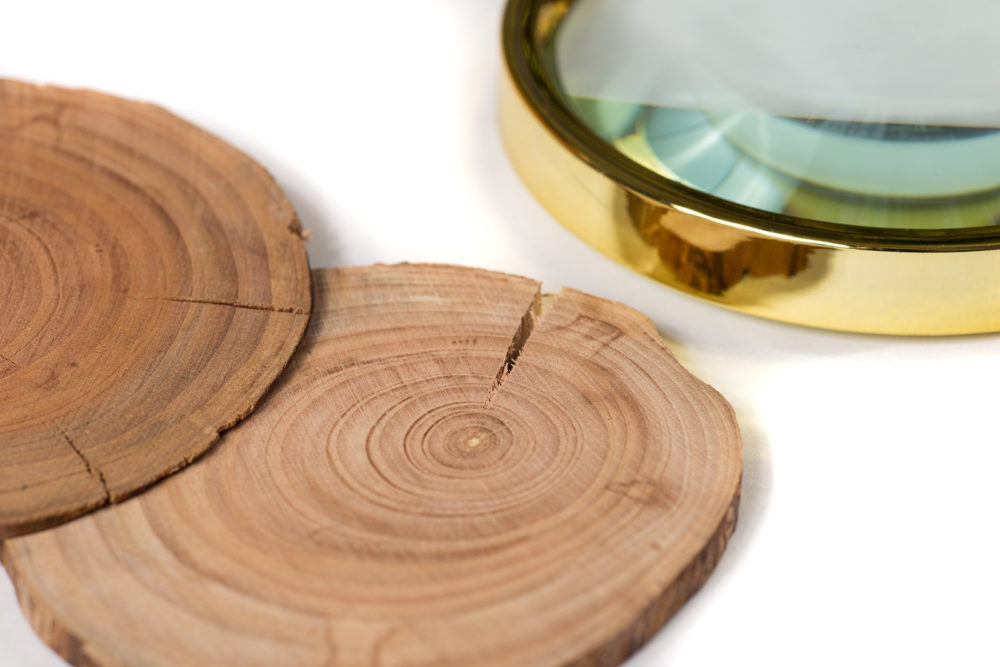
Tree rings reveal not just when wood was cut, but also document geological and environmental events. Volcanic eruptions appear as years with suppressed growth. Human activity shows when the woodland was cleared for agriculture. By matching ring patterns across multiple specimens, scientists build chronologies extending back thousands of years.
Similarly, herbchronology examines growth rings in perennial plants other than trees. The principle remains the same—annual growth layers record environmental conditions and provide dating information.
Paleomagnetic and Archaeomagnetic Dating
Earth's magnetic field changes over time, and these changes get recorded in rocks, sediments, and artifacts. Paleomagnetic and archaeomagnetic dating study these magnetic signatures to determine age.
Magnetic signatures form in two ways. First, extreme heat—such as pottery firing or hearth fires—creates a magnetic alignment. Second, water deposition "freezes" magnetic particles in place. Once set, these magnetic signatures remain stable, recording the magnetic field orientation at that time.
Despite its complexity, this method has proven vital for decades in dating archaeological and geological deposits. Archaeomagnetic dating is typically effective for materials up to about 10,000 years old, while paleomagnetic dating can extend back millions of years for geological research.
Other Absolute Methods
Amino acid dating tracks how amino acids change in organic materials over time. This relatively new technique helps archaeologists, anthropologists, and molecular biologists date materials ranging from 1,000 to several hundred thousand years old. It requires temperature calibration for local conditions but has proven especially useful for tracking early human migrations.
Lead-lead dating studies lead to the study of isotope decay in rocks. While superseded mainly by uranium-lead dating in geological studies, it remains valuable for astronomers who date meteorites and extraterrestrial materials. The method measures changes in lead isotopes over millions of years.
Advantages and Limitations of Absolute Dating
Absolute dating methods offer clear advantages. They provide specific dates or date ranges—you can say with confidence that something is 5,000 years old, plus or minus 200 years. Multiple tests on different samples help ensure accuracy. When labs independently arrive at similar dates, you can trust the results.
Modern techniques require increasingly small samples, reducing the destruction of valuable materials. Radiocarbon AMS dating needs only tiny fragments. The range of available methods means that if one produces anomalous results, others can verify or correct the data.
However, problems typically stem from user error rather than flawed methods. The biggest challenge is selecting the right material without including later contaminants. Testing inclusions or accidentally selecting contaminated samples skews results. This has happened with thermoluminescence and radiocarbon dating when researchers inadvertently tested reused materials.
One documented example involved ancient tomb wood that dated far older than the tomb's construction—the builders had reused ancient timbers. The method worked correctly, but the assumption about what was being dated proved wrong. This illustrates why researchers never rely on absolute dating alone.
Contamination by modern carbon sources poses particular challenges for radiocarbon dating at the upper end of its range. Some dates from Neanderthal and early modern human sites in Europe may be too young due to contamination, affecting our understanding of when these populations overlapped.
Relative Dating Methods
Relative dating methods don't provide exact dates. Instead, they establish sequences—showing that Artifact A came after Artifact B, or that geological Layer X formed before Layer Y. These methods examine relationships and contexts to build chronological frameworks. Here are the most critical relative dating techniques.
Stratigraphy Principles
Stratigraphy examines layers of soil, rock, or deposits. It's fundamental to geology, archaeology, and anthropology. The basic principle seems simple: lower layers are older than higher layers. But real-world stratigraphy involves complex interactions and requires careful interpretation.
The principle of Superposition states that in undisturbed sequences, lower layers formed before upper layers. This works with two other key concepts: Original Horizontality (layers form horizontally, even if later tilted) and Lateral Continuity (separated layers that share characteristics formed at the same time).The
Law of Cross-Cutting Relationships helps determine relative ages when layers are disrupted. Any feature cutting through existing layers must be younger than those layers. Tectonic forces can push rock layers beneath others, creating mountains and complicating simple superposition.
Law of Inclusions notes that any fragments within a layer must be older than the layer itself, even if deposited later. This prevents dating inclusions as evidence of the layer's age.
Harris Matrix provides a tool for visualizing complex stratigraphic relationships. This diagram, similar to a flowchart, breaks down complicated layers into their most likely sequence. It doesn't date layers but explains how the sequence probably formed, using three labels: layers (stratigraphic deposits), cuts (where later additions cut through layers), and fills (material filling cuts).
Faunal and Flora Succession
This method examines fossilized plant and animal remains in sedimentary layers. By identifying which species appear in which layers, scientists build sequences showing how life in an area changed over time. The technique doesn't reveal evolution (though it can), but demonstrates which organisms occupied a landscape at given times.

Faunal and flora succession proves especially useful in geography, anthropology, archaeology, and environmental studies. Pieced together across regions, this data builds profiles of landscape changes and helps datethe formation of layers. The method reveals environmental shifts, climate changes, and ecological transitions.
Paleomagnetism
Paleomagnetism studies Earth's past magnetic field as recorded in rocks, sediments, and artifacts. This field has contributed significantly to understanding continental drift and plate tectonics in geology and geography. In archaeology and anthropology, paleomagnetic studies have provided solid dates for early human occupation in China and Western Europe.
The method examines magnetic minerals in materials that align with Earth's magnetic field when formed. Since Earth's magnetic field changes over time and occasionally reverses, these magnetic "signatures" help establish relative ages and correlate deposits across large areas.
Palynology
Palynology studies fungal spores and plant pollen preserved in sediments. During reproduction, each plant or fungus releases thousands of spores or pollen grains. These settle in water bodies, become embedded in sediment, and survive for long periods.
Archaeologists and anthropologists use preserved pollen to build chronologies of landscape changes. This reveals how vegetation evolved, tracks climate shifts, documents human land use, and establishes relative ages for sediment layers. Palynology often works in conjunction with absolute dating methods, such as radiocarbon, to create complete chronologies.
Tephrochronology
Tephrochronology dates volcanic ash deposits based on their chemical composition and glass particle characteristics. Volcanic ash can travel enormous distances and survive in peat bogs and sediment layers alongside pollen. This makes it valuable for correlating sites across regions.
When volcanic ash appears in a stratigraphic sequence, it provides information about eruption timing, strength, and environmental impact. Combined with archaeological and geological evidence, tephrochronology helps reconstruct how eruptions affected landscapes and human populations. The method also benefits climatology and paleoclimatology studies.
Typology and Seriation
Typology examines how artifacts change over time in form, style, technology, and function. Archaeologists and anthropologists use typological methods to place artifacts in chronological sequences.
Morphology studies artifact size, shape, and form, categorizing items by period, style, and design. This more straightforward approach focuses on physical characteristics.
Seriation arranges artifacts chronologically by assuming technological evolution—increasing complexity and changing manufacturing methods. This works exceptionally well for stone tools, pottery, and grave goods in prehistoric and historic contexts.
Sequence Dating, developed by archaeologist William Flinders Petrie during his research in Egypt, refines seriation by examining different artifact styles and assigning them to archaeological time periods. This approach proves fundamental for tracking artistic styles, technological advances, and social/political changes.
Terminus Post Quem and Terminus Ante Quem
These Latin terms establish the earliest and latest possible dates for archaeological contexts. They don't provide exact dates, but narrow the timeframe.
Terminus Post Quem means "the limit after which"—the earliest possible date. For example, a Roman grave containing coins from Emperor Nero's reign could not have been buried before AD 54, the first year of his rule. The coins provide a TPQ.
Terminus Ante Quem means "the limit before which"—the latest possible date. Using the same example, if the burial lies beneath a structure with a known construction date of AD 113 (such as Trajan's Column), the grave could not have been buried after that date. The structure provides a TAQ.
Together, these concepts create a date range. Our hypothetical grave occurred between AD 54 and AD 113—a 59-year window. Additional evidence might narrow this further.
Advantages and Limitations of Relative Dating
Relative dating excels at establishing sequences and relationships. It shows technological advancement in artifacts, reveals the order of geological events, and helps piece together evolutionary phases. Combined with absolute dating, relative methods create comprehensive chronological frameworks.
The primary limitation is that relative dating rarely provides specific dates. You can say Event A preceded Event B, but not when either occurred or how much time passed between them. Only absolute dating supplies those details.
Relative dating also struggles to demonstrate timescales. Five artifacts in sequence may suggest equal spacing, but Artifact A's period of use might exceed the combined duration of Artifacts B through E. In human prehistory, the Paleolithic lasted 2.6 million years while the Mesolithic spanned just 4,000 years—a period of rapid technological change—and the Neolithic covered roughly 2,000 years.
For geological examples, relative dating can't reveal how long stratigraphic sequences took to accumulate. A thin layer isn't necessarily younger or shorter-duration than a thick layer. Mount Vesuvius deposited 6 meters of ash over several nights in AD 79, burying Pompeii and Herculaneum. Elsewhere, accumulating that much material might take centuries.
Environmental conditions also affect how methods manifest. A geological timescale in Alaska appears different from the same period in New Mexico due to climate and topographic variations.
Choosing the Right Dating Method for Your Research
Selecting appropriate dating methods depends on your material, time period, and research questions. Here's a framework for decision-making:
Consider your material type. Organic remains (bone, wood, charcoal) are suitable for radiocarbon dating up to 60,000 years old. Volcanic rocks work for potassium-argon dating. Pottery and sediments fit luminescence methods. Matching the process to the material is your first step.
Identify your time scale. Recent materials (the last few thousand years) can be dated using dendrochronology, radiocarbon, or archaeomagnetic dating. Geological timescales (millions of years) require potassium-argon or uranium-lead dating. Methods have effective age ranges—choose accordingly.
Define what you need to know. If you need specific dates, use absolute methods. If understanding sequence matters most, relative methods suffice. Often, you'll need both—absolute dates to anchor your timeline and relative methods to fill gaps.
Check for potential complications. Has your material been reheated (resetting radiometric clocks)? Could it contain later contaminants? Has it been reused (like ancient wood in later construction)? Anticipating problems helps you select robust methods and interpret results carefully.
Use multiple methods when possible. Cross-verification strengthens conclusions. If radiocarbon and dendrochronology agree, you can be confident. If they conflict, investigate why—often this reveals essential information about site formation or artifact history.
Consult experienced researchers. Dating method selection involves subtle considerations. Talk with specialists in your field about which methods work best for your specific materials and contexts. Their experience prevents costly mistakes.
Frequently Asked Questions
What's the difference between absolute and relative dating?
Absolute dating provides specific dates or date ranges, telling you how old something is in years. For example, radiocarbon dating might show an artifact is 5,000 years old. Relative dating establishes sequences, showing that one event occurred before or after another without specifying exactly when. Scientists often use both methods together—absolute dating provides anchor points while relative dating fills in the sequence between them.
What is the most accurate dating method?
Accuracy depends on what you're dating and when it existed. For organic materials up to 60,000 years old, radiocarbon dating (especially AMS) is highly reliable. For geological materials millions to billions of years old, uranium-lead dating offers exceptional precision. For wooden structures and artifacts from the past several thousand years, dendrochronology can provide exact calendar dates. No single method is "most accurate" for all applications—choosing the right method for your material and time period determines accuracy.
Can dating methods produce incorrect results?
Yes, dating methods can yield inaccurate results due to contamination, incorrect sample selection, reused materials, or misapplication of techniques. This is why scientists run multiple tests, use different methods to cross-check results, carefully document sampling procedures, and subject findings to peer review. User error causes most problems, not flaws in the processes themselves. When multiple independent labs produce similar dates using different techniques, confidence in the results increases significantly.
Do environmental scientists need to know multiple dating methods?
Most environmental scientists develop expertise in the dating methods most relevant to their specialization. Geologists typically focus on radiometric methods like potassium-argon and uranium-lead dating. Archaeologists might emphasize stratigraphy, typology, and radiocarbon dating. However, understanding principles behind various methods helps you interpret research across environmental science disciplines and recognize when interdisciplinary collaboration could strengthen your work. Graduate programs usually provide training in at least one dating method, along with exposure to others.
How do I choose which dating method to use for my research?
Consider three key factors: the material you're analyzing (organic versus inorganic), the time period you're investigating (recent versus ancient), and what information you need (specific date versus relative sequence). For organic materials older than 60,000 years, start with radiocarbon dating. For geological materials millions of years old, consider the potassium-argon or uranium-lead methods. For establishing sequences without specific dates, stratigraphic or typological methods work well. Consult experienced researchers in your field and consider using multiple methods to verify results. Sample condition and potential contamination also influence method selection.
Key Takeaways
- Two Complementary Approaches: Absolute dating provides specific ages or date ranges (like radiocarbon dating up to 60,000 years), while relative dating establishes sequences showing which events occurred first. Environmental scientists combine both approaches to achieve a comprehensive, chronological understanding.
- Method Selection Matters: Choose dating techniques based on material type (organic versus inorganic), time scale (recent versus ancient), and research goals. Radiocarbon works for organic materials up to 60,000 years old, while uranium-lead dating suits geological timescales of millions of years.
- Cross-Verification Strengthens Results: Reliable research uses multiple dating methods to confirm findings, carefully documents sampling procedures, and accounts for potential contamination. When independent methods agree, confidence in dates increases significantly.
- Discipline-Specific Applications: Different fields of environmental science emphasize different methods based on their materials and questions. Geologists rely heavily on radiometric techniques such as potassium-argon dating, while archaeologists emphasize stratigraphy and typology to sequence artifacts and understand site formation.
- User Expertise Determines Accuracy: Most problems in dating methods stem from user error—contamination, incorrect sample selection, or reused materials—rather than from flawed techniques. Proper training, careful sampling, and consultation with experienced researchers prevent costly mistakes and improve the reliability of results.
Ready to build expertise in environmental science research methods? Explore degree programs that provide hands-on training in chronology, dating techniques, and fieldwork essential for your career.

- What Is Parasitology? The Science of Parasites Explained - November 19, 2018
- Desert Ecosystems: Types, Ecology, and Global Importance - November 19, 2018
- Conservation: History and Future - September 14, 2018
Related Articles



Featured Article
Dendrochronology: How Tree Rings Reveal Environmental History