
Stratigraphers examine layers of rock and soil to understand Earth's geological history, dating deposits from decades to millions of years ago. Working primarily in oil and gas extraction, engineering services, and conservation, stratigraphers fall under the broader geoscientist category with a median salary of $99,240 as of 2024. The field is projected to grow 3% through 2034, creating approximately 2,000 annual job openings nationwide.
Fascinated by Earth's story written in stone? Every layer of rock beneath your feet holds secrets—ancient climates, extinct ecosystems, catastrophic events that shaped continents. Stratigraphers read this geological record, piecing together millions of years of planetary history from soil samples and rock formations. Whether you're drawn to archaeology's human story, geology's deep time perspective, or ecology's environmental narrative, stratigraphy offers a unique lens for understanding our world.
This comprehensive guide explores what stratigraphers do, where they work, realistic salary expectations, and the educational pathway to this specialized geoscience career. You'll discover the three main disciplines using stratigraphic methods, learn what a typical workday entails, and gain clarity on whether this career aligns with your interests and strengths.
What Does a Stratigrapher Do?
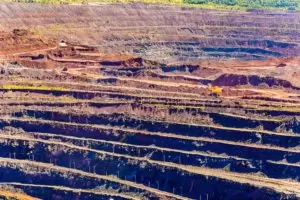
Stratigraphy is the study of layers in the Earth's crust. As rock and soil settle over time, deposits build up gradually—sometimes across decades, sometimes across millions of years. These fundamental shifts in Earth's processes help us identify distinct layers and reconstruct what life on the planet looked like at specific points in history.
The practice of reading Earth's layers developed alongside geology itself. Early geologists in the 18th and 19th centuries noticed that rock formations followed predictable patterns, with older layers buried beneath younger ones. This principle of superposition became foundational to understanding geological time. Today's stratigraphers combine traditional fieldwork with advanced technologies such as ground-penetrating radar, isotope dating, and geographic information systems to extract increasingly precise information from each layer they examine.
Three main disciplines employ stratigraphic methods, each asking different questions of the same geological record:
In archaeology, stratigraphy is used to examine the sequence of cultures, peoples, or building phases using a tool called a Harris Matrix. Archaeological stratigraphers examine soils for inclusions to understand what the environmental biology may have looked like at specific times and which resources past people exploited within the landscape. They work to determine when land was occupied and abandoned, and by which cultures. Towns and cities evolve continuously, and archaeological stratigraphers are particularly interested in understanding how settlements were established, their developmental phases, and their eventual abandonment patterns.
In geology, stratigraphy is used to understand the geological history of a site. Different rock types tell stratigraphers how the land may have appeared in the past. A history of sedimentary rock suggests the presence of ancient swamps, oceans, or lakes, which geologists can often date with precision. We can also date volcanic eruptions by examining ash layers and their chemical signatures, building a timeline of Earth's violent transformations.
In soil science, experts examine different soil types, including subsoils and clay, to understand the more recent history of a site. They look for natural changes in the landscape that occurred within the past few centuries or millennia. Some plants thrive in specific soil types while others cannot survive in them, allowing soil scientists to define the ecological composition of a site and how it has changed over time.
Where Does a Stratigrapher Work?
Where stratigraphers work depends heavily on their area of expertise and training. Students typically pursue a master's degree in stratigraphy after completing an undergraduate degree in a relevant subject, such as geology. Stratigraphers are a specialized type of geoscientist, and employment data from this broader category illuminates career opportunities.
According to 2024 data, the majority of geoscientists—including stratigraphers—work in architectural, engineering, and related services, accounting for approximately 30% of employment. Engineering stratigraphers in this sector examine underlying soil and rock to determine whether ground conditions are suitable for development projects. They assess factors like weight-bearing capacity, subsidence risk, and flood susceptibility. This work often takes place at proposed construction sites for buildings, bridges, tunnels, and infrastructure projects. Engineering stratigraphers typically maintain more regular schedules and work closer to urban centers than their oil-and-gas counterparts.
Mining, quarrying, and oil and gas extraction employ about 14% of geoscientists. This represents a substantial career path for professional stratigraphers. In these roles, stratigraphers analyze subsurface rock formations to identify petroleum deposits, assess extraction feasibility, and predict reservoir behavior. The work combines office-based data analysis with occasional field site visits, often in remote locations. These positions typically offer the highest compensation but may involve irregular schedules and travel to drilling sites.
Management, scientific, and technical consulting services account for 12% of geoscientist employment. This category includes independent heritage services focused on archaeological stratigraphy, ecological consulting firms concerned with conservation, and various groups engaged in scientific recording and environmental impact assessment. These roles offer significant variety, with projects ranging from cultural resource management to ecosystem restoration planning. Consultants often work on multiple projects simultaneously and may split time between office work, laboratory analysis, and fieldwork.
The federal government employs approximately 9% of geoscientists, while state governments employ 9% as well. Government stratigraphers typically work in conservation at state parks, national monuments, and other protected areas. They document geological features, assess natural hazards, contribute to resource management plans, and sometimes lead public education programs. These positions generally offer stable employment, good benefits, and opportunities to protect scientifically significant landscapes.
Educational establishments such as schools and colleges employ about 7% of geoscientists. These are typically geography and archaeology teachers at secondary schools, geology lecturers at colleges and universities, and researchers at academic institutions. Academic stratigraphers balance teaching responsibilities with research projects and often mentor graduate students conducting stratigraphic studies.
What Is the Average Stratigrapher Salary?
The Bureau of Labor Statistics categorizes stratigraphers within the broader geoscientist occupation. As of 2024, the median annual salary for geoscientists was $99,240. However, this figure represents the midpoint of a wide compensation range. The lowest 10% of geoscientists earned $58,790 annually, while the highest 10% earned $178,880 or more.
Several factors significantly influence stratigrapher compensation. Industry sector plays the most significant role, with mining, quarrying, and oil and gas extraction offering the highest median salary at $148,760—substantially above the overall median. Federal government positions provide the second-highest compensation, with a median salary of approximately $116,470. State government positions offer median salaries around $86,780, while architectural and engineering services provide median salaries near $86,620. Management and technical consulting positions typically offer median salaries around $83,420.
Geographic location also affects earnings. Stratigraphers working in central energy-producing states like Texas, Alaska, and North Dakota often command higher salaries due to industry concentration and cost-of-living adjustments. Metropolitan areas with significant consulting sectors, such as Denver, Houston, and Washington, D.C., also tend to offer above-average compensation.
Experience level matters considerably. Entry-level stratigraphers with only a bachelor's degree may start at $55,000-$65,000 annually, while those with master's degrees typically begin at $65,000-$75,000. Mid-career professionals with 5-10 years of experience often earn between $85,000 and $110,000. Senior stratigraphers with advanced degrees and specialized expertise, particularly in petroleum geology or environmental consulting, can exceed $150,000 annually.
Stratigraphy Jobs & Job Description
Stratigraphers are a specific type of geoscientist who examine layers in soil or rock formations. Most stratigraphers work in the oil and gas industry, though significant numbers also work in engineering, conservation, and academia. The profession requires a strong foundation in geology, biology, and physics, as understanding Earth's layered history demands knowledge of multiple scientific disciplines.
Junior stratigraphers typically begin their careers by conducting fieldwork under experienced supervision. This includes archaeological testing and excavation at cultural sites, geological sampling at proposed drilling locations, or soil analysis for environmental assessments. They excavate using trowels, shovels, and other hand tools as appropriate, learning to recognize artifacts, geological features, and basic stratigraphic sequences. Field work often involves physically demanding conditions—working outdoors in various weather, hiking to remote sites with equipment, and maintaining focus during repetitive sampling procedures.
Data recording forms a crucial part of the junior stratigrapher's role. They document relevant information for excavated items using an infrared theodolite, GPS devices, or other precision tools. Each sample must be carefully logged with depth measurements, location coordinates, and contextual observations. Back in the laboratory or office, junior stratigraphers analyze and interpret collected data using specialized computer software. They prepare maps, diagrams, charts, and reports that synthesize fieldwork findings into comprehensible visualizations for clients or research teams.
Communication skills become increasingly important as stratigraphers advance in their careers. They present findings by writing research papers for scientific journals, participating in professional conferences where they share methodologies and discoveries, or teaching geological sciences at the university level. The ability to translate complex stratigraphic concepts for non-specialist audiences is particularly valuable when working with engineering clients, government agencies, or community stakeholders.
Experienced stratigraphers progressively take on project management responsibilities that extend beyond individual technical work. They design comprehensive studies to examine the stratigraphy of specific sites, determining appropriate sampling strategies, equipment needs, and analytical methods before fieldwork begins. Managing teams of junior staff at field sites requires leadership skills, including coordinating daily activities, ensuring safety protocols, maintaining quality standards, and adapting plans when unexpected conditions arise. Senior stratigraphers provide training and mentorship to junior staff, sharing the nuanced observational skills that distinguish competent from exceptional stratigraphic work.
In consulting and industry settings, experienced stratigraphers often serve as technical authorities on exploration strategies. They advise clients on where to focus resources based on stratigraphic analysis, potentially saving companies millions in misdirected drilling or excavation. They lead and participate in quality assurance reviews of geoscience work, ensuring that stratigraphic interpretations meet professional standards. Networking becomes essential at this career stage—connecting with academic and industry contacts keeps stratigraphers informed about advances in dating techniques, analytical methods, and theoretical developments while opening doors to collaborative research projects.
What Is the Job Demand for Stratigraphers?
The Bureau of Labor Statistics projects approximately 3% growth for geoscientist occupations, including stratigraphy, between 2024 and 2034. This growth rate matches the average across all professions, indicating steady but moderate demand. The field is expected to add approximately 2,000 job openings nationwide annually over this period, accounting for both new positions created by industry growth and the replacement of retiring workers.
Several factors drive this moderate growth trajectory. Energy sector demand remains significant as companies seek to locate and assess remaining petroleum reserves using increasingly sophisticated stratigraphic analysis. However, this traditional employment sector faces uncertainty due to energy transition policies and fluctuating oil prices. Conversely, renewable energy development creates new opportunities—stratigraphers help assess geological conditions for geothermal projects, evaluate subsurface storage potential for carbon capture, and analyze sites for underground energy storage facilities.
Environmental consulting represents a growth area for stratigraphers. As we develop a better understanding of how geological layers record environmental changes, archaeological sites, and ecological succession, the demand for stratigraphers continues to expand. Universities increasingly recognize that disciplinary elements once studied in isolation—geological processes, ecological systems, and human settlement patterns—intersect within the stratigraphic record. This holistic perspective creates opportunities for stratigraphers to work across traditional disciplinary boundaries, particularly in fields such as geoarchaeology, paleoclimatology, and environmental reconstruction.
Climate change research offers emerging opportunities. Stratigraphers contribute to understanding past climate shifts by analyzing sediment cores, ice layers, and depositional sequences that preserve evidence of past temperature changes, sea-level variations, and ecosystem responses. This work informs current climate models and helps predict future environmental changes.
What Are the Education Requirements to Become a Stratigrapher?
The educational pathway to stratigraphy begins during high school. Students should prioritize geography, mathematics, biology, and physics. Geography provides an essential understanding of Earth systems and spatial relationships. Mathematics, biology, and physics form the scientific foundation for any college-level science program—stratigraphers regularly use calculus to model depositional processes, chemistry to analyze sediment composition, and physics to understand rock-forming mechanics.
At the undergraduate level, students have three primary pathways depending on their intended stratigraphic specialization. Those interested in archaeological stratigraphy typically major in archaeology or anthropology, while those drawn to geological stratigraphy major in geology, and those focused on environmental stratigraphy often choose ecology or environmental science. These foundational degrees provide the disciplinary context within which stratigraphic work occurs—you cannot effectively interpret rock layers without understanding geological processes, nor can you analyze cultural deposits without grasping archaeological theory.
Supporting coursework and electives should deliberately emphasize environmental science to develop a comprehensive understanding of stratigraphic concepts. Where possible, students should pursue GIS (Geographic Information Systems) as a minor or through substantial elective work. GIS skills prove essential for modern stratigraphic work, as most professionals now use spatial analysis software to map layer distributions and model subsurface conditions. Cartography courses also provide valuable skills, since mapping of any kind connects directly to topographic study and stratigraphic visualization.
No dedicated stratigraphy degrees exist at the undergraduate level, reflecting the field's nature as an advanced specialization rather than a standalone discipline. However, a growing number of master's programs offer stratigraphy concentrations or specialized training. Not all colleges and universities provide these options. Where specialized programs are unavailable, students should pursue a master's degree in their intended career path (archaeology, geology, or ecology) while deliberately tailoring coursework toward stratigraphy and seeking thesis projects with stratigraphic components—most master's degrees position graduates well for project-based and research-focused jobs throughout their careers.
Before committing to this educational pathway, consider the following questions to assess whether stratigraphy aligns with your interests and strengths:
- Does detailed, systematic observation appeal to you, or do you prefer broad conceptual thinking?
- Can you maintain focus during repetitive tasks, such as measuring and recording layer depths?
- Are you comfortable with physical fieldwork in various weather conditions?
- Do you enjoy puzzle-solving—piecing together fragmentary evidence into coherent narratives?
- Are you equally comfortable with hands-on fieldwork and computer-based analysis?
- Does working in potentially isolated locations appeal to or concern you?
- Are you more interested in recent environmental history or deep geological time?
Students aspiring to teach at the secondary level or to lecture and conduct research at universities should pursue doctoral degrees. PhD programs in geology, archaeology, or related fields with stratigraphic research components typically require 4-6 years beyond the master's degree. However, doctoral degrees are not necessary for most industry, consulting, or government stratigraphy positions, where master's-level training suffices for career advancement into senior technical and management roles.
Stratigraphy - Related Degrees
What Kind Of Societies and Professional Organizations Do Stratigraphers Have?
Stratigraphy is an essential subdiscipline with dedicated professional organizations that provide valuable resources for career development, continuing education, and professional networking.
The International Commission of Stratigraphy operates under the auspices of the International Union of Geological Sciences (IUGS). Their role within this organization involves cataloguing and defining the stratigraphic history of Earth's geological ages. The Commission maintains the International Chronostratigraphic Chart, which standardizes how scientists worldwide name and organize geological time periods. Membership provides access to subcommission activities focused on specific geological periods, opportunities to contribute to international stratigraphic standards, and connections with leading stratigraphers globally. For professionals working in geological stratigraphy, particularly those in research or academia, this organization offers essential professional credibility and keeps members informed about evolving stratigraphic nomenclature.
The Archaeological Institute of America serves archaeological stratigraphers, though it is not exclusively a stratigraphy organization. It brings together the United States' archaeological community to share information on the latest developments in field methods, dating techniques, and interpretive approaches. The organization publishes peer-reviewed journals, hosts an annual meeting where members present research findings, and offers local society chapters that provide regional networking opportunities. For archaeological stratigraphers, membership facilitates connections with excavation projects seeking skilled personnel, exposure to innovative stratigraphic recording methods, and access to professional development workshops. The organization also advocates for the preservation of archaeological sites and ethical research practices.
Frequently Asked Questions
What is stratigraphy in simple terms?
Stratigraphy is the study of rock and soil layers (strata) to understand Earth's history. Just as tree rings show a tree's age and growth conditions, geological layers reveal information about past climates, environments, and life forms. Each layer formed during a specific time period and preserves evidence of conditions when it was deposited. By systematically examining these layers, stratigraphers reconstruct what happened at a location over time—whether that's thousands, millions, or even billions of years ago.
How much do stratigraphers make?
Stratigraphers fall under the geoscientist occupation category, which had a median salary of $99,240 as of 2024. However, earnings vary considerably by industry and experience. Entry-level positions typically start at $55,000-$65,000, while experienced stratigraphers in mining, quarrying, and oil and gas extraction—the highest-paying sector—earn a median of $148,760. The top 10% of geoscientists earn over $178,880 annually. Geographic location, educational credentials (bachelor's, master's, or PhD), and specialized expertise also significantly influence compensation.
Where do stratigraphers typically work?
Stratigraphers work in diverse settings depending on their specialization. About 30% work in architectural, engineering, and related services, assessing geological conditions for construction projects. Another 14% work in mining, quarrying, and oil and gas extraction, analyzing subsurface formations to locate petroleum deposits. Consulting services employ 12% and are often focused on archaeological or environmental work. Government agencies (federal and state, 9% each) hire stratigraphers for conservation and resource management at parks and protected areas. Finally, about 7% work in education, teaching at high schools, colleges, and universities. Most stratigraphers split time between field sites, laboratories, and offices.
What degree do you need to become a stratigrapher?
Most professional stratigrapher positions require at least a master's degree. You'll first need a bachelor's degree in a relevant field—geology for geological stratigraphy, archaeology or anthropology for archaeological stratigraphy, or environmental science for ecological stratigraphy. Then pursue a master's degree with coursework and research focused on stratigraphic methods. Some universities offer specific stratigraphy programs, while others allow you to develop this specialization within broader graduate programs. PhD degrees are necessary primarily for university teaching and research positions, but not for most industry, consulting, or government roles.
Is stratigraphy a growing field?
Stratigraphy is experiencing steady, moderate growth. The Bureau of Labor Statistics projects 3% employment growth for geoscientists (including stratigraphers) between 2024 and 2034, matching the average across all occupations. This translates to approximately 2,000 annual job openings nationwide. While traditional oil and gas employment faces uncertainty due to energy transitions, emerging opportunities exist in renewable energy development, environmental consulting, climate change research, and interdisciplinary academic work. The field's growth is stable rather than explosive, offering reasonable career security for qualified professionals.
What skills does a stratigrapher need?
Successful stratigraphers combine technical knowledge with practical skills. You need strong observational abilities to recognize subtle differences in soil and rock layers. Analytical thinking helps you interpret those differences to understand the site's history. Physical stamina is essential for fieldwork that may involve hiking, excavation, and working outdoors under various conditions. Technical skills include proficiency with GIS software, statistical analysis tools, and specialized equipment, such as ground-penetrating radar and GPS devices. Communication skills are essential—you must write clear reports, present findings to diverse audiences, and collaborate effectively with multidisciplinary teams. Patience and attention to detail are invaluable for meticulous recording and documentation.
How is stratigraphy different from general geology?
While stratigraphy is a branch of geology, it has a specific focus. General geology encompasses all aspects of Earth's physical structure, processes, and history—from volcano formation to mineral composition to plate tectonics. Stratigraphy specifically examines layered rocks and sediments to establish the sequence and timing of geological events. Think of it this way: a general geologist might study what types of rock exist in a mountain range and how they formed, while a stratigrapher would focus on determining the order in which those rock layers were deposited and what each layer reveals about conditions at that time. Stratigraphy provides the chronological framework that other geological specializations use to organize their findings in time.
Key Takeaways
- Specialized Geological Career: Stratigraphers examine rock and soil layers to reconstruct Earth's history across timescales from decades to millions of years. The field combines systematic fieldwork with laboratory analysis and computer modeling, requiring strong observational skills and scientific knowledge across geology, biology, and physics.
- Competitive Compensation: Stratigraphers earn a median salary of $99,240 as geoscientists, with top earners in mining, quarrying, and oil and gas extraction reaching $148,760. Entry-level positions start at $55,000-$65,000, while experienced professionals with specialized expertise can exceed $150,000 annually. Geographic location and industry sector significantly influence earnings.
- Master's Degree Typically Required: Professional stratigraphy positions generally require a master's degree in geology, archaeology, environmental science, or a related field with a specialization in stratigraphy. Undergraduate preparation should include strong foundations in geography, mathematics, biology, and physics, supplemented with GIS and cartography coursework. PhD degrees are primarily necessary for academic teaching and research roles.
- Diverse Work Environments: Stratigraphers work across multiple sectors—30% in architectural and engineering services, 14% in mining and oil and gas extraction, 12% in consulting, 9% in federal government, 9% in state government, and 7% in education. Daily work balances field site visits (often in remote locations and challenging weather) with office-based data analysis, report writing, and client communication.
- Steady Career Outlook: The field is projected to grow 3% through 2034, creating approximately 2,000 annual job openings nationwide. While traditional oil and gas employment faces uncertainty, emerging opportunities include renewable energy assessment, climate change research, environmental consulting, and interdisciplinary academic research integrating geological, ecological, and archaeological perspectives.


Ready to explore environmental science education? Discover degree programs that align with your interests in Earth's geological history and develop the scientific foundation needed for a stratigraphy career.
2024 US Bureau of Labor Statistics salary and job growth figures for geoscientists reflect national data, not school-specific information. Conditions in your area may vary. Data accessed January 2026.