
Seismologists study earthquakes, volcanic activity, and seismic waves to understand Earth's structure and predict natural hazards. They earn a median annual salary of $99,240 as geoscientists, with petroleum industry positions often exceeding $140,000. Most seismology careers require at least a master's degree in geophysics, geology, or physics, with PhDs preferred for research positions. The field is projected to grow 3% through 2034, creating approximately 800 new positions alongside replacement needs.
Seismology bridges Earth science and physics to answer some of our planet's most pressing questions. If you're drawn to understanding earthquakes, predicting volcanic eruptions, or exploring for natural resources beneath Earth's surface, seismology might be your path. This field combines rigorous scientific analysis with real-world impact, from protecting communities against natural disasters to powering our energy infrastructure.
The work isn't easy. It requires strong mathematical skills, patience with complex data, and often the flexibility to work remotely. But for those passionate about Earth's dynamic processes, it's a career that offers both intellectual challenge and meaningful contribution to public safety and resource management.
What Does a Seismologist Do?
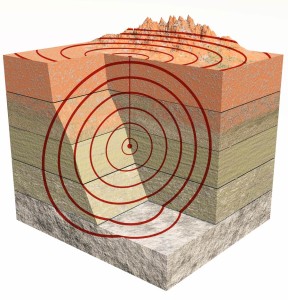
Seismologists interpret how energy moves through Earth's materials. When rock breaks apart suddenly, or tectonic plates shift, they create seismic waves. Seismologists measure, analyze, and apply this information across several distinct career paths.
Petroleum Exploration and Energy Resources
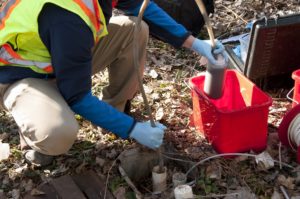
A significant number of seismologists work in petroleum exploration, where they plan and execute controlled seismic surveys. Using explosions or large vibrating trucks, they generate seismic waves and monitor how these waves interact with underground rock formations. The patterns reveal where oil and natural gas deposits might exist. This work involves extensive fieldwork during data collection, followed by detailed computer analysis. Petroleum seismologists collaborate with geologists, engineers, and drilling teams to guide multi-million-dollar exploration decisions.
Natural Hazards and Public Safety
Many seismologists focus on natural seismic activity. They study earthquakes, volcanic tremors, tsunamis, and landslides. Some concentrate on understanding why earthquakes last specific durations or how they stop. Others evaluate geologic faults to assess future risk and predict destructive events. This research directly supports public safety through earthquake preparedness programs, seismic building codes, and early warning systems. After catastrophic events, seismologists create detailed maps of affected areas to guide emergency response and recovery efforts.
Academic and Specialized Research
A smaller number of seismologists pursue theoretical research on Earth's geological makeup and internal structures. Some work in defense or intelligence agencies, particularly for monitoring underground nuclear test explosions as part of treaty verification efforts. Others apply seismological techniques to archaeological investigations, using ground-penetrating analysis to locate buried structures without excavation. These positions typically require doctoral degrees and involve teaching responsibilities at universities alongside research.
Where Does a Seismologist Work?
Seismologists studying major earthquakes typically work in observatories or analysis centers equipped with advanced computing systems. National governments or large research universities usually operate these facilities. Regional research centers, often affiliated with universities or government laboratories, handle smaller seismic events and conduct localized monitoring.
In petroleum exploration, seismologists split time between field sites and office analysis. Field periods might last several weeks in remote locations with basic accommodations. You'll need to be comfortable with outdoor work in varying weather conditions. Between field campaigns, seismologists work in corporate offices analyzing data and planning future surveys.
Most seismologists maintain standard work weeks, but flexibility matters. Public emergencies caused by earthquakes or volcanic activity require immediate response, sometimes at odd hours. Field assignments follow project schedules rather than typical 9-to-5 routines.
According to the Bureau of Labor Statistics, employment sectors for geoscientists (which includes seismologists) are distributed across architectural and engineering services (30%), mining and oil & gas extraction (14%), consulting services (12%), federal government (9%), and state government (9%).
Seismologist Salary and Compensation
Seismologist salaries vary significantly by industry sector and experience level. The Bureau of Labor Statistics reports salary data for geoscientists as a category that includes seismologists.
| Employment Sector | Median Annual Salary (May 2024) | Key Factors |
|---|---|---|
| Mining, Quarrying, and Oil & Gas Extraction | $148,760 | Highest-paying sector; requires field flexibility |
| Federal Government | $116,470 | Stable employment; research-focused positions |
| State Government | $86,780 | Lower pay but often better work-life balance |
| Architectural, Engineering Services | $86,620 | Project-based work; consulting opportunities |
| Management, Scientific Consulting | $83,420 | Diverse project types; client-facing work |
The overall median annual wage for geoscientists was $99,240 as of May 2024, according to the U.S. Bureau of Labor Statistics. Entry-level positions with bachelor's degrees typically start at around $60,000-$70,000, while experienced seismologists with advanced degrees and specialized skills can earn $150,000 or more in petroleum-industry leadership roles. The lowest 10% earned less than $58,790, while the highest 10% earned more than $178,880.
Benefits often include retirement contributions, health insurance, and, in petroleum exploration, bonuses tied to successful discoveries. Government positions offer strong job security and pension plans, though base salaries are lower than those in the private sector.
Essential Skills for Seismologists
Seismology demands a specific combination of technical abilities and analytical thinking. Here's what you'll need to develop:
Technical and Quantitative Skills: Mathematics forms the foundation—calculus, differential equations, and linear algebra are essential. You'll use physics principles daily, particularly wave mechanics and material properties. Computer programming matters, too. Most seismologists write code to process large datasets, often using Python, MATLAB, or specialized geophysical software. Experience with data analysis and visualization tools helps you interpret complex seismic patterns.
Fieldwork and Instrumentation: You need to operate and maintain seismographs and related monitoring equipment. Understanding GPS systems and surveying techniques ensures accurate data collection. Physical stamina helps during extended field campaigns. Problem-solving skills matter when equipment fails in remote locations miles from technical support.
Analytical and Research Skills: Seismologists must recognize patterns in noisy data. You'll distinguish actual seismic signals from background interference, identify different seismic wave types, and correlate findings across multiple monitoring stations. Statistical analysis helps quantify uncertainty in your interpretations. Research requires reviewing scientific literature, designing experiments, and critically evaluating methods and results.
Communication and Collaboration: You'll write technical reports for both scientific peers and non-technical stakeholders. During emergencies, you might brief government officials or the media about earthquake risks. Seismologists rarely work alone—you'll collaborate with geologists, engineers, computer scientists, and other specialists. Teaching skills help if you pursue academic positions.
Job Demand and Career Outlook
Overall employment for geoscientists is projected to grow 3% from 2024 to 2034, about as fast as the average for all occupations. This growth will create approximately 800 new positions over the decade. In addition, about 2,000 openings for geoscientists are projected each year, with most resulting from the need to replace workers who transfer to other occupations or retire.
However, seismology opportunities fluctuate significantly with energy market conditions. When oil and gas prices rise, petroleum companies expand exploration and hire more seismologists. During price declines, hiring slows, and competition for positions intensifies. The shift toward renewable energy is gradually reducing long-termdemand for petroleum exploration, though the industry will remain active for decades.
Government and academic positions offer more stability but are subject to tighter budgets. Federal agencies like the U.S. Geological Survey maintain ongoing monitoring networks that require staffing. State geological surveys employ seismologists in earthquake-prone regions like California, Alaska, and the Pacific Northwest.
The most competitive advantage? An advanced degree. Master's and primarily PhD holders have significantly better prospects. Specialization in emerging areas like geothermal energy exploration or carbon capture monitoring may open new opportunities as energy infrastructure evolves.
How to Become a Seismologist
The path to seismology requires strategic educational planning. Seismology is a specialization within geophysics, and there are virtually no dedicated undergraduate seismology programs. You'll build a foundation in multiple disciplines before specializing.
Undergraduate Education
Most students earn bachelor's degrees in geophysics, geology, physics, or mathematics. Your undergraduate coursework should include:
- Mathematics: Calculus I-III, differential equations, linear algebra, and preferably numerical methods or applied mathematics
- Physics: Complete sequence including mechanics, waves, electricity and magnetism, and modern physics
- Earth Sciences: Physical geology, structural geology, mineralogy, and at least one course specifically on geophysics or seismology
- Computer Science: Programming fundamentals (Python strongly recommended), data structures, and ideally, scientific computing or numerical methods
- Electives: Signal processing, statistics, remote sensing, or GIS if available
Summer internships and research assistantships provide invaluable experience. Look for opportunities through the USGS, oil and gas companies, or university research programs. These experiences help you understand whether you prefer fieldwork, data analysis, or research before committing to graduate school.
Graduate Education
Advanced degrees open most seismology positions. Master's programs typically last two years and include both coursework and thesis research. You'll take specialized classes in seismology, wave propagation, inverse theory, and geophysical data analysis. Your thesis project might focus on analyzing a specific seismic dataset or developing new interpretation methods.
PhD programs require 4-6 years beyond the bachelor's degree. Doctoral research must make original contributions to seismological knowledge—perhaps improving earthquake location algorithms, investigating seismic wave attenuation in specific rock types, or developing new monitoring techniques. PhDs are essential for most research positions and university faculty appointments.
Few universities offer dedicated seismology graduate programs. More commonly, you'll enter geophysics or geology programs and specialize in seismology through course selection, research focus, and advisor expertise. Top programs exist at schools like Caltech, UC Berkeley, MIT, Stanford, and the University of Texas at Austin, though many institutions offer solid preparation.
Certifications and Continuing Education
Seismology doesn't require formal licensure like some professions do, but professional development still matters. Staying current with new analysis techniques, software tools, and instrumentation helps maintain career relevance. Many seismologists join professional societies (detailed below) that offer workshops, webinars, and networking opportunities.
Career Advancement
Entry-level seismologists typically work under supervision, processing data and assisting with field operations. Mid-career professionals design surveys, lead project components, and mentor junior staff. Senior seismologists manage entire programs, direct research teams, oversee budgets, and represent their organizations to clients or funding agencies. In petroleum companies, advancement might lead to roles such as exploration manager or chief geophysicist. In government, you could progress to program director or agency leadership positions.
Frequently Asked Questions
Can I become a seismologist with just a bachelor's degree?
Entry-level positions typically require a bachelor's degree, but they're generally technical roles that process data under supervision rather than involve independent research or analysis. Master's degrees significantly improve job prospects and starting salaries. Most independent seismology work requires at least a master's degree, and research positions almost always require a PhD.
How long does it take to become a seismologist?
Expect 6-8 years minimum. That's four years for a bachelor's degree plus 2-4 years for a master's. If you pursue a PhD for research positions, add another 4-6 years, bringing the total to 10-14 years of post-high school education.
What's the difference between a seismologist and a geologist?
Geologists study Earth's materials, structures, and processes broadly. Geologists might focus on rock formations, mineral resources, groundwater, or environmental site assessment. Seismologists specifically study seismic waves and their applications. Think of seismology as a specialized subset of geophysics, which itself overlaps with geology. Many seismologists have geology backgrounds but emphasize physics and mathematics more heavily than typical geologists.
Is seismology a promising career if I want a work-life balance?
It depends on your employer and specialization. Government and academic positions generally offer predictable schedules, though earthquake emergencies require occasional irregular hours. Petroleum exploration involves extended field campaigns that disrupt everyday routines, though you typically have downtime between projects. Overall, seismology offers better work-life balance than many exploration geology roles but more variable schedules than typical office professions.
Are seismology jobs declining because of the shift away from fossil fuels?
Petroleum exploration employs a significant number of seismologists, so that long-term industry contraction will affect opportunities. However, this won't happen overnight—oil and gas will remain important for decades. Meanwhile, new applications emerge: geothermal energy exploration uses similar seismic techniques, carbon capture projects need subsurface monitoring, and natural hazard research continues regardless of energy trends. The field is evolving rather than disappearing.
What programming languages should I learn for seismology?
Python has become the dominant language in seismology for data processing and analysis. MATLAB remains common, especially in academic settings. Some legacy code uses Fortran. Basic command-line skills (Unix/Linux) are valuable since much scientific computing runs on these systems. Focus on Python first—learning additional languages becomes easier once you've mastered one.
Can I study seismology as an undergraduate major?
Dedicated undergraduate seismology programs are extremely rare or nonexistent. Instead, you'll major in geophysics, geology, physics, or mathematics, then take elective courses in seismology if available. The specialization in seismology typically occurs at the graduate level, where you can focus your research and coursework specifically on seismic studies.
Key Takeaways
- Interdisciplinary Foundation: Seismology combines geology, physics, mathematics, and computer science, requiring strong quantitative skills and comfort with complex data analysis.
- Diverse Applications: Career paths span petroleum exploration (the highest-paying, at a $148,760 median), government research (the most stable, $86,780-$116,470), and academic positions, each with distinct work environments and demands.
- Graduate Education Essential: Seismology is a graduate-level specialization within geophysics or geology—there are no dedicated undergraduate programs. Master's degrees are typically a minimum for independent work, with PhDs essential for research positions.
- Steady Growth Outlook: The field is projected to grow 3% through 2034, creating 800 new positions and approximately 2,000 annual openings from retirements and career changes, though opportunities in the petroleum sector fluctuate with energy markets.
- Technical Skills Differentiate: Beyond educational credentials, proficiency in programming (especially Python), data analysis software, and field instrumentation operation distinguishes competitive candidates in this specialized field.


Ready to explore geophysics and seismology programs? Find accredited degree programs that match your interests in Earth science, natural hazards, or energy exploration.

Professional Societies and Organizations
- The Seismological Society of America (SSA) is the primary international professional association for seismologists, founded in 1906. It organizes an annual meeting, publishes Seismological Research Letters and the Bulletin of the Seismological Society of America, and funds research awards. Student membership offers discounted rates and career development resources.
- The American Geophysical Union (AGU) serves geophysicists and seismologists across all specializations. It publishes numerous peer-reviewed journals, maintains the AGU Digital Library, offers professional development workshops and webinars, and hosts a comprehensive career center with job postings and networking opportunities.
- The Geological Society of America (GSA), established over a century ago, is the foremost association for all geology specialties. Its 18 divisions include Environmental and Engineering Geology. GSA provides networking through field trips, conferences, and regional sections, as well as professional development resources valuable to seismologists with geology backgrounds.
2024 US Bureau of Labor Statistics salary and job growth figures for geoscientists reflect national data, not school-specific information. Conditions in your area may vary. Data accessed January 2026.