
A speleologist studies caves and cave systems, examining their geology, hydrology, biology, and archaeological significance. Speleologists earn salaries comparable to geoscientists, with a median of $99,240 annually as of 2024. While speleology isn't typically a standalone career, it's a valued specialization within geoscience requiring a bachelor's degree in geology or geography, with coursework in biology, cartography, and GIS. Employment follows broader geoscience trends with 3% projected growth through 2034.
Speleology—the scientific study of caves—sits at the intersection of geology, biology, hydrology, and archaeology. If you've ever wondered how stalactites form, why particular species thrive in total darkness, or what prehistoric cave paintings reveal about human history, speleology might be your calling. It's a niche field, admittedly, but one that offers unique opportunities to explore Earth's hidden landscapes while contributing to fields ranging from climate science to mineral prospecting.
As a prospective student or career changer exploring environmental science pathways, you should understand speleology as a specialization within the broader environmental science and geoscience fields rather than a distinct occupation. The interdisciplinary nature of cave studies means your skills transfer seamlessly across multiple scientific domains.
What Does a Speleologist Do?
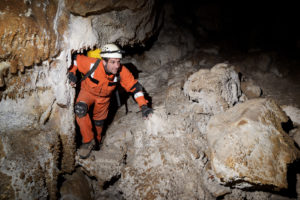
Speleology is both a niche area of geoscience and a broad field of study examining many aspects of caves. There's much we can learn from these curious geological formations. Speleologists investigate how caves formed, which zoological species inhabit them, their geological profile, including how stalagmites and stalactites develop, and their internal hydrology—the profile and processes of water bodies within caves.
They're also interested in caves as habitats for paleontological and anthropological remains. Understanding human use of caves throughout history sheds light on migration patterns, ancient civilizations, and adaptation strategies.
Caves often serve as microcosms of niche ecology. Those with professional interests in biological sciences—zoology, botany, mycology, entomology—might be drawn to speleology when examining native plants and animal species that grow and thrive within cave systems. In recent years, researchers have discovered plants that can photosynthesize in extremely low light levels. Understanding these adaptations may illuminate broader questions about plant genetics and evolutionary biology.
Caves are also important sources of mineral deposits. Speleologists might prospect for these resources or examine their formation processes. They might also work as cartographers, developing maps of caves for recreational or tourism use—devising the safest routes through cave systems or implementing safety protocols. They work primarily in caves but split their time between offices, laboratories, and the cave systems they study.
What Are the Education Requirements to Become a Speleologist?
Speleology requires developing a broad set of scientific skills. High school students should ensure they earn strong grades in the hard sciences—physics, chemistry, and biology—and in mathematics. Geography is also vital for further study. Your degree choices are varied, and pursuing speleology means carefully selecting your major, minors, and electives to build complementary expertise.
Undergraduate Education (Bachelor's Degree)
The most obvious choices for your major include geology and geography. Your minors and electives should be carefully chosen to complement your major. Prioritize any cartography or survey minor, and pursue GIS training where available. Coursework in biological sciences, anthropology, and zoology would also prove valuable.
In most cases, a bachelor's degree will be adequate for your intended career as a speleologist. It's a niche area with limited direct competition, and choosing the right significant plus strategic minors should be sufficient for entry-level positions.
Graduate Education (Master's or PhD)
However, if you want to develop specific interests in certain aspects of cave studies, explore these options through a relevant master's degree. Environmental biology or chemistry, ecology, and postgraduate degrees focused on natural resources are all sound choices.
Doctoral study may be helpful for those wishing to teach specific aspects of speleology at colleges and universities or to lead major research programs. It's unlikely you'll need a PhD unless you intend to enter academia or pursue advanced research positions.
Speleology - Related Degrees
What Is the Average Speleologist Salary?
Because speleology is a specialization within geoscience rather than a distinct occupation, the Bureau of Labor Statistics doesn't track salary data specifically for speleologists. However, speleologists with geoscience credentials can expect compensation comparable to that of other geoscientists. Understanding these broader salary trends helps you set realistic career expectations.
As of May 2024, the BLS reported a median salary of $99,240 for geoscientists. The lowest-paid 10% earned approximately $53,890, while the highest 10% earned about $166,420. Salary varies significantly by employer type and sector.
| Industry | Median Annual Salary (2024) |
|---|---|
| Oil and Gas Extraction | $137,800 |
| Federal Government | $108,350 |
| Engineering Services | $95,890 |
| Management, Scientific, and Technical Consulting | $92,700 |
| State Government | $75,650 |
Speleologists working in mining or energy prospecting contexts typically command higher salaries, while those in government environmental protection roles or educational institutions may earn closer to the median.
Where Does a Speleologist Work?
As this is a niche specialization, BLS doesn't hold employment data on speleology specifically. However, speleology is a subfield of geoscience, which means anyone with a professional interest in this area has transferable skills and a broad knowledge base applicable elsewhere. According to the BLS 2024 data, geoscientists work across diverse sectors.
The largest employer of geoscientists is the architectural, engineering, and related services sector, accounting for approximately 24% of positions. Speleologists working here might design or assess cave systems—for example, as tourist attractions, or evaluate and repair damaged natural or artificial cave structures.
Federal government employment accounts for roughly 18% of geoscientist positions. Speleologists working for government agencies such as NOAA, the EPA, the National Park Service, or the U.S. Geological Survey research climate change indicators, ecological assessments, and cave system management and conservation.
Management, scientific, and technical consulting services employ about 15% of geoscientists. In these roles, speleologists might provide expertise on karst terrain assessments, environmental impact studies, or resource prospecting.
Oil and gas extraction employs approximately 13% of geoscientists. Similarly, they may work on locating caves, examining them as potential geological indicators, or assessing subsurface structures.
State government agencies employ about 7% of geoscientists, in roles similar to federal positions but focused on state-specific geological surveys, environmental protection, and natural resource management.
Educational institutions also employ geoscientists as college lecturers, academic researchers, and program directors.
What Is the Job Demand for Speleologists?
Job demand for all geoscientists is expected to grow 3% between 2024 and 2034, which is about as fast as the average for all occupations. This translates to approximately 800 new positions nationally over the decade. Most opportunities will likely appear in government roles for environmental protection, continued demand for mineral prospecting and fossil fuel surveys, and the education sector.
Here's the reality for job seekers: postings won't typically advertise "speleologist wanted." Instead, you'll compete for positions titled geoscientist, environmental scientist, GIS specialist, research associate, or field technician. Your speleology expertise becomes a valuable differentiator when working for organizations managing cave systems—national and state parks, geological surveys, cave tourism operators, mining companies conducting karst terrain assessments, or environmental consulting firms.
The multidisciplinary nature of speleology means these transferable, broad skills may become increasingly valuable. Climate change research, groundwater management, and ecosystem preservation all intersect with cave science, potentially expanding opportunities beyond traditional geoscience roles.
Consider that competition for positions is intense, particularly in desirable federal agencies or academic institutions. Building practical experience through internships, volunteer cave surveys with organizations like the National Speleological Society, and developing strong GIS and mapping skills will strengthen your candidacy.
What Kind of Societies and Professional Organizations Do Speleologists Have?
Speleology has important organizations for employment, networking, and industry information:
- National Speleological Society: Although cave explorers are now called "cavers" or "spelunkers" and "speleology" is reserved for academic study, the link between cavers and researchers has never broken. NSS brings together anyone interested in caves—recreational explorers, conservationists, and educational researchers.
- Union Internationale de Spéléologie: The world's largest organization for cave studies promotes knowledge sharing and networking among academics, researchers, and recreational cavers across scientific, cultural, and outdoor pursuits.
- Cave Research Foundation: Originally sponsored by the NSS, CRF is now one of the largest cave research organizations in the country, working to conserve and study these critical geological formations through field research, mapping projects, and scientific publications.
Frequently Asked Questions
What is the difference between a speleologist and a spelunker?
Speleologists are academic researchers and scientists who study cave systems professionally, examining geology, biology, hydrology, and archaeology. Spelunkers (or cavers) are recreational cave explorers who visit caves for sport and adventure. However, many amateur cavers contribute valuable data to scientific research, and the communities often overlap through organizations like the National Speleological Society.
Do I need a PhD to become a speleologist?
No, most speleology positions require only a bachelor's degree in geology, geography, or a related field, with minors in biology, GIS, and cartography. A master's degree can help you specialize in particular aspects of cave research, such as cave ecology or hydrogeology. A PhD is only necessary if you plan to pursue academic positions teaching at universities or leading major research programs.
What is the job outlook for speleologists specifically?
The BLS doesn't track employment data specifically for speleologists because it's a specialization within the broader geoscience field. Job growth follows geoscience trends, with 3% growth through 2034, creating approximately 800 new positions nationally. Competition exists for specialized positions, but your multidisciplinary skills transfer well to environmental science, GIS, research, and consulting roles. Your speleology expertise becomes valuable when working with organizations that manage cave systems or conduct karst terrain assessments.
Can I study speleology as an undergraduate major?
No standalone undergraduate speleology programs exist at U.S. universities. Instead, students major in geology or geography while strategically selecting minors and electives—cartography, GIS, biology, anthropology, and zoology all complement cave studies. Some universities offer individual speleology courses or research opportunities through their geology departments. Graduate-level specialization in speleology typically occurs through thesis research or specialized coursework within environmental science or geology master's programs.
What types of organizations hire speleologists?
Federal agencies such as the National Park Service, the U.S. Geological Survey, the EPA, and NOAA employ geoscientists with speleological expertise for cave management, environmental research, and resource assessment. State geological surveys and park systems also hire for similar roles. Private-sector opportunities exist in mining and energy companies conducting subsurface assessments, environmental consulting firms evaluating karst terrain, and cave tourism operations requiring safety assessments and management. Universities employ speleologists as researchers and educators.
Key Takeaways
- Specialized Geoscience Path: Speleology isn't a standalone career but a valued specialization within geoscience, requiring broad scientific knowledge across geology, biology, hydrology, and archaeology, along with highly transferable skills.
- Competitive Compensation: Speleologists earn salaries comparable to those of geoscientists, with a median annual salary of $99,240 as of 2024. Salaries vary significantly by sector, with oil and gas extraction offering a median of up to $137,800 median, and federal government positions averaging $108,350.
- Multidisciplinary Education Required: Success requires a bachelor's degree in geology or geography, complemented by strategic coursework in GIS, cartography, biology, chemistry, and anthropology. Master's degrees offer greater specialization opportunities, while PhDs are necessary only for academic careers.
- Diverse Career Applications: While "speleologist" job postings are rare, your expertise differentiates you for geoscientist, environmental scientist, GIS specialist, and research positions across government agencies, consulting firms, mining companies, tourism operations, and educational institutions.
- Modest Job Growth: The field projects 3% growth through 2034, creating approximately 800 new geoscience positions nationally. Practical experience through internships, volunteer cave surveys, and strong mapping skills strengthen your candidacy in this competitive niche.


Ready to explore environmental science career pathways? Discover accredited geology and geography programs with strong interdisciplinary foundations that prepare you for specialized fields like speleology.
2024 US Bureau of Labor Statistics salary and job growth figures for geoscientists reflect national data, not school-specific information. Conditions in your area may vary. Data accessed January 2026.