Environmental monitors collect and analyze samples of soil, water, and air to assess contamination levels and protect public health. These field-based scientists earned a median salary of $48,380 as of May 2022, with local government positions paying the highest. Entry into the field requires at least a bachelor's degree in environmental science, biology, or chemistry, with employment projected to grow 6% through 2032, creating approximately 3,600 new positions annually.
If you're drawn to fieldwork and care about protecting environmental health, environmental monitoring offers a career path where your work has a tangible impact. Environmental monitors are scientists who collect samples—soil, water, and air—to determine whether the environment meets safety standards. It's detective work combined with laboratory science, and the data you gather informs decisions affecting entire communities.
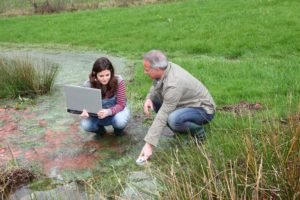
This isn't a desk job. Environmental monitors spend significant time outdoors, often in remote locations or at potentially contaminated sites, collecting samples to assess pollution levels, radioactive materials, and biological threats. Your findings might support legal cases against polluters, track the effects of climate change, or identify the source of disease outbreaks. The work requires both technical expertise and physical stamina, and for those who thrive in varied environments, it's a career that stays engaging.
What Does an Environmental Monitor Do?
Environmental monitoring plays a vital role in identifying health and safety risks to public health and environmental protection. The primary responsibility is sampling—soil, water, and atmospheric samples—though monitors also collect air samples inside buildings to ensure compliance with workplace safety regulations.
What monitors look for depends on the project. Pollutants and radioactivity are common targets, especially when building evidence of negligence against individuals or businesses, or documenting the effects of climate change. But sampling goes beyond contamination detection.
Monitors with expertise in chemistry search for specific chemicals or chemical changes, which can be natural as often as they're artificial. From a biological perspective, they look for microorganisms and bacteria like E. coli or Listeria to identify the source of illness outbreaks in human or animal populations. Population monitoring tracks the rise or decline of species in specific areas, providing data on ecosystem health.
Other responsibilities include identifying potential groundwater sources for public works projects and examining botanical evidence to document changes in plant ecology over time. Regardless of specialization or sampling purpose, the role centers on fieldwork and data collection. Monitors may work almost anywhere—urban construction sites, remote wilderness areas, industrial facilities, or residential neighborhoods. Many also produce reports for decision-makers in government, nonprofit organizations, or private industry.
Specialization Paths in Environmental Monitoring
As you gain experience, you'll likely specialize in one or more monitoring areas. Each specialization requires specific technical knowledge and serves different sectors:
| Specialization | Primary Focus | Typical Employers | Key Skills |
|---|---|---|---|
| Air Quality Monitoring | Atmospheric pollutants, emissions, particulate matter | EPA, state environmental agencies, industrial facilities | Gas chromatography, ambient air sampling, regulatory compliance |
| Water Quality Testing | Surface water, groundwater, drinking water contamination | Municipal water districts, environmental consultants, research labs | Chemical analysis, microbiology, hydrology |
| Soil Contamination Assessment | Heavy metals, petroleum products, agricultural chemicals | Environmental remediation firms, agriculture sector, construction companies | Soil science, toxicology, site assessment protocols |
| Indoor Air Quality | Workplace safety, building contamination, ventilation systems | OSHA contractors, industrial hygiene firms, commercial building management | Industrial hygiene, HVAC systems, occupational safety standards |
| Environmental Toxicology | Chemical effects on organisms, bioaccumulation, ecosystem impacts | Research institutions, pharmaceutical companies, regulatory agencies | Toxicology, biostatistics, analytical chemistry |
| Radiation Monitoring | Radioactive materials, nuclear facilities, environmental radiation | Nuclear power plants, DOE, environmental cleanup contractors | Radiation physics, dosimetry, nuclear safety protocols |
Where Does an Environmental Monitor Work?
Around 36,100 professionals work in environmental monitoring roles across the United States. The majority employer is private scientific and technical services, accounting for just over one quarter of positions. Businesses and government agencies frequently employ or contract with private technical services to address specific monitoring needs. Construction companies, for example, require comprehensive environmental reports before breaking ground—documenting the presence of endangered species, measuring air and water pollution levels, and identifying potential environmental risks.
Local government is the second-largest employer, accounting for approximately one-fifth of positions. These professionals work in parks, environmental protection departments, and regulatory compliance roles. Ensuring municipal and state compliance with environmental regulations is ongoing work, and monitors in these positions may participate in enforcement actions or legal proceedings. Similarly, about one in ten monitors is used by state government agencies.
About one in eight environmental monitors work in laboratories—either at universities or private research facilities. These positions focus on sample analysis for research purposes, product development, and ongoing monitoring programs. Many of these professionals contribute to climate science research.
Work Environment Realities
Environmental monitoring involves substantial outdoor fieldwork, often in challenging conditions. You'll collect samples regardless of weather—in heat, cold, rain, or snow. Remote locations may require hiking with equipment, sometimes to areas without cell service or immediate support. Contaminated sites present exposure risks despite protective equipment, and some projects require working at heights, in confined spaces, or near industrial hazards.
The work schedule varies by project. Routine monitoring occurs during regular business hours, but emergency responses (chemical spills, contamination events) may occur without warning. Some monitoring requires specific timing—water sampling during storm events, air quality measurements during particular atmospheric conditions, or wildlife population surveys during breeding seasons.
Physical demands are real. You'll carry sampling equipment (sometimes 30-50 pounds), dig soil cores, wade into water bodies, and spend hours on your feet. The job suits people who prefer varied work environments to office-based routines, but it's important to recognize the physical demands and potential exposure risks before committing to this career path.
Environmental Monitor Salary
Environmental monitors, classified by the Bureau of Labor Statistics under environmental science and protection technicians, earned a median salary of $48,380 as of May 2022. Salary varies significantly by employment sector, experience level, and geographic location.
| Employment Sector | Median Annual Salary | Percentage of Monitors |
|---|---|---|
| Local Government | $51,320 | ~20% |
| State Government | $45,930 | ~10% |
| Private Scientific & Technical Services | $50,610 | ~25% |
| Testing Laboratories | $47,210 | ~12% |
| Management, Scientific, Technical Consulting | $50,110 | ~8% |
Entry-level positions typically start around $33,250, while experienced monitors with specialized expertise can earn $80,560 or more annually. Geographic location significantly affects earning potential, with monitors in California, Massachusetts, and Washington typically earning above the national median due to higher costs of living and stronger environmental regulations.
Day-to-Day Responsibilities
Environmental monitors combine fieldwork with data management, laboratory analysis, and reporting. While specific duties vary by employer and specialization, most positions share core responsibilities that expand as you gain experience.
Entry-Level Responsibilities
As a new environmental monitor, you'll focus on developing sampling techniques, data accuracy, and field safety practices:
- Monitor and collect samples at designated environmental sites for specific variable,s including temperature, soil composition, water quality, air particulates, and biological indicators
- Analyze, prepare, record, and accurately label samples according to chain-of-custody protocols
- Calibrate, maintain, and organize monitoring equipment to ensure measurement accuracy
- Travel to multiple monitoring locations, which may be in remote areas requiring navigation and self-sufficiency
- Work primarily outdoors using mobile laboratories or field equipment, with some indoor analysis
- Use specialized laboratory equipment, computer software, databases, and tracking systems to record observations
- Maintain current knowledge of environmental regulations, laws, and compliance requirements
- Report findings to coordinators, project managers, or regulatory personnel
Senior-Level Responsibilities
Senior environmental monitors take on larger projects, supervise field teams, and communicate directly with stakeholders:
- Specialize in particular monitoring areas such as emissions assessment, air quality testing, or water contamination analysis
- Produce comprehensive environmental monitoring reports with analysis and recommendations for management regarding the effects of proposed projects like mining, drilling, landfills, or construction
- Develop and deliver weekly, monthly, or annual reports to government agencies, corporate clients, and regulatory bodies
- Design sampling protocols and quality assurance procedures for monitoring programs
- Ensure environmental regulations are met through systematic monitoring and documentation
- Supervise junior monitors, provide training, and coordinate field team logistics
- Manage remote work assignments, including logistics, safety planning, and team communication
- Collaborate with multi-disciplinary team,s including scientists, engineers, legal staff, and environmental planners
Career Progression Timeline
Environmental monitoring offers clear advancement paths for motivated professionals. Progression depends on education, specialization, and demonstrated expertise:
| Career Stage | Years of Experience | Typical Titles | Key Responsibilities |
|---|---|---|---|
| Entry-Level | 0-2 years | Environmental Technician, Field Monitor, Sampling Technician | Sample collection, basic analysis, equipment maintenance, data entry |
| Experienced Monitor | 3-5 years | Environmental Monitor, Environmental Specialist, Senior Technician | Independent project work, specialized sampling, preliminary reporting, quality control |
| Senior/Specialist | 6-10 years | Senior Environmental Monitor, Monitoring Specialist, Project Coordinator | Project design, team supervision, stakeholder communication, regulatory compliance |
| Management/Leadership | 10+ years | Monitoring Program Manager, Environmental Engineer, Consultant | Program oversight, budget management, strategic planning, expert testimony |
Alternative career paths include transitioning into environmental consulting, regulatory agencies, corporate environmental management, or academic research. A master's degree or doctorate opens doors to senior scientific positions and policy-making roles.
Job Outlook for Environmental Monitors
Employment of environmental monitors is projected to grow 6% between 2022 and 2032, creating approximately 3,600 job openings annually. This growth rate is faster than the average for all occupations.
Several factors drive demand for environmental monitoring professionals. Public awareness of environmental health issues continues to increase, creating pressure for more comprehensive monitoring programs. Government agencies at the federal, state, and local levels face ongoing compliance requirements that necessitate consistent environmental sampling. Climate science research relies heavily on long-term monitoring data, expanding opportunities in academic and research settings.
Specialization strengthens job prospects significantly. Monitors with expertise in emerging contaminants (e.g., PFAS), experience with advanced analytical equipment, or certifications in specialized areas face greater demand. Laboratory experience, particularly in chromatography and mass spectrometry, provides a competitive advantage for positions that involve sample analysis rather than purely field collection.
Geographic opportunities vary by region. States with stringent environmental regulations—California, Texas, Florida, Washington, and New York—typically offer more positions and higher salaries. Coastal areas face increasing monitoring needs for water quality and sea-level impacts. Industrial regions require ongoing compliance monitoring, while areas with significant natural resource extraction need environmental oversight.
Education Requirements for Environmental Monitors
A bachelor's degree represents the minimum requirement for most environmental monitoring positions. Degrees in environmental science, biology, chemistry, or related life sciences provide appropriate preparation. Coursework should include field methods, laboratory techniques, data analysis, and environmental regulations.
A bachelor's degree suffices for entry-level field technician positions focused primarily on sample collection and basic analysis. However, progress beyond routine fieldwork becomes increasingly competitive, and a postgraduate qualification provides an advantage. For positions involving independent analysis, project design, or report production, a master's degree has become a standard expectation.
Master's programs offer specialized training in advanced analytical methods, research design, and professional project experience. These programs typically require thesis work demonstrating the ability to design studies, collect and analyze data, and communicate findings effectively. Students gain hands-on experience with sophisticated equipment and develop expertise in specific monitoring areas.
A strong mathematics background, particularly in statistics, proves valuable throughout your career. Environmental monitoring generates extensive datasets requiring statistical analysis to identify trends, assess significance, and support conclusions. Familiarity with statistical software and data visualization tools enhances both analysis capabilities and career prospects.
For those interested in running their own monitoring programs, conducting primary research, or influencing environmental policy, a doctorate becomes necessary. PhD programs focus on advanced research, policy analysis, and scientific leadership. These credentials lead to positions in academia, senior government roles, and consulting leadership.
Practical experience matters as much as formal education. Research assistant positions, laboratory internships, or summer fieldwork provide valuable hands-on training that employers seek. Many successful monitors began as undergraduate research assistants or summer interns, gaining technical skills and professional connections before entering the job market.
Environmental Monitoring - Related Degrees
Frequently Asked Questions
What does an environmental monitor do on a typical day?
A typical day combines fieldwork and analysis. You might start by loading sampling equipment, traveling to monitoring sites to collect soil, water, or air samples in accordance with established protocols, then returning to the laboratory to process samples and record data. You'll spend time maintaining equipment, entering data into tracking systems, and preparing reports. Days vary significantly—some involve entire days in the field at remote locations, while others focus on laboratory analysis or preparing presentations for clients or regulatory agencies.
How much do environmental monitors actually make?
As of May 2022, the median salary for environmental monitors is $48,380, but actual earnings depend heavily on your employer, location, and experience. Entry-level positions typically start around $33,250, while experienced specialists can earn $80,560 or more. Local government positions generally pay the highest, at a median of $51,320. Geographic location matters significantly, with monitors in California, Massachusetts, and Washington typically earning above the national median.
Do I need a master's degree to become an environmental monitor?
No, you can start with a bachelor's degree in environmental science, biology, chemistry, or related fields. A bachelor's degree qualifies you for entry-level field technician positions focused on sample collection and basic analysis. However, career advancement becomes competitive without postgraduate education. A master's degree is increasingly expected for positions involving independent analysis, project leadership, or report production. If you want to design monitoring programs, conduct primary research, or work in policy-making, a doctorate becomes necessary.
Is environmental monitoring a good career choice?
Environmental monitoring suits people who thrive in varied work environments and want their work to have a measurable impact. The career offers intellectual engagement, field diversity, and the satisfaction of protecting public health and environmental quality. Job growth is solid at 6% through 2032, creating approximately 3,600 annual openings. The work involves physical demands, exposure to potentially hazardous conditions, and, at times, irregular hours for emergency responses. If you enjoy outdoor work, problem-solving, and data analysis, and you're comfortable with these challenges, it's a fulfilling career path.
Where do environmental monitors find the most job opportunities?
Opportunities concentrate in states with strong environmental regulations and diverse ecosystems. California, Texas, Florida, Washington, and New York employ the most environmental monitors. Private scientific and technical services firms offer the most positions overall (about 25% of jobs), followed by local government (20%) and state government (10%). Testing laboratories and environmental consulting firms also hire regularly. Urban areas with industrial activity, coastal regions requiring water quality monitoring, and areas with natural resource extraction provide consistent demand.
What's the difference between an environmental monitor and an environmental scientist?
Environmental monitors focus primarily on data collection—the fieldwork and laboratory analysis that produce environmental measurements. Environmental scientists design studies, interpret patterns in monitoring data, develop recommendations, and often hold advanced degrees. In practice, senior monitors and entry-level scientists perform overlapping work, but scientists typically have more analytical responsibility and project leadership. Many environmental scientists started their careers as monitors, gaining field experience before moving into research or policy roles. The titles sometimes overlap depending on the employer.
Do environmental monitors work outdoors year-round?
Yes, monitoring continues regardless of weather conditions because environmental sampling often requires specific timing or regular intervals. You'll collect samples in summer heat, winter cold, rain, and snow. Some positions have seasonal emphasis—water quality monitoring intensifies during certain seasons, while air quality projects may peak during specific atmospheric conditions. The balance between fieldwork and laboratory time varies by position. Entry-level monitors spend the majority of their time outdoors collecting samples, while senior monitors divide their time between fieldwork, analysis, report writing, and project management. Remote locations may require extended field assignments with overnight stays.
Key Takeaways
- Job Function: Environmental monitors collect and analyze soil, water, and air samples to assess contamination and environmental health, working primarily in field settings with laboratory analysis components.
- Salary Range: Median salary of $48,380 nationally as of May 2022, with local government positions paying the highest at $51,320 and entry-level starting around $33,250.
- Education Path: Bachelor's degree minimum (in environmental science, biology, or chemistry); master's degree increasingly standard for advancement; doctorate required for research leadership and policy roles.
- Job Growth: 6% growth projected through 2032, creating approximately 3,600 annual openings; the strongest demand for specialists with laboratory experience and expertise in emerging contaminants.
- Work Environment: Substantial outdoor fieldwork in varied conditions, including remote locations, contaminated sites, and challenging weather; physical demands include equipment transport and extended periods on foot; irregular hours possible for emergency responses.
Ready to start your environmental monitoring career? Explore accredited environmental science programs that prepare you for this vital role protecting public and environmental health.
Professional Organizations for Environmental Monitors
The following organizations serve environmental monitoring professionals and broader environmental health communities:
- National Environmental Health Association (NEHA): Focused on environmental health broadly, including the monitoring role in food safety and water quality. NEHA offers certification programs, professional development resources, and advocacy for environmental health professionals.
- Society of Environmental Toxicology and Chemistry (SETAC): Brings together monitoring professionals worldwide who work in toxicology and environmental assessment. SETAC's annual conference is essential for monitors working in contamination assessment and chemical analysis.
May 2022 US Bureau of Labor Statistics salary and job growth figures for environmental science and protection technicians reflect national data, not school-specific information. Conditions in your area may vary. Data accessed January 2026.