
Geophysicists use advanced technology to study the Earth's physical properties without excavation, creating detailed 3D subsurface maps. The median salary for physicists (which includes geophysicists) was $166,290 as of May 2024, with experienced professionals earning over $239,000. Most entry-level positions require a bachelor's degree in geoscience or geology, though master's degrees significantly improve career prospects.
Ever wonder how archaeologists know precisely where to dig before breaking ground? Or how construction engineers detect underground rivers and utility lines that could derail a multi-million dollar project? That's where geophysicists come in. Using sophisticated remote sensing technology, geophysicists create detailed maps of what lies beneath the Earth's surface—all without digging a single hole.
The field combines cutting-edge technology with real-world problem-solving. Whether you're helping cities plan subway systems, guiding fossil fuel exploration, or protecting archaeological treasures from accidental destruction, geophysics offers a career path that's both intellectually challenging and practically impactful.
What Does a Geophysicist Do?
Geophysicists measure the physical properties of the Earth from above ground. They're looking for changes, anomalies, and patterns in subsurface features—things you can't see but can detect through careful measurement of gravity, magnetism, electrical conductivity, or seismic waves.
Here's how it works in practice: Before a city breaks ground on a new subway line, geophysicists conduct seismic surveys to identify underground cavities, water tables, and bedrock depth. This prevents construction disasters and saves millions in potential delays. When archaeologists suspect an ancient settlement might exist beneath a farmer's field, geophysicists use ground-penetrating radar to create a map showing where walls, roads, and structures lie buried—all without disturbing the site.
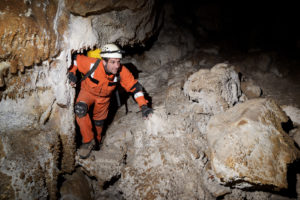
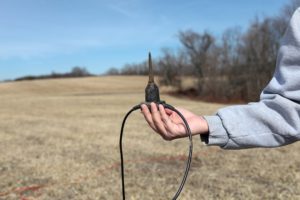
A typical day might start with fieldwork using magnetometers, ground-penetrating radar, or seismographs to collect data at a site. You're often outdoors, working in varying weather conditions, carrying equipment across uneven terrain. After gathering measurements, you return to the office or lab to process the data, create 3D models, and compile reports for engineers, archaeologists, or decision makers.
The technology has evolved dramatically in recent years. Modern geophysicists increasingly use LiDAR (Light Detection and Ranging), drone-mounted sensors, and AI-powered data analysis to process massive datasets faster and more accurately than ever before. What once took weeks of manual calculation can now be accomplished in hours.
This critical technology is used across multiple fields: seismology for earthquake prediction and monitoring, construction and engineering for site assessment, digital mapping for resource management, and fossil fuel or mineral prospecting. Environmental protection has become an increasingly important application—geophysicists help identify contaminated sites, map groundwater resources, and assess environmental impacts before development begins.
Not all geophysicists work in the field. Many spend their careers in labs and offices, compiling and analyzing data from field teams, developing new analytical methods, or putting findings into reports. Either way, the ability to interpret complex data patterns is essential.
Where Does a Geophysicist Work?
Most geophysicists work in architecture and engineering, particularly in construction and geoengineering. These industries work on the front line of civic engineering and land development. Those employed here typically work full-time, moving from project to project as demand remains consistently strong.
Many work in the fossil fuel and mineral mining industries, where their skills are vital for finding new pockets of metals, minerals, and fuels. Geophysics represents a faster, safer, and cheaper prospecting method than physical excavation, with significantly less environmental impact.
Groundwater studies also employ many geophysicists. If you're interested in water resource management, consider exploring hydrogeology, which combines geological knowledge with geophysical methods to study aquifers and underground water systems.
A growing number work as independent consultants or with scientific organizations that provide specialized services on a contract basis. This arrangement allows businesses to access expertise as needed while enabling geophysicists to focus on developing specialized skills rather than on administrative tasks.
Government employment is another significant sector. Federal, state, and local agencies hire geophysicists for environmental protection, land development planning, and resource management. The U.S. Geological Survey, the National Park Service, and state environmental agencies regularly employ geophysicists.
Geographic hotspots: The highest concentrations of geophysics jobs are in Texas and California (due to the fossil fuel industry), Colorado (mining and environmental consulting), and the Washington, D.C., area (federal agencies). However, infrastructure development creates opportunities nationwide.
While fieldwork requires on-site presence, data analysis and modeling can often be done remotely. This offers flexibility for established professionals who've proven themselves reliable.
Geophysics - Related Degrees
What Is the Average Geophysicist Salary?
As of May 2024, the median salary for physicists (the broader BLS category that includes geophysicists) was $166,290. The range varies considerably based on experience, specialization, and location—from $80,020 at the entry level to over $239,200 for senior specialists.
Important note about salary data: The Bureau of Labor Statistics groups geophysicists under the broader "Physicists and Astronomers" category for reporting purposes. This means the salary figures reflect a wider range of physics-related occupations, not just geophysicists. While geophysicists generally earn within this range, your specific compensation will depend on your specialization (exploration geophysics vs environmental geophysics, for example), industry sector, and geographic location.
| Experience Level | Typical Salary Range | Work Setting |
|---|---|---|
| Entry-Level (0-2 years) | $80,000 - $95,000 | Field technician, junior analyst |
| Mid-Career (3-7 years) | $95,000 - $140,000 | Project geophysicist, senior analyst |
| Experienced (8-15 years) | $140,000 - $190,000 | Lead geophysicist, consultant |
| Senior/Expert (15+ years) | $190,000 - $239,000+ | Principal geophysicist, research director |
Higher salaries go to those with more experience and specialized skills. Geographic location matters too—geophysicists in Texas and California (fossil fuel hubs) typically earn more than those in other regions. Industry also plays a role: private-sector consulting and fossil-fuel companies generally pay more than government positions or academic roles. However, the latter offers other benefits such as job security and research opportunities.
The field requires not just knowledge of geophysical methods, but also data interpretation, report writing, statistical analysis, presentation skills, and 3D modeling. The more skills you develop, the more likely you are to advance and the more competitive your compensation becomes.
Geophysics Jobs & Job Description
Information collected and studied by geophysicists determines characteristics of natural resources and informs major infrastructure projects. The role varies from job to job, but generally includes these duties and requirements:
Entry-Level Geophysicist Requirements:
- Bachelor's degree in geophysics, geology, geoscience, or related field
- Knowledge of geological and tectonic systems and their real-world applications
- Ability to collect field samples and observations outdoors in varying environmental and weather conditions
- Experience gathering data from both surface and subsurface sources using geophysical instruments
- Survey and record all geophysical models and images accurately
- Analyze field samples in the laboratory and maintain detailed logs
- Derive technical reports from observations and field data
- Take direction from managers and follow task protocols accurately
- Work independently or as a contributing team member
- Excellent written, oral, and technical communication skills for interacting with clients, supervisors, and fellow scientists
Senior Geophysicist Additional Responsibilities: As you advance, you'll take on leadership and strategic responsibilities beyond core technical work. Senior roles typically include:
- Master's degree or PhD in geophysics, geology, or related field (preferred)
- Extensive experience working with geophysical technology and strong knowledge of geophysical systems
- Design project schedules and ensure teams complete work on time
- Create and monitor project budgets, assessing deviations and adjusting as needed
- Travel to field sites to manage teams and provide methodological recommendations
- Oversee subcontracted work and ensure quality standards are met
- Train fellow geophysicists in specialized techniques and develop training programs
- Attend regular meetings to discuss project progress and results
- Compile regular analyses of results and identify qualitative and quantitative trends
- Provide consultation and scientific information to clients, governments, and management
- Develop and research new methods of surveying and interpreting geophysical data
What Is the Job Demand for Geophysicists?
Demand for geophysicists is projected to grow 4% between 2024 and 2034, about as fast as the average for all occupations. This translates to approximately 1,000 new positions over the decade, with around 1,800 openings annually when accounting for workers who retire or change careers.
Several factors drive this steady demand. Physical excavation is becoming less common due to cost and safety concerns. When construction or research teams need to understand what's underground, geophysics offers a fast, safe, effective, and relatively inexpensive alternative. Environmental protection regulations increasingly require geophysical surveys before development begins—you can't risk accidentally destroying a historically significant site or disrupting a sensitive ecosystem.
The renewable energy sector is creating new opportunities. Wind farm developers need subsurface analysis for foundation planning. Geothermal energy projects require a detailed understanding of underground heat sources and rock formations. Even carbon capture and storage initiatives depend on geophysicists to identify suitable underground storage sites.
Climate research is another growth area. Understanding how ice sheets are changing, how coastal erosion progresses, and how groundwater resources are shifting all require geophysical expertise.
Regional and sector variation: These national projections represent averages across all specializations and locations. Demand in Texas and California (fossil fuel industry hubs) differs significantly from demand in other states. The environmental consulting and renewable energy sectors are growing faster than traditional exploration geophysics. When planning your career, research opportunities in your target region and specialization rather than relying solely on national averages.
What Are the Education Requirements to Become a Geophysicist?
The research-heavy and practical nature of geophysical work means there are few dedicated undergraduate geophysics programs. Most aspiring geophysicists pursue degrees in related fields and develop a specialization in geophysics through electives, internships, and graduate study.
Undergraduate Foundation: You'll need a bachelor's degree in a geoscience-related field such as geology, geography, physics, or environmental science. At the undergraduate level, focus heavily on math (calculus, statistics, linear algebra), physics, and computer science. Many programs also allow students to explore geoscience degree programs that provide a strong foundation for geophysics specialization.
Suppose your school doesn't offer a geology major; an environmental science major, with a geology minor, works well. The key is building a strong quantitative foundation—you'll be doing complex mathematical modeling throughout your career.
Graduate Specialization: A growing number of colleges and universities now offer dedicated geophysics master's degrees, and these should always be your first choice when available. Where master's programs in geophysics aren't provided, stick with your undergraduate field (geology, geography, physics) but concentrate on geophysics coursework, advanced mathematics, statistical analysis, and programming.
| Career Path | Education Level | Timeline | Best For |
|---|---|---|---|
| Quick Entry | Bachelor's in geology/geoscience | 4 years | Field technician roles, getting started quickly, exploring if the field fits |
| Professional Track | Bachelor's + Master's in geophysics | 6-7 years | Project leadership, consulting, specialized technical positions, strong earning potential |
| Research/Academic | Bachelor's + Master's + PhD | 9-11 years | University research, teaching, developing new methods, and working on cutting-edge problems |
Making the Decision: Here's how to think about your path:
Choose a bachelor's degree only if you want to enter the field quickly and see if it's right for you. You'll qualify for entry-level fieldwork positions with utilities, construction firms, or as a research assistant. Many people use this as a testing period before committing to graduate school.
Pursue a master's degree if you want advanced career options and significantly better earning potential. A master's degree qualifies you for project leadership, specialized consulting roles, and positions where you're designing surveys rather than just collecting data. Most professionals eventually earn a master's to advance.
Consider a PhD only if you specifically want a research or academic career. PhDs are primarily for those interested in university teaching, developing new geophysical methods, or working on fundamental research questions. The extra years of study won't significantly increase your salary in industry positions.
Practical Experience Matters: Regardless of degree level, seek internships and field experience during your education. Many programs partner with government agencies (such as the USGS and state geological surveys) or private companies to offer summer internship opportunities. This hands-on experience is often as valuable as coursework when applying for jobs.
Skills & Traits of Successful Geophysicists
Beyond formal education, specific technical skills and personal qualities distinguish successful geophysicists from those who struggle in the field.
Technical Skills You'll Develop:
- Geophysical Instrumentation: Proficiency with magnetometers, seismographs, ground-penetrating radar, gravity meters, and electrical resistivity equipment. You'll learn both operation and troubleshooting.
- Data Analysis Software: MATLAB, Python, R, and specialized geophysics programs like Oasis Montaj, Geosoft, or Kingdom Suite. Programming skills are increasingly essential.
- GIS and 3D Modeling: Creating visual representations of subsurface features using ArcGIS, QGIS, and 3D modeling software. These visualizations communicate your findings to non-specialists.
- Statistics and Mathematical Modeling: Understanding uncertainty, error analysis, and statistical significance. Geophysical data is noisy—you need to know what the signal is and what the noise is.
Personal Traits That Lead to Success:
- Comfort Working Outdoors: You'll spend significant time in the field during various weather conditions. If you prefer climate-controlled environments exclusively, consider roles focused on data analysis and modeling.
- Physical Stamina: Carrying equipment (some instruments weigh 40+ pounds), working on uneven terrain, and spending long days on survey sites requires reasonable physical fitness.
- Analytical Mindset: You're constantly interpreting patterns in data that isn't always clear. Strong problem-solving skills and the ability to think systematically are essential.
- Communication Skills: You'll explain technical findings to engineers, archaeologists, government officials, and clients who aren't geophysicists. The ability to translate complex concepts into understandable language is valuable.
- Attention to Detail: Small errors in field measurements can invalidate entire surveys. Precision and careful record-keeping matter.
- Patience and Persistence: Sometimes surveys don't reveal precise results. You need to troubleshoot, adjust methods, and try again without getting discouraged.
The field rewards people who combine technical precision with creative problem-solving. You're not just following established protocols—you're often figuring out which combination of methods will work best for a unique situation.
What Kind of Societies and Professional Organizations Do Geophysicists Have?
Geophysics is integral to many industries, and several professional organizations support career development, networking, and continuing education:
- International Union of Geodesy and Geophysics (IUGG): This international NGO forges partnerships across borders to study our planet through geophysics and related technologies. IUGG facilitates international collaboration on major research questions.
- American Geophysical Union (AGU): The importance of geophysics to understanding Earth is why we have an organization dedicated purely to these technologies. AGU is the largest and most influential geophysics organization in the United States, hosting major conferences and publishing research journals.
- Society of Exploration Geophysicists (SEG): SEG is the largest global body dedicated to promoting applied geophysics (those who work in the field). Their "Geoscientists Without Borders" program provides practical application of technologies and methods to help developing nations.
Membership in these organizations provides access to conferences where you can learn about new methods, job boards with specialized positions, and networking opportunities with professionals across industries. Many offer discounted student memberships—joining while you're still in school is an excellent way to start building professional connections.
Frequently Asked Questions
What is the difference between a geophysicist and a geologist?
While both study the Earth, geologists focus on rocks, minerals, and physical structures through direct observation, sampling, and laboratory analysis. Geophysicists use remote sensing technology to measure physical properties—gravity, magnetism, seismic waves, electrical conductivity—from above ground, creating subsurface maps without excavation. Many professionals develop expertise in both areas, and the fields often work together on projects.
Do I need a PhD to work as a geophysicist?
No. Most entry-level geophysics positions accept bachelor's degrees in geoscience, geology, geography, or physics. A master's degree significantly improves career prospects and earning potential—many professionals eventually pursue one for advancement. PhDs are primarily for those interested in university research, academic teaching, or highly specialized technical development roles. Most working geophysicists hold master's degrees, not PhDs.
What industries hire geophysicists?
The majority work in construction and civil engineering (site assessment, infrastructure planning, utility location), followed by fossil fuel and mineral exploration. Government agencies—USGS, NOAA, EPA, state geological surveys—employ geophysicists for resource management and environmental protection. Environmental consulting firms hire geophysicists for contamination assessment, groundwater studies, and environmental impact analysis. Renewable energy development is a growing sector, particularly in geothermal and wind farm projects.
Is geophysics a good career choice in 2026?
Geophysics offers strong career prospects with 4% job growth projected through 2034 and salaries well above the national average. The field provides variety—you'll split time between outdoor fieldwork and analytical office work. Demand is robust in renewable energy development, climate research, and environmental protection. If you enjoy combining outdoor work with advanced technology and data analysis, it's worth exploring.
How much do entry-level geophysicists make?
Entry-level salaries typically range from $80,000 to $95,000 annually, depending on location, industry, education level, and employer type. Those starting with master's degrees often begin at the higher end of this range or above. With experience, mid-career professionals earn $95,000-$140,000, and senior geophysicists with specialized expertise can earn $190,000-$239,000, particularly in private-sector consulting or the fossil fuel industry. Government positions typically offer lower starting salaries but provide excellent benefits and job security.
Key Takeaways
- Non-Invasive Technology Career: Geophysicists use remote sensing and advanced technology to study subsurface features without excavation, protecting sensitive sites while providing crucial information for construction, archaeology, environmental protection, and resource exploration.
- Strong Earning Potential: Median salaries around $166,290 for physicists (which includes geophysicists), with experienced senior professionals earning $190,000-$239,000 in specialized consulting or technical leadership roles.
- Diverse Applications: The field spans multiple industries, including construction and engineering, environmental consulting, fossil fuel and mineral exploration, government agencies, renewable energy development, archaeological research, and climate science.
- Flexible Education Paths: Entry is possible with a bachelor's degree in geology or geoscience, but master's degrees are increasingly preferred for advancement and specialized positions. PhDs are for those pursuing research or academic careers.
- Steady Growth Outlook: Job growth projected at 4% through 2034 (about average for all occupations), driven by infrastructure development, environmental protection requirements, renewable energy expansion, and climate research needs. Approximately 1,800 annual openings, including the replacement of retiring workers.


Ready to explore geophysics education programs? Discover accredited degree programs that align with your interests in this technology-driven field, combining outdoor work with advanced data analysis.
2024 US Bureau of Labor Statistics salary and job growth figures for physicists and astronomers are based on broad occupational categories that include but do not isolate geophysicists. Salary and job growth figures reflect national data, not school-specific information. Regional and sector-specific data may vary. Conditions in your area may vary. Data accessed January 2026.