
Environmental lab technicians test soil, water, air, and other samples to identify contaminants and measure pollution levels. Most work for consulting firms, government agencies, or testing laboratories, earning a median salary of $49,490. An associate's degree in environmental science or related field qualifies candidates for entry-level positions, with steady job growth projected at 4% through 2034.
Environmental lab technicians are the scientific detectives who test samples to identify pollution and protect public health. Working at the intersection of chemistry, biology, and environmental protection, these professionals generate the data that drives cleanup decisions and environmental policy. Some technicians specialize in indoor laboratory testing using sophisticated equipment, while others focus on collecting samples from rivers, industrial sites, and natural areas. If you're detail-oriented and passionate about hands-on environmental work, this career offers a direct path to making a measurable impact.
These professionals work under various job titles, including environmental technician, environmental specialist, laboratory specialist, and environmental health specialist. Regardless of title, their core mission remains the same: providing accurate scientific data that protects environmental and human health.
What Does a Lab Technician Do?
Lab technicians prepare and test samples of gases, soils, water, industrial wastewater, and other materials to determine pollutant levels or identify sources of contamination. The work is divided into two main specializations: laboratory testing and field sample collection. Both roles are essential to environmental monitoring and protection.
Laboratory Testing Work
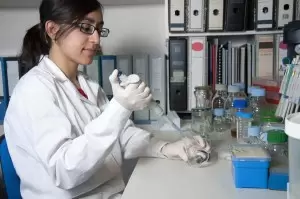
Technicians specializing in lab work spend their days calibrating sophisticated testing equipment, running chemical and biological analyses, and interpreting results. They use methods ranging from mass spectrometry to microbial cultures, depending on what contaminants they're tracking. The work requires meticulous attention to detail since even small errors in procedure can invalidate results. These technicians record and report data systematically, often using specialized laboratory information management systems. They discuss findings with supervisors or clients, helping translate technical results into actionable information. Experienced lab technicians may develop new testing procedures or supervise other laboratory workers.
Field Collection Work
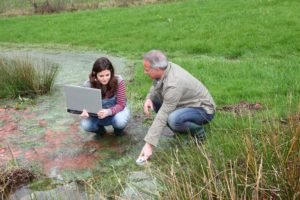
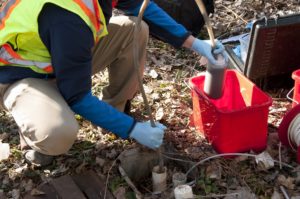
Field technicians design monitoring programs, set up equipment at test sites, and collect samples from diverse environments. This might mean wading into a wetland to test water quality, climbing industrial smokestacks to measure emissions, or excavating soil samples at a former factory site. The work is physically demanding and happens in all weather conditions. Field technicians must understand proper sampling protocols to ensure the specimens they collect accurately represent site conditions. They often work independently, making decisions about where and when to sample based on their understanding of environmental processes.
Senior Technician Responsibilities
Senior lab technicians take on supervisory and planning duties as they advance. They schedule laboratory workloads to meet client deadlines, train junior technicians on equipment and procedures, and ensure labs maintain safety standards. Many write technical reports, develop new analytical methods, and serve as the primary contact for clients. They apply statistical models to monitor testing performance and may participate in budgeting and resource planning. This level of responsibility typically requires several years of experience and sometimes additional education.
Lab technicians typically work under the direction of environmental scientists or engineers, who review their work and use the results to develop cleanup procedures, make policy recommendations, or confirm that contaminated sites have been successfully remediated.
Where Does a Lab Technician Work?
Most environmental lab technicians work for state or local governments, testing laboratories, or environmental consulting firms. Those specializing in lab work spend most of their time indoors in climate-controlled facilities with modern equipment. The environment is clean and organized, though safety protocols are strict when handling potentially hazardous samples. Lab technicians typically work standard business hours, though some facilities operate around the clock and may require shift work.
Field technicians experience a completely different work environment. They spend most of their time outdoors investigating everything from urban industrial sites to remote rivers and wilderness areas. The work can involve extensive walking, standing, carrying equipment, and lifting sample containers. Weather doesn't stop sample collection, so field technicians work in rain, snow, heat, and cold. This variation appeals to people who prefer active, changing work settings over routine laboratory environments. Some positions blend both specializations, offering variety between indoor analysis and outdoor collection.
Field technicians may sometimes need to work long or irregular hours, especially when monitoring time-sensitive environmental events like chemical spills or seasonal water quality changes. Travel is common for those working with consulting firms, as they move between client sites across a region. This outdoor fieldwork shares similarities with other environmental careers like park ranger positions, though with a stronger focus on scientific sampling and testing.
Lab Technician Salary & Compensation
Environmental science and protection technicians earned a median salary of $49,490 as of May 2024. The median wage is the point at which half of the workers in the occupation earned more and half earned less. Entry-level technicians in the lowest 10 percent earned less than $36,130, while experienced technicians in the highest 10 percent made more than $85,630. This salary range reflects differences in experience level, specialization, geographic location, and employer type.
Employer type significantly impacts compensation. Local government positions offered the highest median wages at $60,690, reflecting stable public sector employment with comprehensive benefits. Engineering services firms paid a median of $58,210, while state government positions offered $54,960. Management and consulting firms paid $52,910, and testing laboratories offered the lowest median at $45,940, though these positions often provide valuable experience for early-career technicians.
| Employer Type | Median Annual Salary | Typical Benefits |
|---|---|---|
| Local Government | $60,690 | Strong pension, comprehensive health coverage |
| Engineering Services | $58,210 | Project bonuses, professional development |
| State Government | $54,960 | Job security, retirement plans |
| Consulting Services | $52,910 | Varied projects, travel opportunities |
| Testing Laboratories | $45,940 | Entry-level experience, technical training |
Geographic location also affects earning potential. Technicians in metropolitan areas with high costs of living or strong environmental regulations typically earn more than the national median. Urban regions with concentrations of consulting firms, government environmental agencies, and research institutions offer more opportunities and competitive salaries. However, these positions often require higher educational credentials or specialized certifications. Benefits packages vary by employer, with government positions typically offering stronger retirement plans and job security, while private sector roles may provide higher base salaries but less comprehensive benefits.
Job Outlook & Career Growth
Employment of environmental science and protection technicians is projected to grow 4 percent from 2024 to 2034, about as fast as the average for all occupations. This growth will add approximately 1,600 new positions over the decade. Beyond newly created jobs, the field will see about 5,600 job openings annually on average through 2034 when accounting for workers who transfer to other occupations or retire. This creates consistent opportunities for qualified candidates entering the field.
Several factors drive demand for environmental technicians. Heightened public interest in environmental issues like water contamination and air quality monitoring creates pressure on businesses and governments to increase environmental compliance efforts. Population growth places increasing demands on natural resources, requiring more monitoring and assessment. Climate change concerns are expanding the need for environmental data collection, particularly around water resources and coastal areas. Many organizations are outsourcing environmental testing to specialized consulting firms rather than maintaining in-house laboratories, creating consulting sector growth.
The environmental compliance landscape continues evolving. New regulations addressing emerging contaminants like PFAS (per- and polyfluoroalkyl substances) and microplastics create demand for technicians trained in specialized testing methods. Industries face stricter monitoring requirements, expanding opportunities in both private sector compliance and government enforcement roles. Aging infrastructure creates an ongoing need for environmental assessment, particularly around water treatment systems and industrial facilities.
Candidates with associate's degrees and practical laboratory experience will be well-positioned for these opportunities. Those who develop expertise in both laboratory testing and field sample collection have competitive advantages, as do technicians with specialized skills in emerging contaminant analysis. The combination of steady 4 percent growth and substantial replacement needs from retirements makes this a stable career choice for those committed to environmental protection work.
Education Requirements
Environmental lab technicians typically need an associate's degree or two years of college education in environmental science or a related field. Many technical and community colleges offer environmental laboratory technician programs specifically designed for this career path. These programs balance classroom instruction with hands-on laboratory work, ensuring graduates have practical skills employers value.
Some positions, particularly those with research institutions or advanced testing facilities, may prefer candidates with bachelor's degrees. However, the associate's degree path remains the standard entry point and offers the advantage of a shorter time to employment and lower educational costs. As with nearly any environmental science career, a solid background in natural sciences is essential.
The most helpful coursework includes chemistry, biology, geology, geochemistry, physics, mathematics, and computer science. Chemistry is particularly important since much environmental testing involves chemical analysis. Statistics courses help technicians understand data analysis and quality control. Computer skills are increasingly critical as laboratories adopt sophisticated data management systems and automated equipment. Many programs include environmental law and regulation courses since technicians must understand testing protocols mandated by agencies like the EPA.
Internships can help students gain valuable experience and often lead directly to job offers. Many employers prefer candidates who've worked in professional laboratories, even as interns or through cooperative education programs. This practical experience demonstrates that candidates understand laboratory safety, can follow protocols precisely, and work well in team settings.
In some states, environmental lab technicians need licensing for certain activities. Testing buildings for radon, lead, or mold often requires state-specific certification. Industrial hygiene work may require additional credentials. Even where not legally required, voluntary certifications can strengthen job applications. Organizations like the National Environmental Health Association offer credentials such as Certified Environmental Health Technician and Registered Environmental Technician that demonstrate professional competency.
Related Degree Options for Lab Technicians
Essential Skills & Qualifications
Success as an environmental lab technician requires a combination of technical expertise and professional competencies. The technical skills are obvious: understanding chemistry and biology, operating laboratory equipment, following testing protocols, and interpreting results accurately. But equally important are the soft skills that determine whether technicians can work effectively in professional settings.
Attention to detail stands out as perhaps the most critical skill. A single mislabeled sample or decimal point error can invalidate hours of work and potentially lead to incorrect environmental decisions. Technicians must maintain focus during repetitive tasks and catch discrepancies that others might miss. This precision extends to record-keeping, where thorough documentation is both a professional requirement and often a legal necessity.
Communication skills matter more than many expect. Technicians regularly explain technical findings to scientists, clients, and sometimes the public. They write clear reports, present data visually, and translate laboratory jargon into understandable information. Strong writing skills help technicians document procedures and findings in ways that others can understand and replicate. Those who can communicate well often advance more quickly into senior and supervisory roles.
Time management and organizational abilities help technicians juggle multiple projects with different deadlines. A technician might be running a three-day water quality analysis while also preparing samples for immediate pesticide screening and documenting results from yesterday's soil tests. Keeping everything organized and on schedule requires systematic work habits and the ability to prioritize effectively.
Problem-solving skills come into play when equipment malfunctions, results don't make sense, or field conditions deviate from standard protocols. Technicians need to think critically about what might cause unexpected results and how to troubleshoot issues systematically. Adaptability helps technicians adjust to new testing methods, updated equipment, and changing environmental priorities. The field evolves constantly as new contaminants emerge and testing technologies advance.
Career Advancement Opportunities
Environmental lab technician positions serve as entry points to broader environmental science careers. Many technicians view this role as a stepping stone while gaining experience and completing additional education. The career progression typically follows a clear path, though timelines vary based on individual ambition and educational commitment.
Technicians can advance to senior technician positions after gaining 3-5 years of experience. These roles involve supervisory duties, quality control responsibilities, and often salary increases of $15,000-$25,000 over entry-level positions. Senior technicians mentor newer staff, troubleshoot complex analytical problems, and often serve as laboratory managers in smaller facilities. This advancement usually doesn't require additional degrees, though professional certifications strengthen candidacy.
The jump from technician to environmental scientist represents a more significant transition, typically requiring a bachelor's degree at minimum. Many technicians pursue degrees part-time while working, using their practical experience to inform their studies. This combination of hands-on laboratory knowledge and formal scientific education makes for strong scientist candidates. Environmental scientists earn substantially more, with median salaries around $80,060, and take on responsibilities like study design, data interpretation, and policy recommendations rather than just sample analysis.
Some technicians specialize rather than seeking broad advancement. They might become experts in particular analytical methods, specific environmental media like air quality, or emerging contaminants. This specialization can lead to consultant roles, expert witness positions, or jobs with equipment manufacturers training others in analytical techniques. Related career paths include public health careers focused on environmental health or positions in environmental compliance and regulation.
Those interested in management rather than technical depth might pursue laboratory management positions, quality assurance roles, or business development with environmental consulting firms. These paths value the laboratory background but shift focus toward supervision, client relations, and organizational leadership. An MBA or a master's in environmental management can accelerate this trajectory.
Professional Organizations & Resources
The National Environmental Health Association is a national professional society for environmental health practitioners. It advances the profession by setting standards and awarding scholarships. It offers several credentialing programs, including Certified Environmental Health Technician and Registered Environmental Technician. Members gain access to professional development opportunities, networking events, and technical resources that help technicians stay current with evolving environmental testing methods.
The Association of Public Health Laboratories (APHL) offers professional development and network opportunities to employees of its institutional members. Its Environmental Health Program provides training to staff at environmental labs and communicates relevant government information to members. The association links to valuable resources, including U.S. EPA test methods, proficiency testing exercises, webinars, and environmental laboratory toolkits. For technicians working in government laboratories, APHL membership through their employer provides access to specialized training and regulatory updates.
Frequently Asked Questions
What qualifications do you need to be an environmental lab technician?
Most positions require an associate's degree in environmental science, chemistry, biology, or a related field. Some employers accept two years of college coursework even without completing a degree. Strong laboratory skills, including experience with testing equipment and data analysis, are essential. Certain specializations, like radon or lead testing, may require state-specific licensing. Internship experience significantly strengthens applications, as does familiarity with environmental regulations and laboratory safety protocols.
Is an environmental lab technician a good career?
For people who enjoy hands-on scientific work and want to contribute to environmental protection, this career offers solid opportunities. The median salary of $49,490 provides middle-class income, with potential to earn over $85,000 in experienced positions or government roles. Job growth is steady at 4 percent through 2034 with 5,600 average annual openings, and the work is meaningful—your data directly impacts cleanup decisions and public health protection. The career does require precision and can be repetitive, so it suits people who appreciate detailed, methodical work over variety and spontaneity.
What's the difference between field and laboratory technicians?
Laboratory technicians work indoors analyzing samples using specialized equipment in controlled settings. They follow established testing protocols, maintain equipment, and generate data reports. Field technicians work outdoors collecting samples from rivers, industrial sites, and natural areas. Their work is more physical and variable, requiring them to adapt sampling strategies to different conditions and environments. Many technicians do both types of work, though some positions specialize in one or the other based on employer needs and facility setup.
Do environmental lab technicians need certification?
Legal requirements vary by state and specialization. Testing for radon, lead, asbestos, or mold often requires state-specific certification or licensing. However, many general laboratory positions don't legally require certification beyond a degree. That said, voluntary certifications from organizations like the National Environmental Health Association can strengthen job applications and demonstrate professional competency. Certifications like Registered Environmental Technician or Certified Environmental Health Technician are particularly valued by employers and can lead to higher starting salaries.
Can you become a lab technician with just an associate's degree?
Yes, an associate's degree is the standard educational requirement for entry-level environmental lab technician positions. Many community and technical colleges offer programs specifically designed for this career path. While some positions with research institutions or advanced testing facilities prefer bachelor's degrees, the majority of environmental testing jobs are accessible with two-year degrees. The associate's degree route offers advantages, including lower educational costs, faster entry to the workforce, and the option to complete a bachelor's degree part-time while gaining paid experience.
Key Takeaways
- Education Path: An associate's degree opens entry-level positions; a bachelor's degree enables advancement to environmental scientist roles. Community colleges offer targeted programs with hands-on laboratory training.
- Salary Potential: Median salary of $49,490 with a range from $36,130 (entry-level) to $85,630+ (experienced). Local government and engineering firms offer the highest compensation at $60,690 and $58,210, respectively.
- Job Growth: 4% growth through 2034, creating 1,600 new positions, plus 5,600 average annual openings from replacements. Steady demand driven by environmental regulations and public health concerns.
- Work Settings: Split between indoor laboratory testing (controlled environment, standard hours) and outdoor field sample collection (physically demanding, variable conditions, all weather).
- Career Progression: Entry technician → Senior technician (3-5 years) → Environmental scientist (with bachelor's degree). Specialization in emerging contaminants or laboratory management offers alternative advancement paths.
Ready to start your path to environmental laboratory work? Explore accredited programs that combine scientific training with hands-on experience in environmental testing and analysis.
2024 US Bureau of Labor Statistics salary and job growth figures for Environmental Science and Protection Technicians, Including Health, reflect national data, not school-specific information. Conditions in your area may vary. Data accessed January 2026.