


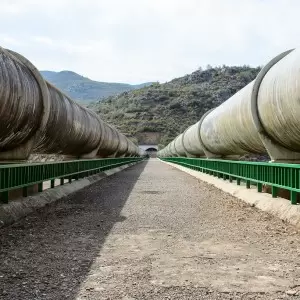
Natural gas is a fossil fuel primarily composed of methane, formed over millions of years from decayed organic matter. It supplies approximately 22% of global energy needs for heating, electricity generation, and industrial processes. While natural gas burns cleaner than coal or oil—producing 50% less carbon dioxide—its extraction and use raise environmental concerns including methane leaks, which are approximately 80 times more potent than CO2 as a greenhouse gas over a 20-year period, and potential groundwater contamination from hydraulic fracturing.
Natural gas plays a complex and evolving role in today's energy landscape. As you explore environmental science careers and energy policy, understanding natural gas becomes essential. This fossil fuel sits at the center of ongoing debates about climate change, energy independence, and the transition to renewable sources.
Here's what you need to know about natural gas—from how it's extracted and processed to its advantages, environmental challenges, and career opportunities in this dynamic sector.
Jump to Section
- What Is Natural Gas?
- Natural Gas Processing
- Advantages & Disadvantages
- Future Trends
- Natural Gas Careers
- Frequently Asked Questions
- Key Takeaways
What Is Natural Gas?
Natural gas is a fossil fuel, like oil and coal, formed from decayed organic material that, over millions of years, was transformed by high temperatures and pressures into bubbles of methane. Conventional sources are found in underground gas or oil fields, whereas unconventional sources require more challenging extraction methods because the gas is locked within sediment layers.
Unconventional sources include coalbed methane (trapped in coal seams), tight gas (trapped in sandstone), gas hydrates (trapped in ice), and shale gas (trapped in shale rock). This last source frequently makes headlines thanks to advances in hydraulic fracturing, commonly known as fracking.
Global Reserves and Production
The U.S. Energy Information Administration estimates approximately 7,000 trillion cubic feet (TCF) of proved natural gas reserves worldwide. Global consumption currently exceeds 135-140 TCF annually, and projections suggest demand will continue growing, particularly in developing nations. Natural gas companies continue to discover new reserves and develop advanced extraction technologies to meet this growing demand.
The top natural gas producers are the United States, Russia, Iran, and Canada. The U.S. emerged as the world's leading producer following the shale gas revolution, beginning in the mid-2000s with advances in horizontal drilling and hydraulic fracturing, which unlocked previously inaccessible reserves.
Historical Context
Natural gas was once considered a mere byproduct of oil drilling. Though first used to power street lights in the early 1800s and for heating and cooking in the 1900s, it lagged far behind coal and oil for decades. Only in the past fifty years has natural gas taken off as extraction and transportation methods improved.
Now considered cleaner and often cheaper than coal, natural gas supplies about 22% of the world's energy. It's used extensively in heating, electricity generation, vehicle fuel, and industrial applications, including plastics and fertilizer production.
Natural Gas Processing
After conducting geological surveys to detect conventional gas fields, energy companies drill down to extract the gas. With unconventional sources, additional steps are required to free gas trapped in sediment layers.
Extraction Methods
In hydraulic fracturing, pressurized fluids are injected into shale layers to create fractures in the rock. This allows trapped gas bubbles to escape and be piped to the surface. While fracking has unlocked vast new reserves, it remains controversial due to environmental concerns about water usage, chemical additives, and potential groundwater contamination.
The industry has made advances in leak detection and methane capture to reduce environmental impacts, though effectiveness varies significantly across operators and regions. Modern drilling techniques also allow multiple wells to be drilled from a single surface location, reducing the overall land footprint.
Refining and Transportation
In its natural state ("wet"), natural gas contains primarily methane, with small percentages of heavier hydrocarbons such as ethane, butane, and propane, along with water and other compounds. After being refined into pure methane ("dry"), it's ready for transport.
Typically, gas is sent overland through extensive pipeline networks. The U.S. has more than 2.7 million miles of natural gas pipeline infrastructure, including approximately 300,000 miles of transmission pipelines. Natural gas can also be transported as liquified natural gas (LNG). The gas is chilled to -260�F, condensing it into a liquid 1/600th of its previous volume, making it economical to ship overseas.
Recent expansions in U.S. LNG export capacity—including facilities at Plaquemines and Corpus Christi under construction, with expected completion in late 2024 through 2025—are positioning the U.S. as a significant global supplier. Additional terminals are scheduled for completion through 2027.
Power Generation
At power plants, natural gas is burned to drive turbines in several ways: heating water to generate steam, heating air to drive combustion turbines, or using combined-cycle systems that use both. Each method uses turbines connected to electrical generators to generate electricity efficiently.
Advantages & Disadvantages of Natural Gas
Natural gas offers significant benefits as an energy source, but it also presents environmental and economic challenges that require careful consideration.
| Advantages | Disadvantages |
|---|---|
| Burns cleaner than other fossil fuels—50% less CO2 than coal, 33% less than oil | Methane is approximately 80 times more potent as a greenhouse gas than CO2 over 20 years; leaks during extraction contribute to climate change. |
| Abundant domestic supply—The U.S. has 90+ years of reserves at current consumption | Non-renewable resource with a finite supply despite current abundance |
| Cost-competitive energy source, though prices vary by region and market conditions | Price volatility is influenced by weather, geopolitical events, and supply disruptions |
| Lower emissions of toxic chemicals like nitrogen oxides and sulfur dioxide compared to coal | Fracking raises concerns about water contamination, wastewater disposal, and induced seismicity |
| Reliable 24/7 power generation, unlike intermittent renewable sources | Extraction disturbs land, wildlife habitats, and water resources |
Environmental Benefits
Natural gas burns significantly cleaner than other fossil fuels. It produces half as much carbon dioxide as coal and about one-third less than oil for the same energy output. It also emits fewer toxic chemicals, such as nitrogen oxides and sulfur dioxide, thereby improving local air quality where it replaces coal-fired power plants.
The U.S. power sector's shift from coal to natural gas has contributed to approximately 30% reduction in CO2 emissions since 2005. This makes natural gas a critical "bridge fuel" as society transitions to renewable energy sources such as solar and wind.
Economic Advantages
Natural gas combined-cycle plants average around 4.8 cents per kilowatt-hour, compared to 7.4 cents for coal and 3.6 cents for utility-scale solar PV, according to EIA's Levelized Cost of Energy analysis. However, this varies by region and market conditions. Stable domestic production has kept prices relatively predictable over the past decade, typically ranging from $3 to $ 7 per million British thermal units (MMBtu).
The natural gas industry supports hundreds of thousands of jobs across exploration, extraction, transportation, and distribution. This economic activity contributes significantly to local and national economies, particularly in major producing regions.
Environmental Concerns
Despite burning cleaner, natural gas presents serious environmental challenges. Methane—the primary component of natural gas—is a greenhouse gas approximately 80 times more potent than carbon dioxide over 20 years (and about 28-36 times more powerful over a 100-year timeframe). When improperly extracted, methane can leak into the atmosphere or be burned off through flaring at oil fields, releasing toxic compounds.
The industry has invested in leak detection technologies and methane capture systems to address this concern, though effectiveness varies significantly across operators and regions. Modern monitoring equipment can identify leaks more quickly, and many companies are implementing stricter protocols to minimize fugitive emissions throughout production and distribution.
Fracking Controversies
Hydraulic fracturing remains highly debated. While evidence of groundwater contamination directly from drilling operations is mixed, greater risks exist from poor transportation, storage, and disposal practices of fracking wastewater. These fluids contain chemicals and naturally occurring radioactive materials that require careful management.
Fracking also consumes large quantities of water—a significant concern in drought-prone regions. Additionally, wastewater injection into deep disposal wells has been linked to increased seismic activity, including earthquakes large enough to cause structural damage in some areas.
Future Trends
Natural gas continues to evolve as both an industry and an energy source. Several trends are shaping its future role in the global energy mix.
Global Expansion
Countries withsignificante shale gas reserves, particularly China, are working to replicate U.S. fracking success. International energy companies are investing in technologies to make the transport of liquefied natural gas more cost-effective, opening new markets without the need for expensive pipeline infrastructure.
U.S. LNG export capacity is expanding significantly with new facilities in Louisiana and Texas under construction. Additional terminals are scheduled for completion through 2027, positioning the United States as a dominant global LNG supplier.
Alternative Applications
Compressed natural gas (CNG) use as vehicle fuel is growing steadily, particularly in municipal fleets including buses and garbage trucks. While still a small market segment, CNG vehicles offer lower emissions and fuel costs than gasoline or diesel vehicles.
Researchers are exploring the extraction of natural gas from gas hydrates—crystalline structures of methane trapped in ice—which exist in vast quantities beneath the ocean floor. These deposits could represent enormous future reserves if extraction becomes economically and environmentally viable.
Environmental Innovation
Renewable natural gas (RNG)—produced from decomposing organic waste at landfills, wastewater treatment plants, and agricultural operations—offers a carbon-neutral alternative. RNG can be injected directly into existing pipeline infrastructure, making it compatible with current distribution systems.
Carbon capture and storage (CCS) technologies are being developed for natural gas power plants. These systems capture CO2 emissions before they reach the atmosphere, potentially making natural gas generation nearly carbon-neutral. Several pilot projects are testing the feasibility and economics of large-scale carbon capture.
The industry continues investing in methane detection and reduction technologies. Satellite monitoring, aerial surveys, and ground-based sensors are improving leak detection, while better equipment and operational practices minimize emissions throughout the supply chain.
Natural Gas Careers
The natural gas industry employs hundreds of thousands of people across the United States, with employment opportunities spanning multiple disciplines, from engineering and geology to environmental compliance and policy.
Engineering Roles
Environmental engineers design systems to minimize the environmental impacts of extraction and processing. Petroleum engineers develop drilling plans and optimize production from existing wells. Chemical engineers work to refine processes and develop new applications for natural gas byproducts.
Most engineering positions require a bachelor's degree in the relevant engineering discipline. Entry-level petroleum engineers earn median salaries around $79,000, while experienced engineers can earn $150,000 or more. Professional Engineer (PE) licensure enhances career advancement opportunities.
Geoscience and Surveying
Geologists and geophysicists use seismic data and other tools to locate natural gas deposits. Surveyors map potential drilling sites and pipeline routes. These roles typically require a bachelor's degree in geology, geophysics, or surveying, with median salaries ranging from $60,000 to $90,000.
Advanced positions often require master's degrees and specialized knowledge of basin geology, rock mechanics, or geochemistry. The field combines outdoor fieldwork with data analysis and computer modeling.
Environmental Compliance and Law
Environmental lawyers handle permitting, regulatory compliance, and contract negotiations. They work with government agencies on environmental impact assessments and ensure that operations comply with federal, state, and local regulations. These positions require a law degree (JD) and often require knowledge of ecological science. Salaries typically range from $80,000 to $180,000, depending on experience and location.
Environmental inspectors monitor drilling and disposal operations to ensure compliance with environmental regulations. Most positions require a bachelor's degree in environmental science or a related field, with starting salaries around $50,000-60,000.
Science and Research
Environmental scientists assess the impacts of natural gas operations on air quality, water resources, and ecosystems. They develop mitigation strategies and monitor long-term environmental effects. These roles typically require at least a bachelor's degree and have a median salary of around $76,000. Many research positions prefer or require master's degrees.
Policy and Advocacy
Environmental lobbyists and policy analysts work with government agencies to shape regulations governing natural gas extraction, transportation, and use. They analyze proposed legislation, testify at hearings, and advocate for their organizations' positions. Most positions require bachelor's degrees in environmental policy, political science, or related fields, with salaries ranging from $55,000 to $100,000+.
Construction and Operations
Pipeline construction, well servicing, and facility operations offer numerous career paths that require certificates or associate degrees rather than four-year degrees. These hands-on roles provide competitive wages, typically $50,000-80,000, with opportunities to advance to supervisory positions.
Frequently Asked Questions
Is natural gas a renewable energy source?
No, natural gas is a non-renewable fossil fuel formed over millions of years from ancient organic matter. While current reserves are substantial, natural gas is finite. However, renewable natural gas (RNG) can be produced from decomposing organic waste at landfills and farms, offering a renewable alternative that works with existing infrastructure.
How does natural gas compare to coal and oil for the environment?
Natural gas burns significantly cleaner than coal or oil. It produces about 50% less carbon dioxide than coal and 33% less than oil for the same amount of energy. Natural gas also emits fewer toxic pollutants, such as sulfur dioxide and nitrogen oxides, thereby improving local air quality. However, methane leaks during production partially offset these benefits since methane is approximately 80 times more potent as a greenhouse gas than CO2 over 20 years.
What is fracking, and is it safe?
Hydraulic fracturing (fracking) injects high-pressure fluid into underground shale formations to create fractures that release trapped natural gas. Safety concerns include water usage, potential groundwater contamination from improper wastewater handling, and induced seismicity from disposal well injection. The industry has improved practices, but environmental risks remain a subject of ongoing research and regulation.
How long will natural gas reserves last?
At current consumption rates, the proved global reserves of approximately 7,000 trillion cubic feet could last several decades. However, consumption is growing, particularly in developing nations, and for electricity generation. Continued discovery of new reserves and improved extraction technologies may extend this timeline, while accelerated use could shorten it.
Can natural gas help fight climate change?
Natural gas serves as a "bridge fuel" in transitioning away from coal, which produces twice as much CO2. Replacing coal-fired power plants with natural gas has helped reduce U.S. power sector emissions by about 30% since 2005. However, methane leaks and natural gas's status as a fossil fuel mean it's not a long-term climate solution. The path to net-zero emissions requires transitioning to truly renewable sources like solar and wind, with natural gas potentially playing a supporting role.
What education do I need for a career in the natural gas industry?
Requirements vary by role. Engineers typically need bachelor's degrees in their engineering specialty. Environmental scientists need bachelor's degrees in environmental science or related fields. Lawyers require law degrees (JD). Technicians and operators often need certificates or associate degrees: many positions value field experience and professional certifications alongside formal education.
How do natural gas prices compare to other energy sources?
Natural gas combined-cycle plants average around 4.8 cents per kilowatt-hour, compared to 7.4 cents for coal and 3.6 cents for utility-scale solar PV, according to EIA's Levelized Cost of Energy analysis. Prices fluctuate based on weather, production levels, and global demand, with occasional spikes during extreme weather events. Regional and market conditions significantly affect pricing.
Key Takeaways
- Cleaner Fossil Fuel: Natural gas produces 50% less CO2 than coal and 33% less than oil, making it the cleanest-burning fossil fuel available for electricity generation and heating.
- Abundant but Non-Renewable: The U.S. has approximately 90 years of proved reserves at current consumption rates. Still, natural gas remains a finite resource that requires continued advances in discovery and extraction technologies.
- Environmental Trade-offs: While natural gas burns cleaner than other fossil fuels, methane leaks during extraction and transportation can offset climate benefits since methane is approximately 80 times more potent as a greenhouse gas than CO2 over 20 years.
- Economic Bridge Fuel: Natural gas provides reliable, cost-competitive power generation while supporting the transition to renewable energy sources, though it cannot be a permanent solution for achieving net-zero emissions.
- Diverse Career Opportunities: The natural gas sector employs hundreds of thousands of people across engineering, environmental science, law, policy, and operations roles, with salaries ranging from $50,000 to $180,000+ depending on education and experience.


Interested in environmental science careers in the energy sector? Explore degree programs that prepare you for roles in energy policy, environmental engineering, sustainable resource management, and renewable energy development.

- Nuclear Energy: How It Works, Environmental Impact & Career Paths - December 1, 2014
- Wind Power 101 - November 30, 2014
- Natural Gas 101: Pros, Cons & Career Guide - October 24, 2014
Related Articles




Featured Article

Entomology 101: The Study of Insects