

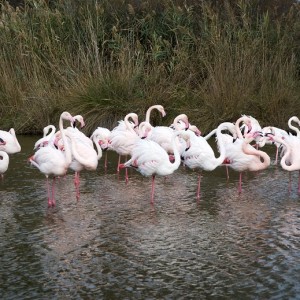
Birds serve as environmental indicators because they respond predictably to changes in habitat quality, pollution, and disease. Scientists study bird populations, behaviors, and physical samples to detect ecosystem stress early — often before other methods reveal a problem. Their sensitivity, visibility, and practical sampling methods make them one of ecology's most reliable monitoring tools.
Environmental scientists use a wide range of instruments to track ecosystem health — from dissolved oxygen sensors to chemical assays testing soil for heavy metals. But some of the most powerful monitoring tools aren't instruments at all. Birds as environmental indicators give researchers a living, responsive window into ecosystem conditions, often signaling problems long before laboratory data confirms them.
Any living organism used in this way is called an indicator species. The best-known example is the canary in a coal mine: because canaries are highly susceptible to carbon monoxide and methane, miners carried them underground as an early warning system. If the bird showed signs of poisoning, miners had time to escape before the gas reached dangerous concentrations for humans. That same principle — using biological sensitivity as a monitoring tool — continues to guide environmental science today.
Jump to Section
- What Makes a Good Indicator?
- Habitat Quality
- Pollution
- Biodiversity
- Disease Outbreaks
- Why This Matters for Environmental Science
- Frequently Asked Questions
- Key Takeaways
What Makes a Good Indicator?
Not all species are equally useful as indicators. Three criteria determine whether a species offers genuine monitoring value.
First, it needs to be sensitive to environmental changes. A species that's highly resilient won't signal a problem until conditions have already deteriorated significantly — at which point early intervention may no longer be possible. Second, it must respond predictably. If a species reacts erratically to change, interpreting what's actually happening in the ecosystem becomes guesswork. Third, data on the species needs to be practical to collect and interpret. Rare species make poor indicators because there aren't enough individuals to draw meaningful conclusions. Species with poorly understood or cryptic life histories are similarly difficult to monitor reliably.
Birds meet all three criteria remarkably well across many ecosystems, which is why they've become one of environmental science's most dependable indicator groups.
Habitat Quality
One of the most valuable things birds can tell us is how well an ecosystem is functioning overall. When birds depend on specific habitat conditions to survive and reproduce, their population trends become a direct readout of ecosystem health.
The Florida Everglades offers a compelling example. Wading bird nesting numbers are tightly linked to prey availability, which depends on natural water flow patterns. When canals and levees were constructed in the 1950s, disrupting the Everglades' hydrology, prey became scarce, and annual nesting numbers collapsed. Critically, these declines appeared before scientists recognized the full scale of the ecosystem damage. The birds responded first. A wildlife biologist working in systems like the Everglades depends heavily on this kind of population data to identify ecological problems early and guide management decisions.
It's not just population numbers that carry information — the composition of bird communities matters too. Research in the Central Appalachian Mountains showed that as forest habitats degraded, the types of birds present shifted in predictable ways. Scientists developed a Bird Community Index (BCI) by classifying birds according to behavioral and physiological guilds. As habitats declined from undisturbed to degraded, specialist species gave way to generalists: bark probers were replaced by omnivores, canopy nesters by open ground nesters. The BCI became a reliable, quantifiable indicator of habitat condition.
The presence or absence of highly specialized species can signal habitat quality on its own. The red-cockaded woodpecker requires living pine trees of large diameter — typically more than 80 years old — to excavate nest cavities. These birds won't nest in younger, smaller-diameter trees, and they abandon sites when understory vegetation grows tall enough to obstruct access. Both conditions reflect ecosystem disruption: the absence of old-growth pines points to intensive forestry pressure, while overgrown understory indicates fire suppression. Monitoring red-cockaded woodpecker populations is therefore a practical, real-time measure of pine forest health. An endangered species biologist working with this species uses exactly this logic to assess and protect critical habitat.
Bird indicators are also valuable for measuring the effectiveness of conservation and restoration efforts. In the Everglades, managers use the ratio of storks and ibises to egrets as a restoration progress metric. Altered hydrology had concentrated water in deep ponds, favoring sight-hunting egrets over the tactile-feeding ibises and storks that rely on shallow, concentrated prey areas. Restoring widespread, shallow water flow — a core restoration goal — should shift that ratio back. A habitat restoration engineer working on large-scale wetland projects like this uses bird population data as a primary measure of whether interventions are achieving real ecological results.
The return of large-scale white ibis nesting events is another meaningful restoration signal. These events were a defining feature of a healthy, functioning Everglades — dynamic, cyclical, and abundant. Their reappearance indicates the ecosystem's natural rhythms are recovering. A habitat specialist monitoring recovery in wetland systems like this relies on these biological signals as much as any physical measurement tool.
Pollution
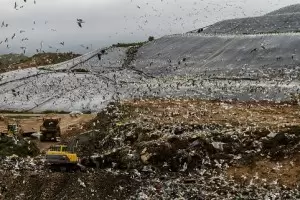
Perhaps the most well-known use of birds as pollution indicators is the story of DDT — brought to international attention by Rachel Carson's Silent Spring. Birds were the first group of animals to show noticeable population declines from DDT exposure. The pesticide accumulated through food chains, causing females to lay eggs with shells so thin that they cracked during incubation. Reproductive output fell sharply across raptor and songbird species alike. An environmental toxicologist studying contaminant pathways in wildlife today still uses the DDT case as a foundational model for how chemical pollutants move through ecosystems and concentrate in top predators.
Birds are especially effective pollution sentinels because their declines are conspicuous. Unlike pelagic or subterranean species, birds are visible across most habitats, and their absence is apparent to the general public — a factor that proved critical in building the political will to ban DDT after decades of use.
Vultures in Asia provided another stark example. Widespread vulture mortality across the Indian subcontinent pointed to a serious environmental problem, but it took more than a decade to identify the cause: diclofenac, an anti-inflammatory drug administered to livestock to help them recover from wounds. When vultures fed on treated carcasses, they ingested the drug, which caused renal failure and rapid death. Once the link was confirmed, diclofenac was banned from veterinary use. As with DDT, bird deaths were the earliest measurable signal of widespread contamination.
One practical advantage of using birds for pollution monitoring is the non-invasive nature of sample collection. Feathers dropped naturally by birds contain measurable concentrations of heavy metals that correlate with levels inside the bird's body. By analyzing feathers from different populations across different regions, scientists can map and compare contamination without capturing or disturbing any animals.
Eggs provide another non-invasive sampling method. A study of abandoned peafowl nest eggs found lead and cadmium concentrations high enough to indicate toxicity — detected entirely from eggs the birds had already left behind. Museum specimens extend this capability further back in time. Analysis of preserved eggs confirmed the DDT-related trend of declining eggshell thickness, using specimens dating to the 1880s. A comparable study at the Swedish Museum of Natural History documented rising mercury concentrations in birds beginning in the 1940s and 1950s — a direct reflection of industrialization-era contamination. These preserved collections give scientists a historical baseline against which to measure the full arc of environmental change.
Biodiversity
In some ecosystems, birds function as practical proxies for broader biodiversity. A study in Polish forests found that higher woodpecker species richness correlated with greater overall bird diversity. The authors proposed that surveying woodpecker species could serve as a reliable proxy for total avian diversity when comprehensive bird surveys aren't feasible — a useful shortcut in resource-limited monitoring programs.
This proxy relationship extends beyond birds. Research on bird and butterfly species found strong correlations across spatial scales of 1 to 10 kilometers, suggesting that bird diversity in small habitat patches can also predict butterfly diversity. A broader study in Greece examined species richness across six taxonomic groups and found that bird diversity correlated with woody plant diversity, aquatic herpetofauna richness, and overall biodiversity across all groups studied. These findings make bird diversity surveys a cost-effective tool for broader biodiversity assessment in conservation planning and environmental impact evaluation.
Disease Outbreaks
The indicator role of birds extends into human health. Before the first confirmed West Nile Virus outbreak in humans in 2000, communities in affected areas reported mass die-offs of crows. Laboratory analysis confirmed the birds had been infected with the virus. Subsequent research showed that incidences of dead crows were among the strongest statistical predictors of human outbreak risk. Crow mortality surveillance became — and remains — a practical early warning system for West Nile Virus, giving public health agencies time to issue advisories and take precautionary measures before human cases escalate.
Museum specimens, again, extend this kind of analysis into history. The 1918 influenza pandemic killed hundreds of thousands of Americans, and birds were suspected of transmitting the disease to humans. Comparing bird specimens from 1918 with human tissue samples collected at the same time showed that the influenza strains in birds and humans were genetically distinct — ruling out direct bird-to-human transmission for that outbreak. Ongoing analysis of bird museum collections continues to inform influenza evolution tracking, which is directly relevant to the development of effective seasonal vaccines.
Why This Matters for Environmental Science
The intimate connection between bird species and their habitats makes birds uniquely powerful tools for diagnosing ecosystem health. They signal deteriorating habitat quality, confirm environmental contamination, serve as metrics for restoration success, and provide early warning of disease outbreaks — often before any other measurement method detects a problem.
For students interested in environmental science, birds as indicators sit at the intersection of ecology, toxicology, conservation biology, and public health. If this kind of work interests you, explore what an ornithologist does and how ornithology contributes to environmental monitoring. You might also explore how birds support ecosystem services and how birds are responding to a changing climate — two areas where indicator science is becoming increasingly critical.
Frequently Asked Questions
What is an indicator species?
An indicator species is any living organism used to measure environmental conditions. Because some species are highly sensitive to changes in their surroundings and respond predictably, scientists monitor them as proxies for overall ecosystem health. Birds are among the most widely used indicator species due to their visibility, sensitivity to change, and the practical accessibility of sampling methods like feather and egg analysis.
Why are birds effective environmental indicators?
Birds meet the three key criteria for a useful indicator species: they're sensitive to environmental change, they respond predictably, and data on them is practical to collect and interpret. They're visible across most habitat types, making population declines apparent without specialized equipment. Their position in food chains also means they accumulate and reflect contaminants from multiple trophic levels simultaneously.
How were birds used as indicators of DDT pollution?
Raptors and other species near the top of food chains accumulated DDT through the food web. The pesticide caused females to produce thin, fragile eggshells that cracked during incubation, leading to sharp reproductive declines. These population collapses were among the first measurable signs that DDT was causing widespread ecological damage, ultimately contributing to its U.S. ban in 1972.
Can birds indicate overall biodiversity in an ecosystem?
Yes. Research has demonstrated that bird species diversity correlates with the diversity of other taxonomic groups, including butterflies, woody plants, and herpetofauna. In practice, this means a bird species richness survey can serve as a cost-effective proxy for broader biodiversity assessment — particularly useful in conservation planning situations where comprehensive multi-taxa surveys aren't feasible.
What environmental science careers involve bird indicator work?
Several career paths involve this kind of monitoring, including wildlife biology, ornithology, environmental toxicology, habitat restoration engineering, and conservation biology. Professionals in these fields use bird population data, feather and egg sampling, and community index scoring to monitor ecosystem health, track contamination levels, and evaluate the effectiveness of restoration programs.
Key Takeaways
- Indicator species defined: Any organism used to measure environmental conditions — birds are among the most widely used because they're sensitive, respond predictably, and are practical to monitor across diverse ecosystems.
- Habitat quality signals: Bird population trends and community composition reveal ecosystem health, with wading birds in the Everglades and the red-cockaded woodpecker serving as well-documented examples.
- Pollution detection: From DDT to diclofenac, birds have repeatedly been the first organisms to signal widespread contamination — and feather and egg sampling offer non-invasive collection methods with strong historical depth via museum specimens.
- Biodiversity proxies: Bird species richness correlates with the diversity of other taxonomic groups, making bird surveys a practical and efficient tool for broader biodiversity assessment in conservation planning.
- Disease surveillance: Crow mortality proved a reliable early predictor of West Nile Virus outbreaks, and museum bird specimens continue to inform influenza evolution tracking and vaccine research.
Interested in a career protecting the natural world? Explore the many paths environmental science has to offer — from wildlife biology to ecological restoration.

- Invasive Species: Causes, Impacts & Environmental Effects - February 23, 2015
- How Climate Change Affects Birds - February 11, 2015
- Environmental Consequences of Fishing Practices - February 6, 2015
Related Articles


Featured Article
The History of Agriculture: Evolution, Innovation & Environmental Impact