

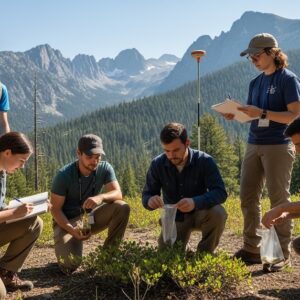
Environmental science programs near national parks offer more than scenic views—they provide direct access to field stations, research sites, and hands-on learning ecosystems. Schools like Utah Valley University (Capitol Reef Field Station), UC Merced (Yosemite Field Station), and University of Idaho (McCall Field Campus) maintain formal partnerships with protected areas, giving students research permits, field course access, and connections to ongoing ecological studies. These programs transform parks from distant study subjects into daily classrooms, preparing graduates for careers in conservation, park management, and environmental research.
You've probably noticed the gap. Environmental science programs talk about fieldwork, but how much time do students actually spend outside collecting data versus sitting in offices running spreadsheets? It's a fair question, and one that prospective students increasingly ask when comparing programs.
The distinction matters more than you might think. There's a real difference between a university that happens to be near a national park and one that operates a dedicated field station inside or adjacent to that park. The first gives you proximity. The second gives you a learning ecosystem—housing, research permits, lab space, faculty actively working on-site, and years of baseline data you can build on.
This article examines environmental science programs that have legitimate field station partnerships with national parks and protected areas. We'll cover what makes these programs different, which schools offer them, what students actually do at field stations, and how to evaluate whether a program's field component is substantial or just marketing. We'll also address the practical concerns highlighted in Reddit threads: fitness requirements, gear costs, and whether field experience genuinely improves job prospects.
Table of Contents
Why Field Station Access Matters More Than Proximity
Universities with National Park Field Station Partnerships
What Students Actually Do at Field Stations
Skills That Complement Field-Based Learning
Career Outcomes and Job Prospects


Why Field Station Access Matters More Than Proximity
The Difference Between "Near" and "Integrated"
Here's what often gets missed in college brochures: being close to a national park doesn't mean your program uses it for education. A university 30 minutes from Yosemite offers scenic weekend hikes. A university with the Yosemite Field Station offers 12-week summer residential research programs where students live and work inside the park.
The difference comes down to infrastructure and the formality of partnerships. Field stations provide housing (often rustic cabins or dorm-style facilities), dedicated lab space, research permits already negotiated with the National Park Service (NPS), safety protocols, and—critically—long-term ecological datasets that students can contribute to and build upon. Capitol Reef Field Station, located inside Capitol Reef National Park in Utah, exemplifies this model. It's a partnership between Capitol Reef National Park and Utah Valley University designed to support engaged learning and research focused on the Colorado Plateau landscape. Note that some field stations primarily host courses and research rather than providing semester-long residential programs—infrastructure varies by institution.
Students at programs with field stations don't just visit—they embed. They participate in ongoing research projects, contribute to monitoring programs that span decades, and build relationships with park staff who become mentors and eventual references.
Real Fieldwork vs. Office Work
Let's address the concern that surfaces repeatedly in environmental career forums: "How much of this work is actually outdoors?" The honest answer depends heavily on career path and seniority. Entry-level environmental scientists often split time between field data collection and office-based analysis. As you advance, roles typically become more office-focused—writing reports, managing projects, analyzing datasets.
But here's where field station experience during your degree matters. Those early-career field positions—the seasonal technician jobs, the monitoring contracts, the research assistant roles—almost universally prefer candidates with demonstrated field experience. Programs that integrate field stations into the curriculum give you that experience before you graduate. You've already handled wildlife telemetry equipment, conducted water quality sampling in varying weather conditions, navigated permit systems, and worked in teams under physically demanding conditions.
Field station programs also help you answer a crucial question early: Do you actually enjoy field work? It's one thing to romanticize outdoor careers. It's another to spend three days in a tent monitoring bird populations in 95-degree heat or collecting soil samples in snow. Field-intensive programs let you test this reality while you still have time to adjust your specialization.
Career paths vary significantly. Park rangers and forest rangers maintain higher fieldwork percentages throughout their careers, while environmental consultants might spend 20-30% of their time on-site. Programs near national parks and field stations prepare you for both trajectories.
Universities with National Park Field Station Partnerships
Western United States Programs
The western United States, with its concentration of national parks and public lands, hosts most formal field station partnerships. Here are programs with documented access to field stations and structured student programming.

University of Idaho - McCall Field Campus
The McCall Field Campus, home to the McCall Outdoor Science School, operates in partnership with Ponderosa State Park on the shores of Payette Lake in central Idaho. While this is a state park rather than a national park, the campus supports multiple pathways, including a Master of Natural Resources (MNR) with practicum teaching in the park. Students also gain access to Taylor Wilderness Research Station in the Frank Church—River of No Return Wilderness, one of the largest protected wilderness areas in the continental United States. Programs emphasize hands-on field methods in fire ecology, hydrology, and forest management.
Degree Levels: Bachelor's, Master's
Field Component: Required field courses, summer practicum, wilderness research access
Nearby Protected Areas: Ponderosa State Park, Frank Church—River of No Return Wilderness, Sawtooth National Recreation Area

Utah Valley University - Capitol Reef Field Station
Capitol Reef Field Station operates inside Capitol Reef National Park through a formal partnership between the park and Utah Valley University. The station serves as a base camp for undergraduate and graduate research on Colorado Plateau ecosystems, including desert ecology, geology, paleontology, and archaeology. Students have access to park resources with coordinated permitting. The station primarily hosts field courses and research projects rather than semester-long residential programs.
Degree Levels: Bachelor's, Master's (through partnerships)
Field Component: Field courses, summer research programs, senior thesis projects
Nearby Protected Areas: Capitol Reef National Park, Grand Staircase-Escalante National Monument

UC Merced - Yosemite Field Station
The Yosemite Field Station, part of the University of California Natural Reserve System, is located in Wawona inside Yosemite National Park and supports field research and student programs in Sierra Nevada ecosystems. UC Merced's Yosemite Leadership Program offers a competitive 12-week residential summer internship where students live and work in the park, gaining experience in resource management, interpretation, and conservation science. The program includes housing, a stipend, and direct mentorship from park staff.
Degree Levels: Bachelor's, Master's, PhD
Field Component: 12-week summer residential program, field courses, thesis research
Nearby Protected Areas: Yosemite National Park, Sierra National Forest

University of Washington - Field Stations Network
The University of Washington School of Environmental and Forest Sciences operates multiple research and education field stations, including Pack Forest (4,300 acres of working forest), Olympic Natural Resources Center, and Friday Harbor Laboratories. While these are not formal NPS field stations, they provide access to diverse ecosystems,s including those adjacent to Olympic National Park and other protected areas. Programs integrate field-based learning into the core curriculum rather than treating it as an optional add-on.
Degree Levels: Bachelor's, Master's, PhD
Field Component: Required field quarters, research station access, long-term ecological study sites
Nearby Protected Areas: Olympic National Park, Mount Rainier National Park (ecosystem access)
Regional Programs by Park Ecosystem
Different park ecosystems require different field skills. Programs often specialize based on their regional landscape.
| Ecosystem Type | Example Parks | Field Focus Areas | Sample Programs |
|---|---|---|---|
| Mountain/Alpine | Rocky Mountain, Glacier, North Cascades | Alpine ecology, glaciology, wildlife corridors, and climate change impacts | University of Montana, Colorado State University |
| Desert/Southwest | Grand Canyon, Joshua Tree, Saguaro | Arid ecosystems, water resources, desert flora/fauna, paleontology | Northern Arizona University, University of Arizona |
| Coastal/Marine | Channel Islands, Olympic (coastal), Acadia | Marine biology, intertidal ecology, coastal processes, fisheries | UC Santa Barbara, University of Maine |
| Forest/Woodland | Sequoia, Redwood, Great Smoky Mountains | Forest ecology, fire management, old-growth studies, and forestry | Humboldt State University, University of Tennessee |
What Students Actually Do at Field Stations
Field Courses and Residential Programs
Field station programs typically organize around intensive, immersive experiences rather than day trips. Multi-day field courses compress what would take a semester in a traditional classroom into 1-3 weeks of focused field time. You might spend 10 days surveying vegetation transects, collecting and analyzing soil samples, conducting wildlife point counts at dawn, and processing data in the evening.
Summer residential programs take this further. The Yosemite Leadership Program mentioned earlier runs 12 weeks. Students live in park housing, work alongside National Park Service staff, participate in resource management projects, and conduct independent research. Housing situations vary—some field stations offer dorm-style shared rooms, others provide individual cabins, and some programs arrange temporary housing. Meals may be communal or handled individually, depending on the facility.
These programs aren't vacations. Expect early starts (5:00 AM for bird surveys isn't unusual), physically demanding days, and rustic accommodations. But they provide exactly what employers look for: demonstrated ability to work in challenging field conditions, technical skill development, and professional references from scientists actively working in your target field.
Research Opportunities
Undergraduate research programs at field stations let you contribute to real science, not simulated exercises. You might:
- Continue long-term vegetation monitoring that's been running for 20+ years
- Deploy and maintain wildlife camera traps
- Collect water quality samples from alpine lakes for ongoing pollution studies
- Map invasive species spread using GPS and Geographic Information Systems (GIS)
- Process soil cores in field labs
Research Experiences for Undergraduates (REU) programs, funded by the National Science Foundation and other agencies, often operate through field stations. These competitive summer programs provide stipends, housing, and research mentorship. Graduate students use field stations as research bases for their theses and dissertations, contributing to decades-long datasets while developing their own projects.
The advantage of working with established datasets can't be overstated. Starting a research project from scratch means spending your first year just establishing baseline conditions. Working within a field station's existing monitoring framework means you can ask more sophisticated questions immediately because you're building on 10, 20, or 30 years of context.
Internships and Career Pathways
Field station experience directly feeds into internship opportunities. National Park Service internships, particularly the Pathways program, strongly prefer candidates with previous park or field station experience. Conservation organizations like The Nature Conservancy, Audubon Society, and regional land trusts recruit heavily from students who've completed field station programs.
These internships often lead to seasonal positions, which in turn lead to permanent roles. A typical pathway might look like: field station summer program —— NPS seasonal internship —— wildlife technician contract —— National Park Service biological technician —— permanent park ranger or resource management specialist.
Career outcomes extend beyond parks. Environmental consulting firms value field station experience because it demonstrates you can collect accurate data under variable conditions—exactly what site assessments and environmental impact work require. Research institutions hire field station aalumsfor technician and lab manager roles. Government agencies such as the U.S. Forest Service, the Bureau of Land Management (BLM), and the Fish and Wildlife Service actively recruit from these programs.
Skills That Complement Field-Based Learning
GIS and Spatial Analysis
Geographic Information Systems appears repeatedly when environmental professionals discuss valuable skills. Field data collection paired with GIS analysis creates powerful combinations. You collect vegetation samples in the field, then use GIS to map distribution patterns and predict habitat changes. You measure water quality at 50 stream sites, then create watershed models to identify pollution sources.
Environmental consulting work, particularly projects that require compliance with the National Environmental Policy Act (NEPA) or the California Environmental Quality Act (CEQA), relies heavily on spatial analysis. You'll map project areas, identify sensitive habitats, model viewsheds, and create figures for environmental impact reports. Field station programs that integrate GIS training—teaching you to collect GPS coordinates, use spatial databases, and perform basic analysis—significantly boost your employability.
Many field stations now incorporate real-time GIS workflows. You collect data on tablets or GPS units in the field, upload it directly to cloud databases, and see your observations plotted on maps by evening. This mirrors professional workflows in consulting and agency work.
Technical Field Skills
Specific technical skills vary by specialization, but programs near national parks typically emphasize:
Biological Skills
- Species identification (plants, birds, mammals, insects)
- Wildlife survey protocols (point counts, transects, camera traps)
- Specimen collection and preservation
- Telemetry equipment operation
Physical Science Skills
- Water quality sampling and analysis
- Soil collection and characterization
- Weather station deployment and maintenance
- Stream flow measurement
Geospatial Skills
- GPS data collection
- Aerial photo interpretation
- Remote sensing basics
- Field mapping
Environmental biology programs emphasize the biological skill sets, while programs focused on natural resource management balance all three. The key is demonstrating competency across multiple methods rather than deep expertise in one narrow area—at least at the undergraduate level.
How to Evaluate Programs
Questions to Ask Admissions
Don't accept vague promises about "field opportunities." Ask specific questions:
About Field Access
- Is field station access a required curriculum component or an optional add-on?
- How many students participate in field programs annually?
- What's the student-to-faculty ratio during field courses?
- Do field courses cost extra beyond regular tuition?
About Logistics
- How are research permits obtained? (Students shouldn't navigate bureaucracy alone)
- What housing is provided? What's the cost?
- Is safety training required? What does it cover?
- What happens if the weather prevents fieldwork?
About Equipment
- What field equipment does the program provide?
- What do students need to purchase personally?
- Are equipment loans available?
- What's the approximate cost for personal gear?
About Outcomes
- Where are recent graduates employed?
- What percentage of students complete field components?
- Do faculty actively conduct research at field stations?
- Can you connect me with current students or recent alums?
Program Features That Matter
Strong programs share identifiable characteristics. Look for:
Dedicated Facilities
Field stations with permanent buildings, lab space, and housing indicate institutional commitment. Temporary setups or "we sometimes use a park" signals weaker programs.
Faculty Research Presence
Faculty should conduct active research at the field station, not just teach courses there. Active researchers bring current projects, professional networks, and graduate student positions.
Long-Term Datasets
Access to decades-long monitoring data distinguishes serious research stations from teaching facilities. Ask what long-term studies operate at the station and whether students contribute to them.
Partnership Formality
Memoranda of Understanding (MOUs), cooperative agreements, or joint programs with parks and land management agencies indicate stable, institutionalized partnerships. Informal relationships can disappear when personnel change.
Career Outcomes and Job Prospects
Where Graduates Work
Field station program graduates pursue diverse career paths. The most common employers include:
Federal Agencies
- National Park Service (resource management, interpretation, protection)
- U.S. Forest Service (silviculture, recreation, fire)
- Bureau of Land Management (rangeland management, archaeology)
- U.S. Fish and Wildlife Service (endangered species, refuge management)
- Environmental Protection Agency (EPA) and National Oceanic and Atmospheric Administration (NOAA) (monitoring, research)
State and Local Government
- State park systems
- State departments of fish and wildlife
- Regional water quality districts
- County planning departments
Nonprofit Conservation Organizations
- The Nature Conservancy
- Audubon Society chapters
- Regional land trusts
- Conservation corps programs
Private Sector
- Environmental consulting firms
- Ecological restoration companies
- Environmental education organizations
- Research institutions and universities
The mix of field skills and scientific training opens doors across all these sectors. Agriculture and forestry careers also draw from this talent pool, particularly for positions managing working forests, rangeland health, and sustainable agriculture systems.
Salary and Job Growth Data
Environmental scientists and specialists—the broad category encompassing many park-adjacent career paths—earned a median annual wage of $80,060 in 2024, according to the U.S. Bureau of Labor Statistics (BLS). The field projects 6% growth through 2032, about the same as the average for all occupations, with approximately 9,400 openings annually.
Geographic location significantly impacts earnings. Environmental scientists in California averaged $99,020 annually, while those in Colorado earned $82,360. States with major national park systems and active public lands management typically offer higher salaries and more opportunities.
| State | Mean Annual Wage (2024) | Major National Parks | Employment Concentration |
|---|---|---|---|
| California | $99,020 | Yosemite, Sequoia, Joshua Tree, Channel Islands | High |
| Colorado | $82,360 | Rocky Mountain, Mesa Verde, Great Sand Dunes | High |
| Washington | $86,540 | Olympic, North Cascades, Mount Rainier | Moderate-High |
| Utah | $71,280 | Zion, Bryce Canyon, Arches, Canyonlands, Capitol Reef | Moderate |
Entry-level positions—seasonal technicians, field assistants, environmental educators—typically pay $35,000-$45,000 annually. With 3-5 years of experience, resource management specialists and project scientists earn $55,000 to $75,000. Senior scientists, program managers, and specialists with advanced degrees earn $80,000-$120,000+, depending on the sector and location.
Career progression often requires patience. Many environmental professionals spend 2-5 years in seasonal or contract positions before securing permanent roles. Field station experience accelerates this timeline by building networks and demonstrating capability early.
Frequently Asked Questions
What's the difference between a program near a park and one with a field station?
Proximity alone doesn't guarantee access. A field station program has formal partnerships with the park, dedicated facilities (housing and labs), research permits already negotiated, and a curriculum explicitly built around field site access. Programs "near" parks might offer occasional field trips but lack the infrastructure and institutional relationships that enable deep engagement.
Do I have to be extremely fit to participate in field programs?
Fitness requirements vary significantly by program. Some field courses involve multi-day backpacking trips requiring good cardiovascular fitness and the ability to carry 40+ pound packs. Others focus on day hikes and vehicle-accessible sites that require moderate physical effort. Most programs clearly state physical requirements in course descriptions. If you have concerns, contact the program directly—many can accommodate different fitness levels or offer alternative field experiences.
How much does field gear and equipment cost?
Budget $300-$800 for basic field gear: sturdy hiking boots, weather-appropriate clothing layers, backpack, water bottles, field notebook, and personal safety items. Programs typically provide specialized scientific equipment (GPS units, water testing kits, wildlife monitoring gear). Some schools maintain gear libraries where students can borrow items. Used gear from outdoor retailers or graduating students can significantly reduce costs.
Will field experience help me get a job after graduation?
Yes, particularly for entry-level positions. Environmental employers consistently prioritize candidates who can demonstrate field competency. You'll compete against dozens of applicants with similar degrees, but your field experience distinguishes you. It provides concrete examples for interview questions, professional references from field supervisors, and proof that you understand the physical and logistical realities of environmental work. For positions like conservation specialists or wildlife technicians, field experience often weighs as heavily as your degree.
Are field station programs only for biology majors?
No. While biology students make up a large portion of participants, field stations serve multiple disciplines. Geology students study rock formations and erosion. Geography students analyze landscape patterns and human-environment interactions. Environmental policy students examine management challenges. Chemistry students sample water quality. Archaeology students conduct surveys. Field stations are inherently interdisciplinary spaces—the best projects often cross traditional academic boundaries.
Key Takeaways
- Field Stations vs. Proximity: Programs with dedicated field stations inside or adjacent to national parks offer housing, labs, research permits, and long-term datasets—not just scenic views.
- Hands-On Experience Matters: Employers strongly prefer candidates with demonstrated field competency, making field station programs valuable for career competitiveness.
- Western U.S. Concentration: Universities in California, Colorado, Idaho, Utah, and Washington host the majority of formal field station partnerships with national parks and protected areas.
- Complement with GIS: Technical field skills paired with spatial analysis capabilities significantly increase employability across environmental sectors.
- Career Pathways Exist: Field station experience leads to National Park Service internships, conservation positions, and environmental consulting roles, with clear progression from seasonal to permanent roles.
Ready to explore environmental science programs with real field access? Research accredited programs, compare field station offerings, and connect with admissions counselors to find the right fit for your career goals.
2024 US Bureau of Labor Statistics salary and job growth figures for Environmental Scientists and Specialists reflect state and national data, not school-specific information. Conditions in your area may vary. Data accessed February 2026.
Related Articles

Featured Article
Desert Ecosystems: Types, Ecology, and Global Importance