Forest rangers protect and manage public forests and parks through conservation work, fire prevention, law enforcement, and visitor services. Most professional ranger positions require at least a bachelor's degree in forestry, environmental science, or related field. Conservation scientists and foresters, which includes forest rangers, earn a median salary of $69,060 annually as of 2024, with 3% job growth projected through 2034.
Forest rangers are the stewards of America's public lands, combining outdoor work with environmental conservation and public service. If you're drawn to careers that protect natural resources while serving communities, forest rangers offer a unique path—though it's more competitive and physically demanding than many people realize.
This guide covers the full scope of forest ranger work: what rangers do day-to-day, where they work, realistic salary expectations based on 2024 data, educational requirements, and honest insights into the career outlook. Whether you're a college student exploring environmental science majors or considering a career change into outdoor conservation work, here's what you need to know about becoming a forest ranger.
What Does a Forest Ranger Do?
Forest ranger work varies dramatically by location, season, and agency needs. On any given day, you might lead a public education program in the morning, respond to a wildfire in the afternoon, and participate in a search-and-rescue mission that evening. The job combines physical outdoor labor with public service and environmental stewardship.
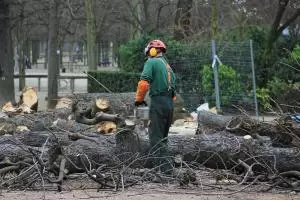
Core responsibilities typically include forest health management, fire prevention and suppression, visitor services, and law enforcement. Rangers monitor tree growth, manage pest control when needed, maintain trails and facilities, and ensure public safety through patrols and emergency response. The work is physically demanding and often requires operating specialized equipment, such as chainsaws, skidders, and GPS devices, in remote locations.
Core Responsibilities
At the heart of forest ranger work is land management and conservation. Rangers spend considerable time monitoring forest health—walking through stands of trees to identify signs of disease or pest infestations, collecting data with handheld GPS devices during forest inventories, and deciding when intervention is necessary. When diseased trees threaten the broader ecosystem, rangers remove them using hand or power equipment, then may plant seedlings to restore the area.
Fire management represents one of the most critical and visible aspects of ranger work. Rangers construct fire lines to prevent wildfire spread, conduct controlled burns to reduce fuel loads, and serve as first responders when wildfires break out. This work requires specialized training and puts rangers in genuinely dangerous situations, often for extended periods during fire season.
Public interaction and education form another essential component. Rangers patrol campgrounds and trails, providevisitors with information about area regulations and safety concerns, and lead educational programs on conservation and wildlife. They also enforce laws and regulations on public lands, ranging from issuing citations for illegal camping to investigating serious crimes on federal property.
Specialized Roles
Many rangers develop specializations that shape their daily work. Wildfire response specialists focus primarily on fire suppression and prevention, often serving on hotshot crews or helitack teams. Law enforcement rangers receive additional training similar to that of park police, carry firearms, and investigate crimes on public lands. Educational specialists spend more time developing and delivering programs for schools and visitor groups, connecting people to nature through interpretive programming.
Search and rescue represents another specialized area. Rangers trained in wilderness rescue techniques respond to lost hikers, medical emergencies in backcountry areas, and recovery operations. This work requires technical skills in rope rescue, wilderness first aid, and coordination with other emergency services. The unpredictable nature of these calls means rangers must maintain readiness even during routine patrols.
Where Do Forest Rangers Work?
Forest rangers work primarily in state and national parks, forests, and rangelands across the United States. The largest concentrations of national forests are in the western states, beginning with the Rocky Mountains and extending through the Pacific Northwest and California. However, ranger positions exist in every region, from the Appalachian forests of the East to the southern pine forests and northern lake states.
The distinction between working for federal agencies like the U.S. Forest Service versus state park systems significantly affects daily responsibilities and career paths. Federal rangers often work on larger land areas with more specialized roles, while state park rangers may have broader responsibilities, including more direct visitor services. Some rangers work at field stations and research facilities, focusing on scientific data collection rather than public interaction.
Work Environment & Conditions
Rangers spend most of their time outdoors in all weather conditions, sometimes in significant isolation. Remote duty stations may be hours from the nearest town, with limited cell service and intermittent contact with colleagues. Weather doesn't stop ranger work—you'll patrol in rain, snow, extreme heat, and cold, often hiking many miles per day over challenging terrain.
The work environment includes genuine hazards. Beyond wildfire risks, rangers face exposure to pesticides during pest management, operate dangerous equipment such as chainsaws in remote locations, and work around wildlife that can pose threats. Wearing appropriate protective gear and following established safety protocols is essential, but the job inherently carries more physical risk than office-based environmental careers.
Most rangers work full-time with regular business hours, though the reality is more complex. Seasonal positions during summer or fire season may require 60+ hour weeks, including nights and weekends. Emergency responses—fires, search and rescue, severe weather—happen regardless of schedule, and rangers must be ready to respond. The work-life balance can be challenging, particularly during peak visitor season or fire season.
Forest Ranger Salary & Compensation
Understanding forest ranger compensation requires looking at both professional and entry-level positions, as the field includes multiple career tracks with significantly different pay scales. Conservation scientists and foresters—the category that provides for professional forest rangers—earned a median annual salary of $69,060 as of May 2024, according to the Bureau of Labor Statistics. However, entry-level technician positions that serve as stepping stones into ranger careers typically startat much lower salaries.
Entry-Level Positions
Entry-level forest technician positions in the U.S. Forest Service begin at General Schedule level 2 (GS-2), which ranges from approximately $26,000 to $34,000 annually in 2024. These positions typically require only a high school diploma and provide hands-on experience in trail maintenance, campground management, and fire crew work. Many aspiring rangers start here, using seasonal technician work to fund their education while gaining the practical experience that makes them competitive candidates for professional positions later.
GS-3 positions, which may require some college coursework or equivalent experience, typically pay between $28,000 and $37,000 annually. GS-4 through GS-5 positions advance to $35,000 to $45,000 annually. These roles involve more responsibility and may include leading small crews, operating specialized equipment, or taking on specific conservation projects. The experience gained at these levels is valuable, but advancement to professional ranger positions almost always requires completing a bachelor's degree.
Experienced Rangers & Professional Positions
Professional forest ranger positions typically begin at GS-7 ($50,000-$60,000) and can advance to GS-9 ($60,000-$75,000) with experience and firm performance. Senior and supervisory ranger positions at GS-11 to GS-12 range from $70,000 to $95,000 in base pay. Geographic location significantly affects compensation—rangers in Alaska, California, and the Pacific Northwest generally earn more due to cost-of-living adjustments and locality pay, which can add 15-30% to base salary in high-cost areas.
Federal benefits substantially increase total compensation. Rangers receive health insurance, retirement contributions through the Federal Employees Retirement System (FERS), paid time off, and housing assistance in some remote duty stations. Some agencies also offer student loan repayment programs, when available, for rangers with qualifying educational debt, which can provide up to $10,000 annually toward loans.
| Position Level | GS Level | Typical Salary Range (2024) | Education Required |
|---|---|---|---|
| Entry-Level Technician | GS-2 to GS-3 | $26,000 - $37,000 | High school diploma |
| Intermediate Technician | GS-4 to GS-5 | $35,000 - $45,000 | Some college or equivalent experience |
| Professional Ranger | GS-7 to GS-9 | $50,000 - $75,000 | Bachelor's degree |
| Senior/Supervisory Ranger | GS-11 to GS-12 | $70,000 - $95,000 | Bachelor's + experience |
How to Become a Forest Ranger
The path to becoming a forest ranger isn't a single straight line—multiple entry points depending on your education level, experience, and career goals. That said, competition for professional ranger positions is intense, particularly with federal agencies like the U.S. Forest Service. Understanding the educational requirements and strategic ways to gain experience will significantly improve your chances.
Education Requirements
If you're eager to start working in forests right after high school, you do have options. Entry-level technician positions don't always require a college degree, though competition remains fierce even for these roles. These seasonal or temporary positions offer hands-on experience in trail maintenance, campground operations, and fire crew work. Many successful rangers started here, using technician work to fund their education while gaining practical experience.
For professional ranger positions involving planning, administration, and scientific work, a bachelor's degree is typically required. The most relevant degrees include forestry, environmental science, natural resources management, biology, and related fields. Your coursework should consist of forest sciences, ecology, biology, natural resources conservation, and mathematics. Many programs also incorporate GIS (Geographic Information Systems) training, which is increasingly essential for modern forest management.
Community colleges offer associate's degrees in forestry that can serve two purposes: they qualify you for higher-level technician positions while you're still in school, and they transfer to four-year programs if you decide to pursue a bachelor's degree. This can be a strategic way to gain credentials and experience while managing education costs. Some community college forestry programs have articulation agreements with universities, making the transfer process smoother.
Graduate degrees (master's or PhD) in forestry or related fields aren't typically required for field ranger positions. Still, they become essential if you're interested in research, upper management, or specialized scientific roles. A master's degree can also accelerate your advancement and open doors to higher GS levels more quickly. However, for most aspiring rangers, the bachelor's degree plus field experience is the practical target.
Gaining Experience & Volunteer Work
Hands-on experience matters as much as your degree—sometimes more. Volunteer work with conservation organizations, seasonal positions with park services, or internships with land management agencies all significantly strengthen your application. The U.S. Forest Service and other agencies often hire seasonal workers for fire crews, trail maintenance, and visitor services. These positions provide the practical skills and professional connections that lead to permanent positions.
Consider joining programs like the Student Conservation Association (SCA), which places volunteers and interns in conservation positions nationwide. AmeriCorps programs focused on environmental work also provide stipends while you gain experience. Many current rangers point to these early experiences as critical to landing their first professional position—not just for the skills learned, but for the networking and understanding of agency culture.
Professional Development & Training
Once hired, ranger education continues through agency-provided training. The U.S. Forest Service offers professional development in both online and traditional settings, including technical training in silviculture (forest cultivation), land appraisal, timber management, and mineral examination. Fire training through organizations such as the National Wildfire Coordinating Group (NWCG) provides certifications essential for wildfire response roles.
Leadership training becomes available as you advance, preparing rangers for supervisory and management positions. Specialized certifications in areas such as wilderness first aid, technical rescue, law enforcement (for ranger positions with police powers), and wildlife management can open up specific career paths. Familiarity with GPS technology, vehicle and equipment maintenance, and fire regulations is highly valued and worth developing throughout your career.
Degrees Related to Forest Rangers
Skills & Qualifications Needed
Becoming an effective forest ranger requires a specific combination of technical knowledge, physical capability, and interpersonal skills. The job demands more than just loving the outdoors—you need practical skills that keep you safe and effective in challenging, often isolated conditions.
Technical Skills
Modern forest rangers must be comfortable with technology even while working in remote areas. GPS devices and GIS mapping software are daily tools for documenting forest conditions, planning projects, and coordinating with other agencies. You'll need a working knowledge of radio communications systems, which are often the only reliable means of communication in backcountry areas. Many positions require operating and maintaining vehicles, chainsaws, brush-clearing equipment, and other power tools safely in challenging conditions.
Understanding forest ecology, fire behavior, and land management principles forms the scientific foundation of ranger work. You should be able to identify tree species, recognize signs of disease or pest infestation, and understand basic soil science and hydrology. Firefighting skills—from hand tool use to understanding fire weather and behavior—are essential even for rangers whose primary focus isn't fire suppression, since all rangers serve as first responders during fire emergencies.
Physical Requirements
The physical demands of ranger work are significant and non-negotiable. You'll regularly hike long distances over rough terrain while carrying equipment, work in extreme weather conditions, and perform manual labor, such as digging fire lines or clearing trails. Many positions require passing a Work Capacity Test (pack test) that involves carrying a 45-pound pack for three miles within 45 minutes—and that's the baseline fitness level, not the ceiling.
Emergency response work can be particularly demanding. Wildfire assignments may involve 14-hour days of hard physical labor at high altitudes with poor air quality. Search and rescue operations require hiking throughruggedt terrain, sometimes at night or in severe weather. Vehicle maintenance, chainsaw operation, and construction work all require physical strength and stamina. Be realistic about whether you're prepared for this level of physical work—it's a frequent reason why people wash out of ranger programs.
Interpersonal & Communication Skills
Despite the outdoor focus, ranger work involves substantial human interaction. You'll educate visitors about regulations and safety, often when they're frustrated or resistant. Enforcement duties require conflict resolution skills and the ability to remain calm in tense situations. Working as part of a team during fires or large projects requires clear communication and cooperation.
Written communication matters more than you might expect. Rangers write incident reports, prepare environmental assessments, document forest conditions, and communicate with supervisors and other agencies through detailed written reports. If you move into supervisory positions, you'll evaluate employees, justify budget requests, and prepare management plans—all requiring clear, professional writing skills.
Career Outlook & Job Demand
Job prospects for forest rangers fall under the broader Bureau of Labor Statistics category of "Conservation Scientists and Foresters." The BLS projects 3% employment growth from 2024 to 2034—roughly in line with the average for all occupations. This translates to approximately 1,100 new positions annually over the decade, considering both new jobs and the replacement of retiring workers.
However, job growth statistics don't tell the whole story of competition. Forest ranger positions, particularly with prestigious federal agencies such as the U.S. Forest Service or the National Park Service, remain highly competitive. Hundreds of applicants often apply for a single opening, especially for positions in desirable locations such as national parks in the West. Those with higher education levels, relevant experience, and specialized certifications will have significantly better prospects.
Regional variations affect opportunities considerably. Western states with extensive federal lands typically have more ranger positions overall, though competition remains intense. States with large state park systems—Texas, California, New York, and Florida—offer alternatives to federal positions. Some areas with retiring baby boomer rangers may see increased opportunities, particularly in less popular or more remote regions.
Career advancement opportunities exist for those willing to relocate and continue developing skills. Rangers who gain specialized certifications in fire management, law enforcement, or other areas find more opportunities. Supervisory positions open up as experienced rangers retire, though these typically require 5-10 years of field experience and demonstrated leadership. Some rangers transition into related careers with conservation organizations, environmental consulting firms, or private land management—skills transfer well, though working conditions and missions differ.
Climate change may affect future job demand in complex ways. Increased wildfire frequency and severity could drive demand for fire management specialists, while shifting ecosystems require more intensive forest health monitoring. However, budget constraints and changing federal priorities can counterbalance environmental factors. Consider ranger careers as competitive but stable rather than rapidly growing—passion for the work matters as much as job security.
Professional Organizations & Resources
Professional associations provide valuable resources, networking opportunities, and continuing education for forest rangers throughout their careers. The Society of American Foresters (SAF), founded in 1900 by Gifford Pinchot, is the most prominent association for forestry professionals worldwide. While it's geared toward professional foresters engaged in science or administration, rangers working in forest management find its publications, conferences, and professional development resources helpful for staying current with forestry science and policy.
Beyond SAF, rangers benefit from membership in specialized organizations aligned with their focus areas. The National Association of Interpretation serves those interested in environmental education and interpretive programming. The International Association of Wildland Fire provides resources and training for fire management specialists. State-level forestry associations often offer networking opportunities and advocate for policies affecting rangers' work.
Frequently Asked Questions
Do I need a college degree to become a forest ranger?
It depends on the type of position. Entry-level technician roles (such as seasonal fire crew or trail maintenance positions) may only require a high school diploma, though competition remains intense. However, professional forest ranger positions that involve planning, administration, and scientific work effectively require a bachelor's degree in forestry, environmental science, natural resources, or a related field. Higher education significantly improves your competitiveness and advancement potential, particularly for federal positions with agencies like the U.S. Forest Service.
What's the difference between a forest ranger and a park ranger?
While the terms are often used interchangeably, there are distinctions. Forest rangers typically work for agencies that manage forested lands (such as the U.S. Forest Service) and focus heavily on timber management, forest health, and resource extraction alongside conservation. Park rangers usually work for park services (the National Park Service or state parks), with an emphasis on visitor services, interpretation, and the preservation of natural and cultural resources. Forest rangers may spend more time on silviculture and logging oversight, while park rangers often have more public interaction and educational programming duties. That said, responsibilities overlap considerably, and some positions use the titles differently.
How competitive are forest ranger positions?
Very competitive, particularly for permanent federal positions. It's common for a single ranger opening to receive hundreds of qualified applications. Competition is most intense for positions in desirable locations, such as national parks in the West, permanent (non-seasonal) roles, and entry-level professional roles. Your competitiveness improves significantly with relevant experience (seasonal work, internships, volunteer positions), specialized skills (fire certifications, law enforcement training, GIS proficiency), and advanced education. Many successful rangers spend years in seasonal or temporary positions before landing permanent ranger jobs. Be prepared for a potentially long job search and consider being flexible about location.
Can I become a forest ranger with a criminal record?
It depends on the nature and severity of the criminal record. Forest ranger positions, particularly those with federal agencies, require background checks. Law enforcement ranger positions that carry police powers have stricter requirements and will typically disqualify applicants with felony convictions or serious misdemeanors. Non-law-enforcement positions may consider the type of offense, how long ago it occurred, and evidence of rehabilitation. Minor misdemeanors, especially those from many years ago, may not automatically disqualify you. If you have concerns about your background, consider contacting the agency's human resources department for guidance—being honest upfront is always better than having issues discovered during the hiring process.
What's the typical career progression for forest rangers?
Most rangers follow a path from seasonal or entry-level technician positions (GS-2 to GS-5) while completing their education, then move into professional ranger positions (GS-7 to GS-9) after earning a bachelor's degree. With 5-10 years of experience and firm performance, rangers can advance to senior positions (GS-11 to GS-12) that may include supervisory responsibilities or specialized roles. Some rangers eventually move into district or forest management positions (GS-13+), though these are fewer and highly competitive. Geographic mobility significantly affects advancement—willingness to relocate opens more opportunities. Many rangers find satisfying careers without moving into management, instead developing deep expertise in areas like fire management, wildlife biology, or recreation management. Career progression is gradual and competitive, requiring both patience and continuous skill development.
Key Takeaways
- Competitive Career Path: Forest ranger positions are highly sought after, with hundreds of applicants competing for a single opening. Building experience through seasonal work, internships, and volunteer positions significantly improves your chances of landing permanent roles.
- Professional Salary Potential: Conservation scientists and foresters, including professional forest rangers, earn a median annual salary of $69,060. Entry-level technician positions typically start at $26,000-$34,000, while professional rangers with bachelor's degrees and experience can earn $70,000-$95,000 in senior or supervisory roles (GS-11 to GS-12).
- Education Matters: While entry-level technician positions are available to high school graduates, professional ranger careers typically require a bachelor's degree in forestry, environmental science, or a related field. The combination of formal education and hands-on field experience creates the strongest candidacy.
- Physical and Mental Demands: Ranger work requires genuine physical fitness, comfort working in isolation and in harsh weather, and the ability to handle hazardous situations, including wildfires and emergency response. A realistic self-assessment of these demands is essential before pursuing a career as a ranger.
- Modest but Stable Growth: The field projects 3% growth through 2034, creating approximately 1,100 positions annually. While not rapid growth, this offers stable opportunities for well-qualified candidates who are willing to be flexible about location and to start in seasonal or entry-level roles.
Ready to explore forestry and environmental science education programs? Use our school finder to compare accredited programs that prepare you for forest ranger careers.
2024 US Bureau of Labor Statistics salary and job growth figures for conservation scientists and foresters reflect national data, not school-specific information. Conditions in your area may vary. Data accessed January 2026.