

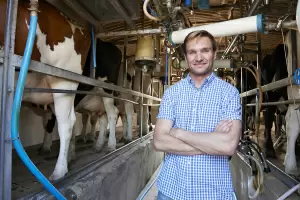
Agricultural managers run farm operations by planning crop production, managing workers, overseeing budgets, and marketing harvests. The median salary is $87,980 annually as of May 2024, with 836,100 jobs nationwide. The field is projected to decline 1% through 2034, but retirement creates about 85,500 annual job openings for those entering the profession.
Agricultural managers combine business expertise with environmental stewardship to keep farms productive and profitable. Whether you're considering this career path or exploring related agricultural fields, understanding the role's responsibilities, earning potential, and education requirements helps you make informed decisions about your future.
This career appeals to people who want hands-on work with the land while applying strategic thinking to challenges like crop selection, resource management, and market timing. You'll work outdoors during critical seasons and spend time in offices handling the business side of farming.
What Does an Agricultural Manager Do?
Agricultural managers plan and coordinate the operation of farms, nurseries, greenhouses, and other agricultural production sites. In larger operations, they hire and train farmworkers to care for crops under their supervision.
The role varies significantly based on the size and type of agricultural operation. On small family farms, managers handle everything from planting to selling the harvest. In large commercial operations, they might specialize in areas such as livestock management, crop production, or agricultural business operations.
Daily responsibilities include monitoring crop health and growth, scheduling planting and harvesting activities, and coordinating with agricultural inspectors to ensure regulatory compliance. Managers also work alongside agricultural specialists who provide expertise in soil health, pest management, and irrigation systems.
Key Responsibilities
Agricultural managers balance strategic planning with hands-on problem-solving. Their responsibilities fall into several core areas that keep farm operations running smoothly and profitably.
Production Planning and Management: Managers decide what crops to plant based on market demand, soil conditions, and weather forecasts. They create planting schedules, coordinate fertilization and irrigation, and plan harvest timing to maximize crop quality. This involves working with agricultural engineers to select and maintain appropriate equipment for each task.
Workforce Coordination: Hiring, training, and supervising farm workers requires strong leadership skills. Managers assign daily tasks, ensure safety protocols are followed, and provide training on proper equipment operation and crop handling. During peak seasons like planting and harvest, this might involve coordinating teams of 10-50 workers.
Financial Management: Successful farm operations require careful budget planning and expense tracking. Managers monitor input costs for seeds, fertilizer, and equipment, track production yields, and analyze profit margins. They also navigate government subsidy programs and crop insurance options to reduce financial risks from weather and market fluctuations.
Marketing and Sales: Getting crops from the field to the market involves timing decisions and relationship-building. Managers monitor commodity prices, negotiate with buyers, arrange transportation, and sometimes market directly to consumers through farmers' markets or community-supported agriculture programs. Understanding market trends helps them make strategic decisions about what to grow each season.
Environmental Stewardship: Modern agricultural management increasingly focuses on sustainability. Managers implement soil conservation practices, manage water resources efficiently, and reduce chemical inputs where possible. Some explore agroforestry practices that integrate trees with crops or livestock to improve environmental outcomes.
Where Does an Agricultural Manager Work?
Agricultural managers spend considerable time working outdoors in farming environments. The majority of each workday takes place in fields, orchards, greenhouses, or livestock areas, where managers oversee operations and monitor crop or animal health.
The work exposes you to weather conditions year-round. Summer heat, spring rain, and winter cold are all part of the job. Physical demands vary but often include walking fields, climbing into equipment, and occasionally performing manual labor alongside workers during critical periods.
Indoor time is spent in farm offices handling paperwork, planning activities for upcoming seasons, marketing crops, and maintaining equipment records. Some managers also attend industry meetings, agricultural conferences, or government agency appointments.
Work Schedule and Lifestyle: Most agricultural managers work full-time, with significant overtime during spring planting and fall harvest. During these peak periods, 12-16-hour days from sunrise to sunset are common. If you manage livestock operations, daily care requirements mean working every day of the year, though you might hire help to cover occasional time off.
The seasonal nature creates a unique work-life balance. Spring and fall are intense, but winter months typically offer more flexibility for planning, professional development, and personal time. This rhythm appeals to people who prefer varied work patterns over consistent 9-to-5 schedules.
What Is the Average Agricultural Manager's Salary?
Agricultural managers earned a median salary of $87,980 as of May 2024, according to the Bureau of Labor Statistics. This median means half of agricultural managers earned more than this amount, and half earned less.
The salary range varies significantly based on experience, operation size, and geographic location. The lowest 10% earned about $51,700, while the highest 10% earned around $156,530.
| Percentile | Annual Salary | What This Means |
|---|---|---|
| 10th Percentile | $51,700 | Entry-level or small operations |
| 25th Percentile | $63,590 | Early career managers |
| Median (50th) | $87,980 | Mid-career professionals |
| 75th Percentile | $122,990 | Experienced managers, larger operations |
| 90th Percentile | $156,530 | Senior managers, corporate agriculture |
Income often fluctuates year to year depending on crop yields, market prices, and weather conditions. Managers who own their farms face more income variability than those working for corporations or landowners on a salary. Government subsidies and crop insurance programs help stabilize income during challenging years.
Most agricultural managers work for themselves, owning and operating their own farms. Others work for large agricultural corporations, family-owned operations managed by absentee owners, or institutional landowners like universities or government agencies.
What Is the Job Demand for Agricultural Managers?
Employment of agricultural managers is projected to decline 1% between 2024 and 2034, according to the Bureau of Labor Statistics. This slight decrease reflects ongoing consolidation in agriculture, in which larger, more mechanized farms require fewer managers to produce higher yields.
However, the outlook isn't as limiting as the decline suggests. Despite overall employment declining, about 85,500 job openings for agricultural managers are projected each year on average over the decade. All of these openings result from the need to replace current managers who are retiring or transitioning to other careers.
Several factors create opportunities for new agricultural managers. The average age of farmers continues to rise, with many approaching retirement. Young people entering agriculture often bring valuable skills in technology, data analysis, and sustainable practices that modern farming increasingly requires. Corporate agricultural operations also continue hiring professional managers who combine agricultural knowledge with business training.
Specialization opens additional pathways. Managers focusing on organic farming, specialty crops, sustainable agriculture, or direct-to-consumer marketing often find niche opportunities. Those willing to work in rural areas typically have better job prospects than those seeking positions near urban centers.
What Are the Education Requirements to Become an Agricultural Manager?
Agricultural managers typically need no specific education level, though the industry standard is evolving. Many managers gain their skills through work experience, apprenticeships at local farms, or inheriting family farming operations. This experiential pathway remains common and respected in the field.
However, a bachelor's degree is increasingly valuable, particularly for those not entering through family farming. Degrees in agriculture, farm management, agronomy, crop science, or botany provide essential knowledge about crop varieties, soil science, plant diseases, pest management, and agricultural economics.
Land-grant universities offer particularly strong agricultural programs because they maintain working farms for hands-on learning. These programs often include internships with commercial farming operations, giving you practical experience alongside academic knowledge.
Choosing Your Educational Path
Consider these factors when deciding between experience-based and degree-based preparation:
Choose the experience pathway if: You have access to family farming operations or agricultural employment, you prefer learning by doing, and you plan to manage small to mid-sized farms. This route costs less and provides immediate income while learning, though it may limit opportunities with large corporate agricultural operations.
Choose the degree pathway if: You lack an agricultural background, you want to work for corporate farms or agricultural companies, you're interested in agricultural science and technology, or you plan to specialize in areas like precision agriculture or sustainable farming systems—degrees open doors to management training programs and advancement opportunities that experience alone might not provide.
Some agricultural managers pursue certification through The American Society of Farm Managers and Appraisers (ASFMRA), which requires at least four years of work experience and a bachelor's degree. Certification demonstrates professional competency and can increase earning potential.
Agricultural Management Related Degrees
Skills & Qualifications
Successful agricultural managers combine diverse skills spanning business, science, and interpersonal domains. Here are the key competencies that help managers excel in this career:
Business and Financial Skills: You'll need strong budgeting abilities to track expenses and plan investments in equipment and supplies. Understanding market trends, commodity pricing, and financial risk management helps you make profitable decisions about what to grow and when to sell. Basic accounting knowledge supports record-keeping requirements for taxes and loan applications.
Agricultural Knowledge: Practical understanding of crop science, soil health, pest management, and livestock care underpins effective farm management. You should recognize plant diseases, understand the growth requirements of different crops, and understand how weather patterns affect production. This knowledge often comes from formal education, work experience, or both.
Technical and Data Skills: Modern farming relies heavily on technology. Managers use GPS-guided tractors, soil moisture sensors, drone imagery for crop monitoring, and farm management software for record-keeping and analysis. Comfort with data analysis helps you interpret information from these tools to optimize irrigation, fertilizer application, and harvest timing. Working alongside agricultural and food scientists who research crop improvements requires understanding scientific data.
Leadership and Communication: Managing farm workers requires clear communication, training, and conflict-resolution skills. You'll also communicate with suppliers, buyers, bank loan officers, government inspectors, and extension agents. The ability to explain complex agricultural concepts to people outside the industry helps when marketing products or advocating for agricultural policies.
Problem-Solving and Adaptability: Weather, pests, equipment failures, and market fluctuations create constant challenges. Successful managers think creatively under pressure and adjust plans when conditions change. Physical stamina and mechanical aptitude also help, as you might troubleshoot equipment problems or work alongside employees during critical periods.
Career Path & Advancement
Agricultural management careers typically follow these progression pathways:
Entry Level (1-3 years): Most people start as farm workers, equipment operators, or assistant managers, learning crop production cycles and farm operations firsthand. You might work on a family farm, intern through university agricultural programs, or join farmworker training programs. This stage focuses on developing practical skills and understanding seasonal rhythms.
Early Career (3-7 years): With experience, you advance to managing specific farm areas, such as a crop section, a livestock group, or a greenhouse operation. You take on more responsibility for planning, budgeting, and supervising workers inyour area. Some people start small farming operations during this phase, beginning with leased land or limited acreage.
Mid-Career (7-15 years): Experienced managers oversee entire farm operations or manage multiple properties for corporate agricultural companies. You make strategic decisions about crop selection, major equipment purchases, and long-term land management. Farm owners often expand acreage or diversify into value-added products. This stage requires proven track records of profitability and effective resource management.
Senior Level (15+ years): Senior agricultural managers might oversee regional operations for large agricultural companies, own substantial farming operations, or transition into agricultural consulting, teaching, or policy work. Some become farm management consultants advising multiple farm owners. Others leverage their expertise into roles with agricultural equipment companies, seed suppliers, or government agricultural programs.
Alternative career transitions include moving into agricultural inspection, agricultural engineering, or agricultural education. The skills you develop in farm management transfer well to many roles in the agricultural industry.
Professional Development & Resources
Agricultural managers and those interested in the field can access valuable resources through government agencies and professional organizations.
Government Resources
United States Department of Agriculture (USDA) Farm Services Agency (FSA): An agency of the USDA that provides information about agricultural laws and regulations, along with resources to help farmers manage risks their crops may face. The FSA offers programs for beginning farmers, disaster assistance, and conservation initiatives.
National Institute of Food and Agriculture (NIFA): A government program run by the USDA that provides information about becoming a farmer. They offer several grants and development programs to help keep small farms in business, including funding for farmer training, mentorship, and agricultural education.
Professional Organizations
The American Society of Farm Managers and Appraisers (ASFMRA): A professional organization providing industry-specific information and certifications for farmers and land managers. They encourage leadership in agriculture by offering continuing education, networking opportunities, and professional development. ASFMRA also maintains listings of agricultural lands currently for sale.
Center for Rural Affairs (CFRA): A nonprofit organization focused on conserving farmlands and supporting small rural communities throughout the United States. They advocate for public policies favoring rural Americans, work on rural community development projects, and promote sustainable agricultural practices.
Additional Resources
Frequently Asked Questions
Can I become an agricultural manager without a college degree?
Yes, many agricultural managers gain skills through work experience, farm apprenticeships, or family farming operations rather than formal education. However, a bachelor's degree in agriculture, agronomy, or related fields increasingly helps advance opportunities and secure positions at larger commercial operations. The degree pathway is particularly valuable if you lack an agricultural background or want to work for corporate farms.
What's the difference between an agricultural manager and a farm owner?
Many agricultural managers own and operate their own farms, combining both roles. However, agricultural managers can also work for other farm owners, agricultural corporations, or institutions, managing operations without ownership. Employed managers typically receive salaries and benefits rather than bearing the financial risks of ownership. Owner-operators have greater control and potential profits but also face more financial risk from market fluctuations and crop failures.
Is agricultural management a good career for someone concerned about environmental sustainability?
Agricultural management offers significant opportunities to implement sustainable practices. You can focus on organic farming, conservation tillage, integrated pest management, water conservation, and improving soil health. Many consumers and markets increasingly value sustainably produced food, creating economic opportunities for environmentally focused managers. The role allows you to balance productivity with environmental stewardship to benefit both farm profitability and land health.
How does technology affect agricultural management today?
Technology is transforming agricultural management through precision agriculture tools like GPS-guided equipment, soil moisture sensors, drone imagery for crop monitoring, and farm management software for record-keeping and analysis. Modern managers use data to optimize planting density, fertilizer application, and irrigation scheduling. This technology increases efficiency and profitability while often reducing environmental impacts. Comfort with agricultural technology has become an important skill for new managers entering the field.
What are the biggest challenges agricultural managers face?
Agricultural managers deal with weather uncertainty, market price fluctuations, and the physical demands of farm work. Climate variability makes planning difficult, while commodity price changes can turn profitable crop selections into money losers. Rising input costs for fuel, fertilizer, and equipment squeeze profit margins. Finding and retaining reliable farm workers has become increasingly challenging in many regions. Despite these difficulties, managers who plan carefully, diversify operations, and stay informed about agricultural innovations often build successful, rewarding careers.
Key Takeaways
- Competitive Median Salary: Agricultural managers earn $87,980 annually on average as of May 2024, with experienced managers at large operations earning over $156,000. Income varies based on crop yields, market conditions, and operation size.
- Strong Replacement Demand: Despite a 1% employment decline through 2034, about 85,500 annual job openings are driven by retirements, creating consistent opportunities for new managers entering the field.
- Flexible Education Pathways: You can enter through work experience and farm apprenticeships or earn a bachelor's degree in agriculture-related fields. Degrees increasingly benefit those seeking corporate positions or lacking agricultural backgrounds.
- Diverse Responsibilities: The role combines production planning, workforce management, financial oversight, marketing, and environmental stewardship, requiring both business acumen and agricultural knowledge.
- Seasonal Work Patterns: Expect long hours during spring planting and fall harvest seasons, with more flexibility during winter months, creating a unique work-life rhythm that differs from traditional office careers.
Ready to explore agricultural management programs? Find degree programs in agriculture, agronomy, and farm management that can help you build the skills for a successful career managing farm operations.
2024 US Bureau of Labor Statistics salary and job growth figures for farmers, ranchers, and other agricultural managers reflect national data, not school-specific information. Conditions in your area may vary. Data accessed February 2026.