

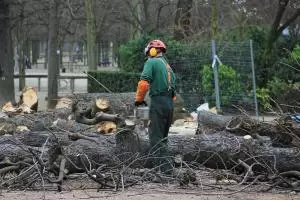
National Park Service Technicians protect and maintain America's national parks, forests, and conservation lands through hands-on fieldwork, environmental monitoring, and visitor services. These conservation professionals earn a median salary of $37,520, require an associate's degree in forestry or conservation, and work primarily for federal, state, and local government agencies. The field is projected to decline by 3% from 2022 to 2032, with approximately 3,100 annual job openings nationwide.
If you're drawn to outdoor conservation work and want to make a tangible difference in protecting natural resources, becoming a National Park Service Technician might align with your environmental passion. This hands-on career combines fieldwork, environmental science, and public service—but it's important to understand both the rewards and challenges before committing to this path.
In our experience helping students explore conservation careers, many are drawn to working in national parks but aren't sure whether to pursue roles as park rangers, forest rangers, or National Park Service Technicians. Each path offers unique responsibilities and requirements, and understanding these differences is crucial for making an informed career decision.
What Does a National Park Service Technician Do?
National Park Service Technicians work on the front lines of conservation, preserving and improving the quality of protected lands, including forests, wetlands, mountains, grasslands, and riparian areas. Think of them as the essential maintenance crew and environmental monitors for America's natural treasures—they're out in the field every day ensuring these lands remain healthy and accessible for future generations.
The core mission involves assessing environmental risks and collecting critical data. Technicians regularly test soil, water, and air quality, gather samples of wildlife and plant species, and monitor ecological indicators that signal potential problems. This data helps predict forest fire risks, track invasive species, identify pollution sources, and guide conservation strategies.
A typical day might include: Starting early to hike remote trails for wildlife monitoring, collecting water samples from streams, marking hazardous trees for removal, repairing trail infrastructure, educating visitors about Leave No Trace principles, and documenting observations in field reports. When emergencies like forest fires occur, priorities shift immediately to wildland firefighting and fire suppression efforts.
National Park Service Technicians frequently collaborate with conservationists, biologists, and land managers to implement habitat restoration projects, mitigate erosion, manage visitor impacts, and maintain the overall ecological health of protected areas.
Core Responsibilities
While every position varies based on location and agency, here are the fundamental duties most National Park Service Technicians perform:
- Environmental Monitoring: Collect and analyze soil, water, and air samples; track wildlife populations and plant health; identify environmental threats and changes in ecosystem conditions.
- Fire Management: Assess forest fire risks, maintain firebreaks and monitoring systems, participate in controlled burns, and assist with fire suppression during emergencies.
- Trail and Facility Maintenance: Repair and maintain trails, campsites, roads, and park infrastructure; mark trees for removal; clear hazardous vegetation.
- Visitor Services and Safety: Educate visitors on conservation and safety practices, enforce regulations on hunting, fishing, and camping, and conduct search-and-rescue operations when needed.
- Wildlife and Habitat Management: Track wildlife movement and behavior, assist with habitat restoration projects, control invasive species, and support wildlife biology research efforts.
- Data Collection and Reporting: Use GIS and GPS technology to map forest areas and access roads, create detailed field reports, process environmental specimens, and maintain accurate records.
- Equipment Operation: Operate and maintain specialized forestry equipment, vehicles, snowmobiles, and monitoring systems safely in challenging terrain.
Career Advancement: Senior Technician Roles
Experienced technicians who demonstrate leadership and expertise often advance to senior positions with supervisory and strategic responsibilities:
- Team Leadership: Manage field crews, coordinate response protocols to environmental threats, and schedule patrol and maintenance activities across parklands.
- Program Development: Design and implement safety training programs for staff and visitors, and create visitor compliance policies aligned with state and federal regulations.
- Strategic Planning: Identify resource gaps (staffing, equipment, funding), develop solutions, and consult with policymakers on land management regulations.
- Stakeholder Relations: Serve as liaison with adjacent landowners, local emergency services, state agencies, and other conservation organizations.
- Project Oversight: Supervise habitat restoration projects, forest health assessments, and large-scale conservation initiatives from planning through execution.
Where Does a National Park Service Technician Work?
National Park Service Technicians spend the majority of their time outdoors, working directly in the landscapes they protect. This is both the greatest reward and biggest challenge of the career—if you thrive in nature and find purpose in hands-on conservation work, few careers offer this level of immersion in wild places.
Work Environment Realities
The challenges are real: You'll face adverse weather conditions—working through rain, snow, extreme heat, and cold. The terrain can be physically demanding, requiring long-distance hiking with equipment, navigating steep or unstable ground, and maintaining stamina throughout long field days. Some positions involve extended periods in remote locations with limited communication and social interaction. If your assignment includes logging operations or heavy equipment areas, you'll work around potentially dangerous machinery requiring constant vigilance.
The rewards are equally significant: You'll wake up to some of America's most beautiful landscapes. There's profound satisfaction in knowing your work directly protects ecosystems and wildlife. Most technicians work in close-knit teams that develop strong camaraderie through shared challenges. The physical nature of the work keeps you fit and healthy, and many find the outdoor lifestyle deeply fulfilling after years in traditional office environments.
Work-life considerations: Most National Park Service Technicians work full-time, though seasonal employment is common, especially in regions with harsh winters. During emergencies like forest fires or severe weather events, expect irregular hours and potentially long shifts. However, off-season periods often allow for more predictable schedules and time for professional development or education.
Primary Employers
Federal, state, and local governments employ the vast majority of National Park Service Technicians, with the federal government (particularly the National Park Service, U.S. Forest Service, and Bureau of Land Management) providing the largest number of positions. State park systems, state forestry departments, and county conservation districts also regularly hire technicians. Private sector opportunities exist with timber companies, private conservation organizations, and land trusts, though these positions are less common.
What Is the Average National Park Service Technician's Salary?
National Park Service Technicians, who fall under the broader Bureau of Labor Statistics category of forest and conservation workers, earned a median salary of $37,520 as of May 2022. Entry-level positions typically start around $30,920, while experienced technicians in senior roles or high-cost-of-living areas can earn $46,550 or more.
Several factors influence salary levels:
- Government level: Federal positions generally offer higher salaries and better benefits than state or local government roles.
- Experience and education: Technicians with bachelor's degrees or specialized certifications (wildland firefighting, GIS, hazardous materials) command higher salaries.
- Geographic location: Positions in Alaska, California, and other high-cost states typically pay more than those in rural areas with lower living costs.
- Specialized skills: Technicians with expertise in fire management, search and rescue, or the operation of technical equipment may receive additional compensation.
Most National Park Service Technicians work full-time with government benefits, including health insurance, retirement plans, paid leave, and sometimes housing allowances for remote duty stations. Seasonal workers should budget carefully for off-season periods when employment may be limited.
What Is the Job Demand for National Park Service Technicians?
Employment outlook for National Park Service Technicians reflects broader trends in federal and state conservation funding. According to the most recent Bureau of Labor Statistics projections, employment for forest and conservation workers is expected to decline by 3% from 2022 to 2032, with approximately 3,100 annual job openings nationwide.
Several factors influence job availability:
Federal and state budget allocations for land management agencies directly impact hiring. Conservation funding has fluctuated with political priorities, making some years more favorable than others for new positions. Climate change impacts are increasing the need for forest fire management, habitat restoration, and ecosystem monitoring—potentially creating new opportunities despite overall modest decline projections. Workforce retirement among current technicians will create openings, as many professionals hired in the 1980s-1990s reach retirement age.
Competition for positions can be significant, especially for desirable locations in well-known national parks. Students who complete internships, volunteer with conservation organizations, earn specialized certifications (chainsaw operation, wilderness first aid, wildland firefighting), and demonstrate flexibility about location will have the strongest job prospects.
What Are the Educational Requirements to Become a National Park Service Technician?
Most National Park Service Technician positions require an associate's degree in forestry, conservation, rangeland management, natural resources, environmental science, or a closely related field. You can obtain these credentials from community colleges, technical schools, or forestry programs at four-year universities.
Employers strongly prefer candidates who graduate from programs accredited by the Society of American Foresters (SAF). Each state has at least one SAF-accredited program, and graduates from these programs demonstrate they've met rigorous standards for forestry and conservation education.
Recommended Coursework
To prepare for a National Park Service Technician career, focus your studies on:
- Core Science: Ecology, biology, botany, soil science, hydrology, wildlife management
- Forestry Fundamentals: Forest ecology, silviculture, dendrology (tree identification), forest measurements
- Technical Skills: Geographic Information Systems (GIS), GPS technology, remote sensing, forest inventory methods
- Resource Management: Forest resource management, rangeland management, watershed management, fire ecology
- Applied Skills: Chainsaw and equipment operation, wilderness first aid, map reading, and navigation
Many programs include field schools or practicum experiences where you'll gain hands-on skills in actual forest and park settings. Take advantage of every opportunity for fieldwork—practical experience matters as much as classroom learning for this career.
Additional Certifications That Help
While not always required, these certifications can strengthen your job applications:
- Wildland Firefighter certifications (Red Card)
- Wilderness First Responder or Emergency Medical Technician
- Chainsaw operation and safety certification
- Commercial Driver's License (CDL)
- Pesticide applicator license
National Park Service Technician - Related Degrees
Essential Skills for National Park Service Technicians
Success as a National Park Service Technician requires a combination of technical knowledge, physical capabilities, and interpersonal skills. Here's what you'll need to develop:
Technical Skills
- GIS and GPS proficiency: Modern conservation work relies heavily on mapping and spatial analysis technology.
- Environmental monitoring: Proper techniques for collecting water, soil, and biological samples; understanding of ecological indicators.
- Equipment operation: Safe use of chainsaws, brush cutters, ATVs, boats, and other specialized forestry equipment.
- Data management: Accurate field note-taking, database entry, report writing, and documentation practices.
- Tree and plant identification: Recognition of species, understanding of forest ecology, identification of invasive species.
Physical Fitness and Outdoor Skills
- Cardiovascular endurance: Ability to hike long distances with equipment, often in steep or difficult terrain.
- Strength and stamina: Lifting, carrying, and using tools throughout full workdays in various weather conditions.
- Adaptability to elements: Comfort working in extreme heat, cold, rain, snow, and high altitude.
- Navigation skills: Map reading, compass use, GPS operation in areas without cell service or established trails.
Soft Skills and Personal Qualities
- Communication: Explaining complex environmental concepts to diverse visitors, writing clear reports, and coordinating with team members via radio.
- Teamwork: Most conservation work is done in small crews, where cooperation and reliability are essential.
- Problem-solving: Addressing unexpected challenges in remote locations with limited resources.
- Attention to detail: Accurate data collection and safety protocols prevent accidents and ensure quality work.
- Self-motivation: Working independently in isolated settings requires discipline and initiative.
- Adaptability: Responding to changing priorities, weather conditions, and emergency situations with flexibility.
Career Path and Advancement Opportunities
National Park Service Technicians who demonstrate strong performance and leadership potential can advance through several pathways:
Typical Career Progression
Entry-Level Technician (Years 0-3): Focus on learning proper field techniques, mastering equipment operation, understanding agency protocols, and building physical fitness for demanding work.
Experienced Technician (Years 3-7): Take on more complex projects, mentor newer staff, develop specialized skills (fire management, GIS analysis, wildlife monitoring), and gain seasonal crew lead experience.
Senior Technician/Crew Lead (Years 7-12): Supervise field crews, coordinate multi-week projects, train staff, interface with land managers and agency leadership, and handle administrative duties alongside fieldwork.
Program Specialist/Supervisor (Years 12+): Oversee entire programs or districts, manage budgets, develop strategic plans, represent the agency in stakeholder meetings, and minimal fieldwork.
Related Career Moves
Many technicians transition into related roles as their interests and skills develop:
- Park Ranger: Moving into law enforcement and visitor services (usually requires additional training and certification)
- Forest Ranger: Greater focus on timber management and commercial forestry operations
- Wildlife Biologist: Pursuing graduate education and specializing in wildlife research and management
- Conservation Scientist: Moving into research, policy, or land-use planning roles
- Environmental Educator: Focusing on public outreach, interpretation, and education programs
Some technicians earn bachelor's or master's degrees while working (many agencies offer tuition assistance) to qualify for professional-level conservation positions with higher salaries and more diverse responsibilities.
How Does This Compare to Related Careers?
Students exploring conservation careers often wonder about the differences between similar-sounding positions. Here's how National Park Service Technicians compare to closely related roles:
| Career | Primary Focus | Typical Education | Median Salary | Work Environment |
|---|---|---|---|---|
| National Park Service Technician | Hands-on conservation work, environmental monitoring, trail/facility maintenance, visitor assistance | Associate's degree in forestry or conservation | $37,520 | Primarily outdoor fieldwork, physical labor, remote locations |
| Park Ranger | Law enforcement, visitor services, interpretation, emergency response, permit management | Bachelor's degree; law enforcement certification often required | $40,000-$60,000 (varies widely by agency) | Mix of outdoor patrol and visitor center/office work, public interaction |
| Forest Ranger | Timber management, commercial forestry, harvest planning, forest economics, landowner consultation | Bachelor's degree in forestry | $55,000-$70,000 | Mix of fieldwork and office-based planning, some private sector opportunities |
Which path is right for you? If you love hands-on outdoor work and want to focus on conservation and habitat management rather than law enforcement or visitor services, National Park Service Technician roles offer the most direct conservation impact. If you're interested in interpretation, education, and public-facing work, explore park ranger positions. If commercial forestry and timber management interest you more than preservation, forest ranger roles might be the better fit.
What Kind of Societies and Professional Organizations Do National Park Service Technicians Have?
National Park Service Technicians and those aspiring to enter the field can access valuable resources, networking opportunities, and professional development through these organizations:
Government Resources
U.S. Forest Service
As an agency of the U.S. Department of Agriculture, the Forest Service manages national forests and grasslands while conducting leading-edge conservation research. Their website provides updates on forestry laws and regulations, research publications, and job opportunities across the agency. This is one of the largest employers of National Park Service Technicians.
Professional Associations
Society of American Foresters (SAF)
SAF brings together forestry professionals for education, networking, and advocacy. The organization provides information about cutting-edge environmental technologies, ethical debates in forestry and conservation, and current management techniques. SAF also offers career guidance, job boards, and resources to help find and advance in forestry careers. Membership demonstrates professional commitment and provides access to conferences and continuing education.
Ecological Society of America (ESA)
This nonprofit organization comprises environmental scientists from around the world working toward the common goal of raising public awareness of the importance of environmental science and promoting knowledge sharing. ESA produces excellent reference materials, research journals, and promotional resources useful for both practicing professionals and students entering the field.
Forest Products Society
This nonprofit association provides industry-specific information on the use of industrial forest materials. While more focused on commercial applications, this organization can be valuable to National Park Service Technicians interested in the intersection of conservation and sustainable forestry practices, as well as to those considering private-sector positions.
Frequently Asked Questions
What's the difference between a National Park Service Technician and a Park Ranger?
National Park Service Technicians focus primarily on hands-on conservation work—environmental monitoring, trail maintenance, habitat restoration, and field data collection. Park Rangers emphasize law enforcement, visitor services, interpretation, and public education. Rangers typically need bachelor's degrees and law enforcement training, while technicians usually require associate's degrees with technical forestry skills. Both careers involve outdoor work in parks, but rangers spend more time interacting with the public while technicians spend more time on direct conservation tasks.
Do I need a bachelor's degree to become a National Park Service Technician?
Most entry-level positions require an associate's degree in forestry, conservation, or a related field from an accredited program. A bachelor's degree isn't mandatory for technician roles, though it can improve your competitiveness for positions and open doors to advancement opportunities. If you're considering eventually moving into professional-level positions like a conservation scientist or park manager, a bachelor's degree becomes necessary. Many technicians work while pursuing bachelor's degrees through evening or online programs.
Is the work seasonal or year-round?
It varies by location and agency. Federal agencies like the National Park Service and Forest Service offer both permanent full-time positions and seasonal appointments. Seasonal work is common in northern climates, where winter weather limits fieldwork, with peak employment from April through October. Southern and western regions often provide more year-round opportunities. Many technicians start with seasonal positions and transition to permanent roles as positions open. Be prepared for some financial uncertainty early in your career if starting seasonally.
What are the physical demands of this job?
National Park Service Technician work is physically demanding. Expect to hike long distances while carrying equipment (often 20-40 pounds), work in extreme weather, perform repetitive tasks such as trail clearing, and maintain stamina throughout full workdays outdoors. You'll need good cardiovascular fitness, functional strength, and the ability to adapt to altitude, heat, cold, and precipitation. Most agencies require physical fitness tests and medical clearances. If you have physical limitations, discuss accommodations with potential employers—some desk-based positions exist, though most technician roles emphasize fieldwork.
What's the career advancement potential?
Advancement opportunities exist but require patience and strategic skill development. Typical progression moves from entry-level technician to experienced technician (3-5 years), then to crew lead or senior technician (7-10 years), and potentially to program supervisor roles (12+ years). Earning specialized certifications in wildland firefighting, GIS analysis, or technical rescue accelerates advancement. Some technicians pursue bachelor's or master's degrees to transition into professional conservation scientist, biologist, or park management roles with higher salaries. Geographic flexibility helps—willingness to relocate for promotions significantly improves advancement prospects.
How does salary compare to related conservation careers?
National Park Service Technician salaries fall in the mid-range of conservation careers. Forest and conservation workers (including NPS Technicians) earn median salaries around $37,520, while park rangers typically earn $40,000-$60,000, forest rangers with bachelor's degrees earn $55,000-$70,000, and conservation scientists with graduate degrees earn $65,000-$85,000. Wildlife biologists earn a median of $60,000-$75,000. Technician roles offer lower entry salaries but require less education initially. Many technicians value the work-life balance and outdoor focus over maximum salary potential. Federal positions include strong benefits (health insurance, retirement, paid leave) that add significant value beyond base salary.
Key Takeaways
- Hands-On Conservation Work: National Park Service Technicians spend most of their time outdoors performing direct conservation activities—environmental monitoring, trail maintenance, habitat restoration, and visitor services—making this career ideal for those who want tangible conservation impact rather than desk work.
- Accessible Entry Requirements: An associate's degree in forestry or conservation from an accredited program qualifies you for most technician positions, making this path more accessible than careers requiring bachelor's or graduate degrees, though advancement may eventually benefit from additional education.
- Realistic Salary Expectations: With median earnings around $37,520 annually, this career offers modest but stable income through government employment, strong benefits packages, and the intangible rewards of meaningful conservation work in beautiful natural settings.
- Physical and Mental Demands: This career requires excellent physical fitness, adaptability to challenging weather and terrain, comfort with isolation in remote locations, and the mental resilience to handle emergencies—it's rewarding but demanding work that isn't suitable for everyone.
- Job Market Realities: With projected 3% decline in employment through 2032 and competition for desirable locations, success requires strategic career planning—pursue internships, earn specialized certifications, stay geographically flexible, and build practical field skills alongside your education.
Ready to explore conservation career paths? Discover accredited forestry and environmental science programs that prepare you for hands-on work protecting America's natural resources.

2022 US Bureau of Labor Statistics salary and job growth figures for forest and conservation workers reflect national data, not school-specific information. Conditions in your area may vary. Data accessed January 2026.