Marine biologists study ocean life and ecosystems, from microscopic plankton to whales, investigating how marine organisms interact with their environment and respond to human activities. The Bureau of Labor Statistics tracks marine biologists under the broader category "Zoologists and Wildlife Biologists," with a median salary of $70,510 (May 2024). Most entry-level positions require at least a bachelor's degree in marine biology or related biological sciences, though research careers typically demand advanced degrees.
Marine biology captures the imagination of anyone drawn to ocean life—the intelligence of dolphins, the mystery of deep-sea creatures, the vibrant ecosystems of coral reefs. While working with charismatic marine mammals attracts many to this field, marine biology encompasses far more diverse specializations. From studying microscopic organisms that form the base of ocean food webs to investigating how climate change affects marine ecosystems, this career path offers numerous ways to contribute to ocean conservation and understanding.
The reality of marine biology careers requires honest discussion. This field combines passionate environmental commitment with competitive job markets and rigorous educational requirements. Understanding what marine biologists actually do, realistic salary expectations, and the educational pathways available helps prospective students make informed decisions about whether this career aligns with their goals.
What Is a Marine Biologist?
Marine biologists study life in the oceans, and sometimes the oceans themselves. They investigate the behavior and physiological processes of marine species, the diseases and environmental conditions that affect them, and the impacts of human activities on marine life. Many marine biologists work under job titles such as wildlife biologist, fish and wildlife biologist, fisheries biologist, aquatic biologist, zoologist, conservation biologist, and biological technician.
It's important to note that the Bureau of Labor Statistics does not track marine biologists as a separate occupation. Instead, they're included in the broader category of "Zoologists and Wildlife Biologists," which encompasses professionals studying all types of animal species across various environments. This means salary and employment data reflect a diverse group of wildlife professionals, not exclusively those working in marine environments.
The field overlaps with related disciplines like oceanography, which focuses more broadly on ocean systems, including geology, chemistry, and physics. While biological oceanographers study large-scale ocean processes and their biological components, marine biologists typically focus on individual species, populations, or specific ecosystems.
What Does a Marine Biologist Do?
Marine biologists study marine organisms in their natural habitats. They may investigate a population's behaviors or physiology, assess the condition of habitats, and examine the effects of human activity on those animals and habitats.
Their research typically involves conducting species inventories, testing and monitoring sea creatures exposed to pollutants, collecting and testing ocean samples, preserving specimens and samples of unknown species and diseases, and mapping the distribution, ranges, or movements of marine populations. In some cases, they recommend alternative industrial practices to minimize negative effects on marine species and habitats. They communicate their findings and recommendations by writing reports and scientific journal articles.
Areas of Specialization
Marine biology offers numerous specialization options, allowing professionals to focus on specific areas that align with their interests:
Marine Mammalogy: Study of whales, dolphins, seals, sea lions, and other marine mammals. This includes research on behavior, population dynamics, conservation, and human impacts. Marine mammalogists often work with acoustic monitoring, satellite tracking, and photo identification techniques.
Fisheries Biology: Focus on commercially and ecologically important fish populations. Fisheries biologists assess fish stocks, recommend sustainable harvest levels, study fish migration patterns, and evaluate the effectiveness of fisheries management policies.
Marine Ecology: Investigation of how marine organisms interact with each other and their environment. Marine ecologists study food webs, predator-prey relationships, habitat requirements, and how environmental changes affect marine communities.
Coral Reef Science: Specialized study of coral reef ecosystems, which face significant threats from climate change, ocean acidification, and coastal development. Reef scientists monitor coral health, study coral bleaching events, and develop restoration techniques.
Marine Biotechnology: Application of marine organisms' unique adaptations to solve human problems. Some marine biotech companies have mimicked the structure of shark skin to create surfaces that germs and viruses such as MRSA can't attach to. Other applications include developing pharmaceutical compounds from marine organisms, creating biodegradable materials inspired by marine biology, and using marine enzymes in industrial processes. This represents a promising and growing area of the field.
Marine Conservation Biology: Focus on protecting endangered marine species and threatened habitats. Conservation biologists work on species recovery plans, marine protected area design, and policy advocacy to reduce threats to ocean biodiversity.
Core Responsibilities
Daily and regular responsibilities for marine biologists typically include:
- Review research and literature relating to current discoveries in the field
- Collect field and control samples of biological samples and non-living media in order to perform analyses
- Research the behavior and relationships among organisms in the marine environment
- Analyze the evolution and distribution of organisms and their environment in the ocean
- Use and maintain instrumentation used to track organisms and measure the properties of the environment
- Analyze the diversity and health of various components of the marine environment
- Consult and work to rebuild damaged marine ecosystems
- Use computer modeling to build predictive data for the marine ecosystem
- Consult with stakeholders regarding programs to monitor pollution
- Advocate for and monitor environmental compliance
- Provide assistance to fisheries management and coast guard units as required
Senior-Level Responsibilities
Senior marine biologists often have a broader set of job responsibilities that focus on management and leadership:
- Navigate various agencies and regulations in order to effectively monitor the ecosystem in question
- Construct grant proposals to fund research and fieldwork
- Draft scientific papers reporting research findings
- Facilitate a positive and challenging team environment with clear communication and mentoring opportunities
- Present research findings at conferences, and to policymakers and stakeholders
- Communicate with the public to help educate them about issues affecting marine ecosystems, like climate change and overfishing
- Determine jurisdictions for various laws and regulations
- Developthe scope of work for projects, as well as calculate project budgets and schedules
- Write environmental assessments and impact statements
- Share data with consideration for endangered species advocacy organizations
Where Does a Marine Biologist Work?
Many marine biologists work for state and federal government agencies. These positions typically offer greater job security, comprehensive benefits, and more opportunities for advancement. Federal positions with agencies like the National Oceanic and Atmospheric Administration (NOAA), the Environmental Protection Agency (EPA), and the U.S. Fish and Wildlife Service often provide access to research vessels, advanced equipment, and larger project budgets. According to BLS data, federal government employees in this occupational category earned higher average salaries than those in state government and private sector positions. Many marine biologists also work at private research laboratories or consulting firms, which may offer more specialized project focus and potentially faster career progression.
Others work for aquariums, zoos, and museums, where they combine research with public education and animal care. Some become faculty members in academia, balancing teaching responsibilities with research programs. Others transition into roles as marine science educators, teaching at high schools, community colleges, or developing educational programs for nonprofit organizations.
Work Environment & Schedule
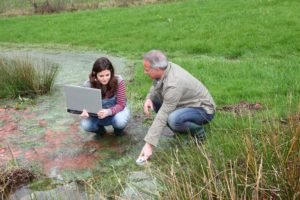
Marine biologists may spend significant time outdoors when conducting research. Fieldwork often involves working on ships to locate, tag, and monitor marine animals and their movements, and to collect seawater samples. This field component can be physically demanding, requiring comfort with boat travel, sometimes rough sea conditions, and extended periods away from home.
The typical work schedule balances field research with office-based analysis and reporting. A marine biologist might spend several weeks on a research vessel collecting data, followed by months in a laboratory or office analyzing samples, processing data, writing reports, and preparing grant proposals. This rhythm varies considerably by position type and research focus.
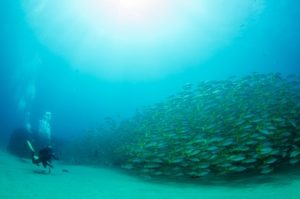
Physical demands include lifting equipment, working in variable weather conditions, swimming or diving for underwater research, and operating specialized scientific instruments. Some positions involve seasonal fieldwork concentrated during specific breeding seasons or optimal weather windows, while others maintain year-round research schedules.
Marine Biologist Salary & Compensation
Understanding salary information for marine biologists requires context about how the Bureau of Labor Statistics tracks this profession. The BLS doesn't collect data on marine biologists as a separate category. Instead, marine biologists are included within the broader occupational group of "Zoologists and Wildlife Biologists." This means the salary figures represent a range of professionals studying various animal species, not exclusively marine life.
According to the BLS (May 2024), the median annual salary for zoologists and wildlife biologists was $70,510. This represents the midpoint—half of professionals in this category earn more, and half earn less. The salary range shows considerable variation: the lowest 10% earned less than $41,270, while the highest 10% earned more than $109,390 annually.
Salary by Employment Sector
The employment sector significantly affects compensation. According to BLS data, those employed by the federal government typically earned higher salaries than those in state government and other sectors. Federal positions also often include comprehensive benefits packages, retirement plans, and funding for conference attendance and professional development.
Academic positions at universities typically offer lower starting salaries but provide research time, access to graduate student assistance, and academic freedom to pursue independent research interests. Private consulting firms may offer competitive salaries with performance bonuses, but often require managing multiple client projects simultaneously.
Geographic Variation
Location substantially impacts marine biologist salaries. Coastal states with major marine research institutions—California, Massachusetts, Florida, Hawaii, Washington—typically offer higher salaries reflecting both the cost of living and the concentration of marine research opportunities. Federal positions maintain consistent pay scales across locations, though locality adjustments account for regional cost differences.
Career Progression
Entry-level positions with bachelor's degrees typically start at the lower end of the salary range. With experience and advanced degrees, marine biologists can progress to senior scientist roles, project management positions, or research program directors, with corresponding salary increases. Those who obtain PhDs and publish significant research may command salaries toward the upper range, particularly in federal research positions or senior academic roles.
What Are the Education Requirements?
A bachelor's or master's degree is typically required for entry-level marine biology research jobs, such as those at private research organizations and biotechnology companies. Doctoral degrees are usually required for faculty positions and other jobs that allow you to follow your own research interests and lead research programs.
Undergraduate Education (4 Years)
While several schools offer undergraduate programs specifically in marine biology, many successful marine biologists graduate with bachelor's degrees in biology, zoology, fisheries, ecology, or other animal sciences. Students in general biology programs can prepare for marine biology careers by choosing relevant electives and seeking marine-focused research opportunities or internships.
Important foundational courses include chemistry, physics, mathematics, and statistics. These quantitative skills prove essential for data analysis, experimental design, and understanding complex marine systems. Classes in environmental biology provide crucial context about how organisms interact with their physical and chemical environment.
Additionally, courses in public policy, English, and scientific writing help prepare students for regulatory work and communicating findings to diverse audiences—skills that prove valuable throughout a marine biology career.
Graduate Education
Master's Degrees (2 Years): A master's in marine biology, biological oceanography, or a related field opens doors to more advanced research positions and higher starting salaries. Master's programs typically combine coursework with a thesis research project, allowing students to develop expertise in a specific area while building their research skills. Many master's students support their education through teaching or research assistantships.
Doctoral Degrees (4-6 Years): PhDs become essential for those seeking academic faculty positions, leading research programs at major institutions, or pursuing independent research careers. Doctoral programs emphasize original research, with students spending most of their time on dissertation projects rather than coursework. PhD students typically receive funding through teaching assistantships, research assistantships, or fellowships.
Practical Experience
Internships and research experience are critically important in marine biology, often making the difference in competitive job markets. Summer internships at marine laboratories, field stations, aquariums, or government agencies provide hands-on experience with research techniques, data collection, and professional networking. Many undergraduate students volunteer in research laboratories during the academic year to gain skills in experimental design, data analysis, and scientific writing.
Internship durations typically range from 8-12 weeks for summer programs to semester-long placements. Organizations like NOAA, the Smithsonian Environmental Research Center, and marine research stations offer competitive internship programs. University career services, professional society job boards, and direct outreach to researchers often reveal additional opportunities.
Certifications & Additional Training
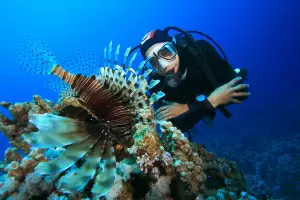
Depending on the research focus, additional certifications may be valuable or required. SCUBA certification becomes essential for underwater research. Boat operation licenses may be needed for field research involving small vessels. Specialized training in techniques like satellite tagging, acoustic monitoring, or molecular genetics analysis enhances employability in specific research areas.
Job Outlook & Demand
The job market for marine biologists requires realistic expectations. Positions in this field remain limited, and competition is consistently strong. The Bureau of Labor Statistics projects that employment for zoologists and wildlife biologists will grow by 6% from 2022 to 2032, which is about as fast as the average for all occupations. This growth translates to approximately 1,500 annual job openings nationally (BLS projections, 2022-2032) across all zoology and wildlife biology specialties, including marine biology.
The limited number of positions reflects several factors. Marine research funding comes primarily from government agencies and nonprofit organizations, which face budget constraints. Academic positions require not only advanced degrees but also strong publication records and successful grant-writing experience. Many aspiring marine biologists compete for relatively few permanent positions.
Competitive Advantages
Those with advanced mathematics and computer skills hold significant advantages in the job market. Modern marine biology increasingly relies on statistical modeling, geographic information systems (GIS), computer programming for data analysis, and remote sensing technologies. Marine biologists who can design experiments, analyze complex datasets, and create predictive models become more valuable to employers.
Practical fieldwork experience, specialized technical skills, and publication records strengthen applications. Flexibility regarding geographic location and willingness to start with temporary or contract positions often help recent graduates gain entry to the field.
Alternative Career Paths
Many people with marine biology training pursue related careers that apply their knowledge in different contexts. Environmental consulting firms hire marine biologists to assess project impacts on marine ecosystems. Government regulatory agencies need staff to review permits and ensure environmental compliance. Science writing, environmental education, and policy advocacy represent additional paths for those passionate about ocean conservation but seeking alternatives to research positions.
Professional Organizations & Resources
Professional societies provide valuable networking opportunities, access to the latest research, job listings, and career development resources for marine biologists.
Association of Zoos & Aquariums
The Association of Zoos & Aquariums (https://www.aza.org/) is a network of more than 6,000 zoo and aquarium professionals and organizations. It offers animal management information, business benchmarking data, conference proceedings, grants, and professional development opportunities for those working in public aquariums and marine mammal facilities.
American Fisheries Society
With over 9,000 members, the American Fisheries Society (http://fisheries.org/) is the oldest and largest professional society for fisheries scientists in the world. The Society promotes professional development, networking, and information exchange through a major annual meeting and several specialized symposia. It supports student involvement, maintains professional standards, and offers professional certification for fisheries scientists.
Society for Marine Mammalogy
The Society for Marine Mammalogy (http://www.marinemammalscience.org/) advances marine mammal science through meetings, publications, and the development of ethical standards for the treatment of marine mammals. The Society organizes workshops and training opportunities, maintains active student chapters, and provides a job board as well as a taxonomic list of marine mammal species and subspecies.
Additional Recommended Resources
- MarineBio Conservation Society
- Marine Biological Association of the United Kingdom
- Marine Conservation Institute
Frequently Asked Questions
What's the Difference Between a Marine Biologist and an Oceanographer?
Marine biologists focus specifically on living organisms in the ocean—their behavior, physiology, ecology, and conservation. Oceanographers study the ocean itself as a physical and chemical system, including water circulation, chemistry, geology, and climate interactions. While biological oceanographers study how ocean processes affect marine life, marine biologists typically focus more narrowly on specific species or ecosystems. Both careers often collaborate on research projects.
Do I Need a PhD to Be a Marine Biologist?
Not necessarily. Entry-level research positions and many government jobs accept candidates with bachelor's or master's degrees. However, PhDs become essential for academic faculty positions, leading your own research program, or achieving senior scientist roles at major research institutions. The degree level you need depends on your specific career goals within marine biology.
Can Marine Biologists Work Remotely or From Inland Locations?
Some aspects of marine biology work can be performed remotely. Data analysis, report writing, grant proposals, and computer modeling don't require coastal proximity. However, career advancement in marine biology typically requires regular fieldwork access to marine environments for research, monitoring, and data collection. While some positions at inland universities or government agencies focus primarily on analysis or policy work, most marine biology careers involve a combination of field and office work, with the fieldwork component essential for professional development and research credibility.
What's the Most Challenging Aspect of a Marine Biology Career?
The competitive job market presents the biggest challenge. Limited positions, grant funding constraints, and numerous qualified candidates make securing permanent research positions difficult. Additionally, fieldwork can be physically demanding and require extended time away from home. The career often requires geographic flexibility and a willingness to accept temporary positions while building experience and credentials.
Are Marine Biology Jobs Only Available With Government Agencies?
No. While federal and state agencies employ many marine biologists, positions also exist at universities, private research laboratories, environmental consulting firms, aquariums, nonprofit conservation organizations, and biotechnology companies. Each sector offers different advantages—government jobs provide stability and benefits, consulting offers variety, academia provides research independence, and nonprofits focus on conservation applications.
Key Takeaways
- Diverse Specializations: Marine biology encompasses far more than marine mammal work, including fisheries biology, coral reef science, marine biotechnology, and conservation biology, offering multiple career paths within the field.
- Competitive but Realistic: With median salaries around $70,510 (BLS, May 2024) and 6% projected job growth through 2032, marine biology offers moderate career prospects in a field with strong competition for limited positions.
- Education Requirements Vary: Entry-level positions typically require bachelor's or master's degrees, while research leadership and academic roles demand PhDs. Practical experience through internships proves critical for career entry.
- Quantitative Skills Matter: Advanced mathematics, statistics, computer programming, and data analysis skills provide significant competitive advantages in the modern marine biology job market.
- Multiple Career Paths: Beyond research positions, marine biology training applies to environmental consulting, policy work, science education, conservation advocacy, and marine biotechnology, offering alternatives to traditional research careers.
Ready to explore marine biology programs? Find accredited universities offering specialized marine science degrees that align with your career goals and environmental interests.
2024 US Bureau of Labor Statistics salary and job growth figures for zoologists and wildlife biologists reflect national data, not school-specific information. Conditions in your area may vary. Data accessed January 2026.