
Monthly Archives: March 2015

How GIS is Revolutionizing Agricultural Science
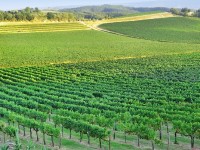
Geographic Information Systems (GIS) technology is transforming agricultural science by enabling precision farming, soil quality mapping, and climate-responsive crop planning. While still emerging in mainstream agricultural education, professionals combining GIS expertise with agricultural science knowledge earn competitive salaries—environmental scientists earn a median salary of $81,690 annually with 6% job growth projected through 2032. This technology…
Read more

Environmental Planning, Design, and GIS

If there is one area of environmental science in which GIS or Geographic Information Systems/Science is vital, it is Environmental Planning and Design. This is true whether we are looking at an urban or rural landscapes, both of which provide issues of their own with different sets of data and considerations. The role of an…
Read more

Environmental Engineering and GIS

Geographic Information Systems/Science or GIS is becoming, if it is not already, a vital tool for the environmental sciences. It is more than a simple digital evolution from cartography to IT based geographic data and digital mapping offers enormous benefits to research, engineering, project management and resource allocation. Useful in the private and public sector,…
Read more

Cultural Resources 101: Part of the Federal Environmental Process

The federal environmental process includes a myriad of individual subjects but there are five big players.  These are cultural resources, biology/ecology, hazardous materials, public outreach/involvement and permitting.  Cultural resources are relevant for every single federal project that must go through the environmental process.  The field encompasses archaeology (prehistoric and historic), historic architecture and Native American…
Read more

Why Climate Scientists Need GIS: Skills, Applications & Career Paths

Geographic Information Systems (GIS) software is essential for climate scientists who analyze spatial data across global, regional, and local scales. GIS transforms massive climate datasets (from ice core samples to satellite imagery) into visual maps that reveal temperature trends, weather patterns, and ecological changes. Many environmental science graduate programs include GIS coursework, especially in climate…
Read more