Category Archives: Entomologist

Entomologist

Invasive Species: Causes, Impacts & Environmental Effects
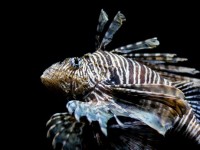
Invasive species are plants or animals introduced to new environments where they cause environmental, economic, or health harm. Unlike exotic species that coexist peacefully, invasives thrive without natural predators, reproduce rapidly, and disrupt native ecosystems. They're the second-leading cause of species extinctions globally, costing an estimated $120 billion annually in the United States alone. One…
Read more

Entomology 101: The Study of Insects

Entomology is the scientific study of insects — a branch of zoology that examines how insects live, reproduce, and interact with their environment and other species. It's one of the oldest natural sciences, with applications ranging from environmental monitoring and forensic investigation to agriculture, public health, and genetics research. If you've ever wondered what connects…
Read more

What is Palynology? Environmental Science’s Microscopic Detective Work

Palynology is the scientific study of microscopic organic materials like pollen, spores, and dinoflagellates preserved in sediments and rocks. This interdisciplinary method helps researchers understand past climates, track environmental changes, identify archaeological sites, and reconstruct ancient landscapes. Palynologists work across botany, geology, archaeology, and climate science to unlock Earth's environmental history. Understanding how landscapes and…
Read more

Dendrochronology: How Tree Rings Reveal Environmental History

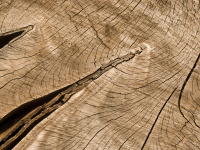
Dendrochronology is the scientific analysis of tree-ring patterns to date wood samples and reconstruct past environmental conditions. Students from archaeology, climate science, chemistry, and forestry use dendrochronology in their research. Tree rings reflect annual growth influenced by climate, enabling scientists to date artifacts, calibrate radiocarbon testing, and study historical climate patterns spanning thousands of years.…
Read more

Is Environmental Science Really a Good Major?

Environmental science is a strong major choice for 2026, with median salaries of $80,060 and projected 4% job growth through 2034. The field combines biology, chemistry, geology, and policy to address real-world environmental challenges, preparing graduates for careers in consulting, government agencies, conservation, and research with approximately 8,500 annual job openings nationwide. When prospective students…
Read more

What We Wish We Had Known before Majoring in Environmental Science

Environmental science students consistently identify four critical areas they wish they'd understood before starting their major: the foundational importance of chemistry across all specializations, the competitive nature of introductory science courses, the long-term value of professional networking from day one, and the significant adjustment required for university-level science education. These insights come from hundreds of…
Read more