

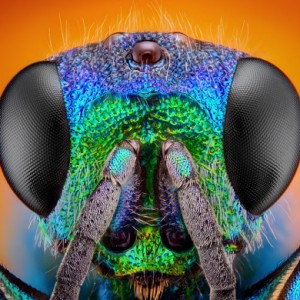
Entomology is the scientific study of insects — a branch of zoology that examines how insects live, reproduce, and interact with their environment and other species. It's one of the oldest natural sciences, with applications ranging from environmental monitoring and forensic investigation to agriculture, public health, and genetics research.
If you've ever wondered what connects a crime scene investigation to forest health monitoring or agricultural pest control, the answer is often the same: insects. Entomology is a broader and more consequential field than most people realize, and it sits comfortably within the wider environmental sciences. Whether you're exploring it as a degree path, a career direction, or simply trying to understand what entomologists actually do, this guide covers the fundamentals.
Jump to Section
- What is Entomology?
- A History of Entomology
- What Can Entomology Tell Us?
- Frequently Asked Questions
- Key Takeaways
What is Entomology?
Entomology is now a well-established discipline, and with the scope of the environmental sciences continuing to expand, the evidence and insights it provides have appeal across an impressive range of fields. Though it's classed as a subsection of zoology — the study of animals — it's a deep enough subject to require its own specialized undergraduate and postgraduate qualifications.
Most universities offer entomology courses under biology or agriculture departments, and at least one college in each US state offers it as an undergraduate program. Students pursuing advanced degrees and PhD programs have a wide range of options. Most research roles require at least a Master's level degree, and many entomologists go on to work in agriculture and conservation, ecology, and land management — including national parks and wildlife agencies.
Put simply, entomology is the branch of zoology that studies insects and how they interact with their environment, other species, and humans. The word comes from the Greek entom, meaning "notched" — a reference to the segmented body structure that defines insects. We've identified roughly 1 million insect species so far, with estimates of unidentified species ranging from 5 million to 8 million. Insects exist on every continent and survive in some of the harshest environments on earth, and in terms of sheer numbers, they're thought to outnumber all other animal species combined.
Learn more about zoologist careers, parasitologist careers, and parasitology.
What is an Insect?
It seems like a simple question, but there's genuine complexity in the answer. Not every creature people call a "bug" qualifies as an insect, and there are specific biological criteria that determine classification.
To be classified as an insect, a creature must have an exoskeleton — common to all arthropods — along with exactly six legs, which is generally what separates insects from other arthropods like spiders or crustaceans. Insects also have three distinct body parts: the head, thorax, and abdomen. They may or may not have wings or antennae, and they may live on land, in the air, or in freshwater environments, though marine species are relatively rare since ocean environments are dominated by other arthropod types.
Most insects have large compound eyes relative to their body size, though some species are eyeless. Some insect species have ocelli — simple light-sensing organs — though their presence varies between groups and can be a distinguishing feature in insect taxonomy. Together, the compound eyes, antennae, and any ocelli present handle most sensory functions. Many insects also have sensory hairs on their bodies that detect wind direction, helping them locate food sources even from a distance.
"Not all insects have ocelli — in fact, this is a distinguishing character at the taxonomic level of orders. Some beetle subfamilies such as the Omaliinae of the Staphylinidae do have ocelli while most beetle types do not. Beetles (order Coleoptera, the largest order of insects) account for roughly 40% of all named insect species." Robert E. Nelson, Professor of Geology, Colby College
If you're interested in pursuing this field professionally, learn more about how to become an entomologist — including the education requirements, typical career paths, and salary expectations.
A History of Entomology
Humans have always had a relationship with insects — ancient cultures examined, farmed, and even venerated them long before formal science existed.
Ancient Egyptians worshipped the scarab, a large species of dung beetle that would gather balls of dung, bury them, and lay eggs within them. Weeks or months later, new beetles would emerge from the ground — seemingly reborn from nothing, representing the renewal of life.
Even earlier, some of the oldest cave art depicts bees. One well-known example at Cuevas de la Araña in eastern Spain shows a human figure surrounded by bees, gathering honey from a hive. Roman writers discussed insects at length, and Aristotle and Pliny the Elder both published detailed observations of insects in their works on natural history.
The true scientific study of insects didn't develop until the Renaissance and Enlightenment eras, with the greatest expansion happening in the 1800s. Three distinct strands of study emerged in a short period of time. The first focused on depicting nature's detail through highly precise illustration — not just for artistic purposes, but as a tool for understanding insect physiology. The second strand concerned itself with classification, dividing species into organized categories for ease of study. The third group examined biological processes: life cycles, reproduction, habitat, and behavior.
By the 19th century, most major universities were studying insects systematically, and both North America and Europe saw enormous growth in entomological interest. Amateur researchers — often gentlemen naturalists of the Victorian era — contributed alongside emerging academic institutions, leading to the formalized discipline we have today.
No work better represents this comprehensive approach than the four volumes published by William Kirby and William Spence in the early 19th century, still considered a seminal reference in the field. Much of this early research was driven by practical necessity: understanding and combating insect-borne diseases like malaria and yellow fever that followed colonial expansion into tropical regions.
The 20th and 21st centuries brought more new species discoveries than any previous era. Remote areas that were once inaccessible are now routinely surveyed, and new species appear in the scientific record regularly. Entomology has also grown well beyond its original boundaries, contributing evidence and methodology to fields including ecology, genetics, archaeology, forensics, and public health.
What Can Entomology Tell Us?
Entomology doesn't exist in isolation. It's embedded in a wider study of natural ecology and human geography, and its applications reach into disciplines that might surprise you. Insects respond to environmental conditions with remarkable sensitivity, which makes them powerful indicators of change — and powerful evidence in a range of investigative and research contexts.
As Environmental Indicators
Insects are a vital part of forest biodiversity. Because they're particularly sensitive to changes in climate, seasonal patterns, and regional plant cover, entomological data provide important evidence for overall forest health. The arrival of a new pest species or the sudden decline of an established native species can signal the effects of deforestation, shifts in tree composition, changes in CO2 concentration, or persistent ecological stressors like drought and flooding.
Pollinating insects like butterflies and bees are especially useful as indicators, since their presence, distribution, and population density directly reflect the types of flowering plants and trees in an area. Ecologists frequently use insect population data alongside botanical surveys to build a complete picture of ecosystem health. In the Arctic Circle, where the ecosystem is particularly fragile, researchers across multiple fields rely heavily on entomological evidence — tracking relationships between insect groups, their environments, and other animal species — to monitor environmental indicators over time.
For Archaeology and Anthropology
As archaeology increasingly intersects with environmental science, insect remains are becoming more important in the interpretation of archaeological sites and past landscapes. Humans have had an enormous impact on their environments throughout history, and researchers are only beginning to understand how geoengineering, hunter-gatherer activity, and the Neolithic Agricultural Revolution each shaped local ecologies.
Insect remains can tell us a great deal. In a study of western Greenland, for example, researchers examined preserved insect remains to find indicators of hygiene practices in past settlements. When a landscape is converted to farmland, changes in pollen distribution and insect remains create a clear pattern shift in the archaeological record — particularly when a crop favorable to native insects replaces one that wasn't, or vice versa. These pattern changes are durable, identifiable, and increasingly useful to researchers working at the intersection of environmental history and human settlement.
Forensic Entomology
Insects play a genuine role in criminal investigation. Forensic entomology uses insect evidence to help determine the time and circumstances of death, making it one of the more striking intersections of biology and law. When a body is exposed to the elements, insects are often among the first responders — attracted to decomposing tissue, feeding, or laying eggs. By identifying which species are present and understanding their lifecycles, investigators can estimate how long a body has been dead, where it was stored, and other critical details.
The practice has a longer history than most people expect. Using insects to identify a murder weapon goes back to 13th-century China, when suspects were asked to lay down their sickles so investigators could observe which blade attracted the most flies, indicating traces of blood. In modern criminal proceedings, the first documented use of insect evidence occurred in 1935 in the UK, where blowfly evidence helped establish tthe ime of death and contributed to a murder conviction.
Medical Entomology
Medical entomology is concerned with insects as a matter of public health, including insect-borne diseases, urban and rural pest management, crop damage, and the development of effective pesticides. The field effectively began in the early 20th century when mosquitoes were identified as the transmission vector for yellow fever, a discovery that transformed both tropical medicine and military preparedness. The US military has maintained significant investment in medical entomology research throughout every major conflict, most recently in Iraq and Afghanistan.
It's worth noting that while entomology strictly covers insects, medical entomology takes a broader scope. It includes other arthropods that affect human health — spiders, mites, ticks, and similar creatures all fall within the purview of medical entomology research, even though they're not technically insects.
Fruit Fly Research
The humble fruit fly deserves particular attention, because these small insects have contributed more to our understanding of genetics and evolutionary biology than almost any other organism.
Because they reproduce quickly and go through multiple generations in a short period, researchers can observe genetic mutation, genetic drift, and selective breeding outcomes at a pace impossible with larger animals. Fruit flies have been a cornerstone of genetics research for over a century, and discoveries continue to emerge.
Recent research has explored insulin regulation and metabolic pathways in fruit flies that have direct implications for understanding human conditions like diabetes — a reminder that entomology's contributions to science extend well beyond the study of insects themselves.
Frequently Asked Questions
What is entomology?
Entomology is the scientific study of insects, including their biology, behavior, ecology, and interactions with humans and the environment. It's a branch of zoology, and while it focuses specifically on insects, it has applications across fields including agriculture, public health, forensics, ecology, and genetics.
What is the study of bugs called?
The formal scientific study of insects is called entomology. In everyday language, "bugs" is often used interchangeably with "insects," but in scientific classification, "true bugs" refers specifically to insects in the order Hemiptera — a group that includes aphids, cicadas, and stink bugs. Entomologists study all insect species, as well as related arthropods in some specialized subfields like medical entomology.
What do entomologists study?
Entomologists study the biology, lifecycle, behavior, distribution, and ecological role of insects. Depending on their specialization, they may focus on agricultural pests, insect-borne diseases, forensic evidence, environmental indicators, or genetic research. Most entomologists work in research, government agencies, agriculture, conservation, or public health.
What degree do you need to work in entomology?
Entry-level positions in entomology typically require a bachelor's degree in entomology, biology, or a related field like environmental biology. Research roles and academic positions generally require a Master's degree or a PhD. Most universities offer entomology as a specialization within biology or agricultural science departments.
What is forensic entomology?
Forensic entomology is the application of insect science to legal investigations, most commonly to help determine time and circumstances of death. Investigators trained in forensic entomology can identify insect species found on or near remains, use lifecycle data to estimate how long a body has been exposed, and provide expert testimony in criminal proceedings.
Key Takeaways
- Entomology Defined: Entomology is the scientific study of insects and their interactions with the environment, other species, and humans — a branch of zoology with specialized undergraduate and postgraduate degree programs at universities across the US.
- Broader Than It Looks: Entomology's applications extend well beyond insects themselves, contributing to environmental monitoring, archaeology, forensic investigation, public health, and genetics research.
- Insects as Environmental Signals: Because insects are highly sensitive to environmental change, their population data is a key tool for ecologists and conservation scientists tracking forest health, climate shifts, and ecosystem stability.
- A Field With Deep Roots: Entomology has been practiced in some form since ancient times, with systematic scientific study developing through the Renaissance and reaching its modern form in the 19th century — driven largely by medical necessity and the need to combat insect-borne disease.
- Strong Career Pathways: A background in entomology opens doors in agriculture, conservation, government research, public health, and academia, with most research-level roles requiring a Master's degree or higher.
Entomology is a discipline that rewards curiosity. Whether you're drawn to the forensic applications, the environmental monitoring work, the genetics research, or simply the sheer diversity of insect life on this planet, there's a meaningful career path here — and a body of science that's still growing. If this field speaks to you, the next step is finding the right educational program to get you there.
Interested in turning your fascination with insects into a career? Explore degree programs in entomology, environmental biology, and related fields to find the right path for you.

- What Is Parasitology? The Science of Parasites Explained - November 19, 2018
- Desert Ecosystems: Types, Ecology, and Global Importance - November 19, 2018
- Conservation: History and Future - September 14, 2018
Related Articles




Featured Article
Birds as Environmental Indicators: What They Reveal