

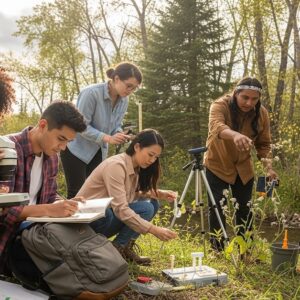
Environmental science scholarships for underrepresented students include national awards (like minority STEM scholarships), identity-based funds (women, BIPOC, first-generation), and school-specific programs offering awards that commonly range from approximately $500 to $10,000 annually, though amounts vary widely by institution. Programs often define "underrepresented" to include racial minorities, first-gen students, low-income backgrounds, and women in STEM. Many require environmental major enrollment, minimum GPA, often in the 3.0–3.5 range, though requirements vary by program, and essays addressing both identity and environmental commitment.
Finding scholarship funding shouldn't feel like navigating a maze, especially when you're already breaking barriers by pursuing environmental science. If you're from an underrepresented background—whether that's racial or ethnic minority status, first-generation college, low-income status, or simply feeling that environmental spaces weren't built with you in mind—you're not alone in wondering where to find support that actually recognizes your journey.
The environmental field desperately needs diverse perspectives. Climate change doesn't affect all communities equally, and a homogeneous group of decision-makers shouldn't shape environmental policy. Yet many students from underrepresented backgrounds don't realize that targeted scholarship funding exists specifically to help them enter this field. This guide breaks down who qualifies, where to find these opportunities, and how to build a competitive application even if you don't fit the "typical" environmental science student profile.
Table of Contents
Who Qualifies as "Underrepresented" in Environmental Science?
Types of Environmental Science Scholarships for Underrepresented Students
Major National Scholarship Programs
Application Requirements and Selection Criteria
Building a Competitive Application Without Research Experience
Writing Compelling Scholarship Essays
Application Timeline and Strategy
Beyond Scholarships: Building Your Environmental Science Foundation


Who Qualifies as "Underrepresented" in Environmental Science?
The term "underrepresented" varies by program, but most environmental science scholarships use it to describe students from groups that are statistically underrepresented in STEM and environmental fields. Understanding these definitions helps you identify which opportunities you're eligible for.
Racial and ethnic minorities remain underrepresented in many environmental science and environmental engineering fields, particularly Black, Hispanic/Latino, Native American, and Pacific Islander students. Many scholarships explicitly target these groups, recognizing that environmental challenges disproportionately affect communities of color and that diverse voices are essential to developing equitable solutions.
Women in certain STEM fields, including environmental engineering and some technical environmental specializations, continue to face representation gaps. Several scholarship programs specifically support women pursuing environmental degrees, from undergraduate through doctoral levels.
First-generation college students—those whose parents didn't complete a four-year degree—often face unique financial and navigational challenges in higher education. Many environmental science scholarships now recognize first-gen status as a form of underrepresentation, even when combined with other identity factors.
Low-income students from families earning below certain thresholds may qualify for need-based scholarships that overlap with diversity funding. Some programs define underrepresented status primarily through economic criteria, acknowledging that financial barriers prevent capable students from pursuing environmental careers.
Students from specific rural communities, federally recognized tribes, or regions served by particular utilities and resource companies may find scholarships tied to geographic underrepresentation. These programs often aim to develop environmental professionals who will return to serve their home communities.
Single parents, adult learners returning to college, and other non-traditional students are increasingly eligible for scholarships, as recognition grows that diverse life experiences create barriers to traditional educational pathways. These programs understand that "underrepresented" isn't just about demographics—it's about who hasn't had equal access to environmental education.
Types of Environmental Science Scholarships for Underrepresented Students
National Minority STEM Scholarships
National-level scholarships typically offer the largest awards but also attract the most competition. These programs often come from federal agencies, major corporations, or national professional organizations with the resources to support students nationwide.
Many national STEM scholarship programs include environmental science and environmental engineering among eligible majors. These often require a minimum GPA in the 3.0–3.5 range, proof of enrollment in an accredited program, and demonstrated commitment to the field through coursework, projects, or career goals. Awards range from $1,000 to $10,000 annually, with some renewable for multiple years if you maintain eligibility requirements.
The most competitive national scholarships often combine financial support with additional benefits like mentoring programs, conference attendance, research stipends, or networking opportunities with professionals in the field. These extras can be as valuable as the monetary award, especially if you're trying to build connections in environmental science without family or community ties to the profession.
Here's how major national scholarship categories typically compare:
| Scholarship Type | Typical Award Amount | Primary Eligibility Focus | Additional Benefits |
|---|---|---|---|
| Federal Agency Scholarships | $5,000-$10,000 | US citizenship, environmental major, racial/ethnic minority | May include internship or job pathway programs (varies by agency) |
| Corporate STEM Programs | $2,500-$7,500 | Underrepresented minorities in STEM, 3.0+ GPA | Mentorship, networking events, and potential employment |
| Professional Associations | $1,000-$5,000 | Membership eligibility, career commitment, and identity criteria | Conference registration, publication opportunities |
| Foundation Awards | $1,500-$8,000 | Varies by foundation mission, often first-gen or low-income | May be renewable, sometimes includes book stipends |
Identity-Based Environmental Funds
Identity-based scholarships specifically target students from particular underrepresented groups, often to increase diversity in environmental professions. These programs understand that simply opening doors isn't enough—students need financial support and a sense of community to succeed.
Women in STEM scholarships increasingly recognize environmental engineering and environmental science as fields where women remain underrepresented, especially in leadership and technical roles. Organizations such as the Society of Women Environmental Professionals, local women-in-science groups, and university women's centers often maintain lists of opportunities. These scholarships typically require essays that address how gender has shaped your educational journey or your career aspirations in environmental science.
BIPOC-specific environmental scholarships are offered by organizations committed to diversifying the fields of conservation, environmental policy, and sustainability. Some focus broadly on racial and ethnic minorities, while others specifically support Black students, Latino/a students, Native American students, or Asian American and Pacific Islander students. These programs often emphasize the connection between environmental justice and racial justice, looking for applicants who can articulate how their identity informs their environmental perspective.
First-generation student awards recognize that being the first in your family to attend college creates unique challenges, from navigating FAFSA to understanding academic expectations. Environmental science programs increasingly offer specific funding for first-gen students, understanding that these students often lack the social capital and financial safety nets that help other students persist through challenging programs. When you're writing essays for these scholarships, selection committees want to understand your path to environmental science—how you found the field without family connections or guidance.
Regional and State-Focused Scholarships
Regional scholarships often provide more attainable opportunities because they limit the applicant pool geographically. If you're studying or planning to study in states with strong environmental sectors—like California, Washington, Oregon, Colorado, or the Northeast—you'll find numerous regional opportunities.
Some Pacific Northwest institutions and organizations have launched initiatives to diversify the environmental fields, often targeting BIPOC students pursuing environmental degrees at regional universities. These scholarships may range from $2,000 to $5,000 and sometimes include summer internship placement with environmental organizations, agencies, or tribes in the region. The Pacific Northwest has strong regional programs that recognize that indigenous knowledge and diverse cultural perspectives are essential to environmental stewardship.
State-level scholarships from environmental agencies, utilities, and resource management organizations often prioritize students who will work in-state after graduation. These programs invest in future environmental professionals for their region, so your essays should articulate why you want to contribute to environmental solutions in that specific area. Many require just one or two years of in-state work after graduation—a reasonable commitment if you're already planning to stay.
Regional professional chapters of national organizations frequently offer smaller scholarships ($500-$2,000) with less competition than national awards. The smaller amounts don't diminish their value—multiple small scholarships add up, and regional awards often connect you with local environmental professionals who can become mentors or references.
Major National Scholarship Programs
Here are established scholarship programs specifically supporting underrepresented students in environmental science and related STEM fields:
Federal & Government Programs:
- NSF Research Experiences for Undergraduates (REU) – Paid summer research positions nationwide
- EPA Student Employment Opportunities – Pathways programs and internships
- NOAA Ernest F. Hollings Scholarship – $9,500/year for undergraduates in environmental science
- USDA 1890 National Scholars Program – Full tuition for underrepresented minorities
Professional Organizations:
- SACNAS Scholarships – Multiple awards for Chicano/Hispanic/Native American students in STEM
- NSBE Scholarships – Awards for Black engineering students (including environmental)
- oSTEM Scholarships – Support for LGBTQ+ students in STEM
- Society of Women Environmental Professionals Scholarships – Awards for women in environmental fields
- Association for Women in Science (AWIS) – Scholarships for women in STEM
Conservation & Environmental Organizations:
- Student Conservation Association Scholarships – Support for conservation careers
- National Wildlife Federation Craig Tufts Scholarships – For environmental leadership
- National Parks Conservation Association Scholarships – For park and conservation students
Corporate STEM Programs:
- AFCEA STEM Scholarships – Technology and engineering awards
- Society of Women Engineers Scholarships – Major awards for women in engineering
- Grainger Foundation Engineering Scholarships – For diverse engineering students
Tribal & Indigenous Student Programs:
- American Indian Graduate Center Scholarships – Graduate and undergraduate awards
- American Indian Science and Engineering Society (AISES) – STEM scholarships for Native students
- American Indian College Fund – Multiple scholarship opportunities
Hispanic/Latino Student Programs:
- Hispanic Scholarship Fund – Major scholarships for Latino students
- Hispanic Association of Colleges and Universities (HACU) – Multiple awards
- MALDEF Scholarships – Support for Latino students pursuing social justice fields
First-Generation & Need-Based Programs:
- Coca-Cola Scholars Foundation – Need-based awards for high-achieving students
- Dell Scholars Program – Specifically for low-income, first-gen students
- CareerOneStop Scholarship Finder – Federal database of scholarship opportunities
Many of these organizations also offer mentoring, conference travel grants, and networking opportunities in addition to financial support. Check each website for current application deadlines, eligibility requirements, and award amounts, as these may change annually.
University-Specific Environmental Scholarships
Your own institution likely offers scholarships you've never heard about. Universities with dedicated colleges of the environment, environmental studies programs, or sustainability initiatives typically maintain internal scholarship funds specifically for enrolled students.
These institutional scholarships may target students from federally recognized tribes, first-generation college students, or other underrepresented groups at that university. Awards range from $1,000 to full tuition and may be renewable if you maintain GPA and enrollment requirements. The application process is usually more straightforward than external scholarships since you're already part of the university community.
Departmental scholarships from your specific program—whether environmental science, environmental engineering, or environmental studies—often go unawarded because students don't know to apply. Check with your department office, academic advisor, or department website. Some universities automatically consider enrolled majors for departmental scholarships, while others require separate applications, usually due in the spring for the following academic year.
Universities with strong diversity and inclusion initiatives increasingly dedicate scholarship funds specifically for underrepresented students in STEM and environmental programs. These institutional commitments often include additional support services, such as mentoring programs, research opportunities, or cohort-based learning communities, that help you succeed beyond the financial award.
Application Requirements and Selection Criteria
Common Application Components
Most scholarship applications share similar requirements, though specifics vary by program. Understanding what you'll need helps you start gathering materials early and craft stronger applications.
Proof of enrollment or acceptance documentation verifies you're eligible as a current or incoming student. Current students submit unofficial transcripts or enrollment verification from their registrar. Accepted students provide admission letters from their intended institution. Keep digital copies of these documents so you can quickly attach them to multiple applications.
Minimum GPA requirements often range from 3.0 to 3.5, though requirements vary by program. Some programs set lower thresholds or consider other factors if your GPA falls slightly below. High school students applying for undergraduate scholarships usually need to meet minimum GPA requirements, while graduate scholarship applicants must meet undergraduate GPA requirements. If your GPA is borderline, focus on scholarships that emphasize other factors like leadership, community involvement, or compelling personal narratives.
Essays and personal statements form the heart of most scholarship applications. You'll typically write 500-1,000 words addressing prompts about your environmental interests, career goals, how your identity has shaped your perspective, and why you deserve the scholarship. Strong essays show rather than tell—they include specific examples, personal anecdotes, and authentic voice rather than generic statements about "wanting to save the planet."
Letters of recommendation from faculty, mentors, or employers in science or environmental work carry significant weight. Selection committees want recommenders who can speak specifically to your abilities, character, and potential in environmental science. Choose recommenders who know you well enough to provide detailed examples rather than generic praise. Give them at least three weeks' notice and provide information about the scholarship and its value so they can tailor their letter.
Additional materials may include resumes highlighting relevant coursework, research, internships, or volunteer work in environmental areas. Some scholarships ask for proof of financial need through FAFSA submission or family income documentation. Technical scholarships occasionally require project portfolios, research abstracts, or evidence of specific skills.
What Selection Committees Look For
Understanding evaluation criteria helps you emphasize the right experiences and frame your application effectively. Scholarship committees aren't just looking for perfect grades—they want students who will make meaningful contributions to environmental science.
Leadership in environmental clubs, community projects, or research demonstrates initiative and commitment beyond classroom requirements. This doesn't mean you need to be president of every club. Selection committees value authentic engagement—leading a campus creek cleanup, organizing a campus sustainability initiative, presenting research at a student conference, or mentoring younger students in environmental science all show leadership. If you've balanced significant responsibilities, such as work or caregiving, while maintaining these commitments, highlight that context.
Community projects and volunteering in conservation, environmental education, or environmental justice work show you're already applying environmental principles. Selection committees particularly value projects that connect to your community or identity. Maybe you've worked on environmental health issues in your neighborhood, helped translate environmental education materials into your family's language, or volunteered with organizations addressing environmental justice in communities of color.
Research experience—whether through REU programs, class projects, independent studies, or lab work—signals you can think scientifically and contribute to environmental knowledge. Don't worry if you haven't published papers or presented at major conferences. Any systematic investigation or data analysis counts. If you haven't had formal research opportunities yet, the latter section of this guide addresses how to build these experiences.
How your identity shapes your environmental perspective is what distinguishes applications for diversity scholarships from general scholarships. Selection committees want to understand the connection between your lived experience and your environmental commitment. Maybe growing up in a community affected by environmental racism sparked your interest in environmental justice. Maybe being first-generation connects to wanting career stability while doing meaningful work. Maybe your cultural background includes traditional ecological knowledge that mainstream environmental education often ignores. Authentic, specific narratives resonate more than generic statements about the importance of diversity.
Building a Competitive Application Without Research Experience
One of the most common concerns from underrepresented students is feeling they can't compete because they lack research experience, summer programs, or the kind of resume-building opportunities that come more easily to students with connections or resources. Here's the reality: selection committees increasingly recognize that lack of opportunities isn't lack of potential.
Summer research programs, particularly NSF Research Experiences for Undergraduates (REUs), provide paid research opportunities with housing and travel stipends. These programs often aim to broaden participation in STEM, actively encourage applications from underrepresented students, and provide everything you need to participate—no family resources required. REU programs in environmental science range from marine ecology to climate modeling to environmental engineering. Applications typically open in December and January for the following summer, with deadlines between January and March. Yes, REUs are competitive, but applying is free, and many students are accepted without prior research experience if they write compelling essays explaining their interest.
Field schools that offer stipends or scholarships provide hands-on environmental science training, often in remote or ecologically significant locations. Organizations such as the Organization for Tropical Studies, the Rocky Mountain Biological Laboratory, and numerous university field stations offer summer programs covering topics from tropical ecology to arctic climate research. Many offer need-based aid or diversity scholarships that cover costs. These intensive experiences build technical skills while creating communities of future environmental scientists.
Campus sustainability projects provide accessible research and leadership opportunities right where you are. Many universities have sustainability offices, campus farms, recycling programs, or energy initiatives that need student workers or volunteers. Propose an independent project—like auditing dorm energy use, analyzing campus food waste, or surveying student attitudes toward sustainability initiatives. Faculty in environmental programs often welcome student initiative and may supervise independent studies for credit.
Community environmental volunteering builds genuine experience while serving real needs. Local environmental organizations, nature centers, parks departments, and watershed groups need help with monitoring programs, restoration projects, education events, and advocacy work. Regular volunteering demonstrates sustained commitment and builds relationships with environmental professionals who can become references or mentors.
If you're already working or have family responsibilities that limit your time to volunteer, highlight your transferable skills. Customer service develops communication skills essential for environmental education. Caregiving demonstrates responsibility and time management. Any job that requires problem-solving, data management, teamwork, or attention to detail involves skills that environmental professionals use daily. Frame your experience in terms of skills rather than apologizing for non-traditional paths.
Writing Compelling Scholarship Essays
Addressing Identity and Environment
The most challenging and important part of diversity scholarship applications is writing authentically about how your identity connects to your environmental commitment. This isn't about performing victimhood or checking boxes—it's about honest reflection on what shaped your path to environmental science.
Start with specific moments rather than abstract statements. Instead of "As a first-generation student, I face many challenges," write about the specific moment you realized your family couldn't guide you through choosing an environmental major, and how you figured it out anyway. Instead of "My community faces environmental injustice," describe the asthma rates in your neighborhood or the Superfund site you passed on your way to school, and how that experience motivates your interest in environmental health.
Connect your background to your unique perspective on environmental issues. Maybe growing up without economic stability makes you passionate about green jobs and equitable access to environmental careers. Maybe your cultural background includes traditional land management practices that contrast with Western conservation approaches. Maybe being one of the few students of color in your environmental science classes gave you insight into why environmental fields struggle with diversity—and ideas about what needs to change.
Balance vulnerability with strength. It's appropriate to acknowledge challenges—financial stress, a lack of family understanding of your field, and feeling isolated in predominantly white environmental spaces—but frame them as context that has shaped your determination rather than as reasons to pity you. Selection committees want to invest in resilient students who will persist through environmental science programs and careers, not students who seem likely to give up.
Avoid trauma dumping or making your identity the only thing about you. Your essay should show how your background informs your environmental perspective, but also demonstrate your knowledge of the field, clear career goals, and specific interests within environmental science. A strong essay might spend two paragraphs on identity and background, then two paragraphs on what specific environmental problems you want to address and why, then one paragraph on how this scholarship enables those goals.
Be authentic, not performative. Selection committees read hundreds of essays and can distinguish genuine reflection from what applicants think diversity committees want to hear. If your path to environmental science was more about personal interest than identity-based experience with environmental issues, that's valid too. Not every underrepresented student's narrative needs to center on environmental justice or identity struggle—some people love ecology, and their diversity matters even if their motivation is scientific curiosity.
Standing Out as a Non-Traditional Student
First-generation students bring valuable perspectives precisely because you're figuring out college without family roadmaps. Your essay might address how you researched environmental careers without family connections to environmental professions, how you explained your major to family members unfamiliar with environmental science, or how you'll be the first in your family working in this field. Selection committees value first-gen students' determination and resourcefulness.
Parents and caregivers balancing family responsibilities with education demonstrate exceptional time management and commitment. If you're managing childcare, elder care, or significant family responsibilities while pursuing environmental science, that context matters. Frame these responsibilities as evidence of your ability to handle complex priorities—a valuable skill in environmental careers that often involve juggling multiple projects, stakeholders, and deadlines.
Career changers coming to environmental science from other fields bring diverse skill sets and mature perspectives. Maybe you worked in business and became concerned about corporate environmental impact. Maybe health care sparked interest in environmental health. Maybe teaching made you passionate about environmental education. Your previous career isn't a detour—it's relevant experience that makes you a stronger environmental professional.
Overcoming structural barriers—whether limited English proficiency, disability, immigration status, housing instability, or other challenges—demonstrates resilience that serves students well in demanding environmental science programs. Be specific about what you've overcome and what support you've sought, showing both struggle and agency. Selection committees aren't looking for students who've suffered the most, but for those who've developed persistence and problem-solving skills through challenging circumstances.
Application Timeline and Strategy
Strategic timing makes scholarship hunting more manageable. Many undergraduate scholarships have deadlines between December and April for the following academic year, though some programs maintain rolling applications. Graduate scholarships often have later deadlines, from January through May.
Start searching during junior year of high school or your sophomore year of college. This gives you time to identify opportunities, build the experiences selection committees value, and prepare strong application materials without last-minute panic. Even if you're past this ideal timeline, starting your search now is better than waiting another year.
Create a spreadsheet tracking scholarship names, amounts, deadlines, requirements, and application status. Include columns for essay topics so you can identify where you can adapt one essay for multiple applications. Many scholarships ask similar questions, allowing you to write one strong essay about your background and environmental commitment, then customize it slightly for each application's specific prompts.
Apply broadly rather than putting all effort into one dream scholarship. Submit applications to 10-15 scholarships rather than perfecting applications for just two or three. Not every application needs to be flawless—good enough and submitted beats perfect and a missed deadline. Focus your strongest effort on scholarships where you're most competitive, but also apply to long-shot opportunities. You never know.
Follow up appropriately after submitting applications. If you don't hear by the stated notification date, a polite email inquiry is reasonable. If you win a scholarship, always send a thank-you note—scholarship committees are often volunteers or donors who appreciate hearing the impact of their investment. If you don't win, you can request feedback on your application to strengthen future submissions, though not all programs have the capacity to provide individual feedback.
Beyond Scholarships: Building Your Environmental Science Foundation
Scholarships solve immediate financial needs, but building a strong foundation in environmental science requires additional strategic thinking about opportunities that develop your skills, connections, and credibility in the field.
Research Experience for Undergraduates (REU) programs, funded by the National Science Foundation and other agencies, provide paid summer research positions that often aim to broaden participation and actively encourage underrepresented students to apply. These 8-10 week programs place you with faculty mentors, provide housing and stipends, and often culminate in presenting your research at conferences. The experience itself is valuable, but REU programs also connect you with cohorts of diverse students pursuing environmental science—friendships and networks that last throughout your career. Search "NSF REU environmental science" to find current opportunities.
Professional organizations for underrepresented students in environmental fields offer community, conferences, and, often, additional scholarship opportunities. Organizations like the Society for Advancement of Chicanos/Hispanics and Native Americans in Science (SACNAS), the National Society of Black Engineers (NSBE), and oSTEM (Out in Science, Technology, Engineering, and Mathematics) hold annual conferences where students present research, network with professionals, and learn about career opportunities. Many offer student membership rates and conference travel grants.
Mentorship opportunities through formal programs or informal relationships with faculty, graduate students, or professionals in environmental fields can be as valuable as scholarship money. Mentors help you navigate program requirements, identify opportunities, write effective graduate school applications, and make strategic career decisions. If your university has a mentorship program for underrepresented students in STEM, join it. If not, seek out faculty whose research interests you and ask if they'd be willing to meet occasionally to discuss your path in environmental science.
Networking strategies for students without family connections to environmental professions require intentional effort. Attend department seminars and ask questions. Introduce yourself to visiting speakers and ask about their career paths. Join student chapters of professional organizations. Participate in university career fairs and information sessions. Follow environmental scientists on social media and engage thoughtfully with their content. Over time, these small interactions build networks that help you learn about opportunities, secure strong letters of recommendation, and ultimately find employment.
EnvironmentalScience.org offers extensive resources to support your environmental science journey beyond scholarship funding. Explore our comprehensive guides on accredited environmental science programs, read about diverse career pathways in environmental science, learn about internship opportunities, and discover how international experiences can strengthen your environmental science credentials. Our career pages provide salary information based on Bureau of Labor Statistics data, helping you make informed decisions about specializations and career paths.
Frequently Asked Questions
Do I need perfect grades to qualify for these scholarships?
No. While many scholarships require minimum GPAs, often in the 3.0–3.5 range, though requirements vary by program, perfect grades aren't necessary. Selection committees evaluate applications holistically, considering leadership, community involvement, life circumstances, and the strength of your essays alongside academic performance. If your GPA is slightly below a scholarship's stated minimum due to work obligations, family responsibilities, or adjusting to college, some programs make exceptions for compelling candidates. Focus on scholarships emphasizing other qualities beyond GPA, and use your essay to provide context if your grades don't fully reflect your abilities.
Should I mention my race or background in my essay?
For diversity scholarships, yes—that's the point. These scholarships exist specifically to support underrepresented students, and selection committees want to understand how your identity has shaped your path to environmental science. Be authentic and specific rather than generic. Describe actual experiences, perspectives, or challenges related to your background that connect to your environmental commitment. You're not playing an identity card—you're providing relevant context that helps committees understand who you are and why this scholarship matters to your educational journey.
What if I don't have research experience yet?
Many scholarship applicants, particularly from underrepresented backgrounds, lack traditional research experience. Selection committees understand that research opportunities require resources and connections that not all students have. Focus on what you have done: coursework, class projects, volunteering, work experience, and community involvement. Emphasize transferable skills like data analysis, problem-solving, and communication. In your essay, express a clear interest in gaining research experience and explain how the scholarship will enable you to participate in opportunities you couldn't otherwise afford. Consider applying to paid summer research programs (REUs) that don't require previous experience.
Can I apply if I'm only "partially" underrepresented (e.g., first-gen but not minority)?
Absolutely. Many scholarships use broad definitions of "underrepresented" that include first-generation college students, low-income students, women in STEM, and other categories beyond racial minorities. Read each scholarship's eligibility criteria carefully—if you meet their definition of underrepresented, you're eligible even if you don't fit every underrepresented category. Some programs specifically target intersectional identities (e.g., first-generation AND low-income), while others accept any underrepresented status. When in doubt about eligibility, contact the scholarship administrator to ask rather than self-selecting out of opportunities.
How do I find scholarships at my specific school?
Start with your university's financial aid office and ask specifically about scholarships for underrepresented students in environmental science or STEM fields. Check your department website and contact your academic advisor or department coordinator to ask about departmental scholarships. Visit your university's Office of Diversity and Inclusion, Multicultural Student Center, or similar offices that often maintain scholarship databases for underrepresented students. Some universities automatically consider enrolled students for certain scholarships, while others require separate applications—don't assume you'll be considered if you don't apply.
Key Takeaways
- "Underrepresented" in environmental science includes racial minorities, women in STEM, first-generation college students, low-income students, and non-traditional students. Most programs broadly define eligibility, so read requirements carefully rather than self-selecting out of opportunities.
- Scholarships range from national STEM awards ($5,000-$10,000) to regional programs ($2,000-$5,000) to university-specific funds ($500-$5,000). Apply broadly to multiple opportunities since many small scholarships add up, and competition varies significantly by program.
- Strong applications combine academic credentials with authentic essays that connect your identity and experience to your environmental commitment. Selection committees value specific examples over generic statements and understand that a lack of traditional opportunities doesn't mean a lack of potential.
- Building competitive applications without research experience is possible through campus sustainability projects, community volunteering, and paid summer programs like REUs that actively recruit underrepresented students. Transferable skills from work or caregiving count more than you might think.
- Start searching junior year (high school or college), apply to 10-15 scholarships with deadlines between December and April, and look beyond just financial awards for opportunities that provide mentorship, research access, and professional networks that support long-term success in environmental science.
Ready to take the next step in your environmental science journey? Finding the right degree program is as important as securing scholarship funding. Explore accredited environmental science programs, learn about diverse career pathways from environmental engineering to conservation science, and discover internship opportunities that build real-world experience. Your unique perspective matters in environmental science—let us help you find the educational pathway that works for you.
Related Articles


Featured Article
What is NEPA? Introduction to U.S. Environmental Policy