Recent Posts by Matthew Mason

Renewable Energy

Renewable energy comes from naturally replenishing sources like sunlight, wind, water, and biomass—resources that don't deplete with use. Today, renewables generate approximately 29% of global electricity (2024), with hydroelectric power leading at 16%, followed by wind (8%), solar (4%), and other sources (1%). The shift to renewable energy addresses three critical challenges: finite fossil fuel…
Read more

GIS for Environmental Biology: Applications and Career Pathways

Geographic Information Systems (GIS) have become essential tools for environmental biologists studying land use changes, habitat connectivity, and ecosystem management. While no standalone undergraduate GIS degrees exist in the US, environmental biology students should pursue GIS minors or graduate certificates to enhance career prospects in conservation, forestry, and environmental protection. If you're studying environmental biology—or…
Read more

GIS in Environmental Microbiology: Applications and Career Paths

Geographic Information Systems (GIS) help environmental microbiologists track disease outbreaks, map microbial distribution patterns, and predict pathogen behavior across landscapes. This spatial technology transforms complex data into visual patterns that guide public health decisions, conservation strategies, and climate research. Combining microbiology expertise with GIS skills opens career paths in epidemiology, environmental consulting, government agencies, and…
Read more

How Geographic Information Systems (GIS) Transform Sustainability Work

Geographic Information Systems (GIS) transform sustainability work by integrating environmental, economic, and social data into visual, actionable formats. GIS enables conservation planning, resource management, climate monitoring, and cross-border collaboration on critical environmental challenges. From documented projects like Puerto Rico's Conservation Trust to national initiatives in rapidly developing nations, GIS has emerged as critical infrastructure for…
Read more

How GIS is Revolutionizing Agricultural Science

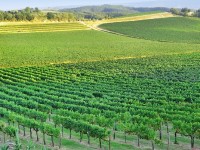
Geographic Information Systems (GIS) technology is transforming agricultural science by enabling precision farming, soil quality mapping, and climate-responsive crop planning. While still emerging in mainstream agricultural education, professionals combining GIS expertise with agricultural science knowledge earn competitive salaries—environmental scientists earn a median salary of $81,690 annually with 6% job growth projected through 2032. This technology…
Read more

Geographic Information Systems in Environmental Planning and Design

Geographic Information Systems (GIS) technology is essential for environmental planners who manage land use, conservation, and urban development. GIS allows planners to visualize spatial data, analyze environmental impacts, and make evidence-based decisions about resource management. Environmental scientists overall earn a median salary of $80,060, with specialized roles and GIS expertise often commanding higher compensation. If…
Read more

Environmental Engineering and GIS

Over the past decade, GIS has evolved from an optional specialty to an essential competency for environmental engineers and scientists. Entry-level environmental professionals with GIS skills earn $60,000-$75,000 annually, while experienced specialists command $85,000-$110,000+ according to 2024 Bureau of Labor Statistics data. Most positions require a bachelor's degree in environmental science, engineering, geography, geology, or…
Read more

Why Climate Scientists Need GIS: Skills, Applications & Career Paths

Geographic Information Systems (GIS) software is essential for climate scientists who analyze spatial data across global, regional, and local scales. GIS transforms massive climate datasets (from ice core samples to satellite imagery) into visual maps that reveal temperature trends, weather patterns, and ecological changes. Many environmental science graduate programs include GIS coursework, especially in climate…
Read more

The Future of Agriculture: Biotechnology and GM Crops

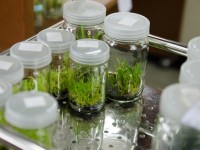
Agricultural biotechnology uses living organisms and genetic techniques to improve crop yields, enhance disease resistance, and develop sustainable farming solutions. Techniques like selective breeding have influenced agriculture for millennia; modern biotechnology emerged much more recently. Today's biotechnology careers typically require degrees in plant biology, biomedical engineering, or environmental biotechnology, with master's or doctoral degrees preferred…
Read more

The History of Agriculture: Evolution, Innovation & Environmental Impact

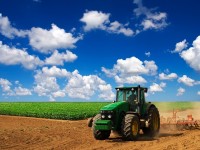
Agriculture began around 10,000 BC in the Fertile Crescent, with independent developments in regions such as the Indus Valley and Yangtze River, when humans transitioned from hunter-gatherer societies to deliberately cultivating crops and domesticating livestock. This Agricultural Revolution enabled permanent settlements, population growth, and the development of complex civilizations. Today, agriculture feeds over 8 billion…
Read more

Recent Comments by Matthew Mason

No comments by Matthew Mason yet.