Category Archives: Articles

Physics for Environmental Science: Your Complete Career Guide

Physics provides the foundational principles for understanding environmental systems, from climate modeling and renewable energy to pollution dynamics and seismology. Physicists and astronomers earn a median salary of $166,290 annually, while environmental scientists earn a median of $80,060. Both fields project 4% growth through 2034, with physics offering about 1,800 annual openings and environmental science…
Read more

Defining Zoology

Zoology is the scientific study of animal life, covering anatomy, behavior, evolution, and ecology across 2 million species. This diverse field offers career paths from wildlife research to conservation, with zoologists typically earning between $63,420 and $95,430, though salaries may range from $42,420 to over $103,000 depending on experience and specialization. Students typically need a…
Read more

Climatology: Climate Science Careers & Degrees

Climatology is the study of Earth's long-term weather patterns and the natural and human factors that influence them. Most positions require at least a master's degree in atmospheric sciences or environmental science. According to the Bureau of Labor Statistics, environmental scientists and specialists (the occupational category that includes climatologists) earned a median salary of $76,530…
Read more

What Is Geology? Studying Earth’s Structure & Careers

Geology is the study of Earth's physical structure, processes, and materials—from rocks and minerals to earthquakes and volcanoes. Geoscientists earn a median salary of $99,240 annually, with employment projected to grow 3% through 2034, creating approximately 2,000 job openings each year. Most positions require at least a bachelor's degree in geology or earth sciences, with…
Read more

Regulatory Science & Regulatory Affairs: How They Keep Us Safe

Regulatory science applies scientific methods to examine public safety impacts of new technologies, products, and treatments. It guides agencies like the FDA, EPA, and OSHA in creating evidence-based regulations that protect public health without stifling innovation. Careers span federal agencies, pharmaceutical companies, and research institutions, typically requiring bachelor's to doctoral degrees in science fields. Regulatory…
Read more

Microbiology: Careers, Degrees & Specializations

Microbiology is the scientific study of microscopic organisms including bacteria, viruses, fungi, and parasites that are too small to see with the naked eye. This field plays critical roles in medicine, environmental remediation, biotechnology, and food safety. Microbiologists earn a median salary of $84,400 annually with steady job growth projected through 2032. When you study…
Read more

What is Geoscience? Disciplines, Careers & Educational Pathways

Geoscience encompasses scientific disciplines studying Earth's physical processes, from geology and meteorology to oceanography and hydrology. Students can pursue bachelor's through doctoral degrees in geoscience disciplines, leading to careers in research, environmental consulting, education, and government agencies. The field addresses critical challenges including climate change, natural resource management, and natural disaster prediction. Table of Contents…
Read more

What is Biotechnology? History, Applications & Career Paths

Biotechnology applies biological systems and living organisms to develop products and solve problems across agriculture, medicine, and manufacturing. Originating with ancient fermentation and selective breedin g 6,000+ years ago, modern biotechnology encompasses genetic modification, bioengineering, and medical innovations. From disease-resistant crops to sustainable materials, biotechnology addresses critical challenges in food security, healthcare, and environmental protection.…
Read more

Big Data in Environmental Science: Careers, Applications & Degree Programs

Big Data refers to extremely complex datasets that require advanced computational methods to process, analyze, and extract meaningful insights. In environmental science, Big Data enables climate modeling, pollution monitoring, conservation planning, and agricultural optimization. Environmental data scientists typically earn $65,000-$130,000 depending on specialization and experience, with the field projected to grow significantly as organizations prioritize…
Read more

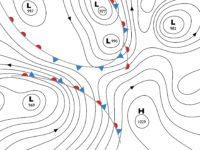
What is Meteorology? The Science of Weather and Climate

Meteorology is the atmospheric science studying weather patterns, atmospheric processes, and climate systems to predict weather conditions and understand environmental phenomena. Meteorologists work in weather forecasting, aviation safety, agricultural planning, climate research, and disaster management. The field requires strong backgrounds in physics, mathematics, and atmospheric chemistry, with career paths ranging from broadcast meteorology to environmental…
Read more