

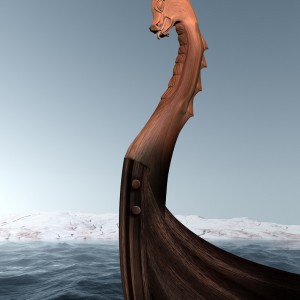
Environmental data-including pollen analysis, ice core isotopes, and soil studies-reveals that Greenland's Norse colonies persisted for several centuries during and after the Medieval Warm Period but collapsed rapidly as conditions cooled in the early 14th century. Limited adaptation to changing conditions and cultural pressures to maintain European farming traditions increased vulnerability when temperatures dropped, illustrating how social and economic choices can shape vulnerability to climate change.
The study of past peoples is called archaeology, and it's come a long way from the romantic treasure-hunter stereotype. Today's archaeologists are as much manual laborers as historians, and while most dig work turns up little of immediate interest, the discipline has evolved into something far more sophisticated. One major branch of modern archaeology is environmental archaeology-examining the same data that geographers and climatologists examine, but relating it to human history.
In Europe, most universities offer archaeology degrees, and a bachelor's is usually enough for excavation work. Students examine historical documents and environmental data as part of their undergraduate studies. Research roles typically require a master's degree, but by then, graduates already have the analytical tools they'll need. In North America, archaeology is seen as a subset of anthropology, though the theories and practices are essentially the same.


Table of Contents
- Who Were the Vikings, Really?
- Viking Greenland as an Environmental Case Study
- What the Evidence Tells Us
- Frequently Asked Questions
- Key Takeaways
Who Were the Vikings, Really?
Everyone thinks they know something about Vikings. They're either ruthless invaders who attacked and pillaged their way around 9th-century Europe, heathens sent by God to punish wrongdoers, or a misunderstood warrior society that contributed significantly to European culture. For most of the last century, history wasn't kind to them-portraying them as brutish and violent, shaped mainly by contemporary accounts such as the Anglo-Saxon Chronicle (1).
Between the 8th and 10th centuries, groups of traders, warriors, and settlers swept out of the Norwegian and Danish homelands in search of new territory and riches. Pressured by Flemish and Frankish expansion, some dispossessed landowners moved into the Baltic, into Russia, and westwards along the north European coast (1) (3, p3-4). There's a debate about why they did it. For years, researchers believed population pressure drove expansion, but recent evidence suggests they sought wealth to boost their influence back home. They didn't particularly hate Christians-they just saw easy targets in the undefended settlements and monasteries of northern and western Europe. The Vikings were excellent mercenaries for hire to French and English kings in their internal power struggles, and their religion and society were built around warfare.
While theirs was indeed a warrior society, they weren't lacking in technology or culture. They were primarily traders who moved goods across Europe, with Islamic countries, and even as far as China (2). They produced remarkable objects and valued silver more than gold for reasons we still don't fully understand-perhaps simply for aesthetic reasons.
They settled lands, too. In France, they created Normandy (3, p. 13), in England, they were granted the Danelaw by King Alfred (3, p. 10-11). They settled Scotland, Ireland, and the islands of the English Channel and Irish Sea (3, p. 13-14). As a seafaring people, they traveled to the Orkneys and Shetlands, the Faroe Islands, Iceland, Greenland, and eventually to North America (3, p. 12). We're only now beginning to understand the full extent of their impact on European genetics (4) and culture (5).
They were largely successful and became vital to the early medieval cultural landscape. So, if they thrived in most of the places they settled, what went wrong in Greenland? And what can environmental data tell us about those who lived there?
Viking Greenland as an Environmental Case Study
Environmental Methods Used
Before diving into what happened in Greenland, it's worth understanding how environmental scientists piece together historical narratives. Researchers use multiple data sources to reconstruct past climates and human activities. Palynology (pollen analysis) reveals what crops people planted and how vegetation changed over time. Ice-core isotope studies show temperature fluctuations over centuries. Radiocarbon dating establishes precise timelines for artifacts and organic remains. Soil sediment analysis tracks nutrient depletion and erosion patterns.
These methods don't work in isolation. By combining evidence from multiple sources, archaeologists can build remarkably detailed pictures of how past societies interacted with their environments-and how those environments changed them.
Early Success in a Harsh Land
Located in the far north Atlantic Ocean, Greenland is one of the world's largest islands. We know it was settled by Norse colonists from Iceland around 1000 CE-traditionally dated to 985 CE (3, p117-118). While the east coast is cold, harsh, and barren, and an enormous ice cap covers the island's center, the west coast tells a different story. Early arrivals found the topography remarkably similar to that of Norway, and they would've felt at home in the subarctic conditions. The coastal crags made it appealing for the lifestyle they already knew.
We know they hunted coastal areas for walruses and seals (7, p159; p165), and the uplands and lowlands for reindeer and local birds (7, p159). They whaled the surrounding seas (3, p119) and ate lots of fish (7, p165). Today, Greenland's famous for its salmon, and it likely was then too. Other species included muskox, arctic hare, arctic foxes, and several whale species (6).
Documentary and pollen evidence show the colonists didn't survive solely on hunting. They eventually planted crops too-on the same latitude as Norway and Iceland, this would've occurred naturally to them. Despite the arctic conditions, colonists would've had a comfortable existence in the early years.
While visitors found human and artifact remains in the 18th century, extensive excavations didn't begin until the 1990s. That's when archaeology started to reveal details about the Greenland Vikings (9). We now know they lived on a small, fertile coastal strip south of the glaciers (10), and the colony existed from the late 10th century until the mid-14th century.
The fact that it lasted several hundred years and peaked at 5,000 people (9) suggests they made it work for a long time. Yet its end remains one of archaeology's great mysteries. It failed so spectacularly and quickly that researchers still debate the exact causes. What went wrong?
Two Critical Climate Events
Here's what we do know: the colony lived through two of the last 1,500 years' most critical climate events-the Medieval Warm Period and the Little Ice Age-when the arrival of the first ships. The Medieval Warm Period (MWP) possibly lulled them into false security about Greenland's viability. Cooling conditions associated with the Little Ice Age (LIA) later critically reduced their chances of success. Most researchers now suggest that limited adaptation to changing conditions and pressures to maintain European practices contributed significantly to the colony's decline. Isotope studies of Greenland's ice sheets show profound changes on the island (16, p3-4) and periods of extreme cold for several years in the early 14th century (16, p5).
Changes to Climate and Diet
It's well documented that the North Atlantic Region underwent several periods of sudden cooling through the medieval period. The earliest may have begun around 1275 CE (12), which would've greatly affected Greenland's Vikings. Many researchers now accept that climate fluctuations of the period severely impacted what was already a borderline marginal landscape (13). While there's still disagreement about precisely when cooling intensified, documentary evidence shows that access to Greenland colonies was increasingly hampered by annual drifting ice (16, p. 4).
What the colonists did was cut down many trees-to plant crops, trade the wood, or send it back to Norway as tribute (14, p249-50). Ecology has shown us time and again how problematic this is in marginal landscapes. The soil was already fragile, and the intensive farming permitted in Europe (and to some extent in Iceland) meant Greenland's soil was exhausted quickly (8, p. 3). We also know they established dairy and sheep farms (11) and may have reduced their reliance on some hunting practices over time (14, p245-7).
They did continue eating fish, though, increasing the percentage in their diet from 20% in early years to 80% later on (7, p165). We need to be careful about assumptions here. We know their marine diet increased, and surviving bones suggest this was largely seal meat-but seal bones survive much better than other marine bones so that the picture might be incomplete.
The Role of Christianity and Cultural Identity
Cultural pressures to maintain European farming traditions may have discouraged greater reliance on hunting practices that could have provided more stable food sources. This pressure may have come from the church, the local nobility, or social attitudes that encouraged colonists to maintain European identity (16, p1-2). Some sources suggest colonists had limited contact with Inuit tribes who had successfully adapted to Arctic conditions (10). The Greenland Vikings certainly contributed to their own challenges-not just through intensive farming, but also by clearing native vegetation for farmland and cutting turf that wasn't as mineral-rich as what they were used to (14, p. 248).
Thanks to heavy reliance on livestock farming (14, p254), trees and crops may have been trampled by introduced animals during the fragile winter months. Soil evidence from lakes and rivers shows that many nutrients were washed away. We know this from extensive palynological and radiocarbon dating, which show severe changes in topography and in crops planted between the Viking arrival in the late 10th century and the early 14th century, when conditions deteriorated. They replaced native trees on a mass scale (14, p254).
These changes couldn't have come at a worse time. Cooling conditions intensified-this was once debated but is now well established (16). Temperatures dropped, shortening the growing season and the period when cattle could be left to pasture (11). Cattle and sheep need food, which was increasingly scarce as land fertility declined while the human population remained substantial. Limited adaptation to natural climate changes, along with an incomplete understanding of the extent of environmental damage, meant the colony faced increasing food stress and eventual collapse (15).
Modern Lessons for Climate Adaptation
The Viking Greenland case study offers sobering insights for today's climate challenges. It demonstrates how societies respond to environmental stress-and what happens when economic, social, and environmental factors converge. The colonists faced multiple challenges: trade isolation, sea ice blocking ship access, soil degradation, and cooling temperatures. While neighboring Inuit populations had developed successful strategies for Arctic survival, factors such as cultural identity, economic ties to Norway, and established agricultural practices may have limited the colonists' options for adapting.
Today's environmental scientists use the same analytical methods developed through studies like this one-palynology, isotope analysis, soil science-to understand current climate patterns and predict future changes. These aren't just historical curiosities. They're practical tools for conservation planning, climate change research, and understanding human resilience in the face of environmental stress.
What the Evidence Tells Us
In summary, we know Norse colonists were heavily reliant on hunting, fishing, and whaling at the beginning of Greenland's colonial period. This coincided with the Medieval Warm Period, and Greenland's climate would've been relatively favorable for colonists from Iceland and Norway. Later, they converted to Christianity, and various social, economic, and cultural factors shaped their subsistence strategies. The combination of European farming practices, environmental degradation, and a changing climate created increasing challenges.
We know they grew the same crops they would've grown in Norway, France, England, and Ireland-crops that may have been too intensive for the soil. They cut and burned trees and farmed livestock, particularly sheep and cows. All this put tremendous pressure on already fragile soil. When the climate began to change, the colony faced mounting challenges. Multiple factors-isolation from Europe, sea ice, soil depletion, shortened growing seasons-converged to make the settlement increasingly unsustainable.
A marine diet may have provided greater resilience had they relied on it more consistently from earlier periods. As it was, it made up only 20% of their diet initially but 80% in later years. Most evidence suggests they ate lots of seal meat-though this could be because seal bones survive better than other types of marine remains.
Frequently Asked Questions
What environmental data sources tell us about Viking Greenland?
Archaeologists use pollen analysis, ice-core isotope studies, radiocarbon dating, and soil-sediment analysis to understand Norse Greenland. These methods reveal crop types, temperature changes, dietary shifts, and land use patterns that explain why the colonies eventually failed after surviving for several centuries. By combining multiple data sources, researchers build detailed pictures of how the colonists interacted with their environment and how climate change affected their sustainability.
Why did the Greenland Norse colonies fail when other settlements survived?
The Greenland colonies collapsed due to multiple converging factors. Cooling conditions in the 14th century shortened growing seasons and increased sea ice, making ship access difficult. Intensive European farming practices exhausted fragile Arctic soil. The colonists cut down trees for crops and tribute, further damaging the ecosystem. Trade isolation from Norway reduced access to essential goods. Unlike Inuit populations, the Norse maintained agricultural practices that became increasingly unsustainable as conditions changed. No single factor explains the collapse-it was a combination of environmental, economic, and social challenges.
What is palynology, and how does it help archaeologists?
Palynology is pollen analysis-studying ancient pollen preserved in sediment layers. It reveals what plants grew in an area over time, showing when Norse colonists cleared native vegetation for crops and how soil fertility declined. Pollen evidence from Greenland shows the colonists replaced native trees with European crops on a large scale between the 10th and 14th centuries. This data helps archaeologists understand the environmental impact of past human activities and how landscapes changed.
How does the Medieval Warm Period relate to the Vikings?
The Medieval Warm Period (roughly 950-1250 CE) created relatively favorable conditions for Viking expansion, including Greenland colonization traditionally dated to 985 CE. Warmer temperatures initially allowed European-style farming to succeed, thanks to longer growing seasons and milder conditions. However, this may have encouraged agricultural practices that became unsustainable when cooling intensified in the 14th century. The MWP created conditions that initially made Greenland settlement viable but set the stage for later challenges when climate patterns shifted.
What modern lessons does Viking Greenland teach about climate change?
Norse Greenland demonstrates how climate shifts combined with human decisions and constraints determine outcomes. Economic practices and cultural traditions that work in certain conditions can become vulnerabilities during environmental change. The case study shows the importance of flexibility, diversified subsistence strategies, and understanding local ecological limits. Today's climate challenges similarly require adaptive approaches and recognition that established practices may need to be modified. Environmental archaeology provides valuable context for understanding how societies have historically responded to climate variability and what factors contributed to resilience or vulnerability.
Key Takeaways
- Multiple Evidence Types: Environmental archaeology combines pollen analysis, ice-core isotope studies, radiocarbon dating, and soil-sediment analysis to reconstruct past climates and human impacts with remarkable detail.
- Complex Collapse Factors: Norse Greenland's decline resulted from converging challenges-14th-century cooling, shortened growing seasons, sea ice blocking trade access, soil exhaustion from intensive farming, and limited adaptation to changing conditions.
- Cultural and Economic Context: The maintenance of European farming traditions and economic ties to Norway shaped colonists' choices. At the same time, factors such as trade isolation and environmental constraints limited their adaptation options as conditions changed.
- Environmental Degradation: Deforestation, intensive livestock farming, and crop planting on fragile Arctic soil reduced the ecosystem's resilience and created vulnerability when climate patterns shifted in the 14th century.
- Modern Applications: Environmental archaeology methods developed through studies such as Norse Greenland now inform climate change research, conservation planning, and the understanding of societal responses to environmental stress-providing valuable historical context for current challenges.
Fascinated by how environmental science reveals hidden histories? Explore careers in environmental archaeology, climatology, and related fields where you can apply these analytical methods to answer pressing questions about our planet's past and future.

- What Is Parasitology? The Science of Parasites Explained - November 19, 2018
- Desert Ecosystems: Types, Ecology, and Global Importance - November 19, 2018
- Conservation: History and Future - September 14, 2018
Related Articles



Featured Article
Natural Gas 101: Pros, Cons & Career Guide