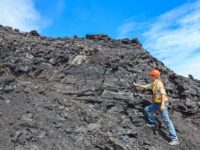


Geochemists apply chemistry principles to study Earth's composition, from mineral deposits to pollution patterns. They earn a median salary of $95,290 annually, with the top 10% earning $201,590 or more. The broader geoscientist occupation shows 6% job growth projected through 2032, combining laboratory analysis with fieldwork across industries like mining, environmental consulting, and government research.
If you're fascinated by the chemistry behind our planet-how minerals form deep underground, why certain pollutants persist in groundwater, or what chemical signatures reveal about ancient climates-geochemistry offers a career where analytical thinking meets real-world impact. This specialized branch of geoscience sits at the intersection of chemistry, geology, and environmental science.
Geochemists don't just work in laboratories. You'll find them analyzing rock samples in remote mining sites, tracking contamination sources in urban watersheds, testifying as expert witnesses in environmental litigation, and teaching the next generation of earth scientists. It's a field that demands both technical precision and big-picture thinking-you might spend your morning calibrating a mass spectrometer and your afternoon explaining your findings to non-scientists.
Whether you're drawn to the challenge of finding sustainable mineral resources, the detective work of environmental forensics, or the intellectual depth of academic research, geochemistry offers diverse pathways. Let's explore what this career really involves, from day-to-day responsibilities to the education you'll need and the rewards you can expect.
What Does a Geochemist Do?
Geochemists apply chemistry principles to understand Earth's physical and chemical processes. Your work centers on analyzing how elements and compounds interact within rocks, minerals, water, soil, and the atmosphere. This expertise is essential wherever geology and chemistry intersect-and that intersection spans more industries than most people realize.
The largest employer of geochemists is the natural resources sector, particularly mining and petroleum. In these roles, you'll analyze geological data using GIS mapping and satellite imagery to identify promising areas for mineral deposits or fossil fuel reserves. You'll examine core samples from drilling operations to determine the chemical composition and concentration of valuable materials. Much of this work happens in offices and laboratories, though field visits to potential or active extraction sites are common.
On the opposite end of the spectrum, many geochemists focus on environmental protection and remediation. You might investigate contaminated sites to determine the sources of pollution-was it industrial negligence, natural processes, or gradual accumulation? Your chemical analysis provides the evidence needed for environmental cleanup projects or legal proceedings. You'll track how pollutants move through soil, groundwater, and surface water, predicting their long-term environmental impact.
Academic geochemists pursue fundamental research questions. How do chemical processes drive plate tectonics? What can trace elements in ancient rocks tell us about past climates? How do microorganisms alter mineral chemistry in extreme environments? In these roles, you'll design experiments, mentor graduate students, secure research funding, and publish your findings in scientific journals.
Regardless of your specialization, you'll work extensively with analytical instruments. Gas chromatograph-mass spectrometers help you identify organic compounds. Differential scanning calorimeters measure thermal properties. Carbon analyzers and thermogravimetry readers provide precise elemental data. X-ray fluorescence spectrometers reveal mineral composition. Learning to operate, calibrate, and troubleshoot this equipment is central to your daily work. You'll also spend significant time with data analysis software, statistical modeling programs, and specialized geochemical databases.
The job also requires strong communication skills. You'll write detailed technical reports, present findings to colleagues or clients, and sometimes explain complex chemistry to non-scientists-whether that's a mining company executive, a judge and jury, or a community concerned about local water quality.
Where Does a Geochemist Work?
Geochemists work across diverse industries, each offering distinct work environments and focuses. According to the Bureau of Labor Statistics, here's how the workforce is distributed across major sectors:
| Industry Sector | % of Workforce | Typical Work Focus | Work Environment |
|---|---|---|---|
| Architecture, Engineering & Related Services | 26% | Environmental consulting, site assessments, contamination analysis | Office-based with regular field site visits |
| Mining, Quarrying & Oil/Gas Extraction | 24% | Resource prospecting, ore quality analysis, extraction optimization | Mix of office analysis and remote field locations |
| Federal Government | 7% | Regulatory oversight, research (NASA, NOAA, EPA, USGS) | Government facilities, labs, and field research sites |
| State Government | 7% | Environmental monitoring, state geological surveys | State agencies and regional field offices |
| Colleges & Universities | 6% | Research, teaching, graduate student mentorship | University labs, classrooms, and field research |
Your day-to-day work environment depends heavily on your sector. In mining and consulting, expect a 60/40 split between office work and field assignments. Field work might involve collecting samples in challenging terrain-mountainous regions, desert environments, or offshore platforms. Physical stamina matters, as does comfort with variable weather conditions and remote locations. Travel can be extensive, especially when projects span multiple sites or international operations.
Environmental geochemists working for consulting firms or government agencies often maintain more predictable schedules. You'll spend mornings in the laboratory running analyses and afternoons writing reports or meeting with clients. Field visits are usually local and planned well in advance. Government positions typically offer standard 40-hour workweeks with good work-life balance.
Academic geochemists enjoy the most schedule flexibility but face the pressure of "publish or perish." You'll balance teaching responsibilities, grant writing, laboratory management, and your own research. Summers often include fieldwork at remote research sites-volcanoes in Iceland, hot springs in Yellowstone, ocean-drilling platforms, or cave systems. Academic positions allow you to pursue questions that intrigue you, though funding constraints always shape research directions.
Federal agencies like NASA, NOAA, the Environmental Protection Agency, and the U.S. Geological Survey (USGS) employ geochemists for diverse missions-studying Martian soil chemistry, monitoring ocean acidification, investigating hazardous waste sites, or mapping geological resources. These roles combine research with public service and often provide excellent benefits and job security.
Regardless of the sector, modern geochemistry means significant computer time. You'll use specialized software for spectral analysis, geochemical modeling, statistical interpretation, and three-dimensional visualization of subsurface formations. Remote sensing and satellite data analysis have become increasingly central to prospecting and environmental monitoring work.
What Is the Average Geochemist Salary?
Geochemists fall under the Bureau of Labor Statistics category of geoscientists, which provides comprehensive salary data. As of May 2023, geoscientists earned a median annual salary of $95,290. This represents the midpoint-half of geoscientists earn more, half earn less.
The salary range is substantial, reflecting differences in experience, education, specialization, and geographic location. The lowest 10% of geoscientists earned $51,890 or less, typically representing entry-level positions or roles in lower-cost-of-living areas. The highest 10% earned $201,590 or more-usually senior researchers, consultants, or those in specialized petroleum geochemistry roles.
Industry sector significantly impacts earnings. As of May 2023, mining, quarrying, and oil and gas extraction offered the highest median salary at $125,670, driven by strong demand for expertise in resource identification and extraction optimization. Federal government positions offered the second-highest median salary of $104,210, along with comprehensive benefits packages. Architecture and engineering services firms-the largest employers of geochemists-typically paid closer to the national median.
Geographic location also matters. States with active mining operations, major oil and gas production, or high concentrations of environmental consulting firms generally offer higher salaries. Positions in Alaska, Texas, Oklahoma, and Colorado often command premium pay due to industry concentration and sometimes challenging work conditions.
Your level of education strongly influences your earning potential. Bachelor's degree holders typically start in the $50,000-$65,000 range as junior geochemists or laboratory technicians. A master's degree opens opportunities in the $70,000-$90,000 range for project management and specialized analysis roles. PhD holders, especially those with postdoctoral experience, can enter at $85,000-$110,000 in industry or secure tenure-track academic positions with similar starting salaries plus research funding opportunities.
Experience compounds these advantages. A geochemist with 10+ years of experience and specialized expertise-whether in rare earth element extraction, environmental forensics, or isotope geochemistry-can command salaries well into the six figures, particularly in consulting roles or as senior scientists in energy companies.
What Is the Job Demand for Geochemists?
The Bureau of Labor Statistics projects 6% growth for geoscientist positions between 2022 and 2032, creating approximately 2,400 new jobs over the decade. While this growth rate is roughly average compared to all occupations, the underlying drivers suggest stable long-term demand.
Several factors support the continued need for geochemistry expertise. The global transition to renewable energy technologies requires rare earth elements and specialty minerals-lithium for batteries, cobalt for electric vehicles, platinum group metals for hydrogen fuel cells. Identifying and sustainably extracting these materials demands geochemical analysis. Traditional energy sources remain economically important during the transition period, sustaining their roles in petroleum geochemistry.
Environmental protection and remediation create growing opportunities. Aging infrastructure, legacy contamination from past industrial activity, and increasing regulatory scrutiny drive demand for geochemists who can characterize pollution, determine liability, and design cleanup strategies. Climate change research expands academic and government positions studying carbon cycling, changes in ocean chemistry, and long-term climate records preserved in geological formations.
Competition for positions can be significant, especially for desirable roles in federal agencies or prestigious research universities. The most opportunities exist for geochemists willing to work in remote locations for mining or petroleum companies or those who develop expertise in high-demand specializations like environmental forensics or critical mineral exploration.
Job security varies by sector. Government and academic positions offer the most stability but are hardest to obtain. Private sector consulting and mining roles can be cyclical, tied to commodity prices and economic conditions. Diversifying your expertise-say, combining petroleum geochemistry with environmental remediation-improves your employment resilience.
The Bureau of Labor Statistics expects retirements to create additional openings beyond the 6% growth projection, as the current geoscientist workforce includes many professionals nearing retirement age. This demographic trend may create opportunities for early-career geochemists over the next 10-15 years.
What Are the Education Requirements to Become a Geochemist?
Becoming a geochemist requires a strong foundation in the physical sciences, built progressively from high school through graduate education. Here's what to expect at each stage:
| Education Level | Typical Duration | Core Focus Areas | Career Outcomes |
|---|---|---|---|
| High School Preparation | 4 years | Chemistry, physics, biology, math through calculus, computer science | College admission preparation; consider summer science programs |
| Bachelor's Degree | 4 years | Geochemistry, chemistry, geology, physics, calculus, statistics, GIS | Entry-level positions, lab technician roles, preparation for graduate school |
| Master's Degree | 2-3 years | Specialized geochemistry, advanced analytical methods, thesis research | Project management, consulting, government research positions, industry specialists |
| PhD | 4-6 years | Original research, dissertation, advanced theory, grant writing, teaching | Academic careers, senior research positions, industry leadership, government senior scientists |
| Postdoctoral Research | 2-4 years | Advanced research, publication record building, grant acquisition | Competitive for tenure-track positions, research institution leadership |
High School Foundation
If you're considering geochemistry, excel in chemistry, physics, and mathematics during high school. Take the most advanced science and math courses available-AP Chemistry, AP Physics, and mathematics through calculus if possible. Biology provides a useful background, though it's less central than chemistry and physics. Information technology and computer science courses prepare you for the data analysis and modeling you'll do throughout your career.
Summer science programs, particularly those focused on earth sciences or chemistry, let you test your interest before committing to a college major. These experiences also strengthen college applications and help you build connections with professors who can guide your educational planning.
Undergraduate Education
Most entry-level geochemistry positions require at least a bachelor's degree. You have several pathways: some universities offer specific degrees in geochemistry or environmental chemistry, while others require you to major in chemistry, geology, or general geosciences, with appropriate electives and specialization.
Regardless of your specific major, certain courses are essential. You'll need general, organic, and physical chemistry, as well as analytical chemistry. Geology coursework should cover mineralogy, petrology, and structural geology. Physics is required for at least two semesters. Mathematics, including calculus and differential equations, is necessary for understanding geochemical models. Statistics and data analysis become increasingly important given the modern emphasis on large datasets.
Don't overlook supporting skills. Geographic Information Systems (GIS) courses are nearly essential-spatial analysis appears in almost every geochemistry application. Computer programming, even basic Python or R, dramatically expands your analytical capabilities. Technical writing courses prepare you for the extensive reporting requirements in any geochemistry career.
Seek internships or research assistantships during your undergraduate years. These experiences are often more important than specific courses when applying for jobs or graduate programs. Summer internships with mining companies, environmental consulting firms, government geological surveys, or university research groups provide hands-on experience with analytical instruments and real-world projects. Many students find that internships clarify which geochemistry specialization interests them most.
Graduate Education
While some entry-level positions require only a bachelor's degree, most professional geochemistry work requires at least a master's degree. Graduate programs typically take 2-3 years and culminate in a thesis based on original research. You'll take advanced courses in your specialization-perhaps isotope geochemistry, organic geochemistry, aqueous geochemistry, or environmental geochemistry-while developing expertise in sophisticated analytical techniques.
Master's programs often include teaching assistantships, giving you experience explaining complex concepts and mentoring undergraduates. Research assistantships support your thesis work while building your publication record. Strong thesis research, ideally resulting in at least one peer-reviewed publication, significantly improves your competitiveness for industry positions or PhD programs.
PhD programs demand 4-6 additional years beyond the bachelor's degree. You'll take comprehensive exams covering broad geochemistry knowledge, develop an original research dissertation, and typically publish multiple papers in peer-reviewed journals. Teaching experience is expected. PhD work requires intellectual independence-you must identify important research questions, design studies to address them, and defend your conclusions before expert committees.
For competitive tenure-track positions at research universities, a postdoctoral research appointment (2-4 years) is commonly pursued. These positions let you expand your research portfolio, develop new collaborations, and build the publication record essential for academic careers. Postdocs also provide time to develop grant-writing skills and sometimes gain international research experience.
Specialization Considerations
As you advance through graduate education, you'll specialize. Petroleum geochemistry focuses on the transformation of organic matter into hydrocarbons. Environmental geochemistry examines pollution, remediation, and natural cycling of elements. Isotope geochemistry uses radioactive decay and stable isotope variations to understand processes and timescales. Mineralogical geochemistry studies the formation and stability of minerals. Your specialization choice shapes your career options, so consider it carefully based on your interests and job market realities.
Geochemistry - Related Degrees
Essential Skills for Geochemists
Success as a geochemist requires a combination of technical expertise and professional competencies. Here's what you'll need to develop:
Technical Skills
Analytical Chemistry Expertise: You must understand how analytical instruments work, not just how to operate them. When a mass spectrometer produces unexpected results, you need to troubleshoot whether the problem is instrumental drift, sample contamination, matrix effects, or actual geological variation. This deep understanding comes from coursework combined with extensive hands-on experience.
Data Analysis and Statistics: Modern geochemistry generates enormous datasets. You'll use statistical software to identify trends, test hypotheses, and assess data quality. Understanding error propagation, detection limits, and statistical significance is essential for drawing valid conclusions from analytical data.
Geochemical Modeling: Thermodynamic calculations predict mineral stability, chemical speciation, and reaction pathways. Software like PHREEQC, Geochemist's Workbench, or FactSage requires you to understand the underlying theory while interpreting model outputs critically. Models guide hypotheses but never replace careful experimental or field validation.
Computer Programming: While not every geochemist writes complex code, basic programming skills in Python, R, or MATLAB dramatically expand your analytical capabilities. You'll automate repetitive calculations, create custom data visualizations, and sometimes develop specialized analysis tools for your research or consulting work.
GIS and Spatial Analysis: Geochemical data almost always have spatial context. You'll create maps showing element concentrations, contamination plumes, or resource distributions. Understanding spatial statistics and geostatistics helps you interpolate between sample points and assess sampling adequacy.
Professional and Soft Skills
Scientific Writing: You'll write constantly-technical reports for clients, papers for peer review, grant proposals for funding agencies, and regulatory documents for government oversight. Clear, precise writing that explains complex chemistry to diverse audiences is invaluable. Learn to present data visually through effective figures and tables.
Critical Thinking and Problem-Solving: Geochemical data rarely provide simple answers. You must integrate information from multiple sources, recognize when results don't make sense, and devise creative approaches to answer difficult questions. The best geochemists combine methodical, systematic thinking with a willingness to challenge assumptions.
Attention to Detail: Small errors compound quickly in geochemistry. Mislabeling one sample, transposing digits in a calculation, or contaminating a clean room can invalidate weeks of work. Developing careful laboratory practices and systematic data management prevents costly mistakes.
Communication and Collaboration: Most projects involve teams-fellow geochemists, hydrologists, geologists, engineers, and often stakeholders from industry, government, or affected communities. You must explain your findings clearly to non-specialists, listen to others' perspectives, and integrate diverse expertise into comprehensive solutions.
Project Management: As you advance, you'll oversee projects involving multiple analysts, tight deadlines, and budget constraints. Prioritizing tasks, delegating effectively, and keeping projects on track require organizational skills beyond technical expertise.
Adaptability: Field conditions rarely match plans. Equipment fails at inconvenient times. Research results contradict your hypotheses. Regulatory requirements change mid-project. Successful geochemists adapt smoothly to changing circumstances while maintaining scientific rigor and meeting commitments.
Career Path and Advancement
Geochemistry careers typically follow these progression patterns, though timelines and specific titles vary by sector:
Entry Level (0-3 years)
With a bachelor's degree, you'll likely start as a laboratory technician, junior geochemist, or research assistant. Your work focuses on sample preparation, running routine analyses under supervision, and data entry. You're learning to operate instruments, follow laboratory safety protocols, and implement quality control procedures. Salaries typically range from $45,000-$65,000 depending on location and sector.
Master's degree holders often enter mid-level analyst positions with more independence. You might design sampling programs, conduct fieldwork, interpret results, and prepare preliminary reports. Starting salaries of $65,000 to $85,000 are common.
Mid-Career (3-10 years)
With experience and proven competence, you advance to project geochemist or senior analyst roles. You'll manage complete projects from design through reporting, supervise junior staff, and serve as the primary technical expert for clients or research sponsors. You begin specializing-developing expertise in environmental forensics, petroleum systems, mineral exploration, or academic research.
This stage often involves increasing interaction with clients or stakeholders. In consulting, you might present findings to corporate clients or regulatory agencies. In mining, you'll recommend sites for detailed exploration. In academia, you're publishing regularly and mentoring graduate students. Salaries range from $75,000-$110,000, sometimes higher for those in petroleum geochemistry or with rare specializations.
Senior Level (10+ years)
Senior geochemists lead programs rather than individual projects. You might become a principal scientist at a consulting firm, directing multiple project teams and contributing to business development. In mining or petroleum companies, you could become a chief geochemist, overseeing all geochemical aspects of operations. In government, you advance to senior research scientist or program manager positions.
Academic careers follow a parallel track: assistant professor (entry level for PhD holders), associate professor (usually after 6-7 years with strong publication and teaching records), and full professor (senior status with established research programs and national recognition). At top research universities, full professors with active research groups often have total compensation exceeding $150,000 when research grants and summer salary are included.
Senior-level work emphasizes leadership, strategic thinking, and synthesis. You're identifying emerging opportunities, mentoring the next generation, and often serving as an expert witness or consultant on high-stakes projects. Compensation at this level ranges from $110,000 to over $180,000, with petroleum and mining geochemistry at the high end.
Alternative Career Paths
Not all geochemists follow linear progression. Some transition into related fields-such as environmental policy, science journalism, patent law, or science education. Your analytical skills, scientific literacy, and problem-solving abilities transfer well to these areas. Others move into management, leading entire departments or consulting practices rather than focusing primarily on technical work.
Entrepreneurial geochemists sometimes establish consulting firms, particularly those with expertise in environmental forensics or specialized analytical services. This path offers autonomy and potentially higher income but requires business skills beyond technical expertise.
Is Geochemistry Right for You?
Geochemistry suits people with specific interests and temperaments. Consider these questions as you evaluate whether this career aligns with your goals and preferences:
Self-Assessment Questions
About your interests and motivations:
- Do you find satisfaction in solving complex puzzles using analytical data?
- Are you curious about how natural systems work at a chemical level?
- Does the idea of contributing to resource discovery or environmental protection appeal to you?
- Are you comfortable with ambiguity and incomplete information?
- Do you enjoy both laboratory precision and fieldwork challenges?
About your work style preferences:
- Do you prefer a mix of independent work and team collaboration?
- Are you detail-oriented and patient with repetitive analytical procedures?
- Can you maintain focus during long data analysis sessions?
- Do you want work that balances office time, laboratory work, and field assignments?
- Are you willing to work in remote locations or travel frequently (if pursuing mining or exploration roles)?
About your career priorities:
- Do you value intellectual challenge more than high income potential (academic path), or is compensation a higher priority (petroleum/mining path)?
- Would you prefer steady employment with a predictable schedule (government), or are you comfortable with project-based work and some uncertainty (consulting)?
- Is work-life balance essential, or are you willing to work irregular hours during field campaigns or project deadlines?
- Do you want to stay in one location, or are you open to relocating for better opportunities?
Choosing Your Specialization
If geochemistry appeals to you, consider which specialization fits best:
Choose petroleum or mining geochemistry if: You're comfortable working for extractive industries, motivated by compensation, interested in exploration and resource economics, and willing to work in remote locations. This path offers the highest salaries but can involve ethical considerations about environmental impact and may be less stable due to commodity price fluctuations.
Choose environmental geochemistry if: You're driven by environmental protection, interested in contamination and remediation, comfortable working at the science-policy interface, and value seeing direct positive impact from your work. Salaries are moderate, but you'll find abundant opportunities in consulting and government.
Choose academic research if: You're intellectually curious, excited by fundamental questions, willing to invest years in graduate education and postdoctoral work, and comfortable with grant writing and teaching responsibilities. Academic careers offer intellectual freedom but require persistence and can be highly competitive.
Choose government research if: You want to contribute to public service, value job security and work-life balance, are interested in long-term monitoring or regulatory work, and prefer collaborative environments. Government positions offer stability but typically require patience with bureaucracy and may offer lower peak salaries than private sector roles.
Challenges and Rewards
Challenges you'll face: Geochemical analysis can be tedious-running the same procedure dozens of times, troubleshooting finicky instruments, and managing mountains of data. Field work involves physical demands, uncomfortable conditions, and time away from home. Competition for the best positions is significant. Academic pressure to publish constantly can be stressful. Private sector work may involve ethical tensions between scientific findings and client preferences.
Rewards you'll experience: Geochemistry offers genuine intellectual stimulation. You'll work on problems that matter-finding resources society needs, protecting environmental health, and understanding our planet's past and future. The work combines hands-on laboratory skills with big-picture thinking. You'll work with smart, dedicated colleagues. Many roles offer geographic and project diversity, preventing routine. Contributing to scientific knowledge or solving real-world problems provides deep professional satisfaction.
If analytical thinking energizes you, if you're drawn to both chemistry and earth science, and if you want work that combines technical precision with real-world impact, geochemistry deserves serious consideration. The education commitment is substantial, but for those well-suited to the field, it's a rewarding career.
Professional Organizations for Geochemists
Joining professional organizations provides networking opportunities, career development resources, and connections to the broader geochemistry community. Consider these major organizations:
- International Association of Geochemistry (IAGC): This global organization promotes professional standards through sponsored conferences, peer-reviewed publications, and collaborative working groups. Membership connects you with geochemists worldwide and provides access to the journal Applied Geochemistry. Student memberships are available at reduced rates, and the organization offers travel grants to help early-career geochemists attend international conferences.
- Geochemical Society (GS): Dedicated to advancing knowledge of geochemistry across the solar system, GS publishes the respected journal Geochimica et Cosmochimica Acta. The organization brings together researchers from fields ranging from petrochemistry to planetary science to conservation biology. Annual meetings feature cutting-edge research presentations and extensive networking opportunities. Student members gain access to career resources and mentorship programs.
- Association of Applied Geochemists (AAG): With a strong focus on practical applications, AAG represents geochemistry interests across government, industry, and academia. The organization emphasizes environmental analysis, mineral exploration, and applied research. Regional chapters host local events, and the international symposium (held biennially) is a premier venue for applied geochemistry. Student chapters at many universities provide opportunities to connect with peers and practicing geochemists.
These organizations typically offer student memberships at significantly reduced rates-often $20-40 annually compared to $100-200 for professional members. Membership benefits usually include journal subscriptions (print or online), conference registration discounts, job boards, and professional development webinars. Active participation, particularly in student chapters, helps you build professional networks that prove valuable when seeking internships, graduate programs, or your first professional position.
Frequently Asked Questions
What's the difference between a geochemist and a geologist?
While both study Earth's materials and processes, geologists focus on physical properties, structures, and formation mechanisms, while geochemists concentrate on chemical composition and reactions. Geologists might map rock formations and describe their mineralogy, whereas geochemists analyze those same rocks to determine precise elemental abundances, isotope ratios, or trace organic compounds. Many professionals combine both approaches, and the fields overlap significantly in areas like economic geology and environmental science.
Can I work as a geochemist with only a bachelor's degree?
Entry-level positions exist with a bachelor's degree, typically as laboratory technicians or junior analysts. However, advancement opportunities are limited without graduate education. Most professional geochemistry roles-such as project management, independent consulting, government research, or academic positions-require at least a master's degree. If you're uncertain about committing to graduate school, consider working for 1-2 years after your bachelor's to gain experience and clarify your career interests before pursuing further education.
Do geochemists spend most of their time in laboratories?
Laboratory time varies considerably by specialization. Academic and government research geochemists might spend 60-80% of their time in labs, especially during intensive analytical phases of projects. Mining and petroleum geochemists balance lab work with fieldwork and office-based data interpretation, with about 40% in the lab, 30% in the field, and 30% in the office. Environmental consultants might spend only 30-40% of their time in labs, with the remainder split between fieldwork and report writing. As you advance in your career, laboratory time typically decreases as management and client interaction increase.
Is the job market competitive for geochemists?
Competition varies by specialization and geographic location. Academic positions, particularly at research universities, are highly competitive-often 100+ applicants for a single tenure-track opening. Government research positions at prestigious agencies like USGS or NASA are similarly competitive. Private sector positions in environmental consulting are more accessible, though senior roles still face significant competition. Mining and petroleum positions fluctuate with commodity prices and economic cycles. Your competitiveness improves with specialized skills, a strong publication record (for research roles), relevant internship experience, and a willingness to relocate.
How does climate change affect geochemistry careers?
Climate change creates both opportunities and shifts in geochemistry work. The growing emphasis on renewable energy technologies is driving demand for geochemists who can locate and assess deposits of lithium, cobalt, rare-earth elements, and other materials essential to batteries and electronics. Carbon sequestration research requires geochemists to study how CO₂ interacts with subsurface formations. Ocean acidification monitoring expands opportunities in marine geochemistry. Simultaneously, long-term trends may reduce the role of petroleum geochemistry, though this transition will occur gradually over decades. Overall, climate change increases the importance of geochemistry while shifting where that expertise is most needed.
Key Takeaways
- Diverse Career Applications: Geochemists work across mining, environmental consulting, government research, and academia, applying chemistry to understand Earth's processes from resource exploration to pollution investigation.
- Strong Compensation with Specialization Premium: The median salary is $95,290, with petroleum and mining geochemists earning $125,000+ and top professionals earning $ 200,000+. Entry-level positions start around $50,000-$65,000.
- Graduate Education Expected: While bachelor's degrees open entry-level opportunities, most professional roles require master's degrees (2-3 years), and academic careers demand PhDs (4-6 additional years) plus postdoctoral experience.
- Technical and Communication Skills Both Essential: Success requires mastering analytical tools, data analysis, and geochemical modeling, while developing strong writing and presentation skills to explain findings to diverse audiences.
- Steady Demand with Evolving Focus: The field projects 6% growth through 2032, driven by critical mineral exploration, environmental remediation needs, and climate research. Career opportunities shift toward sustainable resources and environmental applications.
Ready to explore your path in geochemistry? Discover degree programs that combine your passion for chemistry with earth science, from undergraduate majors to specialized graduate research.

2023 US Bureau of Labor Statistics salary and job growth figures for geoscientists reflect national data, not school-specific information. Conditions in your area may vary. Data accessed January 2026.