
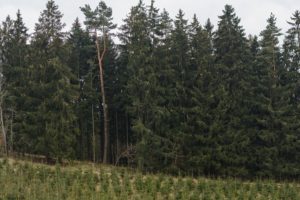
Agroforesters integrate trees and shrubs into agricultural landscapes to enhance crop yields, improve soil health, and support ecosystem resilience. These professionals earn a median annual salary of approximately $64,000, with top earners who may exceed $90,000–$100,000. The field requires at least a bachelor's degree in forestry, agricultural science, or environmental management, with opportunities spanning government conservation roles, private agricultural consulting, and climate adaptation initiatives.
If you're passionate about sustainable agriculture and environmental conservation, agroforestry offers a unique career path that bridges both worlds. Unlike traditional forestry or standard farming, agroforesters design systems where trees, crops, and sometimes livestock work together—creating healthier ecosystems that produce more while using fewer resources.
The field has evolved significantly since the mid-20th century, when intensive monoculture farming dominated agricultural practice. Today, as climate change impacts soil health and water availability, agroforesters are increasingly essential to developing resilient food systems. You'll find yourself working at the intersection of ecology, economics, and practical land management.
What Does an Agroforester Do?
Agroforesters plan and manage agricultural systems that integrate woody plants—trees and shrubs—with crops or livestock. The goal isn't simply to increase yields (though that often happens). It's about creating agricultural systems that actually improve over time, rather than depleting soil and requiring ever-increasing inputs.
Here's how it works in practice. Coffee plants thrive in partial shade, so an agroforester might design a system where coffee grows beneath taller nitrogen-fixing trees. The trees provide shade, their fallen leaves enrich the soil, and their roots help prevent erosion on hillsides. Everyone benefits—the farmer gets better coffee yields, the soil gets healthier, and local wildlife gains habitat corridors.
Your work involves much more than just planting trees alongside crops. You'll analyze soil composition, water flow patterns, and microclimates. You'll research which plant combinations work well together and which compete for resources. You'll collaborate with food scientists, agricultural engineers, and farmers to implement practical systems that can be maintained long-term.
Agroforesters also work extensively on environmental remediation projects. When farmland has been depleted through decades of intensive cultivation, you'll select and plant species specifically chosen to restore soil nutrients, rebuild organic matter, and reestablish beneficial microbial communities. This restoration work is becoming increasingly important as climate change accelerates soil degradation in many agricultural regions.
Field boundaries offer another application. Those tree lines dividing agricultural fields aren't just property markers—when designed by an agroforester, they serve multiple functions. They act as windbreaks, protecting crops; provide habitat for beneficial insects and birds that control pests naturally; and can even generate secondary income through timber or fruit production.
Where Does an Agroforester Work?
Agroforesters work across multiple sectors, making this a relatively flexible career in terms of employment options. Your specific role will determine whether you spend more time outdoors in the field or in an office using planning software, though most positions involve both.
According to Bureau of Labor Statistics data, agroforesters fall within the conservation scientists and foresters occupational category. The largest employment sector is agricultural support services, which employs roughly 24% of professionals in this field. In these roles, you might work with large farming operations developing sustainable land management plans, or with smaller farms implementing agroforestry techniques to improve productivity and environmental outcomes.
Government agencies represent another significant employer. State governments hire about 21% of conservation scientists and foresters, while the federal government employs 9%, and local governments another 9%. In these positions, you'll typically work on public lands—state and national forests, parks, and conservation areas. You might manage programs that assist private landowners in adopting conservation practices, enforce environmental regulations, or develop regional land use plans.
The forestry industry itself employs about 14% of professionals, where agroforesters work alongside traditional foresters to integrate commercial timber production with other land uses. This might involve designing systems that produce timber while also supporting wildlife habitat or maintaining watershed health.
Private consulting offers opportunities for experienced agroforesters. You'll work with diverse clients—individual landowners, agricultural cooperatives, development companies, or conservation organizations—providing expert advice on land management decisions. Consulting roles typically require several years of experience and strong communication skills, since you'll need to explain complex ecological concepts to clients with varying levels of technical knowledge.
Typical Job Responsibilities
Your day-to-day work as an agroforester varies significantly depending on your specific position and the season, but several core responsibilities appear across most roles:
Site Assessment and Planning: You'll conduct detailed analyses of properties where agroforestry systems will be implemented. This involves soil testing, topographic mapping, hydrological assessment, and evaluating existing vegetation. You'll use GIS software to create detailed maps showing planting zones, water management features, and access routes.
System Design: Based on your assessment, you'll develop comprehensive plans showing which species to plant, where to place them, and how to manage them over time. Your designs must account for the client's goals (whether food production, timber harvest, wildlife habitat, or some combination), local climate patterns, and available resources for implementation and maintenance.
Species Selection: You'll research and select appropriate tree, shrub, and crop species for each specific site. This requires deep knowledge of plant ecology—understanding which species fix nitrogen, which tolerate shade or drought, which attract beneficial insects, and which combinations work synergistically. You'll often consult with soil and plant scientists on complex projects.
Monitoring and Adaptive Management: After implementation, you'll visit sites regularly to monitor growth, assess system health, and identify problems early. Agroforestry systems evolve over years and decades, so you'll adjust management strategies based on observed outcomes. This long-term perspective distinguishes agroforestry from conventional agriculture.
Data Collection and Analysis: You'll maintain detailed records of system performance, including growth rates, yields, changes in soil quality, pest and disease incidence, and water use. This data informs future design decisions and helps demonstrate the economic and environmental benefits of agroforestry to stakeholders and policymakers.
Stakeholder Communication: Whether working with farmers, government officials, or conservation groups, you'll spend significant time explaining your recommendations and building support for implementation. This might involve preparing reports, delivering presentations, or conducting workshops teaching landowners how to maintain their agroforestry systems.
What Is the Average Agroforester Salary?
Agroforesters, classified under conservation scientists and foresters by the Bureau of Labor Statistics, earned a median annual salary of approximately $64,420 as of May 2022. However, compensation varies considerably based on experience, specialization, and employer type.
Entry-level positions with bachelor's degrees typically start in the $40,000-$50,000 range. These roles often involve more fieldwork than planning, as you build practical experience understanding how different systems perform in various conditions.
Mid-career professionals with 5-10 years of experience and strong technical skills in areas like GIS, environmental economics, or agricultural management can expect salaries in the $65,000-$85,000 range. At this level, you're typically leading projects, making design decisions independently, and may supervise field staff.
Senior agroforesters with advanced degrees and established expertise—particularly those in consulting roles or leading large-scale programs—earn $90,000–$103,000+. The highest earners in this field can reach the upper end of this range. These positions usually require a master's degree, extensive experience, and specialized knowledge in emerging areas like climate adaptation or carbon sequestration.
| Experience Level | Typical Salary Range | Common Roles |
|---|---|---|
| Entry-Level (0-2 years) | $40,000 - $50,000 | Field technician, assistant planner, conservation aide |
| Mid-Career (3-10 years) | $65,000 - $85,000 | Project manager, regional planner, government specialist |
| Senior (10+ years) | $90,000 - $103,000+ | Lead consultant, program director, policy advisor |
Geographic location also influences compensation. Positions in regions with extensive agricultural land and active conservation programs—such as the Pacific Northwest, upper Midwest, and parts of the Southeast—tend to offer higher salaries due to greater demand for these specialized skills.
What Is the Job Demand for Agroforesters?
The outlook for agroforestry careers is optimistic, driven by the growing recognition that conventional intensive agriculture isn't sustainable in the long term. The Bureau of Labor Statistics projects employment of conservation scientists and foresters (the occupational category that includes agroforesters) to grow approximately 4% through 2032, which is about as fast as the average for all occupations.
Several factors are driving this growth. Climate change is creating an urgent need for agricultural systems that can withstand more extreme weather while maintaining productivity. Agroforestry systems, with their deeper root systems and greater biodiversity, exhibit significantly greater resilience to drought, flooding, and temperature extremes than conventional monocultures.
Soil degradation has become a critical concern in many agricultural regions. Decades of intensive farming have depleted soil organic matter, reduced water retention, and increased erosion. Government agencies at the federal, state, and local levels are investing in programs to address these issues, creating positions for agroforesters who can design and implement soil restoration systems.
The carbon credit market is also generating opportunities. Well-designed agroforestry systems sequester substantial amounts of carbon in both biomass and soil. As carbon markets mature, demand is growing for professionals who can design systems that qualify for carbon credits while meeting agricultural production goals.
Wildfire management represents another emerging application. In fire-prone regions, strategically placing trees and vegetation can serve as firebreaks, reducing fire intensity. This integration of fire management with agricultural production is creating new specialized roles.
Most new positions are expected in government agencies and conservation organizations, though private sector opportunities are growing as corporations seek to improve the sustainability of their agricultural supply chains.
What Are the Education Requirements to Become an Agroforester?
Becoming an agroforester requires formal education combining ecological science with practical land management. Here's the typical educational pathway:
High School Preparation
If you're considering this career while still in high school, focus on building a strong foundation in biology, chemistry, and mathematics. Environmental science courses are valuable if available. Math through pre-calculus will prepare you well for the statistics and spatial analysis you'll use professionally.
Bachelor's Degree (Required)
You'll need at least a bachelor's degree to work as an agroforester. Several degree paths can lead to this career:
Forestry: The most direct route, forestry programs cover tree biology, forest ecology, silviculture, and land management. Look for programs that offer coursework or concentrations in agroforestry specifically, or that emphasize multiple-use forest management.
Agricultural Science: Ag science degrees with an environmental or sustainable agriculture focus provide excellent preparation. You'll gain a deep understanding of crop production, soil science, and farm management, then supplement this with electives in ecology and forestry.
Environmental Science: Environmental science programs with strong ecology and natural resource management components work well. Choose electives in agricultural systems, forestry, and land use planning to build relevant skills.
Natural Resource Management: These interdisciplinary programs often include coursework in agroforestry, covering the integration of multiple land uses—precisely what agroforesters do professionally.
Regardless of your major, strategically selecting minors and electives strengthens your career prospects. GIS and remote sensing skills are increasingly essential for site analysis and planning. Coursework in environmental economics helps you demonstrate the financial viability of agroforestry to skeptical landowners. Understanding sustainability frameworks provides context for communicating the broader benefits of your work.
Master's Degree (Strongly Recommended)
While you can enter the field with a bachelor's degree, a master's significantly improves your career prospects and earning potential. Graduate programs allow you to specialize in specific aspects of agroforestry—tropical systems, temperate alley cropping, silvopasture, or carbon sequestration, for example.
A master's degree is particularly valuable if you want to advance into leadership roles, work as an independent consultant, or influence policy. The research component of graduate programs develops your analytical skills and gives you experience designing studies and interpreting complex datasets—abilities you'll use regularly in senior positions.
Many professionals work in entry-level positions for several years before pursuing graduate education. This approach lets you identify which aspects of agroforestry interest you most, making your graduate work more focused and immediately applicable to your career goals.
Doctoral Degree (For Research and Teaching)
A PhD is typically required for university-level research or teaching roles. It's primarily relevant if you want to conduct research at a university or federal research facility, or if you plan to teach at the college level. The extensive research focus and time commitment don't translate into proportionally better career outcomes for practitioners working directly in land management.
Certifications and Continuing Education
Professional certifications can enhance your credentials, particularly when working across state lines or with federal programs. The Society of American Foresters offers certifications that many employers recognize. Some agroforesters pursue certification as crop advisors to strengthen their agricultural expertise.
Continuing education remains essential throughout your career as new plant combinations, management techniques, and applications for agroforestry systems are revealed. Professional conferences, workshops, and online courses help you stay current with developments in the field.
| Education Level | Typical Duration | Career Outcomes |
|---|---|---|
| Bachelor's Degree | 4 years | Entry-level positions, field technician roles, and government positions |
| Master's Degree | 2 years (post-bachelor's) | Advanced practitioner roles, consulting, project leadership, policy work |
| Doctoral Degree | 4-6 years (post-bachelor's) | Academic research, university teaching, and federal research positions |
Agroforestry - Related Degrees
What Kind of Societies and Professional Organizations Do Agroforesters Have?
Connecting with professional organizations provides valuable resources for both students and practicing agroforesters. These groups facilitate knowledge exchange, offer professional development opportunities, and advocate for policies supporting sustainable land management.
Association for Temperate Agroforestry: This organization focuses specifically on agroforestry in North America's temperate zones. They bring together practitioners, researchers, and landowners to share information about what works in real-world applications. Their annual conferences and regional workshops offer excellent networking opportunities and keep you informed about emerging techniques. Membership includes access to research publications and case studies documenting successful agroforestry projects across the continent.
USDA National Agroforestry Center: As a federal resource, the NAC develops technical tools, conducts research, and provides training materials that practicing agroforesters use regularly. While not a membership organization, they offer freely available resources, including design guides, species selection tools, and economic analysis frameworks. Their online training modules are handy for professionals expanding into new geographic regions or system types.
CIFOR-ICRAF (formerly World Agroforestry Centre): For those interested in international work, this Kenya-based organization coordinates agroforestry research and implementation across tropical regions. They maintain an extensive network of partners and research the role of agroforestry in addressing food security, climate adaptation, and rural development. Even if you work primarily in the U.S., their research often reveals principles applicable to temperate systems.
Beyond agroforestry-specific organizations, many professionals maintain memberships in related societies, such as the Society of American Foresters, the Soil and Water Conservation Society, or the Ecological Society of America. These broader affiliations expand your professional network and expose you to developments in adjacent fields that might inform your agroforestry work.
Frequently Asked Questions
What's the difference between a forester and an agroforester?
Traditional foresters primarily manage land for timber production, wildlife habitat, or conservation, typically in forest settings. Agroforesters integrate trees and agricultural production on the same land, creating systems that serve both ecological and economic functions simultaneously. While both careers involve tree management and environmental knowledge, agroforesters work more closely with agricultural production systems and must understand crop science, livestock management, and farm economics alongside forest ecology. The skill sets overlap considerably, but agroforesters focus specifically on multi-functional landscapes where food or fiber production occurs alongside tree cultivation.
Do I need a master's degree to work as an agroforester?
You can begin your career with just a bachelor's degree in forestry, agricultural science, or environmental management. Many entry-level positions, particularly with government agencies, require only a bachelor's degree. However, a master's degree significantly improves your advancement prospects, earning potential, and competitiveness for consulting or leadership roles. Many professionals work in the field for several years with a bachelor's degree, then pursue graduate education once they've identified their specific interests within agroforestry. This approach makes your graduate work more focused and immediately applicable to your career goals.
Can agroforesters work remotely, or is it all fieldwork?
Most agroforestry positions involve a mix of office and field time. You'll spend significant time outdoors conducting site assessments, monitoring established systems, and meeting with landowners or farmers. However, you'll also work extensively at a computer using GIS software for spatial analysis and design, preparing reports and management plans, analyzing monitoring data, and communicating with clients or stakeholders. The balance varies by position—government planners might spend 30-40% of time in the field, while consulting roles might involve 50-60% field time during growing seasons. Pure remote work is uncommon; physical site visits are essential to most projects, but hybrid arrangements with some remote planning and analysis are increasingly common.
What's the job outlook for agroforesters through 2030?
The Bureau of Labor Statistics projects 4% employment growth for conservation scientists and foresters (including agroforesters) through 2032, roughly matching the average for all occupations. However, several trends suggest demand for agroforesters specifically may grow faster than this average. Climate change is accelerating soil degradation and creating an urgent need for more resilient agricultural systems. Government investment in conservation programs continues to expand at the federal, state, and local levels. Corporate sustainability commitments are driving private-sector demand for professionals who can make supply chains more environmentally sustainable. The carbon credit market is creating new opportunities for agroforesters who can design systems that sequester carbon while maintaining productivity. While competition for positions is intense, prospects are robust for candidates with technical skills in GIS, data analysis, and economic modeling.
How does climate change impact agroforestry careers?
Climate change is significantly increasing demand for agroforestry expertise. As weather patterns become more variable and extreme, agricultural systems need greater resilience—something well-designed agroforestry provides through deeper root systems, enhanced soil organic matter, and increased biodiversity. You'll find growing opportunities in climate adaptation planning, helping farmers and landowners modify their operations to withstand more frequent droughts, floods, or temperature extremes. Carbon sequestration is another expanding area, as governments and corporations seek to offset emissions. Agroforestry systems sequester substantially more carbon than conventional agriculture, both in biomass and in soil, creating opportunities for professionals to design systems that qualify for carbon credits. Wildfire management in agroforestry contexts is emerging as a specialization in fire-prone regions. Overall, climate change is making the skills agroforesters possess—integrating multiple land uses, building ecosystem resilience, managing for long-term sustainability—increasingly valuable to society.
Key Takeaways
- Integrated Systems Design: Agroforesters create agricultural systems where trees, crops, and sometimes livestock work synergistically, improving both productivity and environmental health. This requires knowledge spanning forestry, agronomy, soil science, and ecology.
- Competitive Compensation: With median salaries around $64,000 and top earners reaching $90,000–$103,000+, agroforestry offers solid compensation. Career advancement typically requires a master's degree and specialized technical skills in areas like GIS, environmental economics, or climate adaptation.
- Diverse Employment Options: Government agencies (federal, state, and local) employ nearly 40% of conservation scientists, while agricultural support services, forestry companies, and private consulting offer additional pathways. Your specific role determines the balance between fieldwork and office-based planning.
- Growing Climate Relevance: As climate change accelerates soil degradation and extreme weather, demand for agroforestry expertise is increasing. Opportunities are expanding in climate adaptation, carbon sequestration, wildfire management, and agricultural sustainability consulting.
- Long-Term Career Perspective: Agroforestry systems evolve over decades, making this career ideal for those who think long-term and appreciate seeing their work mature over the years. You'll return to sites repeatedly, adjusting management strategies and documenting how systems perform under varying conditions—creating a deep connection to the landscapes you steward.


Ready to explore agroforestry education programs? Discover degree options in forestry, agricultural science, and environmental management that prepare you for this growing career field.
2024 US Bureau of Labor Statistics salary and job growth figures for conservation scientists and foresters reflect national data, not school-specific information. Conditions in your area may vary. Data accessed January 2026.