

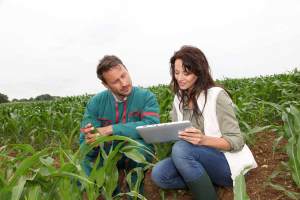
Agricultural engineers integrate technology with farming to design efficient equipment, sustainable infrastructure, and innovative solutions for food production. These specialists earn a median salary of $84,630 nationally and work across sectors from private industry to federal agencies. With 6% job growth projected through 2034—faster than average—and emerging opportunities in sustainable agriculture and climate adaptation, agricultural engineering offers a growing career path for those passionate about feeding a changing world.
Welcome to EnvironmentalScience.org, your comprehensive resource for exploring meaningful careers at the intersection of technology and agriculture. If you're drawn to solving real-world problems—designing more innovative farming equipment, developing sustainable food systems, or engineering solutions for climate resilience—agricultural engineering might be the path you've been searching for.
Agricultural engineering represents a unique blend of traditional engineering principles and agrarian sciences. These professionals work behind the scenes to make modern farming more efficient, sustainable, and better able to meet global food demands. Unlike many engineering specializations, this field lets you see the direct impact of your work: from irrigation systems that conserve water in drought-prone regions to renewable energy solutions that are transforming farm operations.
This guide will walk you through everything you need to know about pursuing a career as an agricultural engineer—the daily responsibilities, education requirements, earning potential, and emerging opportunities in this evolving field. Whether you're a student exploring options or a professional considering a career change, you'll find honest insights to help you decide if agricultural engineering aligns with your goals and interests.
What Is Agricultural Engineering?
Agricultural Engineering is the area of engineering concerned with the design, construction, and improvement of farming equipment and machinery. But it's much more than tractors and harvesters. Agricultural engineers integrate technology with farming in ways that touch every aspect of food production and sustainability.
For example, they design new and improved farming equipment that works more efficiently or performs entirely new tasks. They design and build agricultural infrastructure, including dams, water reservoirs, warehouses, and specialized storage structures. Some focus on developing solutions for pollution control at large farming operations, helping to protect soil and water quality in surrounding communities.
An exciting frontier in this field is developing new biofuel forms from non-food resources such as algae and agricultural waste. Such fuels could economically and sustainably replace gasoline without jeopardizing food supplies—a critical consideration as global populations continue to grow.
What Do Agricultural Engineers Do?
While agricultural engineers may develop specialties over time, most professionals engage in certain core activities that define the field. Understanding these responsibilities helps clarify whether this career matches your interests and strengths.
Design and Testing
Most agricultural engineers spend significant time designing and testing agricultural machinery, equipment, and parts. This might involve creating prototypes, running simulations, and conducting field tests to ensure equipment performs reliably under real-world farming conditions. They also design food storage structures and food processing plants that maintain product quality while maximizing efficiency.
Sustainable Infrastructure and Resource Management
Those interested in sustainability careers often focus on water quality and pollution control issues on farms. They plan and oversee land reclamation projects, develop agricultural waste-to-energy systems, and work on carbon sequestration projects that absorb carbon dioxide from the atmosphere into soil, crops, and trees. Some agrarian engineers design housing and environmental control systems for livestock, ensuring animal welfare while optimizing production.
A Day in the Life
A typical workday for an agricultural engineer varies depending on their specialization and employer, but might include:
Morning hours often begin with reviewing project plans and collaborating with team members—agronomists, animal scientists, or horticulturalists—to address technical challenges. You might spend mid-morning conducting site inspections at a farm implementing new irrigation technology you designed, checking equipment performance, and gathering data on water conservation metrics.
Afternoon work often shifts to the office or lab, where you analyze field data, refine CAD drawings for equipment modifications, or prepare reports for clients or stakeholders. Some days involve presenting findings to farmers, explaining how new drainage systems will improve crop yields, or working with manufacturing teams to troubleshoot production issues with agricultural equipment.
The variety keeps the work engaging. One week you're in the field measuring soil moisture levels; the next you're in meetings with food processing plant managers, designing systems to reduce waste and energy consumption.
Where Does an Agricultural Engineer Work?
Agricultural engineers work in surprisingly diverse settings. As of May 2024, employment was distributed across several sectors: 17% worked in architectural, engineering, and related services; the federal government employed 16%; 14% worked in food manufacturing; 13% in agriculture, construction, and mining machinery manufacturing; and 6% worked as educators in university settings.
The work environment blends indoor and outdoor settings. Engineers spend time in offices creating plans, managing projects, and collaborating with teams. They also work in agricultural settings—inspecting sites, monitoring equipment performance, and overseeing reclamation and water management projects. Laboratories serve as testing grounds for new equipment designs or biofuel prototypes, while classrooms provide opportunities to shape the next generation of agricultural engineers.
This variety means adaptability is key. You might consult with farmers on their land one day, then present technical findings to government agencies the next. Travel is everyday, particularly for consultants or those working on multiple regional projects. However, the combination of fieldwork and office tasks keeps the career dynamic and prevents monotony.
Agricultural engineers frequently collaborate with professionals from other fields. You'll work alongside horticulturalists designing precision irrigation systems, partner with agronomists on soil conservation projects, and consult with animal scientists on livestock facility designs. This interdisciplinary nature makes the field appealing for those who enjoy teamwork and learning from diverse perspectives.
What Are Work Schedules Like?
Agricultural engineers typically work full-time, with occasional overtime depending on project demands and seasonal considerations. Unlike traditional 9-to-5 office jobs, agricultural engineering often requires flexibility. During planting or harvest seasons, you might work extended hours to ensure equipment installations are completed on schedule or to troubleshoot urgent equipment failures that could jeopardize crop yields.
Many agricultural engineers are on call to manage problems that arise on various projects. If irrigation systems fail during a critical growth period or processing equipment malfunctions during peak production, you might need to respond quickly—even outside regular business hours. This responsive nature of the work requires both technical expertise and problem-solving under pressure.
However, the scheduling isn't all demanding. Between major project phases, workloads often normalize, allowing for standard working hours and better work-life balance. Those in academic positions typically enjoy more predictable schedules, with flexibility during non-teaching periods for research and consulting work.
What Is a Typical Agricultural Engineer's Salary?
As of May 2024, agricultural engineers earned a median salary of $84,630. However, compensation varies considerably based on experience, education level, geographic location, and the sector you work in. This is a highly skilled profession, and salaries reflect the specialized knowledge required.
| Experience Level | Typical Salary Range | Key Factors |
|---|---|---|
| Entry-Level (0-2 years) | $60,000 - $70,000 | Bachelor's degree, internship experience valued |
| Mid-Career (3-7 years) | $75,000 - $95,000 | PE license, specialized skills increase earnings |
| Experienced (8-15 years) | $95,000 - $120,000 | Project management, consulting roles |
| Senior (15+ years) | $120,000+ | Leadership positions, advanced degrees |
Salaries also vary by sector. Federal government positions often include comprehensive benefits packages and job security. Private sector roles—particularly in consulting or equipment manufacturing—may offer higher base salaries and performance bonuses. Academic positions typically pay less than industry roles but provide research opportunities, flexible schedules, and the satisfaction of teaching.
Geographic location significantly impacts earning potential. Agricultural engineers working in regions with extensive farming operations or specialized agricultural industries often command higher salaries due to demand. States with significant agrarian economies—California, Iowa, Illinois, Texas—typically offer more job opportunities and competitive compensation.
Beyond base salary, many agricultural engineers receive benefits such as health insurance, retirement contributions, paid time off, and support for continuing education. Some employers offer vehicle allowances for those who travel frequently to farm sites. At the same time, consulting engineers may have more variable income but greater earning potential as they build their client base.
Agricultural Engineering Jobs & Job Description
Agricultural engineer jobs focus on the science behind food and farming, specifically how to help modern agricultural methods and products meet global and national food demands. While tasks vary significantly from position to position, understanding typical responsibilities enables you to prepare for the profession.
Core Responsibilities
Standard duties that agricultural engineers encounter include:
- Plan and design the construction of irrigation, drainage, and flood- and water-control systems that optimize water use and prevent environmental damage
- Review the research literature and recent discoveries in the field to stay up to date on emerging technologies and methodologies.
- Collect field and control samples of biological and non-biological media to perform analyses and inform design decisions.s
- Engineer the construction of agricultural buildings and storage facilities, balancing efficiency with cost-effectiveness.
- Design equipment and machinery for field preparation, seeding, spraying, harvesting, and transporting agricultural products
- Ensure equipment designs comply with local codes and farming culture while considering available regional resources.
- Supervise all aspects of production and delivery for agricultural products from seed to table.e
- Prepare technical reports, meet with clients, and communicate complex technical concepts to internal and external stakeholders.
- Advocate for sustainable agriculture practices on the local and national levels.s
- Research innovative farming, harvesting, and storage methods that improve productivity while protecting environmental resources
- Conduct field and laboratory research to develop practices for food production that protect the environment.nt
Senior-Level Responsibilities
Senior agricultural engineer positions often include additional managerial tasks to support project scheduling, budgeting, and communication. Everyday senior-level duties include:
- Analyzing data, preparing comprehensive reports for external stakeholders, and managing documentation workflows
- Drafting and implementing construction plans and computerized management systems
- Planning projects, administering budgets, and ensuring projects remain on schedule and within financial constraints
- Participating in longitudinal safety analyses to identify and mitigate risks
- Communicating with internal and external clients, stakeholders, and government departments to maintain regulatory compliance
- Researching and collecting contextual information for case studies that inform best practices
- Supervising the construction of flood- and water-control systems, ensuring quality standards are met.
Essential Skills & Competencies
Success as an agricultural engineer requires a combination of technical expertise, practical problem-solving abilities, and interpersonal skills. While your formal education provides the foundation, developing these competencies makes the difference between adequate and exceptional performance.
Technical Skills
Engineering fundamentals: Proficiency in mechanics, thermodynamics, fluid dynamics, and materials science forms the backbone of agricultural engineering work. You'll apply these principles daily, whether designing irrigation systems or developing machinery specifications.
CAD and modeling software: Modern agricultural engineers must master computer-aided design tools and simulation software. These skills allow you to visualize designs, test modifications virtually, and communicate concepts clearly to manufacturers and clients.
Data analysis: Agricultural engineering increasingly relies on data-driven decision-making. Skills in statistical analysis, programming languages like Python or R, and familiarity with Geographic Information Systems (GIS) help you interpret complex datasets and optimize agricultural systems.
Practical Competencies
Systems thinking: Agricultural systems are complex and interconnected. Successful engineers see how changes in one area—such as irrigation timing—affect other factors like soil health, energy consumption, and crop yields. This holistic perspective prevents unintended consequences and leads to more sustainable solutions.
Problem-solving under constraints: Agricultural projects often face limitations—budget constraints, weather dependence, existing infrastructure, or local regulations. The ability to develop creative solutions within these constraints separates competent engineers from exceptional ones.
Field adaptation: Farming environments are unpredictable. Equipment that performs perfectly in controlled tests might behave differently under actual field conditions. Agricultural engineers must adapt designs quickly based on real-world feedback, often thinking on their feet to keep projects moving forward.
Interpersonal Skills
Communication with non-technical audiences: You'll regularly explain complex technical concepts to farmers, business owners, and government officials who lack engineering backgrounds. The ability to translate technical jargon into clear, practical terms builds trust and ensures your designs are implemented correctly.
Collaboration across disciplines: Agricultural engineering involves working with professionals from diverse fields, including agronomists, economists, environmental scientists, and equipment operators. Respect for different expertise and willingness to integrate various perspectives lead to better outcomes.
Cultural sensitivity: Agricultural practices vary significantly across regions and cultures. Engineers working internationally or with diverse farming communities must understand and respect these differences, designing solutions that fit within existing cultural frameworks rather than imposing one-size-fits-all approaches.
Career Challenges & Rewards
Like any profession, agricultural engineering comes with both obstacles and satisfactions. Understanding both sides helps set realistic expectations and determine if this career aligns with your temperament and values.
Challenges to Consider
Limited geographic concentration: While job growth is positive, agricultural engineering positions concentrate in regions with significant farming activity. This means that career opportunities may require relocating to rural or agricultural areas, which may not appeal to everyone. Urban-based positions exist but are less common.
Weather and seasonal dependencies: Many agricultural engineering projects follow farming calendars, creating periods of intense activity alternating with slower phases. This cyclical nature can be stressful, particularly when critical installation or testing phases coincide with unpredictable weather. Factors beyond your control, such as drought, flooding, or unseasonable temperatures, may delay projects.
Balancing ideal designs with practical reality: Theoretical engineering solutions don't always translate to real-world farming operations. Budget limitations, farmer skepticism about new technologies, and existing infrastructure constraints can force compromises that feel frustrating. Learning to deliver practical improvements rather than perfect solutions requires patience and pragmatism.
Physical demands: Field work involves physical labor—walking long distances over uneven terrain, working in extreme weather conditions, and occasionally assisting with equipment installation or testing. While not as physically demanding as farming, the work requires reasonable fitness and the ability to tolerate uncomfortable situations.
Rewards and Satisfactions
Tangible impact: Agricultural engineering offers something many engineering disciplines lack—immediate, visible results. You can point to irrigation systems that conserve water, equipment that reduces labor requirements, or storage facilities that extend food shelf life. The connection between your work and feeding communities provides deep satisfaction.
Sustainability contributions: For those passionate about environmental sustainability, this field offers meaningful opportunities. Whether developing renewable energy systems for farms, designing systems that reduce agricultural runoff, or creating equipment that minimizes soil compaction, you directly contribute to more sustainable food production.
Intellectual variety: Agricultural engineering rarely becomes monotonous. Projects span diverse challenges—from precision agriculture technology to livestock facility design to renewable energy integration. Each project brings new problems requiring creative solutions, keeping the work mentally engaging.
Relationship building: Working closely with farmers and agricultural communities often leads to lasting professional relationships. Seeing your equipment or systems succeed season after season, and knowing you've made someone's livelihood easier or more profitable, creates rewarding long-term connections.
Innovation opportunities: Agriculture faces enormous challenges—climate change, water scarcity, and the need to feed growing populations. These challenges create space for innovation. Agricultural engineers who develop breakthrough solutions—whether more efficient irrigation controllers or novel approaches to waste management—can see their work widely adopted, thereby multiplying their positive impact.
What Is the Job Demand for Agricultural Engineers?
Despite our reliance on agriculture, which will only continue to grow, and researchers constantly seeking ways to improve yields through biotechnology, agricultural technology, landscape management, and civic works, agricultural engineering remains a specialized field with modest but steady growth.
According to the Bureau of Labor Statistics, the field employed approximately 1,700 people in 2024 across the United States. Job growth is projected at 6% between 2024 and 2034—faster than the average for all occupations—with approximately 100 new positions expected during this period. While the total number of positions remains relatively small, this growth rate indicates growing recognition of the value of agricultural engineers in addressing modern food production challenges.
This positive growth trajectory reflects several evolving factors. Climate change creates an urgent need for engineering solutions to help agriculture adapt to shifting weather patterns and resource availability. Growing global populations require more efficient food production systems. Consumer interest in sustainable and locally-produced food drives investment in innovative agricultural technologies. These trends position agricultural engineering as increasingly relevant despite the field's specialized nature.
Emerging Opportunities
While traditional agricultural engineering roles grow steadily, emerging specializations show even more promise:
Precision agriculture technology: GPS-guided equipment, drone-based crop monitoring, and sensor networks for soil and plant health create demand for engineers who understand both agriculture and advanced technology. This intersection of agriculture and data science represents one of the fastest-growing segments.
Climate adaptation engineering: As climate change affects growing seasons, water availability, and weather patterns, farmers need engineering solutions to adapt. Designing drought-resistant irrigation systems, developing climate-controlled growing environments, and creating resilient agricultural infrastructure offer expanding opportunities.
Sustainable food systems: Consumer demand for sustainably produced food drives investment in engineering solutions that reduce environmental impact. Engineers developing systems for organic farming, regenerative agriculture, or closed-loop aquaponics find growing markets for their expertise.
Alternative protein production: Emerging industries around cellular agriculture, vertical farming, and insect farming need engineers to design novel production systems. These industries, while small now, show substantial growth potential and seek professionals with agricultural engineering backgrounds.
International development: Developing nations investing in agricultural modernization create opportunities for engineers willing to work internationally. Organizations focused on food security, international development, and humanitarian work employ agricultural engineers to improve food production in resource-limited settings.
Getting an Agricultural Engineering Degree
Entering this field requires substantial education, but the investment opens doors to meaningful career opportunities. Understanding the educational pathway helps you plan effectively and make informed decisions about your academic future.
Bachelor's Degree Requirements
Entry-level positions in agricultural engineering require a bachelor's degree, preferably in agricultural engineering or biological engineering. These programs typically span four years and include classroom instruction, laboratory work, and field studies in science, mathematics, and engineering principles.
| Education Level | Typical Duration | Career Opportunities |
|---|---|---|
| Bachelor's in Agricultural/Biological Engineering | 4 years | Entry-level engineering positions, equipment design, and field consulting |
| Master's in Agricultural Engineering | 2 years (post-bachelor's) | Specialized roles, research positions, and senior project management |
| PhD in Agricultural Engineering | 4-6 years (post-bachelor's) | University faculty, advanced research, industry R&D leadership |
| Professional Engineer (PE) License | 4+ years experience + exams | Required for public consulting, demonstrates professional competence |
Participating in cooperative education programs during college is highly recommended. These programs allow you to gain practical experience while completing your degree, building professional networks, and often securing employment before graduation. Many employers prefer candidates with co-op experience because it demonstrates practical skills alongside theoretical knowledge.
Program Availability and Considerations
Currently, approximately 15 colleges in the United States offer dedicated agricultural engineering programs or similar specializations at the bachelor's level. This limited availability means that some students pursue standard engineering degrees—typically mechanical, civil, or chemical—and focus their electives and projects on agricultural applications.
Alternatively, students might major in agricultural sciences with a strong emphasis on engineering principles, mathematics, and physics. This approach works particularly well for those interested in the biological aspects of agricultural engineering, though it may require additional coursework to meet engineering certification requirements.
Strong proficiency in mathematics, hard sciences (especially physics), and written communication is essential. Engineering programs are rigorous, requiring calculus, differential equations, physics, chemistry, and technical writing. If these subjects don't come naturally to you, consider whether the investment in developing these skills aligns with your career goals.
Professional Engineering Licensure
Agricultural engineers who offer services directly to the public must obtain licensure as Professional Engineers (PEs). While not all positions require licensure, it significantly expands career opportunities and earning potential. Licensure generally requires:
- A degree from an ABET-accredited engineering program
- A passing score on the Fundamentals of Engineering (FE) exam
- Relevant work experience, typically at least 4 years working under a licensed engineer
- A passing score on the Professional Engineering (PE) exam
College graduates may take the Fundamentals of Engineering exam immediately upon graduation. Engineers who pass this exam are called engineers in training (EITs) or engineer interns (EIs). After gaining four years of supervised work experience, EITs and EIs can take the Principles and Practice of Engineering exam to qualify for full licensure.
Several states require licensed engineers to participate in continuing professional development activities to maintain their licenses. Most states recognize licensure from other states, provided that the originating state's requirements meet or exceed their own standards.
Graduate Education Considerations
Engineering is a STEM field that generally offers strong employability and competitive salaries. However, agricultural engineering has a specialized job market with fewer positions than other engineering disciplines. A graduate degree—master's or PhD—improves your competitiveness considerably by:
- Providing specialized expertise that sets you apart in a competitive job market
- Opening doors to research positions in universities, government agencies, or private research institutions
- Qualifying you for advanced roles in equipment manufacturing companies or consulting firms
- Creating pathways into related fields such as environmental engineering, water resources management, or sustainable food systems
Academia is one career path available to those with advanced degrees, though academic positions are among the lowest-paying options at this qualification level. However, scholarly work offers other rewards—intellectual freedom, opportunity to shape future generations, and flexibility for consulting work.
Where Can This Career Take Me?
Agricultural engineering offers several pathways for advancement, though progression looks different from that in some other engineering fields due to the specialty's smaller size and unique industry structure.
Traditional Career Progression
Agricultural engineers typically advance to supervisory and management positions over time. After gaining 5-10 years of experience, many engineers move into project management roles, overseeing teams of junior engineers and technicians. These positions involve less hands-on technical work but greater responsibility for budgets, schedules, client relationships, and business development.
Senior engineers often become technical specialists within their organizations, serving as subject matter experts on complex problems. Rather than managing people, these roles involve solving the most challenging engineering problems, mentoring junior staff, and representing the organization at industry conferences or standards committees.
Some agricultural engineers transition into executive leadership—becoming directors of engineering, chief technology officers, or vice presidents of research and development. These positions focus on strategic planning, business development, and organizational management rather than direct engineering work.
Alternative Career Paths
Sales and technical support: Many engineers move into sales roles with agricultural equipment manufacturers. These positions leverage your technical knowledge to explain machinery and products to potential customers, assist with product planning, oversee installation, and provide ongoing technical support. Sales engineers often earn higher incomes than design engineers, particularly when commissions or bonuses are included.
Consulting and entrepreneurship: Experienced engineers sometimes establish independent consulting practices, offering specialized expertise to farms, food processors, or equipment manufacturers. This path requires business acumen alongside technical skills but offers autonomy and potential for higher earnings. Some consultants focus on niche areas—irrigation system optimization, sustainable farming practices, or regulatory compliance.
Government and regulatory work: Federal and state agencies employ agricultural engineers in roles ranging from research to regulation enforcement. These positions offer job security, comprehensive benefits, and opportunities to influence agricultural policy. Career advancement in government follows structured pathways, with promotions based on experience, performance, and often completion of leadership development programs.
Adjacent fields: Agricultural engineering skills transfer well to related fields. Engineers move into water resources management, renewable energy development, food processing technology, or environmental policy and planning. This flexibility becomes particularly valuable if agricultural engineering opportunities in your region are limited.
What Kind of Societies and Professional Organizations Do Agricultural Engineers Have?
- The American Society of Agricultural and Biological Engineers (ASABE) (http://www.asabe.org) - Helps professionals share ideas, stay current, keep their skills fresh, and advance their careers. The society has 8,000 members in over 100 countries worldwide.
- The National Society of Professional Engineers (NSPE) (http://www.nspe.org) - Represents licensed PEs across all disciplines, as well as those currently working on their licensure. It helps engineers navigate the licensing process and serves as the authority on ethics and professional practice.
- International Commission of Agricultural and Biosystems Engineering (CIGR) (http://www.cigr.org) - The largest global body of its kind, they are a worldwide organization that brings together the international community of agricultural engineering professionals. They represent private and public bodies, as well as national organizations.
- European Society of Agricultural Engineers (EurAgEng) (http://www.eurageng.eu) - The European Society of Agricultural Engineers promotes the profession, public awareness, and research. They are highly active, participating in conferences across the continent. They are a founding member of CIGR.
Agricultural Engineering - Related Degrees
Frequently Asked Questions
What's the difference between agricultural engineering and agricultural science?
Agricultural engineering focuses on designing, building, and improving the mechanical and technological systems used in farming, including equipment, infrastructure, and processing facilities. Agricultural science focuses on the biological aspects of agriculture, including crop genetics, soil health, pest management, and animal husbandry. Engineers solve problems through technology and design; scientists solve problems through biological research and experimentation. Many projects require collaboration between both disciplines.
Do I need a PE license to work as an agricultural engineer?
Not all positions require Professional Engineer licensure, but it significantly expands your career options. If you plan to offer engineering services directly to the public, work as an independent consultant, or pursue certain government positions, PE licensure is mandatory. Many employers prefer or require licensure, even when it is not legally mandated, because it demonstrates professional competence and a commitment to the field. Even if your initial position doesn't need licensure early in your career, it can open more doors later.
Can I work internationally as an agricultural engineer?
Yes, international opportunities exist through development organizations, multinational equipment manufacturers, consulting firms, and research institutions. Developing nations often seek engineers to help modernize agricultural practices and improve food security. International work typically requires flexibility, cultural sensitivity, and sometimes a willingness to work in challenging conditions. Some engineers find international work incredibly rewarding, as it combines technical expertise with humanitarian impact. Language skills and experience with diverse agricultural systems strengthen your candidacy for international positions.
What specializations exist within agricultural engineering?
Agricultural engineering encompasses several specializations: irrigation and water management; machinery design and testing; food processing and storage systems; renewable energy applications in agriculture; precision agriculture and automation; livestock facility design; agricultural structures; environmental quality and pollution control; and emerging areas such as vertical farming and cellular agriculture. Most engineers develop expertise in one or two specializations over time, though broad knowledge across multiple areas remains valuable for consulting or management roles.
How is agricultural engineering responding to climate change?
The field is evolving rapidly to address climate challenges. Engineers develop drought-resistant irrigation systems using real-time soil moisture monitoring and weather forecasting. They design equipment for new crop varieties adapted to changing climates. Water conservation technologies, the integration of renewable energy into farm operations, and carbon sequestration systems are growing areas of practice. Climate adaptation creates some of the most exciting opportunities in agricultural engineering, as traditional approaches prove insufficient for changing conditions. Engineers working in this area combine technical expertise with an understanding of climate science and sustainable agriculture principles.
Key Takeaways
- Unique engineering niche: Agricultural engineering combines traditional engineering principles with agricultural sciences to create solutions that directly impact food production and sustainability.
- Positive job growth outlook: With 6% growth projected through 2034—faster than average—and 100 new positions expected, the field shows increasing demand driven by climate adaptation and the need for a sustainable food system.
- Competitive compensation: Median salary of $84,630 with significant variation based on experience, location, and specialization. PE licensure and advanced degrees increase earning potential.
- Education requires commitment: at minimum, a Bachelor's degree from an accredited program, with a master's or Ph.D. to enhance competitiveness. PE licensure opens additional career opportunities and is required for independent consulting.
- Impact-driven work: Direct connection between your engineering solutions and feeding communities provides meaningful career satisfaction, with tangible results visible in improved farming efficiency and environmental sustainability.


Ready to explore agricultural engineering programs? Discover degree options that align with your interests in technology, sustainability, and food security.
2024 US Bureau of Labor Statistics salary and job growth figures for agricultural engineers reflect national data, not school-specific information. Conditions in your area may vary. Data accessed January 2026.