Beekeepers manage honeybee colonies to produce honey, beeswax, and pollination services for agriculture. This career includes everyone from hobbyists tending backyard hives to commercial operators managing thousands of colonies. The Bureau of Labor Statistics classifies beekeepers within the broader agricultural management category, which reported a median salary of $87,980 in 2023, though individual beekeeper income varies widely based on operation size and revenue streams.
If you're drawn to working outdoors, supporting food production, and contributing to environmental health, beekeeping offers a unique career path. Today's beekeepers play a critical role in agriculture—not just producing honey, but providing essential pollination services for crops ranging from almonds to blueberries. With wild pollinator populations declining, commercial beekeepers have become indispensable to American agriculture.
Beekeeping spans multiple career paths. Some manage commercial operations producing honey for national markets. Others specialize in pollination services, traveling with their hives to orchards and farms. Research-focused beekeepers study colony collapse disorder, parasites like the varroa mite, and climate change impacts on bee populations. The field combines agricultural science, environmental stewardship, and hands-on animal husbandry.
What Does a Beekeeper Do?
A beekeeper is a type of agricultural worker specializing in the management of honeybee colonies. Modern beekeepers maintain hives that produce multiple revenue streams: honey as a sweetener, beeswax for household and cosmetic products, and royal jelly as a dietary supplement. But increasingly, pollination services have become the primary income source for commercial operations.
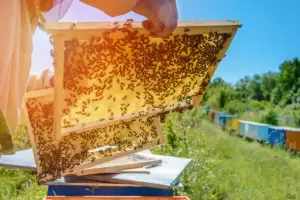
The core responsibility is keeping colonies healthy and productive. This means regular hive inspections, monitoring for diseases and parasites, ensuring adequate food stores, and managing the queen's health. Commercial beekeepers often maintain hundreds or thousands of hives across multiple locations, requiring sophisticated logistics and record-keeping systems.
Pollination work has transformed the industry. With wild bee populations struggling, farmers now contract with commercial beekeepers to ensure crop pollination. A beekeeper might transport hives to California's almond orchards in February, move them to Washington apple orchards in spring, then finish the season pollinating blueberries in Maine. This migratory beekeeping requires understanding bloom schedules, managing hive strength, and coordinating with multiple agricultural operations.
Some beekeepers focus exclusively on research. Working similarly to wildlife biologists, they monitor colony health, track bee population dynamics, and study threats like colony collapse disorder. These research positions often involve collecting data across diverse environments, testing treatments for varroa mite infestations, and documenting how pesticide exposure affects colony survival. Understanding climate change impacts on both bees and the plants they depend on has become increasingly vital work.
Independent beekeepers might maintain a small number of hives while working another job, selling honey and products at farmers' markets or to local customers. This hobbyist approach can gradually scale into a full-time operation as experience and customer base grow.
Where Does a Beekeeper Work?
Most beekeepers work outdoors at apiary sites where hives are located. This means exposure to all weather conditions—from freezing winter hive checks to sweltering summer honey harvests. The work involves lifting heavy hive boxes (a full honey super can weigh 60-80 pounds), managing protective equipment, and staying alert around thousands of potentially defensive insects.
Commercial operations often spread hives across multiple locations to maximize different nectar flows and pollination contracts. You might manage sites on farmland, in orchards, near wildflower meadows, or in remote areas with specific bloom schedules. Some beekeepers maintain permanent apiaries, while others practice migratory beekeeping—loading hives onto trucks and traveling thousands of miles annually following crop bloom schedules.
The pollination services sector has created a distinct work environment. These beekeepers function as agricultural contractors, placing and retrieving hives at orchards and farms on precise schedules. California's Central Valley requires over 1.5 million honeybee colonies each February for almond pollination, creating massive logistical operations.
Research beekeepers split time between field sites and laboratories or offices. They collect field data, monitor experimental hives, and analyze results. Some work for universities, government agencies, or conservation organizations studying pollinator health and ecology. These positions require systematic data collection and often involve collaboration with other scientists.
Even small-scale beekeepers need appropriate space. Urban beekeeping has grown in popularity, but requires navigating local regulations, managing hives in confined spaces, and addressing neighbor concerns. Rural beekeepers have more flexibility but must consider forage availability—bees need diverse flowering plants within a 2-3 mile radius of their hives.
Beekeeping Jobs & Job Description
Beekeepers work across several distinct sectors, each with different daily responsibilities. Commercial honey producers focus on maximizing hive productivity, timing honey harvests with major nectar flows, and managing extraction and bottling operations. Pollination contractors coordinate with farmers, transport hives strategically, and maintain colonies at peak strength during critical bloom periods. Research beekeepers emphasize data collection, experimental protocols, and long-term monitoring rather than production.
Daily tasks vary by season but typically include:
- Colony inspections: Opening hives to assess queen health, brood patterns, food stores, and population strength. Checking for disease symptoms, pest infestations, and structural problems.
- Hive maintenance: Repairing or replacing damaged equipment, adding or removing hive boxes as colonies grow or contract, ensuring proper ventilation and moisture control.
- Pest and disease management: Monitoring for varroa mites, small hive beetles, and wax moths. Implementing treatment protocols when needed. Identifying and responding to American foulbrood, nosema, and other diseases.
- Queen management: Assessing queen performance, requeening colonies when production drops, managing swarming behavior, and maintaining genetic diversity across the operation.
- Harvest operations: Removing honey-filled frames, extracting honey, processing wax, and packaging products for sale or distribution.
- Record keeping: Tracking hive productivity, treatment schedules, expenses, and revenue. Managing contracts, coordinating logistics for migratory operations.
Experienced beekeepers who own their operations take on additional management responsibilities. They hire and train seasonal workers during peak times, oversee breeding programs to maintain strong genetics, manage marketing and distribution of products, handle financial planning, including payroll and taxes, and maintain relationships with customers or contract growers.
What Is the Average Beekeeper Salary?
The Bureau of Labor Statistics does not track beekeepers as a separate occupation. Instead, they are classified under the broader category of farmers, ranchers, and other agricultural managers. As of May 2023, this occupation reported a median annual salary of $87,980. However, individual beekeeper income varies dramatically based on operation size, geographic location, and business model.
The salary range is substantial. Entry-level positions or small-scale operations might earn around $51,700 (10th percentile), while experienced commercial beekeepers managing large operations can earn $156,530 or more (90th percentile). Income fluctuates year-to-year depending on weather patterns affecting nectar flows, honey prices, and pollination contract rates.
Geographic location significantly impacts earnings. California leads the nation with agricultural managers averaging $113,530 annually—driven largely by the massive almond pollination industry in the Central Valley. Washington state averages $104,120, while Iowa shows $101,250. Traditional farming states often pay less, with Idaho averaging $71,660 and Nebraska $72,660, despite having high concentrations of agricultural operations.
Self-employment is the norm in beekeeping—63% of agricultural managers work for themselves. This means most beekeepers operate as independent businesses, with income depending on their ability to diversify revenue streams. A successful commercial beekeeper might combine honey sales ($200-300 per hive annually), pollination contracts ($200-250 per hive for almond pollination alone), queen bee production, package bee sales, and value-added products like beeswax candles or creams.
Small-scale beekeepers often maintain other employment while building their operations. Someone managing 20-50 hives part-time might generate $10,000-20,000 annually, supplementing primary income rather than replacing it. Scaling to 300-500 hives typically represents the threshold for full-time commercial viability in most regions.
What Is the Job Demand for Beekeeping?
The Bureau of Labor Statistics projects a 1% decline in employment for farmers, ranchers, and agricultural managers from 2022 to 2032, dropping from approximately 836,100 to 825,000 jobs nationwide. This modest contraction compares to 3% average growth across all occupations. However, the field will still generate approximately 85,500 annual job openings—entirely from replacement needs as workers retire, transfer to other careers, or leave the workforce.
For beekeeping specifically, the story is more complex than overall agricultural management trends suggest. Despite slight employment declines in traditional farming, demand for commercial pollination services has grown substantially. Wild bee populations face ongoing challenges from habitat loss, pesticide exposure, and disease. This creates a sustained need for managed honeybee pollination.
California's almond industry requires a substantial portion of America's commercial honeybee colonies each February—industry estimates suggest around 2.8 million colonies are needed to pollinate the state's almond orchards. Blueberries, apples, cherries, cranberries, cucumbers, and dozens of other crops depend on honeybee pollination. As specialty crop acreage expands, particularly in California, Washington, and Florida, pollination services become more valuable.
Technology is changing the profession, but hasn't reduced labor needs as dramatically as in other agricultural sectors. While automated honey extraction and improved hive monitoring tools help efficiency, beekeeping remains fundamentally hands-on. Each colony requires regular inspection by someone who can recognize subtle signs of problems. Remote hive monitoring systems supplement rather than replace human judgment.
Research positions in beekeeping are growing, particularly focused on colony collapse disorder, varroa mite resistance, and climate adaptation. Universities, government agencies like the USDA Agricultural Research Service, and private companies invest in understanding and solving pollinator health challenges. These roles often require advanced degrees and combine fieldwork with laboratory analysis.
The high self-employment rate (63%) means opportunity exists for anyone willing to invest in establishing their own operation. Entry barriers are relatively low—someone can start with a few hives and basic equipment for under $2,000. However, scaling to commercial viability requires substantial capital investment in equipment, land or leasing arrangements, and working capital to sustain operations between harvests.
What Are the Education Requirements to Become a Beekeeper?
Educational requirements for beekeeping vary dramatically depending on your intended career path. Unlike many professions, beekeeping doesn't mandate specific degrees—practical experience often matters more than formal education. However, the right academic background can accelerate your learning and open doors to specialized roles.
For commercial honey production or pollination services, formal education is optional but helpful. Many successful commercial beekeepers learned through mentorship, hands-on experience, and industry workshops. That said, coursework in biology helps you understand bee anatomy, genetics, and disease. Mathematics becomes essential for managing business finances, calculating treatment dosages, and analyzing hive productivity. High school students considering beekeeping should focus on these foundational subjects.
If you're approaching beekeeping from an ecological or conservation perspective, relevant degree programs include Fish and Wildlife Management or Environmental Biology. These programs provide strong backgrounds in population dynamics, ecosystem interactions, and conservation principles. They're particularly valuable if you're interested in studying wild bee populations, designing pollinator habitat restoration projects, or working in environmental consulting.
Research-focused beekeeping typically requires at least a bachelor's degree, often in biology, entomology, or agricultural sciences. Universities conducting bee research look for candidates who understand experimental design, statistical analysis, and scientific writing. For university faculty positions or leading research programs, a master's or Ph.D. is necessary. Graduate programs might focus on pollinator ecology, integrated pest management, or data science applied to agricultural systems.
Postgraduate degrees aren't common in commercial beekeeping operations, but some beekeepers combine agricultural sciences and GIS to optimize hive placement using geographic analysis. This interdisciplinary approach helps identify optimal forage areas and manage migratory operations more efficiently.
Beyond formal degrees, practical beekeeping education comes from multiple sources. State beekeeping associations offer beginner courses covering hive setup, basic management, and local regulations. Many experienced beekeepers mentor newcomers. University extension programs provide research-based guidance on regional best practices. The key is combining book knowledge with supervised hands-on experience—no textbook can fully prepare you for managing a defensive colony on a 95-degree afternoon.
Beekeeping - Related Degrees
What Kind Of Societies and Professional Organizations Do Beekeepers Have?
Beekeeping supports a robust network of professional organizations providing education, research support, and industry advocacy. These groups connect practitioners from small-scale hobbyists to large commercial operations.
- American Beekeeping Federation: With over 4,700 members, the ABF represents beekeepers nationwide. The organization advocates for honeybee health policies, connects researchers with practitioners, and provides educational resources. Their annual convention brings together commercial producers, hobby beekeepers, suppliers, and scientists. Membership includes access to research updates, legislative alerts, and networking with operations of all scales.
- International Bee Research Association: IBRA operates globally to advance bee science and beekeeping practices. They publish peer-reviewed research, maintain the world's most comprehensive bee research library, and facilitate knowledge exchange between countries. For beekeepers interested in staying current with international developments—new treatment methods, breeding advances, or management innovations—IBRA provides authoritative information.
- Apiary Inspectors of America: This organization brings together state apiary inspectors, beekeepers, researchers, and policy makers to develop disease management protocols and regulatory standards. Protecting bee health requires coordinated approaches across state lines. AIA works to harmonize regulations, share surveillance data about pest and disease spread, and develop best practices for the movement of bees across state boundaries. Their work directly impacts commercial operations conducting migratory pollination.
- WeedKillerCrisis.com: This resource examines pesticide impacts on bee populations, particularly focusing on chemicals detected in honeybees and their effects on colony health. Understanding pesticide exposure is crucial for beekeepers managing colonies in agricultural areas. The site provides research on protecting pollinators while maintaining crop production.
Additionally, most states have their own beekeeping associations offering local networking, region-specific education, and regulatory guidance. These state organizations often prove most valuable for beginners, providing mentorship programs and hands-on learning opportunities.
Frequently Asked Questions
What does a beekeeper do on a daily basis?
Daily responsibilities vary by season and operation type. During the active season (spring through fall), beekeepers inspect hives for health issues, monitor food stores, check for pests like varroa mites, and assess whether colonies need more space or are preparing to swarm. Commercial beekeepers also coordinate equipment maintenance, manage honey extraction during harvest periods, and handle business operations, including sales and record-keeping. Winter requires less frequent inspections but includes equipment repair, planning for the next season, and ensuring colonies have adequate stores to survive.
How much do beekeepers make?
Income varies dramatically based on operation size and business model. The Bureau of Labor Statistics groups beekeepers with farmers, ranchers, and agricultural managers, reporting a median salary of $87,980 as of May 2023, though individual earnings range from around $51,700 to over $156,530. Small-scale operations managing 20-50 hives might generate $10,000-20,000 annually as supplemental income. Commercial operations with 300-500+ hives can support full-time livelihoods. Geographic location matters significantly—California beekeepers average $113,530 due to high pollination service demand, while traditional farming states pay less.
Do I need a degree to become a beekeeper?
No degree is required for commercial honey production or managing your own operation. Many successful beekeepers learned through mentorship, hands-on experience, and workshops offered by state beekeeping associations. However, education helps in specific contexts. Research positions typically require at least a bachelor's degree in biology, entomology, or related fields. If you're approaching beekeeping from a conservation or ecological perspective, degrees in environmental biology or fish and wildlife management provide a valuable background. The most important education comes from practical experience working with actual colonies.
What's the difference between hobbyist and commercial beekeeping?
Scale and income objectives separate hobbyists from commercial operations. Hobbyists typically maintain 1-50 hives, often while working other jobs, and may sell honey locally but primarily keep bees for personal interest or supplemental income. Commercial beekeepers manage hundreds to thousands of colonies as their primary livelihood. They focus on maximizing productivity, often specialize in either honey production or pollination services, and invest heavily in equipment and infrastructure. Commercial operations require significant capital, business management skills, and often involve migratory beekeeping—transporting hives to different regions for pollination contracts.
Is beekeeping a growing career field?
The broader agricultural management category shows a slight 1% employment decline projected from 2022 to 2032, but beekeeping presents unique opportunities. While traditional farming faces consolidation, demand for pollination services continues growing as wild bee populations struggle and specialty crop acreage expands. California's almond industry alone requires an estimated 2.8 million honeybee colonies annually. The field will generate approximately 85,500 annual job openings through 2032 from replacement needs—retirements and workers leaving the field. Additionally, 63% of agricultural managers are self-employed, meaning motivated individuals can establish their own operations rather than competing for limited positions.
Key Takeaways
- Diverse Career Paths: Beekeeping spans commercial honey production, pollination services (a growing sector), research roles studying colony health, and small-scale operations. Each path requires different skills and offers distinct earning potential.
- Competitive Earnings with Wide Range: Classified under agricultural managers, beekeepers' median salary was $87,980 in May 2023, with the range spanning from $51,700 to over $156,530. California offers the highest compensation at $113,530 average, driven by intensive pollination service demand. Note that BLS does not track beekeepers separately.
- Modest Decline but Substantial Openings: While the field projects a 1% employment decline from 2022 to 2032, it will generate 85,500 annual job openings from replacement needs (retirements and career changes). Pollination services demand remains strong despite overall agricultural consolidation.
- Flexible Education Requirements: No degree is required for commercial beekeeping—many succeed through hands-on learning and mentorship. However, research positions typically need bachelor's degrees or higher, and conservation-focused work benefits from environmental biology or wildlife management education.
- Critical Environmental Role: With wild pollinator populations declining, managed honeybees have become essential to American agriculture. Beekeepers don't just produce honey—they support food production for dozens of crops worth billions annually while contributing to ecological research on pollinator health and climate change impacts.
Ready to explore educational paths in agriculture and environmental science? Whether you're interested in hands-on beekeeping or related fields like wildlife biology and conservation, finding the right program helps you build the knowledge and skills to succeed.
2023 US Bureau of Labor Statistics salary and job growth figures for farmers, ranchers, and other agricultural managers reflect national data, not school-specific information. Conditions in your area may vary. Data accessed January 2026.