
Agricultural Inspectors (BLS occupation code 45-2011) examine agricultural commodities, processing equipment, and facilities to ensure compliance with federal and state food safety regulations. According to the Bureau of Labor Statistics Occupational Employment and Wage Statistics (OES) data for May 2024, Agricultural Inspectors earn a median salary of $50,990 annually, with most requiring a high school diploma and on-the-job training. Employment is projected to grow 1-2% through 2034, creating approximately 2,200 job openings primarily through workforce replacement and modest expansion.
When you bite into fresh produce at the grocery store or prepare meat for dinner, you're trusting that what you're eating is safe. Agricultural Inspectors are the professionals who make that trust possible. They work behind the scenes throughout our food production system, examining everything from farm equipment to processing plants to ensure the food reaching American families meets rigorous safety standards.
This career sits at the critical intersection of agriculture, public health, and regulatory compliance. Agricultural Inspectors don't conduct laboratory research like wildlife biologists or design farming systems like agricultural engineers. Instead, they serve as the frontline enforcers of food safety regulations, catching potential contamination before products reach consumers. For those interested in protecting public health through hands-on field work, agricultural inspection offers a stable career path with accessible entry requirements and meaningful impact.
What Does an Agricultural Inspector Do?
Agricultural Inspectors scrutinize every stage of food production to verify compliance with FDA, USDA, and state regulations. Their work prevents contaminated or substandard products from entering the marketplace, protecting both consumers and the integrity of agricultural commerce.
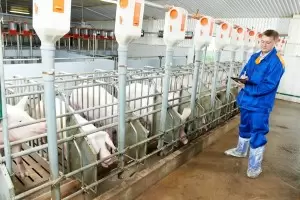
Core responsibilities center on systematic examination and documentation. Inspectors visit farms, processing plants, slaughterhouses, and distribution facilities to assess sanitation conditions, inspect equipment for proper maintenance, and verify that handling procedures meet regulatory standards. When examining agricultural commodities—whether poultry, meat, seafood, eggs, or horticultural products—they check for disease, chemical residue contamination, pest infestations, and proper labeling. They collect samples for microbiological testing when contamination is suspected.
The regulatory enforcement component is equally critical. Agricultural Inspectors interpret and apply complex government regulations, issuing official grading certificates when products meet standards. When they discover violations—inadequate sanitation, improper storage temperatures, mislabeling, or evidence of contamination—they take immediate corrective action. This might mean requiring facility modifications, placing products on hold, or, in severe cases, closing facilities until safety issues are resolved. They document all findings in detailed inspection reports and may testify in legal proceedings when violations result in enforcement actions.
Unlike environmental science careers focused on ecosystem health or pollution monitoring, agricultural inspection concentrates specifically on the safety and quality of food products and the systems that produce them. The work requires both technical knowledge of food safety science and practical understanding of agricultural operations.
Where Do Agricultural Inspectors Work?
Work environments vary significantly depending on specialization and employer. Federal inspectors working for USDA's Food Safety and Inspection Service (FSIS) spend most of their time in meat and poultry processing plants, conducting continuous inspection during operating hours. State agricultural inspectors might cover broader territory, visiting multiple farms, packing facilities, or grain elevators within an assigned region. Those specializing in horticultural commodities often work at shipping points where produce is graded before distribution.
The physical demands and conditions reflect this variety. Inspectors working in processing plants operate in controlled indoor environments but face exposure to cold temperatures in refrigerated areas, noise from machinery, and potential contact with animal products or by-products. Field inspectors examining livestock or crops work outdoors in variable weather conditions, sometimes encountering large animals or heavy farm equipment. Both settings involve significant walking, standing, and occasional lifting of sample containers or testing equipment.
Exposure to contaminants represents a persistent occupational consideration. About 60% of Agricultural Inspectors report daily exposure to potential contaminants—pesticide residue, animal waste, chemical cleaning agents, or biological hazards in food products. Proper use of personal protective equipment (gloves, boots, protective clothing, sometimes respirators) is standard protocol. Work schedules typically follow regular business hours, though slaughterhouse inspectors may work early morning or evening shifts to match processing plant operations. Some positions require travel within an assigned territory, occasionally involving overnight stays for inspections at distant facilities.
Agricultural Inspector Salary & Compensation
According to the Bureau of Labor Statistics Occupational Employment and Wage Statistics (May 2024 data), Agricultural Inspectors (SOC 45-2011) earn a median annual wage of $50,990, with national employment reaching approximately 14,700 workers. This represents notable growth from the May 2023 median of $48,010, reflecting a 6.2% year-over-year increase in compensation.
The BLS OES data reveals significant salary variation by experience and percentile ranking. Entry-level positions at the 10th percentile earn around $37,500 annually, typically requiring only a high school diploma with minimal training. The 25th percentile reaches approximately $42,000, representing inspectors with 1-3 years of experience. Mid-career professionals at the median (50th percentile) earn $50,990, while the 75th percentile approaches $64,300 for senior inspectors with specialized expertise or supervisory responsibilities. The top 10th percentile (90th percentile) exceeds $79,800, usually reflecting senior federal positions or specialized roles requiring advanced technical knowledge.
Geographic location substantially impacts earning potential, according to BLS state-level wage data. States with comparatively higher mean wages include New York (mean wage $68,500), Michigan ($67,720), Illinois ($66,610), Vermont ($64,720), and North Dakota ($64,550). These elevated wages often correspond to concentrated agricultural processing industries or higher costs of living in major metropolitan areas. The national mean hourly wage was $24.51 in May 2024, making Agricultural Inspectors eligible for overtime compensation in many positions.
Employment distribution across industries demonstrates where opportunities concentrate, based on BLS industry staffing data. State government agencies employ 4,880 Agricultural Inspectors nationally—the largest single employer group, encompassing state departments of agriculture and food safety divisions. Federal positions account for approximately 2,810 workers, primarily with USDA's FSIS. Local government employs 890 inspectors focusing on county-level agricultural compliance. Private sector opportunities exist in support activities for crop production (880 workers) and animal slaughtering and processing facilities (820 workers), though these represent smaller segments of total employment.
Benefits packages vary by employer. Government positions typically offer comprehensive health insurance, retirement pension plans (often defined benefit plans for federal and state workers), paid vacation and sick leave, and job security through civil service protections. Private sector positions may provide competitive salaries but often feature more variable benefit structures. Most full-time positions include standard benefits regardless of employer, making total compensation packages reasonably attractive for workers without requiring advanced degrees.
Job Outlook & Growth
The Bureau of Labor Statistics projects 1-2% employment growth for Agricultural Inspectors between 2024 and 2034, classified as "slower than average" compared to the 3.1% growth expected across all occupations. This translates to approximately 2,200 total job openings over the decade, driven by both workforce replacement needs (as current inspectors retire or change careers) and modest net employment expansion.
Several factors temper growth prospects. Automation and technology improvements enable more efficient inspections—digital record-keeping, advanced testing equipment, and remote monitoring systems allow individual inspectors to cover more facilities with less time investment. Industry consolidation in food processing means fewer but larger facilities requiring inspection, reducing the total number of inspection sites. Budget constraints at the state and federal levels periodically limit new hiring despite ongoing food safety needs.
However, countervailing forces provide stability. Food safety remains a non-negotiable public health priority, ensuring consistent demand for inspection services regardless of economic conditions. High-profile foodborne illness outbreaks periodically drive increased regulatory scrutiny and enforcement, sometimes spurring temporary hiring increases. The aging workforce—many current inspectors approaching retirement age—creates steady replacement demand. Additionally, evolving food production methods, including organic certification programs and new processing technologies, require inspectors to verify compliance with emerging standards.
Job security tends to be strong, particularly in government positions protected by civil service regulations. Unlike private sector careers vulnerable to corporate restructuring, agricultural inspection functions are legally mandated, making positions relatively recession-resistant. Geographic flexibility improves prospects—candidates willing to relocate to rural areas with concentrated agricultural activity or states with high food processing volumes find more abundant opportunities than those limiting searches to urban centers.
Education & Training Requirements
According to the Bureau of Labor Statistics occupational data for SOC 45-2011, Agricultural Inspector positions feature relatively accessible entry requirements compared to many environmental science careers. The BLS identifies the typical entry-level education requirement as a high school diploma or equivalent, making this one of the few stable, mid-paying careers available without requiring college credentials. Approximately 56% of current Agricultural Inspectors hold a high school diploma as their highest educational credential, with 12% having some college experience and 12% holding associate's degrees.
Entry-level positions typically require a high school diploma supplemented by relevant coursework or work experience. Valuable high school preparation includes biology, chemistry, agriculture, and mathematics. Many inspectors transition from prior agricultural experience—working on farms, in food processing plants, or in agricultural retail—bringing practical knowledge of farming operations and food handling. This background proves valuable during the application process and accelerates on-the-job learning.
Some employers prefer candidates with post-secondary education, particularly for specialized roles or federal positions. An associate's degree in agricultural science, animal science, food science, or environmental biology provides a competitive advantage. Coursework in microbiology, food safety, agricultural regulations, and quality control directly applies to inspection work. A bachelor's degree becomes increasingly valuable for advancement into senior inspector or supervisory positions, with relevant majors including agricultural science, animal science, food science, or environmental health.
Formal training occurs primarily through on-the-job instruction classified by BLS as "moderate-term training"—typically several months to one year working alongside experienced inspectors. Federal USDA FSIS inspectors complete structured, standardized training programs administered by USDA covering federal meat and poultry inspection regulations, inspection procedures, sanitation standards, pathogen control, and safety protocols before assuming independent inspection duties. State agricultural inspector training programs vary considerably by jurisdiction—some states offer comprehensive training academies similar to federal programs, while others provide more limited orientation followed by mentored field experience. Trainees learn to interpret regulatory requirements, conduct systematic facility examinations, identify common violations, collect samples properly, and prepare legally defensible documentation.
A registered apprenticeship program exists through the U.S. Department of Labor: "Agricultural Commodity Grader." This structured program combines classroom instruction with supervised work experience, offering a formalized pathway into the profession. Some states require inspectors to obtain specific certifications, such as food safety manager certification or pesticide applicator licenses, depending on their assigned duties.
Continuing education remains important throughout careers. Regulations evolve—new food safety standards, updated testing protocols, emerging agricultural technologies—requiring inspectors to maintain current knowledge through periodic training sessions, workshops, and certification renewals. Professional development opportunities often focus on specialized commodities, advanced testing techniques, or regulatory updates.
Skills & Qualifications
Success as an Agricultural Inspector requires a specific combination of technical knowledge, observational skills, and professional judgment. The Bureau of Labor Statistics identifies quality control analysis as the most critical skill, with 76% of workers rating exactness and accuracy as "extremely important" to their role. Missing contamination during an inspection can have severe public health consequences, making meticulous attention to detail non-negotiable.
Technical competencies form the foundation of effective inspection work. Inspectors must understand food safety microbiology—recognizing signs of bacterial contamination, understanding pathogen transmission routes, and knowing which conditions promote spoilage. Knowledge of agricultural regulations is equally essential, as inspectors serve as interpreters and enforcers of complex federal and state requirements. They need a working knowledge of mathematics for calculating contamination levels, measuring storage temperatures, weighing samples, and verifying facility compliance with quantitative standards. Familiarity with sanitation practices, pest control, and proper food handling procedures enables inspectors to identify violations and recommend corrective actions.
Observational and analytical skills separate competent inspectors from exceptional ones. Effective inspectors develop systematic approaches to facility examination, following consistent protocols to ensure nothing escapes notice. They cultivate critical thinking abilities to recognize when surface compliance masks deeper safety issues or when unusual conditions warrant additional investigation. Reading comprehension skills allow quick interpretation of complex regulations, facility records, and laboratory test results. Monitoring skills enable the detection of subtle changes in equipment performance, sanitation standards, or operational procedures that might indicate developing problems.
Interpersonal and communication abilities prove surprisingly important. Agricultural Inspectors regularly interact with facility managers, plant workers, farmers, and agricultural business owners—sometimes delivering unwelcome news about violations or facility closures. Active listening helps inspectors understand operational constraints and collaborate on practical solutions to compliance issues. Clear verbal and written communication ensures facility operators understand violation specifics and required corrections. Professional demeanor maintains working relationships while enforcing regulations firmly.
Physical capabilities support the demands of field work. Inspectors spend considerable time walking through facilities, standing during examinations, and occasionally lifting sample containers or equipment. Vision sufficient to detect visual signs of contamination, disease, or pest damage is essential. Tolerance for unpleasant odors, cold temperatures, and exposure to animal products represents realistic job requirements that candidates should consider honestly before pursuing this career.
Career Advancement Pathways
Agricultural Inspector careers typically follow a structured progression from entry-level positions to senior technical roles or management positions. Understanding this trajectory helps aspiring inspectors set realistic expectations and identify development opportunities.
Entry-level inspectors start with basic facility inspections under close supervision, gradually assuming independent responsibility as they demonstrate competence. This phase typically lasts 1-2 years. Inspectors learn regulatory requirements, develop systematic examination procedures, and build practical knowledge of agricultural operations and food safety hazards. Performance evaluation focuses on accuracy, consistency, and the ability to identify violations.
Mid-career advancement (years 3-7) involves assuming more complex assignments. Experienced inspectors might specialize in particular commodities (meat, poultry, produce, grain), handle investigations of suspected violations, or train newly hired inspectors. Some transition to compliance work, helping facilities develop corrective action plans and monitoring implementation. Others move into quality assurance roles within private food processing companies, applying their regulatory knowledge from the industry side. Specialized certifications in areas like organic certification, hazard analysis, or laboratory testing can open these opportunities.
Senior positions (8+ years) include lead inspector or inspector-in-charge roles overseeing multiple facilities or coordinating inspector teams within a region. These positions involve scheduling inspections, reviewing subordinate inspectors' reports, handling complex compliance cases, and serving as technical resources for the interpretation of regulations. Some senior inspectors focus on policy development, participating in regulatory update processes, or training program design at the state or federal levels.
Management pathways lead to supervisory inspector positions, area compliance managers, or directors of regional inspection programs. These roles shift focus from field work to personnel management, budget oversight, and strategic planning. A bachelor's degree becomes increasingly important for advancement into management, with relevant experience in supervision, project management, or regulatory policy providing additional advantages.
Lateral career transitions leverage inspection experience into related fields. Some inspectors move into environmental chemistry roles, applying their understanding of regulatory compliance to pollution monitoring or waste management. Others transition to food safety consulting, helping private agricultural businesses develop compliance programs. Positions in agricultural marketing, commodity trading, or agricultural extension services represent additional options for experienced inspectors seeking career changes while utilizing their agricultural knowledge.
Professional Organizations & Resources
Agricultural Inspectors benefit from several professional organizations and government agencies that provide regulatory guidance, continuing education, and career development resources.
The U.S. Food and Drug Administration (FDA) serves as the primary regulatory authority for most food products (excluding meat, poultry, and processed egg products). The FDA website (www.fda.gov) offers comprehensive, regularly updated information about food safety regulations, inspection procedures, and compliance guidance. As the largest federal employer of food inspectors, the FDA posts employment opportunities and provides detailed job descriptions for various inspector positions. Their online resources include training materials, regulatory interpretations, and alert systems for food safety issues.
The U.S. Department of Agriculture (USDA) Food Safety and Inspection Service regulates meat, poultry, and processed egg products. USDA's website (www.fsis.usda.gov) maintains extensive databases covering federal meat and poultry inspection regulations, pathogen reduction standards, and food defense protocols. The site provides career information for prospective FSIS inspectors, including application procedures, training program details, and inspector position requirements. USDA also offers free online training modules covering basic food safety concepts valuable for exam preparation.
The International Organic Inspectors Association (IOIA) (www.ioia.net) supports inspectors specializing in organic certification. IOIA provides training programs, certification preparation courses, and networking opportunities for organic inspectors. Their annual conferences offer continuing education focusing on organic standards, new certification requirements, and inspection techniques specific to organic agriculture. Membership includes access to technical resources, listservs for peer consultation, and a job board featuring organic inspection opportunities.
State departments of agriculture maintain their own inspection programs and often provide state-specific training and certification. Most state agriculture department websites post employment opportunities, explain state-level certification requirements, and offer continuing education resources. Joining state agricultural inspector associations—where they exist—provides local networking opportunities and access to state-focused professional development.
The Association of Food and Drug Officials (AFDO) represents federal, state, and local officials working in food, drug, and product safety. While not exclusively for inspectors, AFDO conferences and training sessions provide valuable professional development opportunities and exposure to emerging regulatory issues. Their publications keep members informed about regulatory changes, enforcement trends, and best practices.
For those considering related career paths in agricultural science, exploring broader fish and wildlife management programs or environmental science career resources reveals adjacent opportunities that utilize similar inspection and regulatory compliance skills in conservation and natural resource management contexts.
Frequently Asked Questions
What's the difference between an Agricultural Inspector and an Agricultural Scientist?
Agricultural Inspectors (BLS occupation 45-2011) focus on regulatory compliance and food safety enforcement, examining facilities and products to ensure they meet legal standards. Agricultural and Food Scientists (BLS occupation 19-1011) conduct research to improve agricultural productivity, developing new farming methods, crop varieties, or food processing techniques. Inspectors enforce existing regulations; scientists create new knowledge. The median salary for Agricultural Inspectors is $50,990 compared to $77,040 for Agricultural Scientists, reflecting the different education requirements and job responsibilities.
Do I need a college degree to become an Agricultural Inspector?
No, most Agricultural Inspector positions require only a high school diploma combined with on-the-job training, which the Bureau of Labor Statistics identifies as the typical entry-level education requirement for SOC 45-2011. About 56% of current Agricultural Inspectors hold a high school diploma as their highest credential, according to BLS occupational data. However, some employers prefer candidates with associate's or bachelor's degrees in agricultural science, animal science, or food science, particularly for federal positions or roles with advancement potential. Relevant coursework and agricultural work experience can substitute for formal degrees in many cases.
Can Agricultural Inspectors work remotely or from home?
No, Agricultural Inspector work is almost entirely on-site by nature. The job requires physical presence at farms, processing plants, slaughterhouses, packing facilities, or grain elevators to conduct examinations and collect samples. While inspectors may complete paperwork and reports from home offices, the core inspection functions demand in-person facility visits. This field-based work distinguishes agricultural inspection from office-based environmental science careers and means regular travel within an assigned territory is standard.
What certifications help Agricultural Inspectors advance their careers?
Specialized certifications strengthen career prospects and earning potential. Food Safety Manager Certification (ServSafe or equivalent) demonstrates competence in food safety principles and is sometimes required by employers. Organic certification from the International Organic Inspectors Association (IOIA) opens opportunities in the expanding organic agriculture sector. HACCP (Hazard Analysis and Critical Control Points) certification shows expertise in systematic food safety management. Pesticide applicator licenses may be required for inspectors examining crop production. State-specific certifications vary—some states require agricultural inspectors to complete state-administered training and pass competency exams before granting inspection authority.
How does the work-life balance compare to other environmental careers?
Agricultural Inspectors generally experience a favorable work-life balance compared to many field-based environmental careers, though individual experiences vary by employer and assignment. Most positions follow regular business hours (Monday-Friday, 8 am-5 pm), though slaughterhouse inspectors often work early morning shifts starting at 5 or 6 am. Seasonal variation is typically less pronounced than for careers like wildlife biology or conservation work. Weekend and holiday work is uncommon except during peak agricultural seasons or emergency investigations. However, the job does involve significant travel within an assigned territory—potentially 30-50% of work time spent driving between facilities. The predictable schedule makes this career attractive for those seeking stable hours and consistent employment.
What's the job security like for Agricultural Inspectors?
Job security is strong, particularly in government positions. Food safety inspection is legally mandated and politically supported across partisan lines, making Agricultural Inspector positions resistant to budget cuts compared to other government roles. The 2024-2034 employment projection of 2,200 job openings reflects steady replacement demand as experienced inspectors retire, combined with modest employment expansion. Government inspectors benefit from civil service protections, making layoffs extremely rare except in severe fiscal crises. Even during economic downturns, food production continues, and inspection requirements remain constant, providing recession-resistant career stability that many private sector positions lack.
How physically demanding is agricultural inspection work?
Physical demands are moderate but consistent. Inspectors spend considerable time on their feet—walking through processing plants, climbing stairs to access equipment, and standing during examinations can total 4-6 hours daily. The work involves exposure to temperature extremes (refrigerated areas, outdoor inspections in summer heat), unpleasant odors from animal processing or waste, and potential contact with contaminants requiring protective equipment. Lifting requirements are generally light (sample containers, testing equipment under 40 pounds), but facilities may lack elevators or accessibility features. The job suits individuals comfortable with active, field-based work but doesn't require the intensive physical exertion of careers like wildland firefighting or field biology research.
Key Takeaways
- Accessible Entry Requirements: The Bureau of Labor Statistics identifies a high school diploma or equivalent as the typical entry-level education for Agricultural Inspectors (SOC 45-2011), with approximately 56% of current inspectors holding this credential. Moderate-term on-the-job training prepares new inspectors without requiring college degrees.
- Moderate Salary with Geographic Variation: According to the BLS May 2024 Occupational Employment and Wage Statistics, the median salary of $50,990 represents stable mid-career earnings. States with comparatively higher mean wages include New York ($68,500), Michigan ($67,720), and Illinois ($66,610), based on BLS state-level wage data.
- Government Employment Dominates: BLS industry staffing data shows state government agencies employ the largest share of Agricultural Inspectors (4,880 workers), followed by federal USDA positions (2,810 workers), providing strong job security through civil service protections and comprehensive benefit packages.
- Modest Growth but Stable Demand: BLS projects 1-2% employment growth through 2034, below the 3.1% average for all occupations. However, approximately 2,200 total job openings will emerge through both workforce replacement (retirements and career changes) and modest net employment expansion, ensuring consistent opportunities.
- Food Safety Mission with Real Impact: Agricultural Inspectors serve as frontline defenders of public health, catching contamination and regulatory violations before products reach consumers. The work provides tangible meaning through protecting food supply safety rather than producing research or documentation.
Ready to explore careers in agricultural science and environmental health? Discover degree programs that prepare you for hands-on work protecting public health and food safety.

2024 US Bureau of Labor Statistics salary and employment figures for Agricultural Inspectors (SOC 45-2011) reflect national data, not school-specific information. Wage data sourced from May 2024 Occupational Employment and Wage Statistics (OES); employment projections from 2024-2034 Employment Projections program. Conditions in your area may vary. Data accessed January 2026. View BLS Source