

Yes, you can get a job with an environmental science degree, but success depends on specialization, practical experience, and strategic job searching. Most graduates find employment in environmental consulting, government agencies, conservation, GIS analysis, or sustainability roles. Entry-level positions often require 1-2 years of experience, making internships and fieldwork during school critical.
Let's be honest—the question "Can I actually get hired?" probably keeps you up at night. You're passionate about the environment, but you've heard the horror stories: entry-level jobs that require two years of experience, low starting salaries, and endless unpaid internships. Maybe you've seen Reddit threads where recent graduates share their frustrations about breaking into the field.
Here's what this article covers: real graduate outcomes backed by data, specific career paths with actual salary ranges, realistic employment timelines, and what makes environmental science graduates employable. We'll look at what 21,000+ tracked graduates actually did after earning their degrees, not what career counselors hope might happen.
This isn't about sugarcoating the challenges. Environmental science careers are real and growing, but they require strategic planning during school and realistic expectations after graduation. By the end of this article, you'll know exactly what to expect and how to position yourself for success.
Table of Contents
The Reality of Environmental Science Employment
Common Career Paths for Environmental Science Graduates
Specialization Matters: Engineering vs. Science
Programs with Strong Career Outcomes


The Reality of Environmental Science Employment
The data tells a more optimistic story than you might expect. A comprehensive analysis of 21,484 graduates in Natural Resources and Conservation tracked employment outcomes three years after graduation. The results? About 68% were employed in a related field within three years, with alums working across government, research, consulting, and higher education rather than stuck in underemployment or jobs unrelated to their field.
UCLA's Environmental Science program provides more specific numbers: as of their 2022 alum survey, 74% of bachelor's degree graduates were employed, and 76% were either working in or studying an environment-related field. Perhaps most telling, 81% reported that their education was relevant to their current job or graduate studies. These aren't just employment numbers—they're indicators that the degree leads to meaningful work in the field.
For graduate-level programs focused on sustainability and environmental management, outcomes can be strong when programs emphasize professional development alongside academics. Iowa State's environmental science graduate program reports strong placement outcomes in sustainability-related fields, though specific placement percentages are not publicly available. Structured professional programs, whether at bachelor's or master's level, demonstrate the value of combining rigorous coursework with required internships and deliberate cultivation of employer relationships.
The timeline for finding that first position varies considerably. Most graduates with internship experience and geographic flexibility find employment within three to six months. Those with multiple internships, specialized skills such as GIS, and a willingness to relocate often secure positions within 0 to 3 months. On the other end, graduates with limited practical experience or significant geographic constraints may search for six to twelve months or longer.
The Experience Gap Challenge
Here's the frustration you've probably encountered: entry-level environmental science positions often list "1-2 years of experience required." How do you get experience when every job requires experience to start? This catch-22 is real, but it's not insurmountable.
The solution lies in understanding what counts as experience. Employers aren't necessarily looking for two years in a formal job title. They want evidence that you can handle field sampling, write technical reports, use GIS software, understand environmental regulations, or collect and analyze data. You can build this evidence during your degree through co-ops, research assistant positions, lab work, field technician roles, and environmental science internships.
Seasonal field technician jobs, even if they're only three-month positions, demonstrate that you can work independently, handle equipment properly, and follow sampling protocols. A summer research assistantship shows data management and scientific methodology. An internship at a consulting firm demonstrates your understanding of client relationships and reporting deadlines. These experiences, accumulated during your undergraduate years, become that "1-2 years" employers are seeking.
The most successful graduates treat these opportunities as non-negotiable parts of their education, not optional extras. They pursue summer internships, accept seasonal fieldwork positions, volunteer on professors' research projects, and seek out co-op programs. By graduation, they have resumes that show consistent practical experience, making them competitive for roles that require post-graduation experience.
Common Career Paths for Environmental Science Graduates
Environmental science graduates don't follow a single career trajectory. The field branches into numerous specializations, each with distinct responsibilities, work environments, and compensation structures. Understanding these paths helps you target your coursework, internships, and early-career decisions toward the roles that genuinely interest you.
Field and Lab Positions
Environmental Scientist and Specialist roles are among the most common entry points for bachelor's degree holders. These positions blend office work with fieldwork—you might spend Monday writing a Phase II Environmental Site Assessment report, Tuesday collecting soil samples at a contaminated site, Wednesday analyzing data, and Thursday meeting with clients or regulators about permit applications. Starting salaries typically range from the mid-$50,000s to the low-$70,000s, with significant variation by region and sector (government tends to be lower, consulting higher). The U.S. Bureau of Labor Statistics reports the national median for environmental scientists at $80,060 as of 2024, with the top 10% earning approximately $130,000 or more.
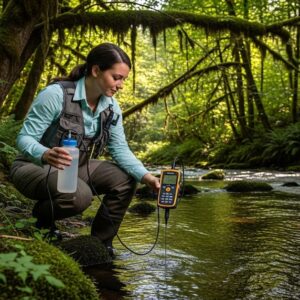
Environmental Technician positions place greater emphasis on hands-on collection and monitoring. You'll conduct water and soil sampling, perform site inspections, maintain monitoring equipment, and ensure proper chain of custody for samples sent to laboratories. These roles often serve as entry points into consulting firms or government agencies, with starting salaries in the low-$40,000s to mid-$50,000s. With specialized skills—particularly in hazardous waste sites, industrial monitoring, or complex sampling protocols—technicians can earn $60,000 or more and often transition into scientific roles within a few years.
Laboratory Technician roles at universities, research institutes, or environmental testing laboratories suit those who prefer controlled environments over outdoor fieldwork. You'll prepare samples, operate analytical equipment, maintain quality control protocols, and document results. These positions develop deep technical expertise in specific analytical methods, whether that's water chemistry, soil analysis, or environmental microbiology. The work requires precision and attention to detail, with less variability in daily tasks compared to field-based roles.
Conservation and Wildlife
Conservation Scientists and Foresters often begin their careers in government agencies such as the U.S. Forest Service, the Bureau of Land Management, or state natural resource departments. Starting salaries for government positions typically range from $40,000 to $55,000, with the national median at $69,060, according to 2024 BLS data. The work involves habitat management, ecosystem restoration planning, sustainable land use practices, and monitoring of protected areas. Many professionals appreciate the mission-driven nature of conservation work and the stability of government employment, even if private sector roles offer higher initial compensation.
Wildlife and Ecological Technician positions frequently start as seasonal work—bird surveys during migration periods, vegetation monitoring in summer months, or species population assessments tied to specific projects. While the seasonal nature can be challenging early in a career (finding housing for three-month stints, patching together multiple seasonal jobs), this fieldwork provides invaluable experience. You'll learn species identification, data collection protocols, field safety procedures, and how ecological research actually happens in the field, outside textbooks. Many conservation professionals look back on their years as seasonal field technicians as formative, even if they required some financial flexibility.
Consulting and Compliance
Environmental Consulting represents a significant employment sector for environmental science graduates. Consulting firms conduct environmental site assessments (Phase I and Phase II ESAs), manage remediation projects, prepare environmental impact assessments, and provide technical expertise to clients navigating environmental regulations. Entry-level field scientists or junior consultants in these firms typically start between $55,000 and $70,000, with consulting generally offering higher starting salaries than government positions. The trade-off: consulting often involves greater pressure to bill more hours, client deadlines, and travel requirements.
The typical consulting career progression moves from field scientist (collecting data and assisting with report writing) to project manager (leading entire assessments and managing client relationships) to senior consultant or principal (bringing in new business and providing expert testimony). This path can lead to six-figure salaries within 7-10 years for successful professionals. Some consultants eventually transition from consulting firms to government regulatory roles, seeking better work-life balance, or move into corporate environmental management positions.
Environmental Compliance Specialists help companies meet EPA and state environmental regulations. You'll track permit requirements, ensure proper reporting, conduct internal audits, manage hazardous waste documentation, and serve as the liaison between your company and regulatory agencies. These roles suit detail-oriented individuals who can translate complex regulations into practical compliance programs. Starting compensation typically ranges from the mid-$50,000s to the mid-$60,000s, with experienced compliance managers earning $80,000 to $100,000+. The work is primarily office-based, with occasional site inspections, and it provides stable employment in industries such as manufacturing, utilities, and waste management.
GIS and Data Analysis
GIS Analysts and Technicians are among the most in-demand specializations for environmental science graduates. Geographic Information Systems skills apply across environmental consulting, urban planning, conservation, natural resource management, and climate science. You'll create maps, conduct spatial analyses, manage environmental databases, and provide technical support for projects that require geographic data visualization. Starting salaries range from $50,000 to $65,000, depending on sector and location, with mid-career GIS specialists earning $70,000 to $90,000+ in government or consulting roles. Metropolitan areas with strong tech sectors sometimes offer even higher compensation.
GIS expertise provides career flexibility—if you tire of environmental consulting, your skills transfer to urban planning, public health, logistics, or numerous other fields. Many environmental science students add GIS certificates or concentrations during their undergraduate degrees specifically to increase their marketability. The Bureau of Labor Statistics projects 6% growth for cartographers and photogrammetrists from 2024 to 2034—faster than average for all occupations—with a median salary of $78,380. This growth reflects increasing demand for spatial data analysis across industries beyond traditional environmental work. If you enjoy the intersection of technology, environmental data, and visual communication, GIS degree programs and certificates merit serious consideration.
Sustainability and Green Jobs
Sustainability Analysts and Coordinators have experienced growing demand as corporations increase their focus on Environmental, Social, and Governance (ESG) reporting and carbon-reduction commitments. These roles involve tracking environmental metrics, managing sustainability programs, preparing corporate sustainability reports, coordinating waste-reduction or energy-efficiency initiatives, and helping organizations meet their environmental goals. Entry-level sustainability coordinator positions typically start at $50,000 to $65,000, while experienced sustainability managers or specialists earn $90,000 to $130,000+, depending on company size and industry.
Corporate sustainability roles offer exposure to environmental impact and business strategy. You'll work cross-functionally with operations, facilities, procurement, and executive leadership. The role requires environmental knowledge plus communication skills to translate technical concepts for business audiences. Many professionals find these positions intellectually diverse, combining environmental science with project management, stakeholder engagement, and strategic planning. For comprehensive information about this growing field, explore sustainability and green job opportunities.
Environmental Policy and Planning roles attract graduates interested in the regulatory and governmental side of environmental protection. Entry-level positions in policy analysis, planning departments, or regulatory agencies typically start at $50,000 to $65,000, while experienced policy analysts and program managers can earn $80,000 to $130,000. The work involves analyzing proposed regulations, conducting environmental reviews for development projects, writing policy recommendations, and facilitating stakeholder engagement processes. These positions exist at federal agencies (EPA, NOAA, USGS), state environmental departments, regional planning commissions, and advocacy organizations. If the policy dimension of environmental work interests you, learn more about career paths in environmental policy and planning.
Salary Ranges by Career Track
Salary expectations vary considerably based on career path, geographic location, sector (government versus private), and level of education. The table below provides realistic starting ranges and median/mid-career expectations for common environmental science positions. These figures reflect 2024 Bureau of Labor Statistics data and recent graduate outcomes surveys, helping you set appropriate expectations for different career trajectories.
| Career Path (Typical with BS) | Typical Early Range | Median/Mid-Career Notes |
|---|---|---|
| Environmental Scientists & Specialists | $50,000-$70,000 starting (varies by region; government lower, consulting higher) | National median approximately $80,060; top 10% above $130,000 |
| Environmental Technician/Field Tech | $40,000-$55,000 starting | Median generally lower than that of scientists but can reach $60,000+ with experience and specialization (hazardous sites, industrial) |
| Conservation Scientists & Foresters | $40,000-$55,000 early career (many government roles) | Median $69,060 nationally (2024 BLS data) |
| Agricultural & Food Scientists / Ag-Environment Roles | $50,000-$65,000 early career | Median around $78,000 |
| GIS Analyst/Specialist | $50,000-$65,000 entry depending on sector | Mid-career can reach $70,000-$90,000+ in government/consulting; higher in metro tech markets |
| Environmental Policy & Planning | $50,000-$65,000 entry roles | Experienced analysts and managers in the $80,000-$130,000 range |
| Sustainability/Corporate ESG Roles | $50,000-$65,000 (coordinator/analyst) | Specialist/manager roles can range from $90,000 to $130,000+, depending on industry and company size. |
The Bureau of Labor Statistics projects environmental scientists and specialists to grow 4% from 2024 to 2034—about as fast as the average for all occupations. This translates to approximately 4,000 new jobs in this specific category, with additional openings across related fields, including conservation scientists (3% growth, 11,000 jobs), geoscientists (3% growth), and GIS-related positions such as cartographers and photogrammetrists (6% growth).
Geographic location significantly impacts these salary ranges. Environmental professionals in California, Massachusetts, Washington, and Colorado typically earn above the national median due to strong state environmental programs, concentration of consulting firms, and higher costs of living. Conversely, positions in rural areas or states with smaller environmental sectors may fall below these ranges. When evaluating job offers, consider both base salary and total compensation—government positions often provide excellent benefits packages, pension systems, and work-life balance that partially offset lower base salaries compared to consulting.
How Long Until You Get a Job?
There isn't a single national statistic for "time to first environmental science job," but available data and graduate experiences reveal consistent patterns. The timeline depends heavily on your preparation during school, geographic flexibility, and job search strategy. Understanding what influences this timeline helps you plan accordingly and set realistic expectations.
Employment Timelines by Preparation Level
Immediate to Three Months: Graduates in this category typically have multiple internships on their resume, specialized skills (particularly GIS or data analysis), and strong professional networks built through professors and field placements. They're willing to relocate to where jobs concentrate—think Denver for environmental consulting, Washington, D.C., for federal positions, California for state environmental work, or to specific regions known for conservation programs. Some secured job offers before graduation through internship-to-hire pipelines by applying directly to opportunities their professors recommended.
Structured graduate programs with career services and industry partnerships also place students in this timeframe. Programs with built-in internships, industry connections, and dedicated career counseling tend to speed the transition from education to employment compared with programs in which students must build experience and networks independently.
Three to Six Months: This represents the typical timeframe for graduates with some practical experience who apply broadly across sectors. They submit applications to government agencies, consulting firms, nonprofits, and utilities rather than waiting for one dream job. They leverage their department's connections—reaching out to professors for introductions, connecting with alumni working in the field, and following up on leads from internship supervisors. Geographic flexibility helps, but it isn't absolute; they're willing to consider positions in neighboring states or regions, and they're not fully open to relocation anywhere.
During this period, many graduates work temporary positions or part-time roles tangentially related to their field while continuing their search. Some accept seasonal field technician work to build additional experience while searching for permanent positions. The key is maintaining momentum in applications while staying financially stable.
Six to Twelve+ Months: Extended searches typically involve one or more limiting factors. Limited internship experience means competing against candidates with stronger practical backgrounds. Geographic constraints—needing to stay in a specific city for family reasons or a partner's job—significantly reduce available opportunities, especially if the location has a smaller environmental sector. Being highly selective about role type, refusing to consider certain sectors (only wanting non-profit work when most jobs are in consulting or government), or waiting exclusively for specific positions also lengthens the search.
This isn't to say these constraints are unreasonable—life circumstances vary, and some limitations are non-negotiable. However, understanding how they affect timelines helps you strategize. If you know geographic constraints will limit your options, compensate by building exceptional experience and skills during school. If you can only accept certain types of roles, start your search earlier and network extensively in those specific areas.
What Speeds Up Employment
Multiple Internships: Every additional internship or co-op experience on your resume increases competitiveness exponentially. Your first internship proves you can show up professionally and follow instructions. Your second internship demonstrates sustained interest and capability. Your third internship provides specialized experience that sets you apart. Treat internship acquisition during undergrad as seriously as job hunting after graduation—because it essentially is pre-emptive job hunting. Environmental science internships are available at consulting firms, government agencies, non-profits, research institutions, and corporate environmental departments. Apply early (many fill six months in advance), apply often, and don't limit yourself to paid-only opportunities for your first experience.
Willingness to Relocate: Environmental jobs aren't evenly distributed. Federal agencies are concentrated in Washington, D.C., though they have field offices nationwide. Environmental consulting firms cluster in major metros. State environmental departments are obviously located in state capitals. Conservation jobs are concentrated in states with large areas of public land. Some regions offer more opportunities in environmental science than others. Graduates willing to move where the jobs are—even if just for a first position to build experience—find employment faster and often start at higher salaries in regions with competitive markets for environmental talent.
Specialization: A generic "environmental science degree" sounds versatile, but it can read as unfocused to employers. Graduates who can clearly articulate their specialization—wetlands assessment, air quality monitoring, GIS-based environmental analysis, renewable energy policy, hazardous waste management—align more closely with specific job descriptions. Develop this specialization through focused coursework, targeted internships, and relevant research projects. Your resume should tell a coherent story about the specific type of environmental work you're prepared to do, not just that you're generally interested in the environment.
Professional Networks: Many environmental science positions never reach online job boards. Agencies post vacancies they're legally required to advertise publicly, but already have internal candidates or referrals in mind. Consulting firms sometimes fill positions through employee referrals before advertising widely. This isn't nepotism—it's risk reduction. Hiring managers prefer candidates who someone can vouch for over unknown applicants. Build your network through professors (who often have former students throughout the field), internship supervisors, department head connections to industry, and informational interviews with professionals in areas you're targeting. Attend professional conferences even as a student. Join relevant organizations (Soil and Water Conservation Society, Wildlife Society, Air & Waste Management Association). Professional networks convert from abstract concepts to job leads when people know your name and capabilities.
Flexible Sector Approach: Some graduates mentally categorize jobs as "good" (e.g., nonprofit conservation work, federal agency positions) versus "settling" (e.g., environmental consulting, corporate compliance roles). This mindset limits opportunities unnecessarily. Environmental consulting provides excellent training, strong salaries, and direct environmental impact through site remediation and assessment work. Corporate environmental positions ensure industrial operations meet environmental standards—critical work. Government regulatory roles enforce environmental protection laws. Each sector offers meaningful environmental careers. Successful graduates consider opportunities across sectors, recognizing that your first job isn't your forever job. Many professionals start in consulting for the training and experience, then transition to government or non-profit work later. Others find they enjoy consulting or corporate work more than expected. Keep your options open.
Real Graduate Career Journeys
Career paths rarely follow straight lines. Reviewing actual graduate progressions—patterns drawn from alum outcomes and professional communities—reveals what environmental science careers look like in practice, not in theory. These journeys show how early experiences lead to different specializations and how professionals pivot as they discover their interests and strengths.
The Field-to-Consulting Progression
Years 0-1: Many environmental science graduates begin with field-heavy positions. A wildlife biology internship during your senior year leads to a seasonal field technician role surveying bird populations for a consulting firm. You spend April through August camping in remote locations, conducting point counts at dawn, recording data on tablets, and learning field methodology from experienced biologists. The pay is modest (perhaps $15-18 per hour), housing is basic, but you're building concrete field experience.
That seasonal work leads to another three-month position—this time, water quality monitoring for a watershed group. You collect stream samples, measure discharge, check for macroinvertebrates, and input data into monitoring databases, in a fall position conducting vegetation surveys for habitat restoration planning. These short-term positions may be financially uncertain, but each one adds to your resume and expands your professional network.
Years 2-4: The accumulated field experience makes you competitive for permanent positions. An environmental consulting firm hires you as a field scientist. Now you're conducting Phase I and Phase II Environmental Site Assessments—reviewing historical records, walking properties to identify environmental concerns, collecting soil and groundwater samples, and assisting senior staff with report writing. The work is more stable (salaried position with benefits), better compensated ($55,000-$62,000 starting), and intellectually diverse. One week, you're at a former industrial site investigating soil contamination. Next week, you're at an undeveloped property checking for wetlands. You're learning how environmental consulting actually functions, how to manage client expectations, and how technical knowledge translates into business services.
By year three or four, you're managing smaller projects independently. You write complete assessment reports, communicate directly with clients and regulators, and oversee junior staff and field technicians on your projects. Your salary has increased to the mid-$60,000s or low-$70,000s. You're developing expertise in specific areas—maybe wetland delineation or underground storage tank investigations—that makes you more valuable to your firm and more marketable if you decide to move.
Years 5+: At this point, careers diverge based on interests and priorities. Some consultants become senior staff or project managers, taking on larger, more complex projects and focusing more on client development and project oversight than hands-on fieldwork. Compensation ranges from $ 80,000 to $100,000+ for successful senior consultants. Others use their consulting experience as a credential to transition into state regulatory positions—the pay may be lower initially. Still, work-life balance improves dramatically, benefits are excellent, and you're now on the agency side evaluating others' assessment work rather than producing it yourself. Still others move into corporate environmental management roles, overseeing environmental compliance and sustainability programs for specific companies. Each path leverages the technical foundation built in those early years.
The Government Track
Some graduates target government employment from the start, valuing mission-driven work, job security, and public service. The path often begins with state agency positions—perhaps as an environmental specialist at a state environmental quality department reviewing permit applications, or as a natural resources technician with a state park system managing habitat restoration projects. Federal positions are more competitive but offer nationwide opportunities with agencies such as the EPA, the Forest Service, the Bureau of Land Management, or the U.S. Fish and Wildlife Service.
Government careers provide stability and clear advancement paths through civil service systems. You progress through job classifications (Environmental Specialist I to II to III, for example) with corresponding salary increases. The work is often more focused than consulting—you develop deep expertise in specific regulatory programs or management areas rather than broad generalist knowledge. Many government environmental professionals appreciate knowing their work directly serves public environmental protection rather than client business needs. The trade-offs include generally lower salaries than consulting (though benefits often compensate), more bureaucracy, and slower career advancement due to budget constraints and civil service rules.
The Academic and Research Track
Graduates interested in environmental research often enter graduate programs directly or work as research assistants or lab managers for a few years before pursuing master's or doctoral degrees. This path leads to research positions at universities, government research labs (such as USGS and NOAA), non-profit research institutions, or research divisions of consulting firms. The work is more focused on knowledge generation—designing studies, collecting and analyzing data, publishing findings—rather than applied problem-solving for clients or regulatory compliance.
Research careers require comfort with delayed gratification (graduate school means years of modest stipends) and often less geographic flexibility (research positions concentrate at specific institutions and agencies). However, they offer intellectual autonomy, contribution to scientific understanding, and the opportunity to become a recognized expert in specific environmental topics. Many researchers also teach, contributing to the next generation of environmental scientists.
The Private Sector Sustainability Track
Corporate environmental and sustainability roles attract graduates interested in working within business structures to improve environmental performance. You might start as a sustainability coordinator at a manufacturing company, tracking waste and energy metrics, or as an environmental compliance specialist, ensuring factory operations comply with regulations. As you gain experience and understand how businesses function, you advance to sustainability manager or director roles, shaping corporate environmental strategy, managing multimillion-dollar sustainability programs, and reporting on progress to executives and investors.
Corporate roles often offer faster salary growth than government roles and more predictable schedules than consulting. The challenge is working within business constraints—environmental goals must align with or support business objectives, not override them. Successful corporate environmental professionals learn to frame environmental initiatives in business language (cost savings, risk reduction, brand reputation, regulatory compliance) while still achieving meaningful environmental outcomes. This path suits people who enjoy the intersection of environmental knowledge and business strategy.
Specialization Matters: Engineering vs. Science
One recurring debate in environmental education circles: should you major in environmental science or environmental engineering? Online discussions about this question often turn contentious, with engineering advocates arguing that their degrees offer more opportunities and higher salaries. In contrast, science advocates emphasize the broader ecological and policy focus of their programs. The reality is more nuanced—the right choice depends on what you actually want to do professionally.
Environmental Science Strengths: Environmental science programs excel at preparing graduates for ecosystem-focused work, including remediation of contaminated sites, ecological restoration, wildlife surveys and monitoring, environmental impact assessments, field ecology, policy analysis and development, and natural resource management. The curriculum emphasizes biology, ecology, chemistry, earth science, and environmental policy. If your ideal day involves identifying vegetation communities, tracking wildlife populations, analyzing ecosystem health, or working on conservation policy, environmental science provides the appropriate foundation. The work can be extremely fulfilling for those drawn to direct interaction with natural systems and species protection.
Environmental Engineering Domains: Environmental engineering programs focus on the design and operation of systems that protect human health and the environment, including water and wastewater treatment plants, air pollution control systems, solid waste management facilities, landfill design and monitoring, industrial process optimization for pollution prevention, and stormwater management infrastructure. The curriculum emphasizes math, physics, chemistry, fluid dynamics, and engineering design. If your ideal day involves designing a new treatment system, modeling pollutant fate and transport, optimizing industrial processes for environmental compliance, or managing complex infrastructure projects, environmental engineering provides the appropriate preparation.
The Overlap Zone: Some positions accept either degree—environmental consulting firms hire both environmental scientists and engineers, government agencies employ both in different capacities, and corporate environmental departments include both backgrounds. In these overlapping areas, engineering credentials often command higher starting salaries (perhaps $10,000 to $15,000 higher) and generally lead to faster salary progression. This reflects both the technical nature of engineering training and market demand for professional engineers.
Making Your Decision: Rather than choosing based solely on salary projections or job market competitiveness, consider what you actually enjoy studying and what type of work you find genuinely engaging. Engineering programs require extensive math and physics—if you struggle with or dislike calculus, differential equations, and physics, you'll spend four years fighting against your coursework. Environmental science programs require extensive biological and ecological content—if you find ecology boring and prefer mechanical systems, you'll spend four years in the wrong major.
Many professionals who pursued environmental science because "engineering seemed too hard" or chose engineering because "it pays better" end up dissatisfied in careers that don't match their interests. The most successful environmental professionals—whether scientists, engineers, policy specialists, or consultants—chose paths aligned with their genuine interests and strengths. Your career will span 40+ years; choose a foundation that prepares you for work you'll find intellectually engaging over the long term, not just financially acceptable.
For those still uncertain, consider spending a few years working in the environmental field before deciding on graduate school. Many successful environmental engineers earned bachelor's degrees in environmental science, worked in the field, identified specific engineering problems they wanted to solve, and then pursued master's degrees in environmental engineering with a clear career direction. This path provides real-world context for educational decisions.
What Makes You Employable
Environmental science degree completion alone doesn't guarantee employment—that much is clear from earlier discussions about the experience gap—graduates who transition smoothly from education to career share specific attributes and behaviors. Understanding what makes you competitive allows you to build these assets deliberately during your undergraduate years rather than discovering gaps after graduation.
During School: Building Your Foundation
1. Experience Is the Gatekeeper
This point has been reinforced throughout this article because it's genuinely that important. Pursue every internship opportunity you can find. Seek out co-op programs that alternate semesters of coursework with semesters of paid professional experience. Accept seasonal field jobs even if they disrupt your summer plans. Volunteer for a professor's research projects even if they're unpaid. Work as a teaching assistant for environmental courses to develop communication skills. Each experience adds to your resume and, more importantly, teaches you how environmental work actually functions outside of classroom theory.
Don't wait for perfect opportunities. Your first internship might be filing paperwork and shadowing professionals rather than conducting meaningful analysis—that's fine. It gets your foot in the door, shows you workplace norms, and leads to better opportunities. Your second internship builds on the first. Your third provides specialized experience that makes you genuinely competitive for entry-level positions.
Yes, this often means working summers when your non-environmental-major friends are traveling or relaxing. Yes, it sometimes means unpaid work initially, though aim for paid internships once you have basic experience. Yes, it requires treating internship searches as seriously as course registration. The graduates who secure jobs quickly after graduation are the ones who built experience systematically during school, not those who hoped their coursework alone would suffice. For a comprehensive guide to finding opportunities, visit Environmental Science Internships.
2. Build Specific Skills
Generic environmental science knowledge is necessary but insufficient. Develop concrete technical skills that appear in job descriptions. GIS proficiency tops this list—Geographic Information Systems capabilities apply across environmental consulting, planning, natural resource management, and numerous other fields. Complete not just introductory GIS courses but advanced coursework in spatial analysis, remote sensing, and database management. Build a portfolio of GIS projects you can show potential employers.
Data analysis and statistics represent another highly valued skill set. Environmental work increasingly involves large datasets, monitoring programs with years of accumulated data, and modeling projects. Competence in R, Python, or statistical software makes you significantly more valuable. Take statistics courses beyond your program's minimum requirements. Complete research projects involving substantial data analysis.
Develop working knowledge of environmental regulations and policy frameworks. Understand how NEPA (National Environmental Policy Act) functions, what Phase I and Phase II Environmental Site Assessments entail, how wetland regulations work, and what air and water quality permitting involves. You won't be an expert fresh out of undergraduate education, but familiarity with regulatory frameworks demonstrates that you understand the legal context in which environmental work occurs. Many universities offer environmental policy or law courses specifically for this purpose.
Master field and laboratory techniques relevant to your intended specialization. If you're pursuing wildlife biology, develop strong species identification skills. If you're interested in water quality, become proficient with field sampling equipment and water chemistry analysis. If you're focused on soil science, learn soil profiling and classification. Technical competence distinguishes you from candidates with theoretical knowledge but limited hands-on ability.
3. Network Strategically
Professional networking as an undergraduate doesn't mean awkward, forced conversations at career fairs (though you should attend those, too). It means building genuine relationships with people in the field through informational interviews, research collaborations, and sustained communication. Your professors are the easiest and most valuable network connections. They have former students throughout environmental agencies, consulting firms, and non-profits. They know which organizations hire regularly, which skills those employers value, and how specific students' strengths align with available opportunities. Professors make recommendations and introductions for students they know well—attend office hours, engage thoughtfully in classes, and express genuine interest in their research or professional backgrounds.
Connect with your department head and any career services staff specializing in environmental fields. They often maintain relationships with employers specifically for student placements. When attending campus guest lectures or networking events, ask thoughtful questions and follow up with thank-you emails that mention specific aspects of their presentation. Join student chapters of professional organizations (many offer free or reduced student memberships)—these provide access to professionals, conferences, and job boards. Attend regional or national conferences, even if you're not presenting; they offer unparalleled networking opportunities with people actively working in the fields you're targeting.
After Graduation: Strategic Job Searching
Apply Broadly Across Sectors and Roles
New graduates sometimes create narrow target lists: "I only want to work for the National Park Service" or "I'll only accept non-profit conservation positions." While having preferences is reasonable, excluding entire sectors dramatically limits your opportunities. Environmental consulting provides excellent training and reasonable compensation. Government agencies offer stability and mission-driven work. Corporate environmental positions ensure industrial operations meet environmental standards. Non-profit conservation organizations work on habitat protection and restoration. Each sector employs environmental science graduates and provides meaningful environmental work.
Your first position doesn't lock you into a career path permanently. Many professionals start in consulting for the technical training and salary, then transition to government or non-profit work after a few years. Others discover they enjoy consulting or corporate work more than expected. Cast a wide net in your initial search, evaluate opportunities as they arrive, and remember that career paths allow for pivots and changes.
Be Mobile If Possible
Geographic flexibility dramatically increases your options. If you can relocate anywhere for the right opportunity, you're competing for far more positions than graduates limited to specific cities or states. This doesn't mean you must relocate permanently—many professionals take first positions in locations they didn't expect, build experience for two to three years, then move to preferred regions with stronger credentials. Others discover they enjoy regions they never considered. If geographic constraints are unavoidable due to family obligations or your partner's career, compensate by building exceptional skills and experience during school and by starting your job search earlier.
Consider Seasonal or Temporary Roles as Stepping Stones
If your search extends beyond your ideal timeline, consider seasonal field technician positions or temporary contracts. These roles provide income, continue to build experience, and often lead to permanent positions—either within the same organization or through connections made during temporary work. Many permanent employees started as seasonal staff. Temporary work also keeps you active in the field professionally, preventing resume gaps that make some employers cautious.
Leverage All Networks
Reconnect with professors, internship supervisors, and classmates who graduated before you. Send brief emails to update them on your job search and ask whether they know of opportunities in specific areas. Join relevant LinkedIn groups or professional organization job boards. Attend regional conferences or workshops even while unemployed (many offer reduced registration for job seekers)—the networking opportunities often justify the cost. Follow environmental consulting firms, agencies, and organizations on social media, where job announcements sometimes appear before official postings. Personal connections account for a significant percentage of hires in environmental fields; use yours strategically.
Programs with Strong Career Outcomes
Not all environmental science programs produce equivalent employment outcomes. While individual initiative and experience-building matter enormously, program structure, institutional resources, and career support influence graduate success rates. Understanding what distinguishes programs with strong placement records helps you select undergraduate or graduate programs strategically—and if you're already enrolled, helps you maximize available resources.
Success Indicators to Evaluate
Published First-Destination Surveys: Strong programs track where graduates go within six months or one year after degree completion. They publish these outcomes openly, including employment rates, graduate school enrollment rates, employer types, and sometimes even position titles and locations. Programs confident in their outcomes share this data publicly. Programs without published outcomes data may not track graduates systematically—a potential concern about career support infrastructure. When evaluating programs, ask directly: "What percentage of graduates are employed or in graduate school within six months? What types of organizations hire your graduates?" Specific answers with supporting data suggest robust career services and employer relationships.
Built-In Internships or Co-Op Requirements: Programs with mandatory internships or co-op experiences essentially force students to build the practical experience employers demand. These requirements also indicate established relationships with organizations that regularly host students. Optional internships mean some students graduate with extensive experience, while others have none. Mandatory structures ensure everyone graduates with professional credentials beyond coursework. Similarly, programs with capstone projects involving real clients or organizations provide applied experience, even if they are technically classified as academic work.
GIS, Data, and Policy Coursework: The most versatile environmental science programs balance traditional ecology and chemistry with technical skills employers consistently request. Check whether GIS courses are required or merely optional. Determine if data analysis, statistical methods, or programming receive substantive curricular attention. Examine whether environmental policy, regulations, or law courses are available. Programs that integrate these components produce graduates who can contribute immediately to employers' needs, rather than requiring extensive on-the-job training in basic technical skills.
Connections to Agencies, Firms, and NGOs: Look for evidence of institutional relationships beyond internship placements. Do consulting firms recruit specifically from this program? Do government agencies regularly hire graduates? Do program faculty maintain active consulting practices or advisory roles with environmental organizations? These connections create pipelines from education to employment. Guest speakers, site visits, sponsored projects, and adjunct faculty from environmental organizations all indicate strong professional networks supporting the program.
Dedicated Environmental Career Center Support: Some universities maintain career services specifically focused on environmental fields, with counselors who understand environmental career paths and maintain relationships with employers in environmental sectors. This specialized support proves more valuable than generic university career centers, where counselors may have a limited understanding of environmental employment patterns. Ask whether the program has dedicated career staff, what employer relationships they maintain, and what career support services continue beyond graduation.
Example Outcomes from Strong Programs
Yale School of the Environment publishes detailed employment outcome data showing sector distribution six months after graduation. Recent cohorts have found positions across environmental non-profits (conservation organizations, advocacy groups, research institutes), private consulting firms and businesses (environmental consulting, sustainability consulting, renewable energy companies), government agencies (EPA, state departments, international environmental agencies), and academic study. The diversity of sectors represents program success—graduates aren't funneling into a single narrow career path but are finding positions across the environmental field.
UCLA's Environmental Science program alum survey found that 74% of bachelor's degree holders are currently employed, and 76% are working in or studying environment-related fields. Most significantly, 81% reported their education was relevant to their current job or graduate work. This relevance metric matters—it indicates that the program prepared graduates for real environmental careers, not just any employment. High relevance scores suggest the curriculum aligns with employer needs and career realities.
Programs that emphasize professional development alongside rigorous academics consistently produce strong outcomes. Whether through required internships, structured industry partnerships, or dedicated career counseling, the combination of theoretical knowledge and practical preparation positions graduates for successful career transitions.
What should you do with this information? If you're selecting undergraduate programs, evaluate them partly based on evidence of career outcomes. If you're already enrolled, explore the resources you haven't used yet—career counseling, alum networks, employer events, and research opportunities. Strong employment outcomes result from both program infrastructure and individual initiative; maximize both to position yourself for success.
For comprehensive information about environmental science degree options at various levels, visit Environmental Science Degree Programs.
Frequently Asked Questions
What jobs can I get with a bachelor's in environmental science?
Bachelor's degree holders commonly find positions as environmental scientists, field technicians, GIS analysts, conservation technicians, compliance specialists, sustainability coordinators, policy analysts, environmental consultants, laboratory technicians, and habitat restoration specialists. Most positions exist within environmental consulting firms, government agencies (federal, state, local), non-profit conservation or advocacy organizations, or corporate environmental and sustainability departments. Entry-level roles typically involve data collection, monitoring, sampling, permit support, or assisting senior staff with assessments and reports. With experience, you advance to independent project management, specialized technical work, policy development, or supervisory roles. Career diversity is considerable—environmental science graduates work in fields as varied as wildlife biology, water quality management, air pollution control, environmental law support, renewable energy development, and urban sustainability planning.
How long does it take to find a job after graduating?
Most environmental science graduates with internship experience find employment within three to six months of graduation. Graduates with multiple internships, specialized skills such as GIS, and geographic flexibility often secure positions within zero to three months—some receive offers before graduation through internship-to-hire transitions or through professor recommendations. Conversely, graduates with limited practical experience, significant geographic constraints, or very narrow job preferences may search for six to twelve months or longer. The timeline correlates strongly with preparation during school. Those who pursued internships every summer, developed technical skills employers request, and built professional networks typically transition to employment significantly faster than classmates who focused exclusively on coursework. Starting your job search during your final semester rather than after graduation, applying broadly across sectors and locations, and leveraging all available networks (professors, internship supervisors, alumni, career services) all accelerate the process.
Do you need a master's degree for environmental science jobs?
No, a bachelor's degree opens substantial entry-level opportunities in environmental science. Most field technicians, junior environmental scientists, GIS technicians, conservation technicians, and compliance specialists enter these roles with bachelor's credentials. However, a master's degree provides advantages for certain career paths. Specialized research positions, advanced policy roles, senior-level consulting positions, academic careers, and some federal agency roles prefer or require master's or doctoral degrees. Many professionals work for two to three years after their bachelor's degree, gain clarity on their specific interests and career direction, and then pursue master's degrees more strategically. Graduate school with work experience typically proves more valuable than graduate school immediately after undergraduate completion—you understand what additional education will actually provide for your career goals, rather than pursuing it as a default next step. Some employers will sponsor graduate education for promising employees, reducing financial burden while ensuring the degree directly supports your career progression.
Is environmental science a stable career?
Yes, environmental science offers reasonable career stability, particularly in government positions and established consulting firms. The Bureau of Labor Statistics projects 4% growth for environmental scientists and specialists from 2024 to 2034 (approximately 4,000 new jobs), with related fields showing similar stability: conservation scientists at 3% growth (11,000 jobs), and GIS-related positions like cartographers at 6% growth (faster than average). Environmental protection regulations remain in place regardless of political administration changes—companies must comply with environmental laws, contaminated sites require assessment and cleanup, government agencies need staff to implement environmental programs, and conservation work continues. Economic recessions can temporarily slow hiring in consulting and corporate positions, but core environmental work persists. Government environmental positions provide especially strong stability with civil service protections, pension systems, and consistent funding. Sustainability roles in corporations have grown substantially as ESG reporting and climate commitments increase, though these positions can be more vulnerable during corporate restructuring. Overall, environmental science offers greater stability than many private-sector careers while providing purpose-driven work that addresses genuine environmental challenges.
What's the starting salary for environmental science graduates?
Entry-level environmental science positions typically range from $40,000 to $70,000 annually, depending on the role, location, sector, and education level. Environmental field technicians often start in the $40,000 to $55,000 range. Environmental scientists and specialists in consulting or private-sector roles typically earn $ 50,000 to $70,000, with government positions generally lower ($45,000 to $60,000) but offering stronger benefits. GIS analysts typically start at around $50,000 to $65,000, depending on the sector and location. Conservation positions often start toward the lower end ($40,000 to $55,000), especially in government or non-profit roles. Corporate sustainability coordinators typically begin between $50,000 and $65,000. Geographic location significantly influences these ranges—positions in California, Washington, Massachusetts, Colorado, and major metropolitan areas generally pay above the national average due to the higher cost of living and stronger environmental sectors. The national median salary for environmental scientists is approximately $80,060, according to 2024 BLS data. Mid-career professionals earn $70,000 to $90,000, and top performers (senior consultants, program managers, and specialists with advanced degrees) earn $100,000 to $130,000 or more. Starting salaries represent just the beginning—experience, specialization, and career progression substantially increase earning potential over time.
Key Takeaways
- Employment is achievable and common: Data tracking 21,484 graduates shows about 68% employed in a related field within three years. UCLA's 2022 alum survey reports that 74% of its environmental science bachelor's graduates are employed, 76% are working in or studying environment-related areas, and 81% find their education relevant to their work.
- Experience during school is critical: Entry-level positions typically require 1-2 years of experience—build this through internships, co-ops, seasonal field work, research assistantships, and lab positions during your degree. Graduates with multiple internships find employment significantly faster than those with coursework alone.
- Specialization increases competitiveness: Generic environmental science knowledge is necessary but insufficient. Develop specific technical skills—GIS, data analysis, policy expertise, specialized field techniques in wetlands/wildlife/air quality—that match job description requirements and distinguish you from other candidates.
- Multiple career paths exist across sectors: Environmental consulting, government agencies (federal, state, local), non-profit conservation organizations, corporate sustainability departments, and research institutions all employ environmental science graduates in meaningful roles. Don't limit yourself to one idealized sector—evaluate opportunities across the field.
- Timeline expectations vary by preparation: Most graduates with practical experience find employment within 3-6 months. Those with multiple internships, specialized skills, and geographic flexibility often secure positions within 0-3 months. Limited experience or significant constraints can extend searches to 6-12 months or longer.
- Geographic mobility accelerates employment: Environmental jobs concentrate in specific regions and states—willingness to relocate to where positions cluster significantly speeds employment and often provides access to higher starting salaries in competitive markets for environmental talent.
- Starting salaries vary widely: entry-level positions typically pay $40,000-$70,000, depending on role, location, and sector, with median career earnings around $80,000 for environmental scientists. Top performers with specialization and experience exceed $130,000. The government offers lower starting salaries but superior benefits and a better work-life balance, compared with consulting's higher pay and longer hours.
Ready to start your environmental science career with a program that provides both rigorous academics and practical experience? The first step is choosing a degree program with proven graduate outcomes, built-in internships, and strong employer connections that prepare you for the careers discussed in this article.
2024 US Bureau of Labor Statistics salary and job growth figures for Environmental Scientists and Specialists reflect state and national data, not school-specific information. Conditions in your area may vary. Data accessed February 2026.
Related Articles




Featured Article

Conservation: History and Future